

You could do the test with any fan of mechanical watchmaking, and the percentage of correct prediction would be very close to 100% if you asked them about Omega and what their most emblematic watch is: in the vast majority of cases the answer would be the Speedmaster, assuming that we are talking about the Moon Watch or the first watch used on the Moon. A feat of such magnitude that almost 50 years later it remains a milestone for both an engineer and a watchmaker.
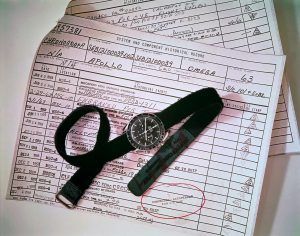

The moon landing and what is possibly the most famous walk of humanity occurred in 1969, but NASA had been working for almost ten years to reach this point with the maximum guarantees. And what few know isOmegait was already there. Before the Apollo missions that would culminate in our satellite, there were several exploration programs named after different inhabitants of Olympus, starting with the Mercury Program, which aimed to “put a human in Earth orbit, investigate its capabilities and reactions, and return it safely to Earth.”
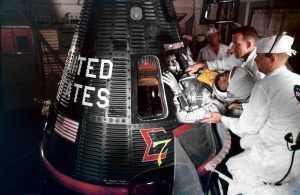
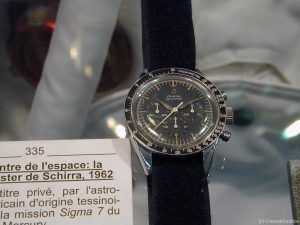
And it is with Mercury that, without knowing it,Omegabegins his relationship with NASA and the space race. On October 3, 1962, an astronaut of Swiss origin, Walter “Wally” Schirra, was launched into space on what was the second trip of that year, in the ship baptized by himself as Sigma 7. I don't know if it was because he was Swiss, but Schirra was carrying (as a “personal purchase”, that is, unofficial) aOmega Speedmaster CK-2998, with which it was in orbit for 9 hours, 13 minutes and 11 seconds, making six complete revolutions around the Earth. HeOmega Speedmaster CK-2998It is not the first watch on the Moon, but it is the first to go into outer space.

El Omega Speedmaster CK-2998Launched in 1959, it is the second of several evolutions that the model has undergone throughout its long history, where what is most striking is the shape of the “Alpha” hands, unlike the Broad Arrow of the 1957 model. But it also changes the bezel, which is now made of black painted aluminum with a graduated tachymeter (initially with “Tachymetre Base 1000 and 300-60 Km/h” and from 1962 with “Tachymeter 500-60 Km/h”). In the non-visible part, gaskets were applied to the buttons to improve protection against dust.
This undisputed classic has served as inspiration toOmegato launchthe new CK 2998: the characteristic Alpha hands (both the main and secondary ones) covered in Super-Luminova are maintained on a “panda” dial (white with black subdials) while the chronograph trotter stands out in red, which gives the watch an undeniable personality beyond its kinship with the first “Space Watch”. To complete the link, the bezel scale (ceramic here) is pulsametric, graduated for 30 beats, one of the four options offered by the original CK 2998.
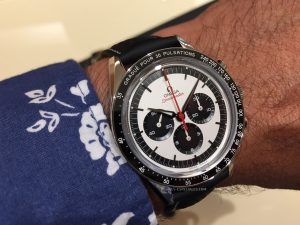
The movement chosen to give life to thenew CK 2998It is another classic among classics: the famous caliber 1861 or, in other words, the 861 produced by Lemania in the 1950s, an evolution of the caliber 321 equipped with a column wheel. That it continues to be produced today says a lot about its reliability. They were the first calibers produced in series with tolerances of one micron or one thousandth of a millimeter, which allowed an interchangeability of parts never seen before.
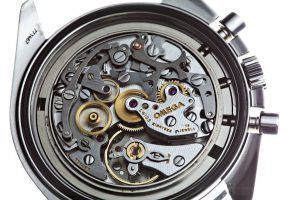
2998 are the units that make up this limited series, each with its own individual number engraved on the back of the case, and most of them will be sold through the more than 300 boutiques thatOmegahas spread throughout the world.
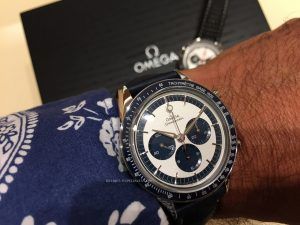
And it was in theOmega boutique in Madridwhere I was able to try on the copy they have available at the time of writing this. Not only this one: I also saw the 2016 edition and a gold version that I didn't know about. One of the best feelings you can have when buying a luxury watch is the personalized treatment that someone who knows the product can give you, who knows what they are talking about and who in some way – necessarily – establishes a link beyond the commercial one. I was able to verify it with Juan, director of the Omega Boutique, who not only knew all the CK 2998 models but was aware of the evolutions of both the original caliber 321 and the 861 and later 1861. And this, let's face it, for an amateur is a plus point.
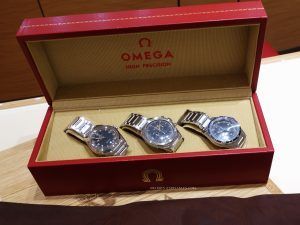
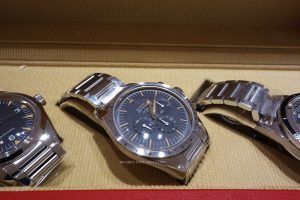
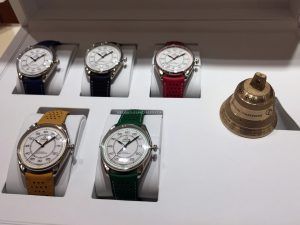
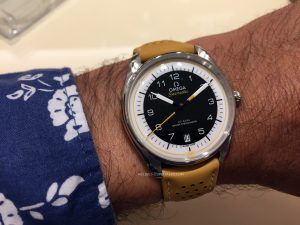
I also saw the last Omega Trilogy pack that remains unsold, although for a short time because it was already committed to a loyal customer. Or one of only 100 Seamaster Olympic Games sets ever produced, accompanied by a scale bell made where the originals were. All pieces are difficult if not impossible to see outside the brand's boutiques. Boutiques that, in addition to the professional treatment they provide, make details available to fans that are equally difficult to find elsewhere.
www.omegawatches.com










