Before telling you about my visit to the Breguet Manufacture, perhaps an introduction would be good to get us situated. Most watch fans know Breguet as the inventor of the tourbillon, that very light and at the same time complicated device on a watch that allows it to compensate for the effect of gravity. But the truth is that his contribution to watchmaking goes much further, such as the spiral that bears his surname and which has not yet been surpassed or the anti-shock device for the pivots of the balance wheel axis, not to mention the characteristic hands or hands also called Breguet. What's more, Louis-Abraham Breguet gave rise to a line of inventors who stood out in a multitude of fields, including aviation. Some of them followed his same path, like his son and his grandson, although the latter ended up dedicating his ingenuity to the then incipient electrical industry, a field that, by the way, had already interested Louis-Abraham.
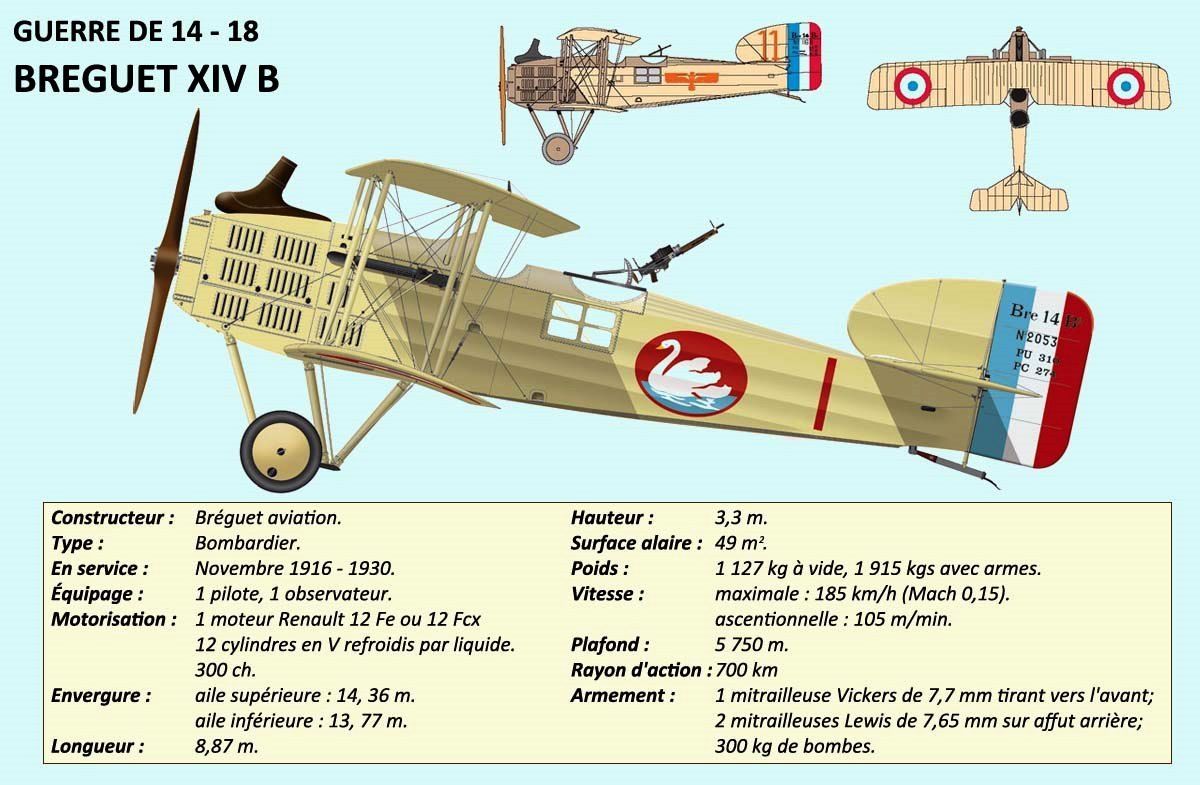
a little history
Founded in 1775, the brand remained in the hands of the Breguet family until 1870, when Louis-Clément (the aforementioned grandson) decided to change direction and sold the company to his workshop boss, Edward Brown, whose family, one hundred years later (1970), in turn sold it to the Chaumet jeweler brothers. They make a great effort to recover the Breguet essence, to the point that they reopen the manufacturing in the original location of L'Abbayé in the Vallée de Joux. But the quartz tsunami was wreaking havoc on the Swiss watch industry, and in 1986 the Chaumets threw in the towel and the brand was bought by Investcorp, an investment company with no relation to watchmaking. However, Investcorp also acquires the Nouvelle Lemánia ebauche factory, which makes it possible to provide variety to a relatively small production. Even so, during these years Breguet languished in a kind of limbo, until in 1999 it was purchased by the Swatch Group, which already owned Blancpain and which wanted to consolidate its offer in Fine Watchmaking with this purchase. Personal commitment of Nicolas G. Hayek, founder and chief executive of the group, has since then been recovering the original glory of the eponymous watchmaker, rescuing both horological and decorative techniques (guilloche, polishing, engraving...). Today Breguet once again takes its place among the greats of Fine Watchmaking.

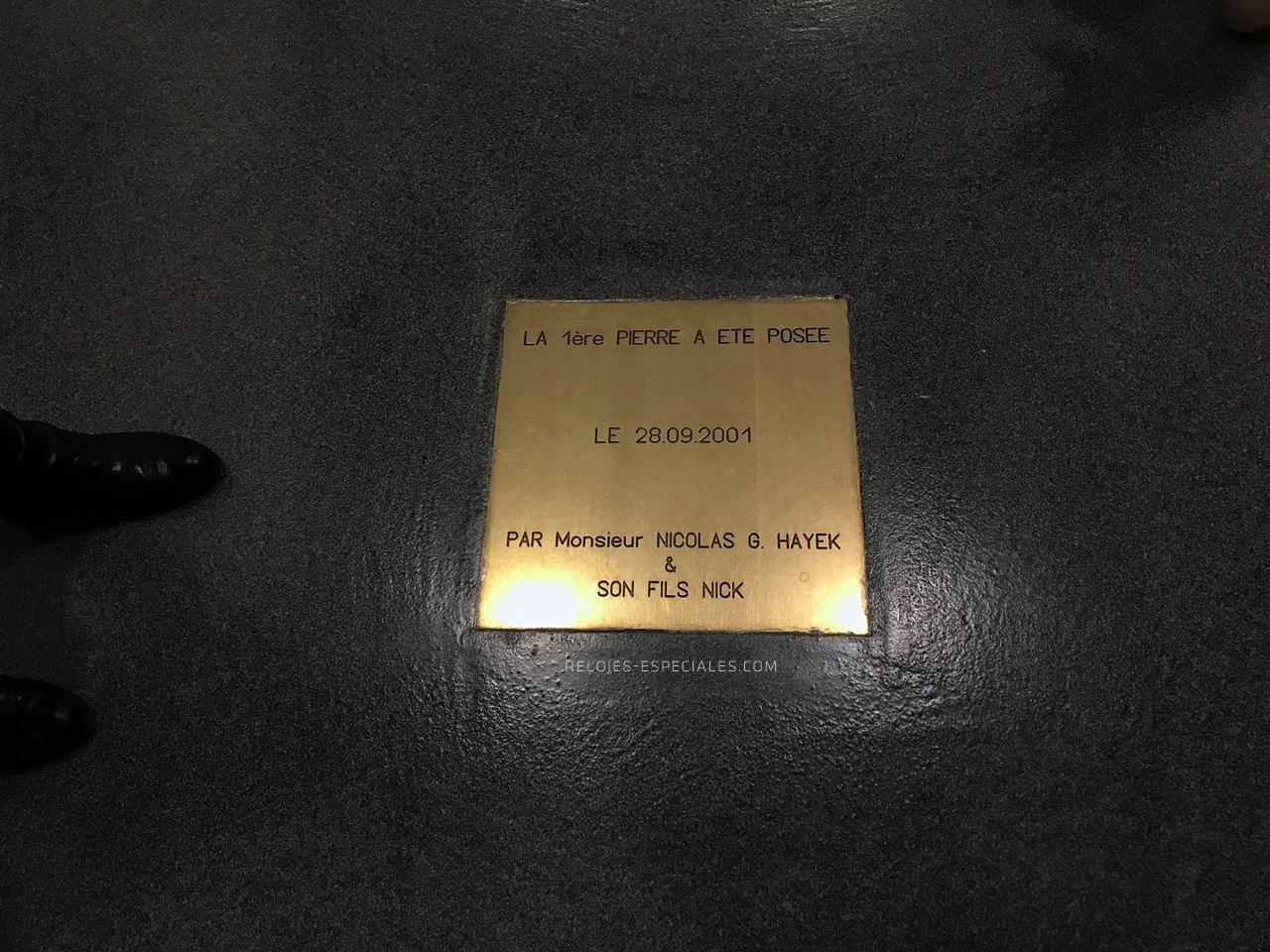
Breguet today
The trip from Geneva to the Jura Valley is an almost initiatory experience through postcard landscapes that leads to another equally suggestive one: from the same road one glimpses no less picturesque chalets whose roofs are topped by loud markings. But this is not the case with Breguet: its ultra-functional building is oriented towards excellence and without concessions to the cliché. Located in the town of l'Orient, its origin dates back only to 2001, when the expansion of what had until then been Nouvelle Lemania began (which was absorbed). Subsequently, new expansions were undertaken in 2006 and 2013, which gave it its current appearance.
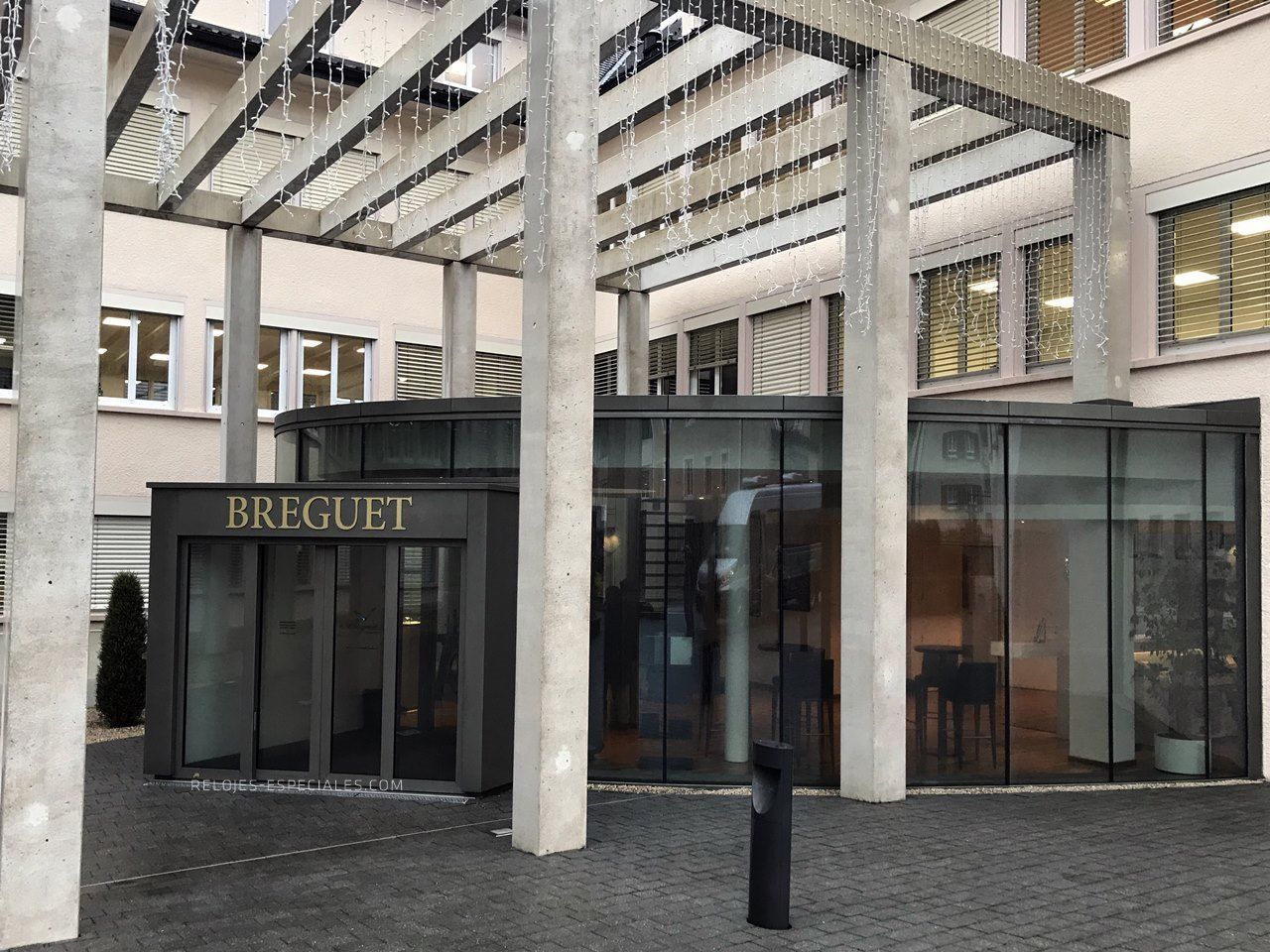
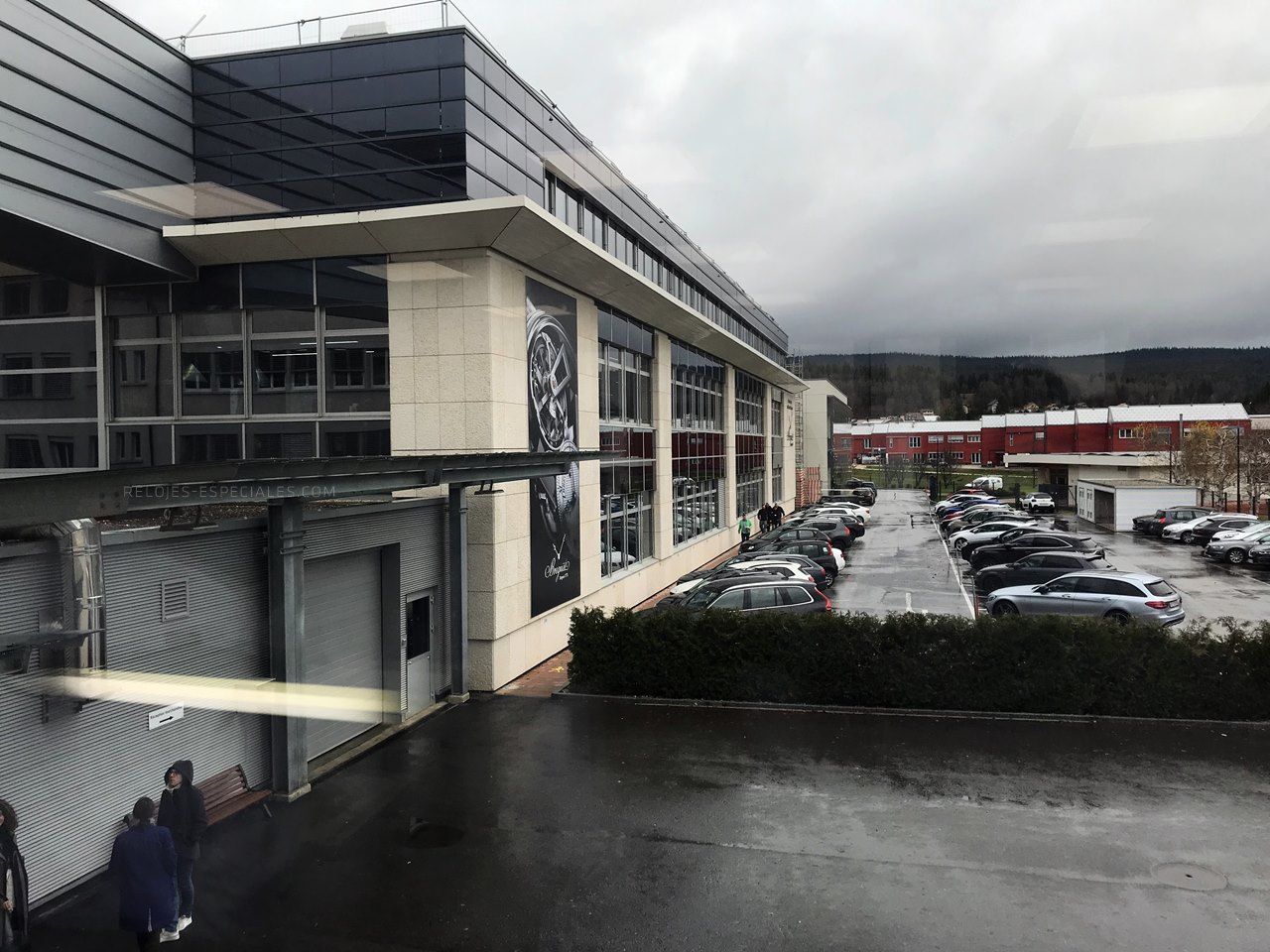
Visit to the Breguet factory
There are few things that excite a fan more than the invitation to visit a Manufacture. And if that manufacture is called Breguet the thing is close to ecstasy. Because it is not only excellence at a watchmaking level, but the aesthetic part has a greater importance here than it has in other brands: a Breguet watch is practically unmistakable. This is why the first thing one finds when entering is an old guilloché machine, a combination of pulleys, discs and burin that is used to mainly decorate the spheres, but is also used in the rotors or oscillating masses. The mandatory watch smock was waiting for us, although later we would also have to put on protectors so that the soles of the shoes do not introduce dirt into the clean areas.
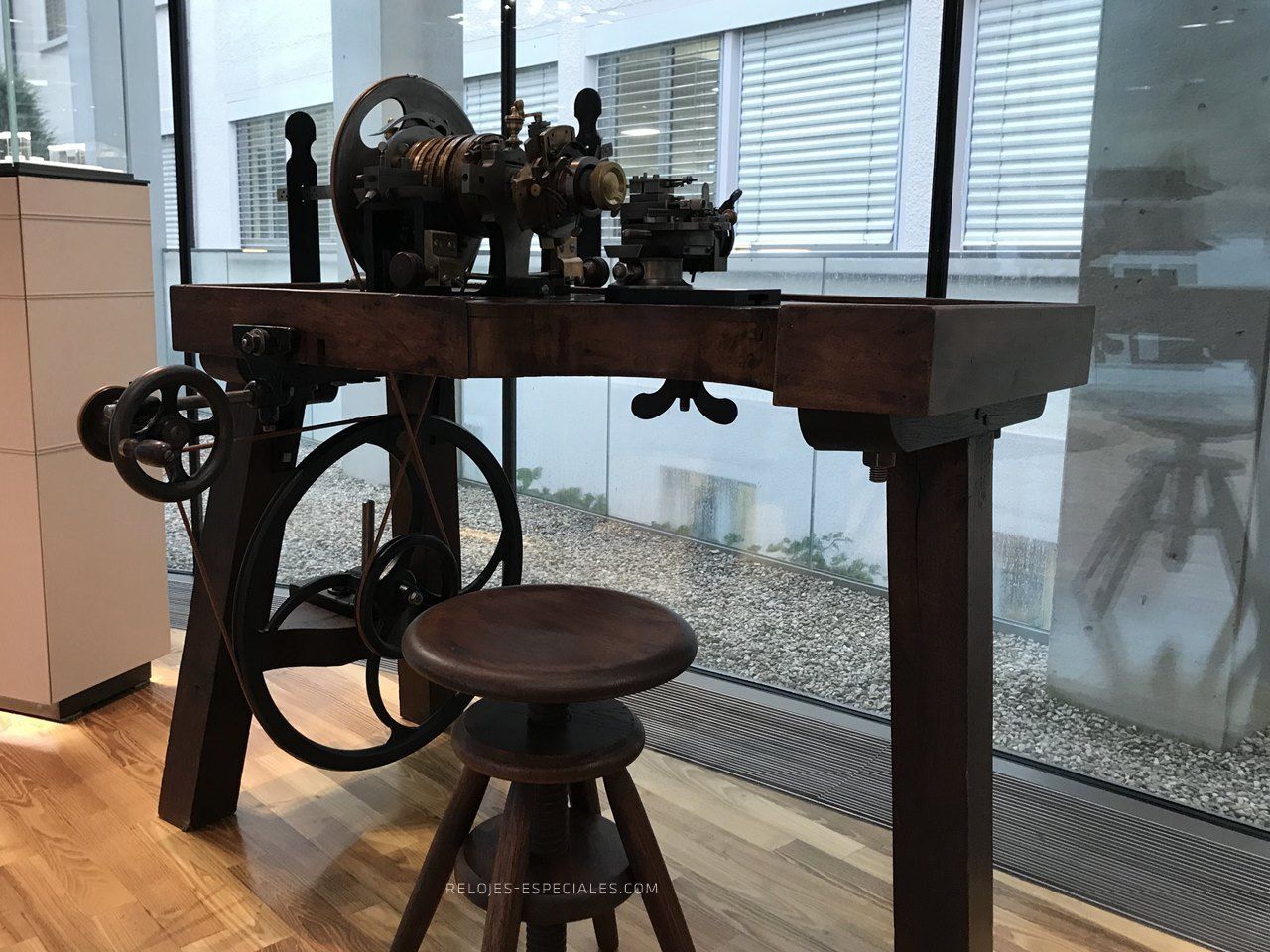
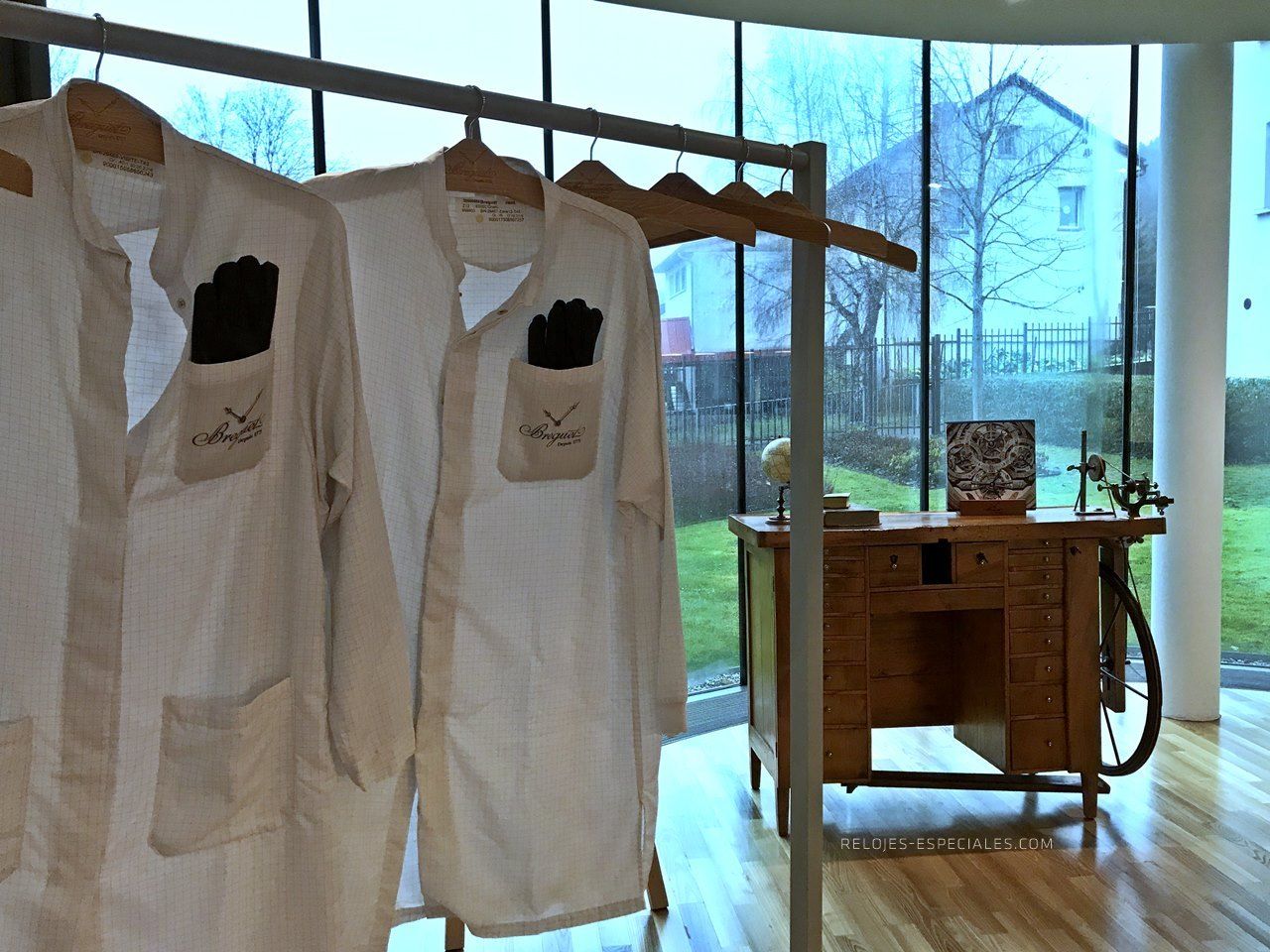
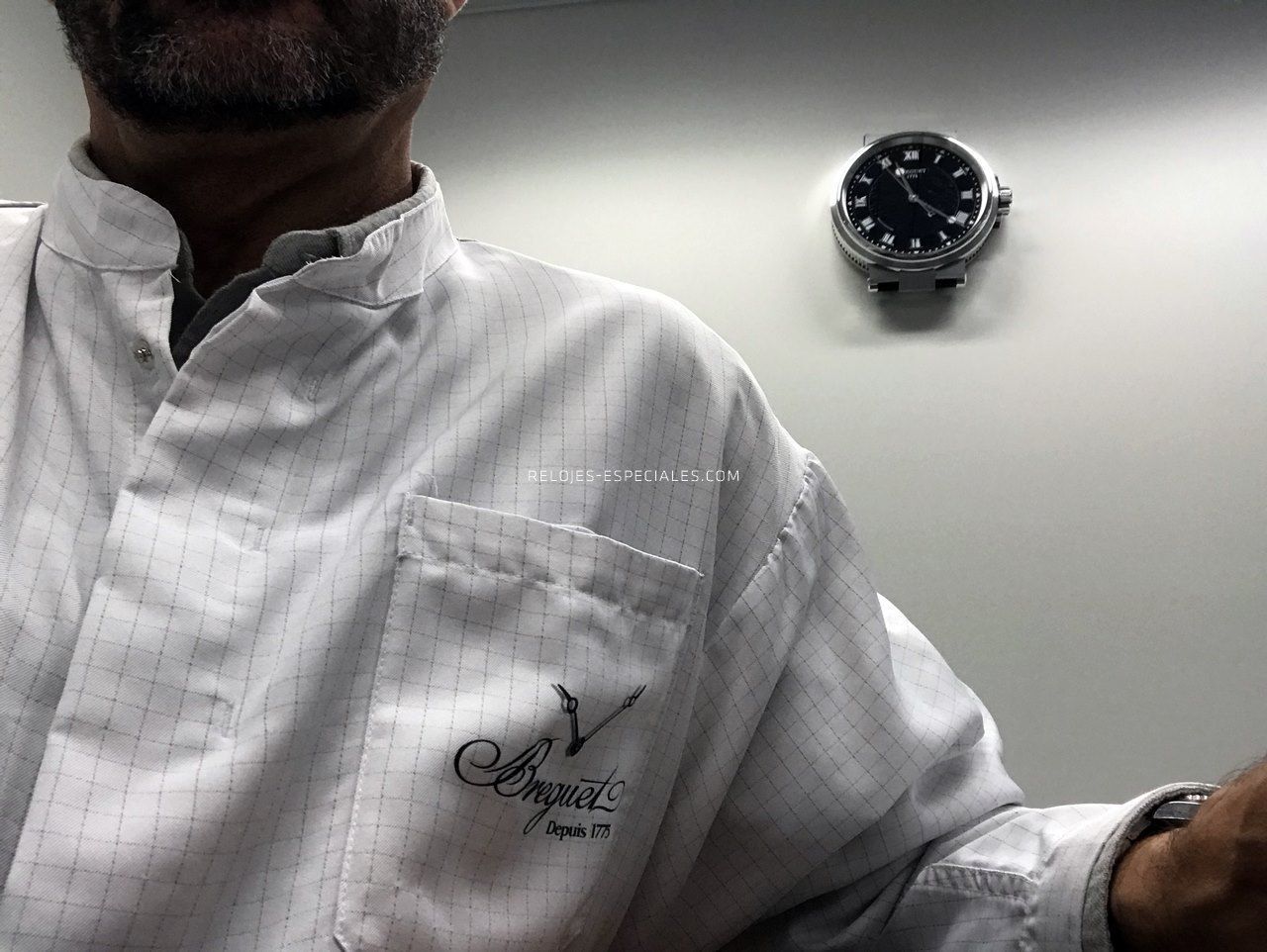
The origin of everything
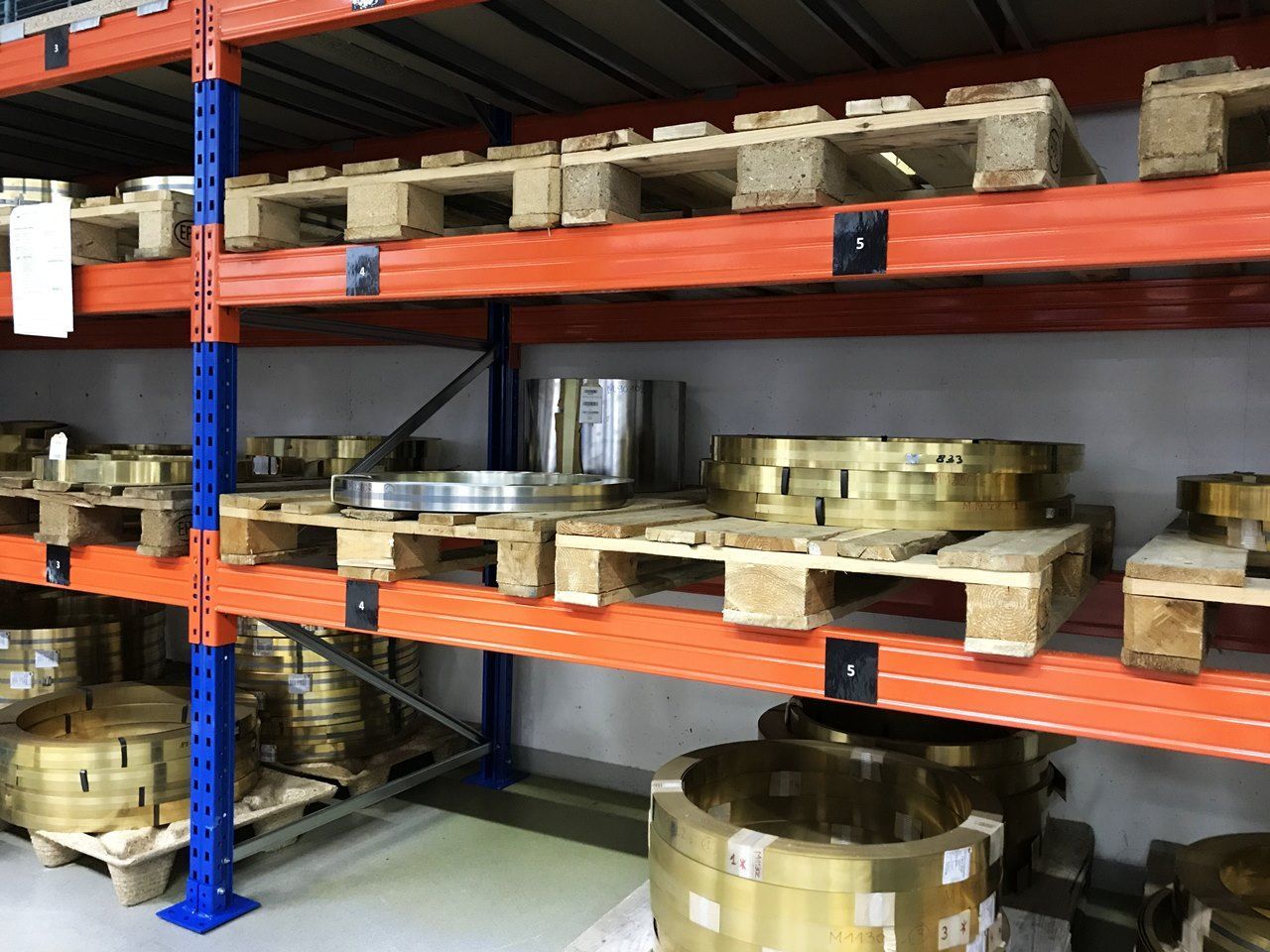
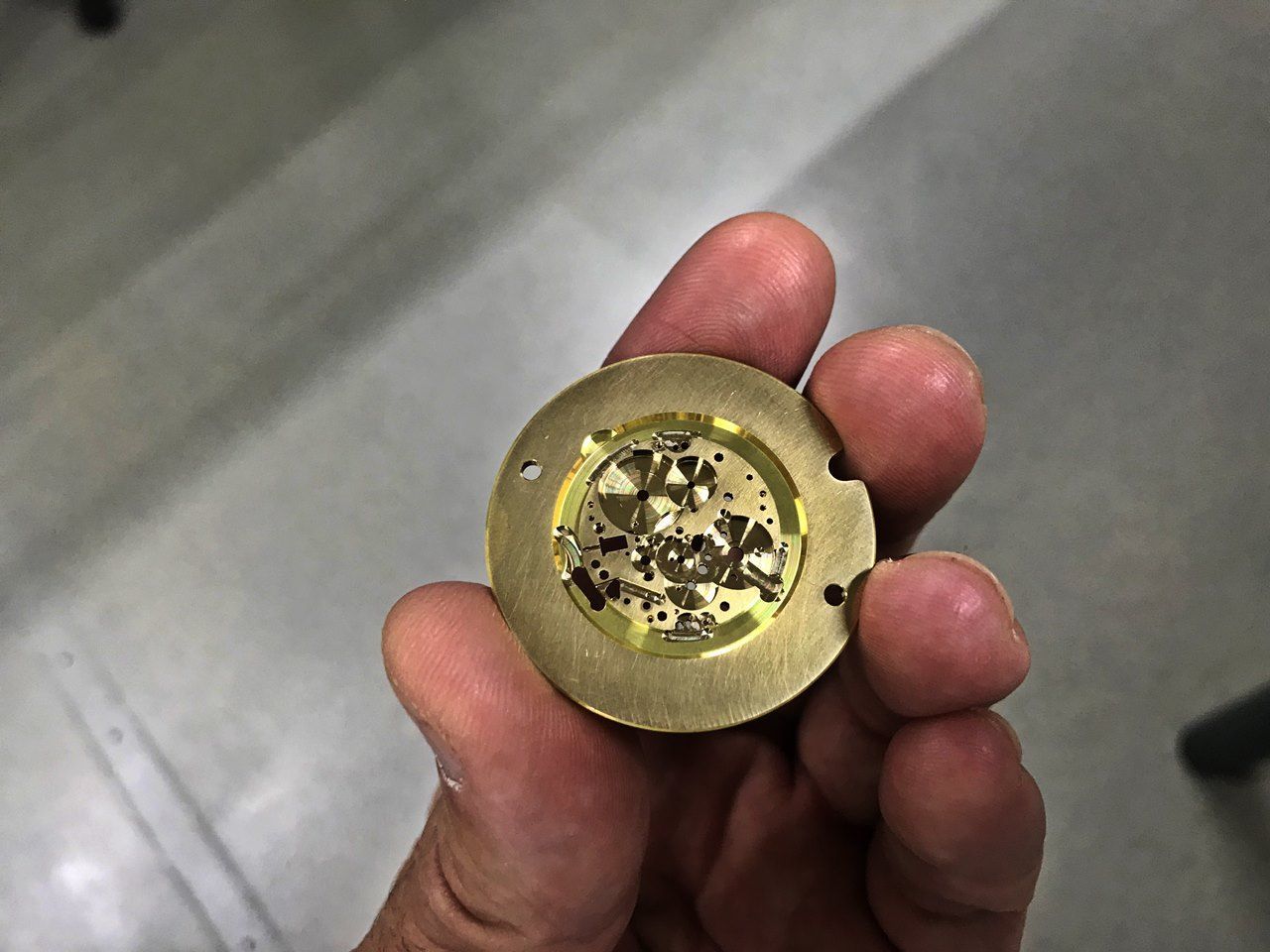
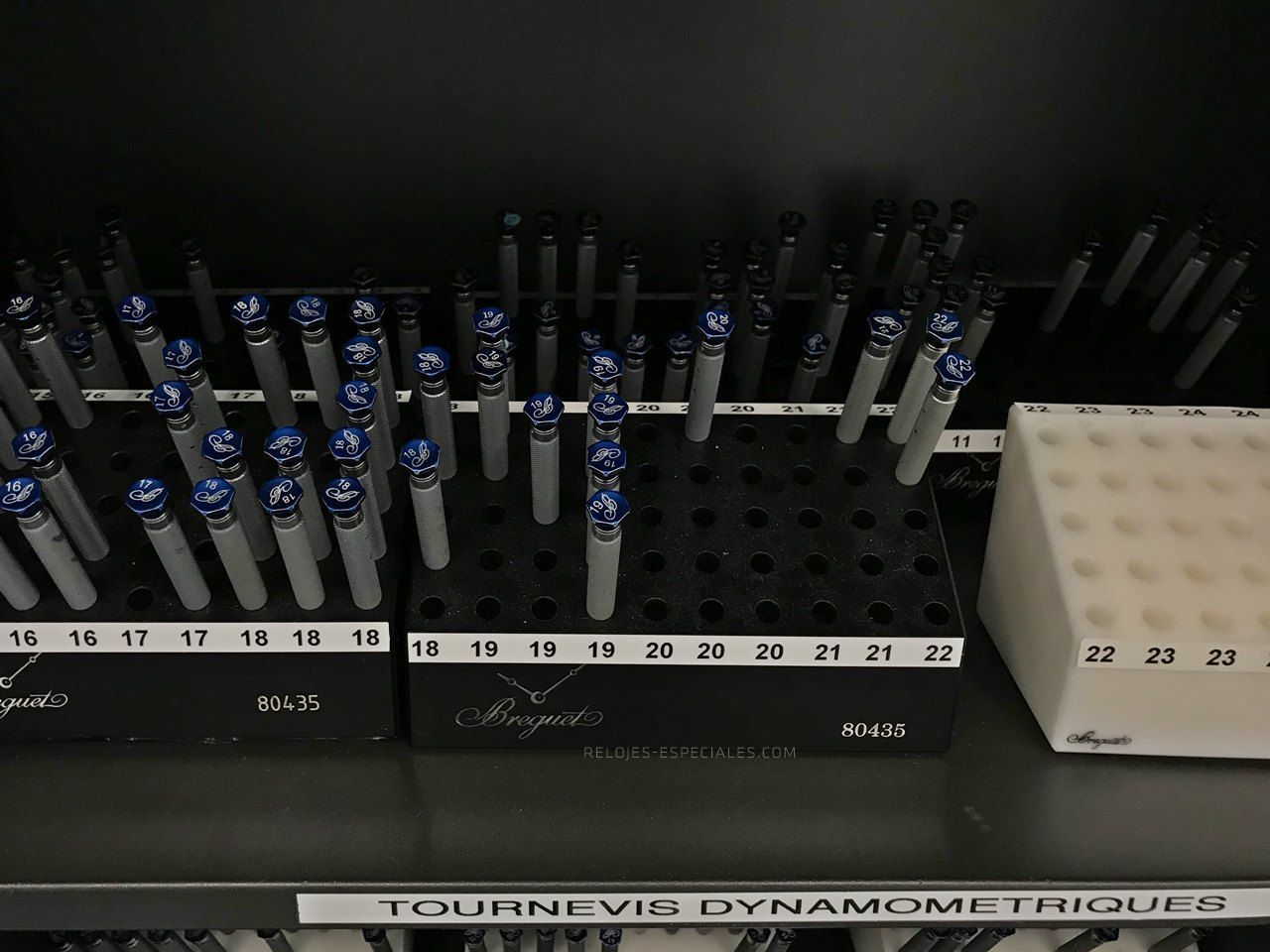
Starting at the "bottom" (ground floor), we entered a place that the manufacturing facilities simply do not allow you to photograph. And I don't understand why, as it is a great starting point to explain the "journey" that will end up being a complete watch. That place is neither more nor less than the warehouse where the straps from which the discs for the base plates will be "extracted" are received. I was lucky, and after explaining this same argument to them they told me to go ahead, so despite its bland appearance we can consider this photo as an exclusive:
Guillochage
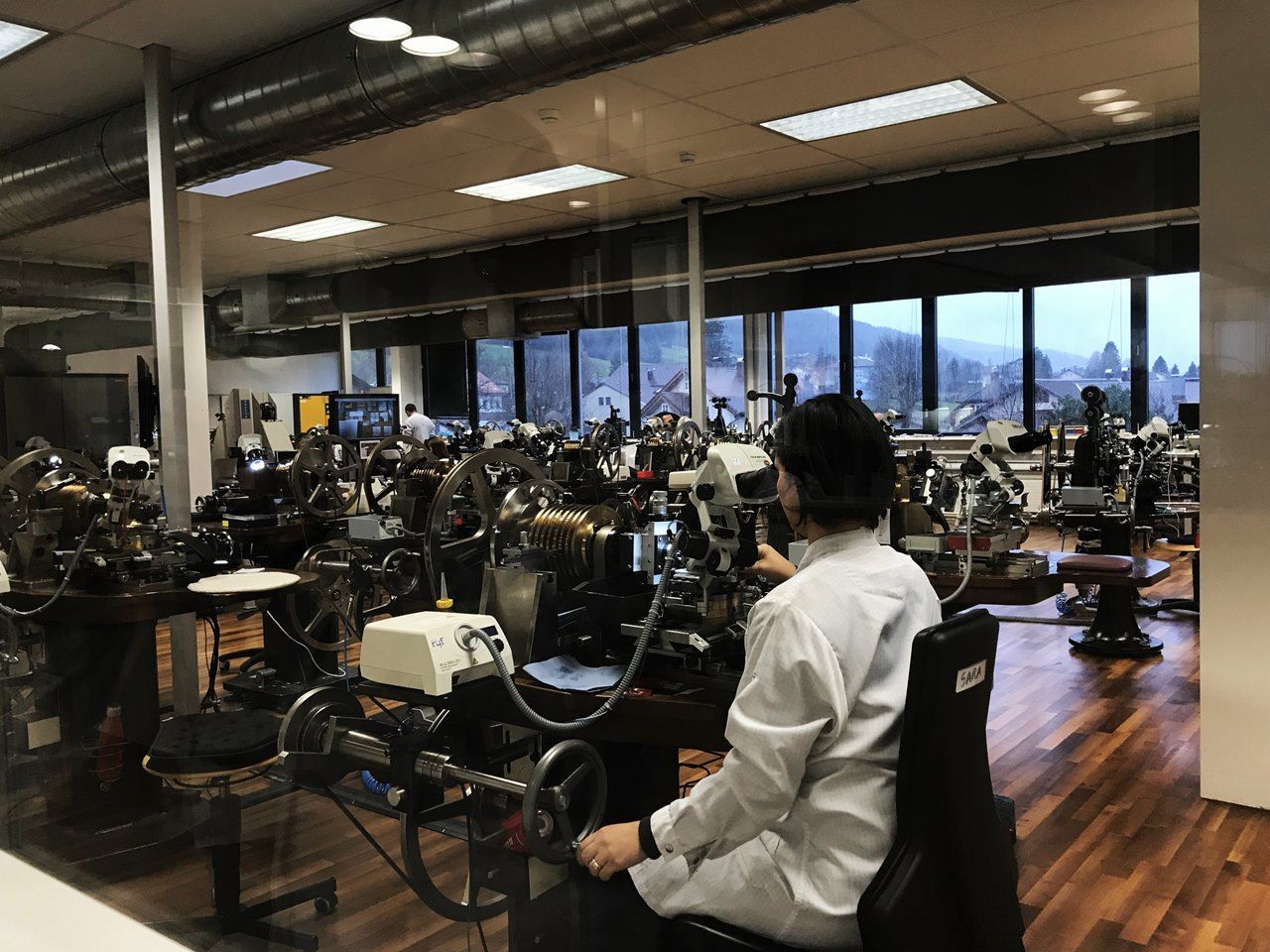
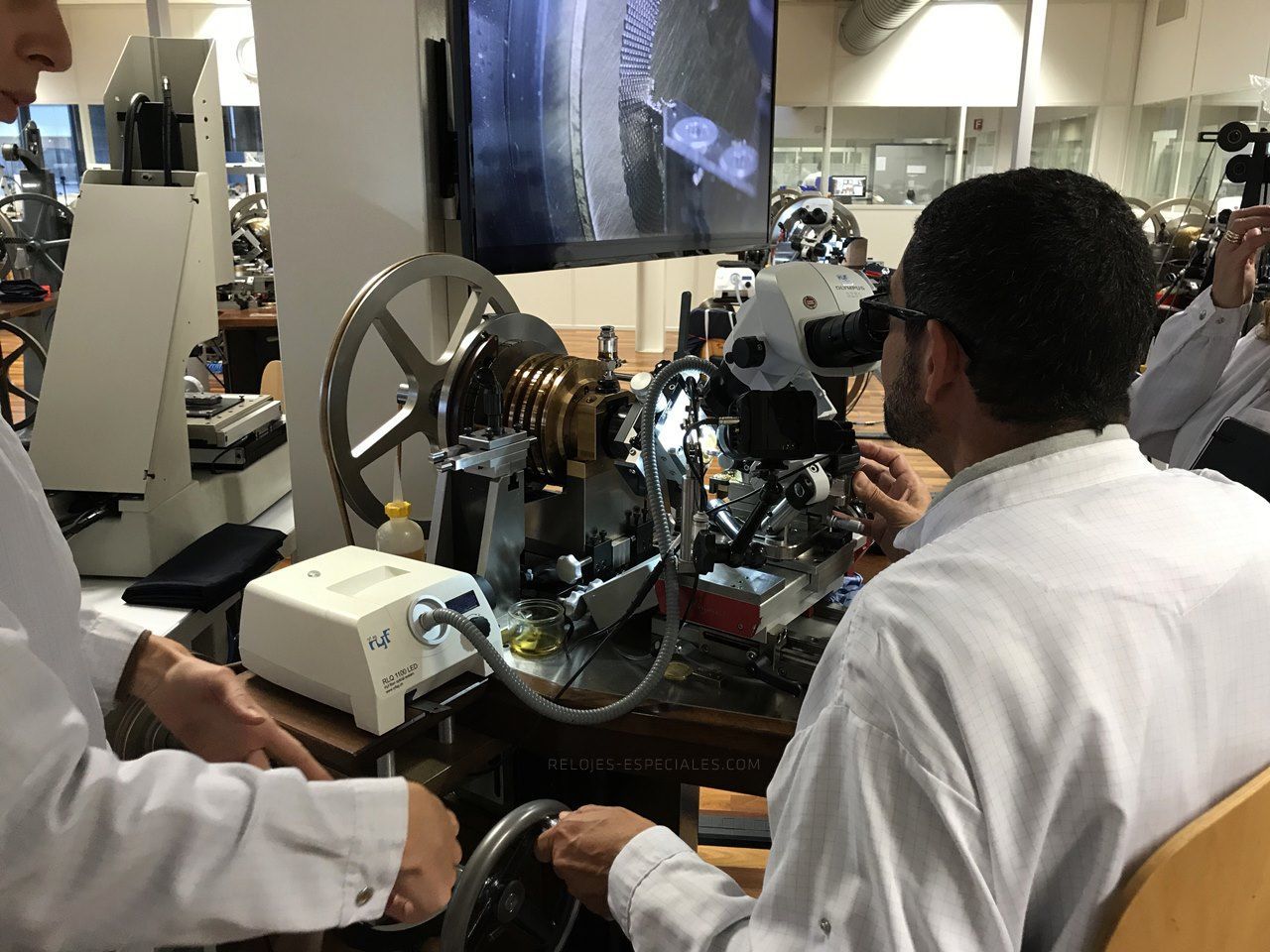
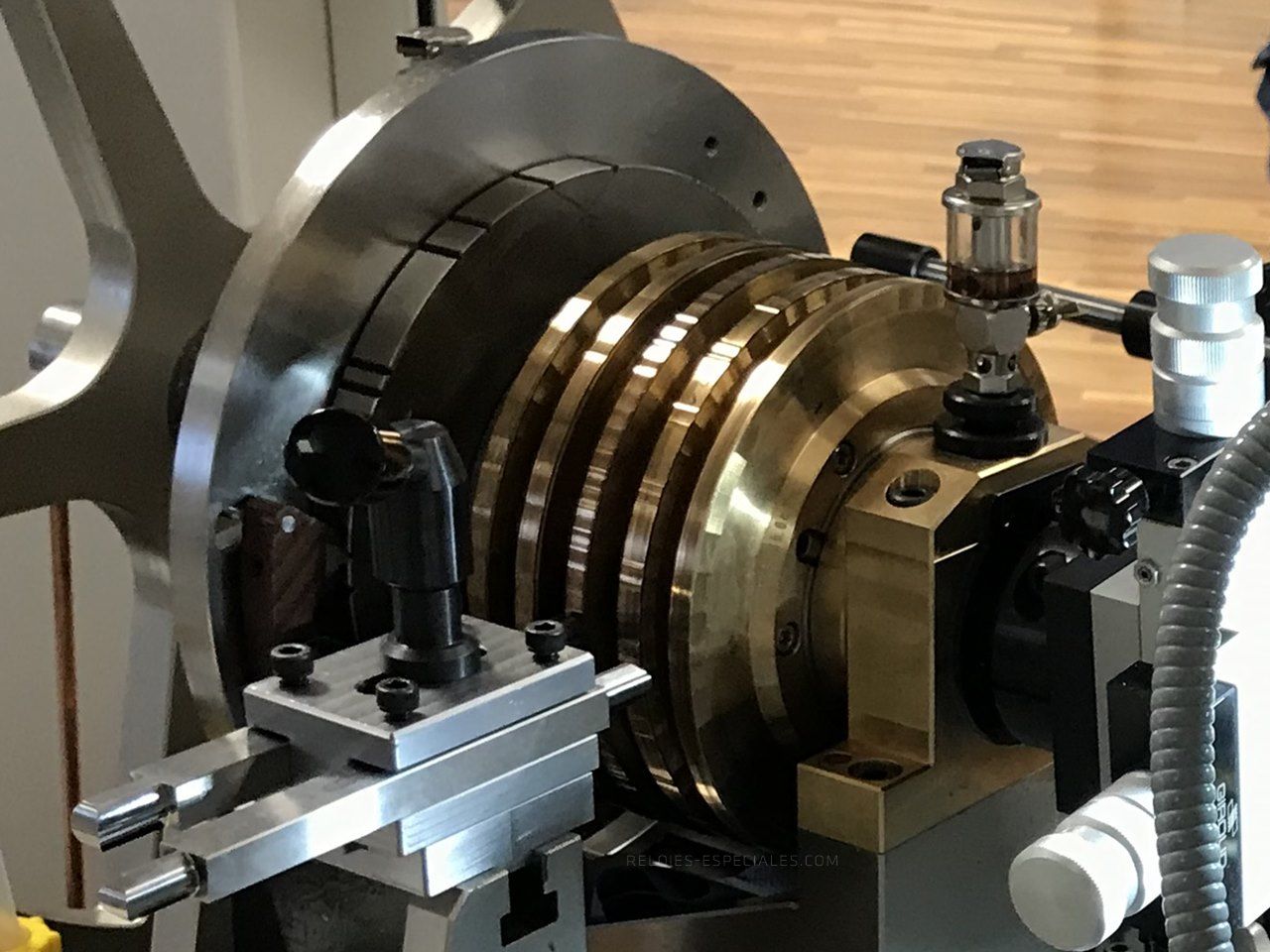
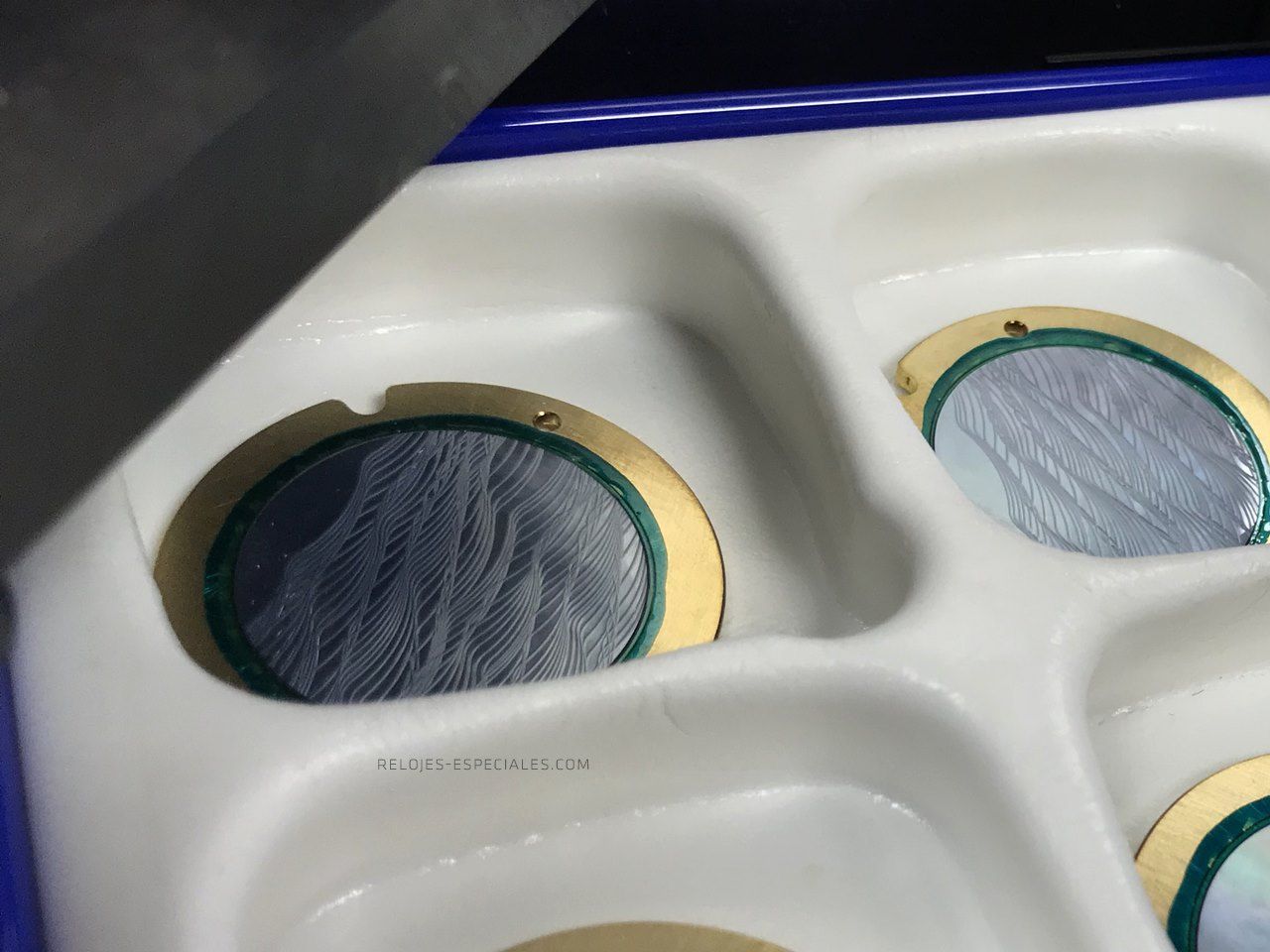
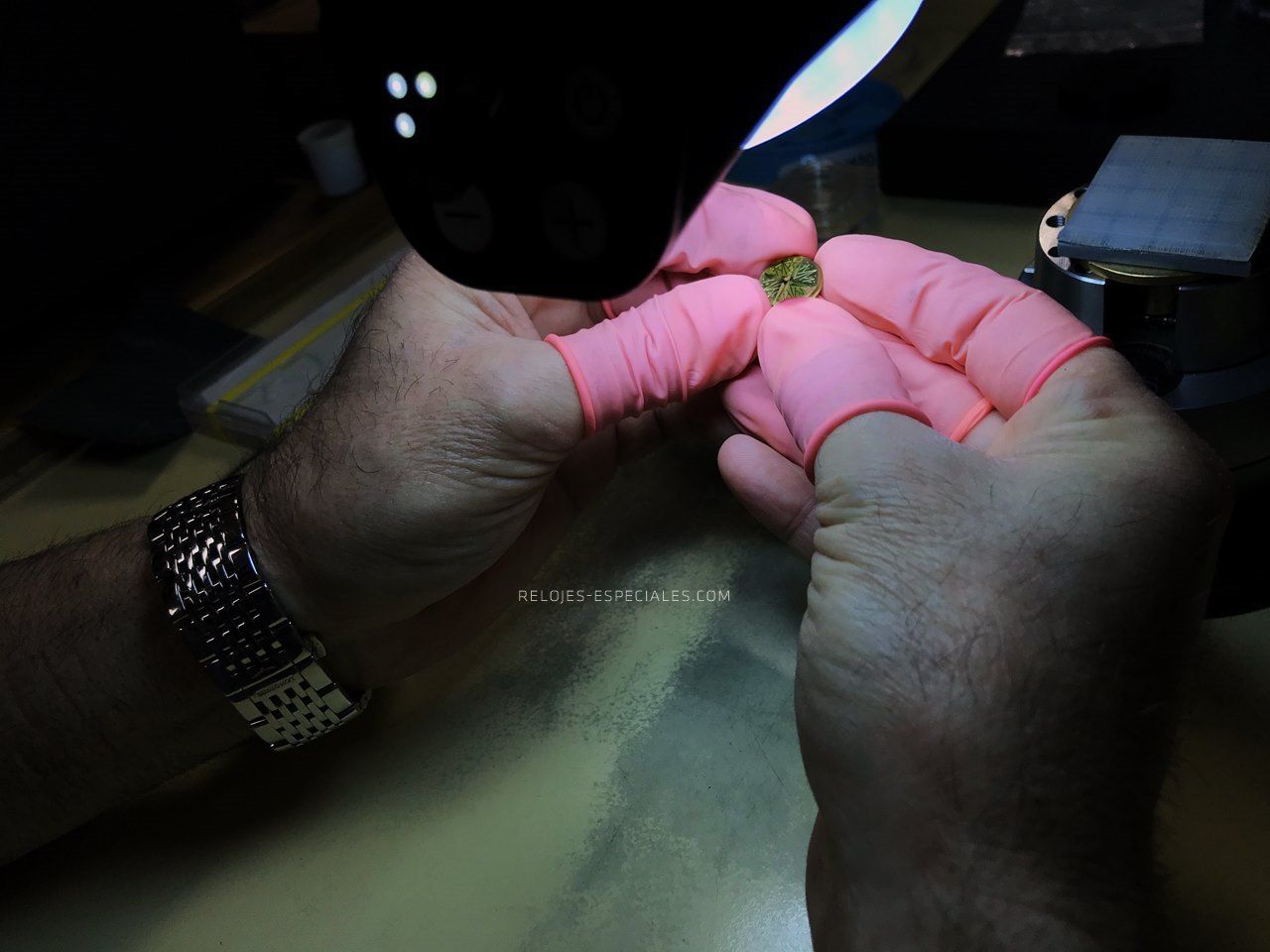
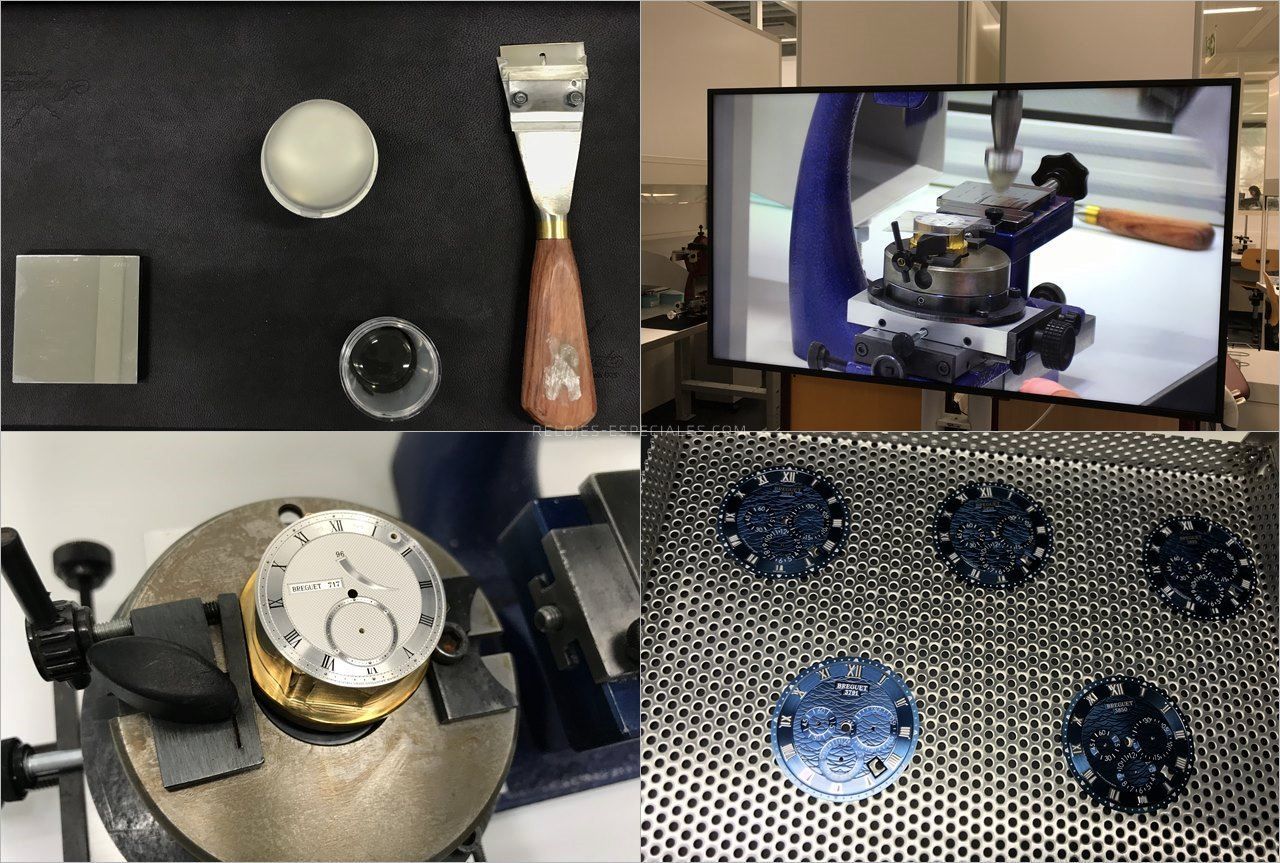
Returning to the guilloché machine that we saw at the entrance, we arrived at an area where I counted at least fifteen of these devices. The guilloché technique is deceptively simple but terribly difficult to do well. It is essentially spinning a disc while pressing a graver to mark the surface of said disc, generally a clock face or, as I said before, the oscillating weight. Both the rotation - with one hand - and the pressure - with the other - are performed manually, which requires a lot of practice to meet the standards of a brand like Breguet. And I can attest to that because they invited me to see it first…hand. The highlight was seeing a plate of mother-of-pearl or mother-of-pearl "guilloche" being made, a more delicate material than glass given the thicknesses used. It must be taken into account that to achieve a specific motif, be it "grains" or waves, different discs - with their notches - must be combined so that the center "moves" in a certain way in front of the burin, which is fixed.
Anglage
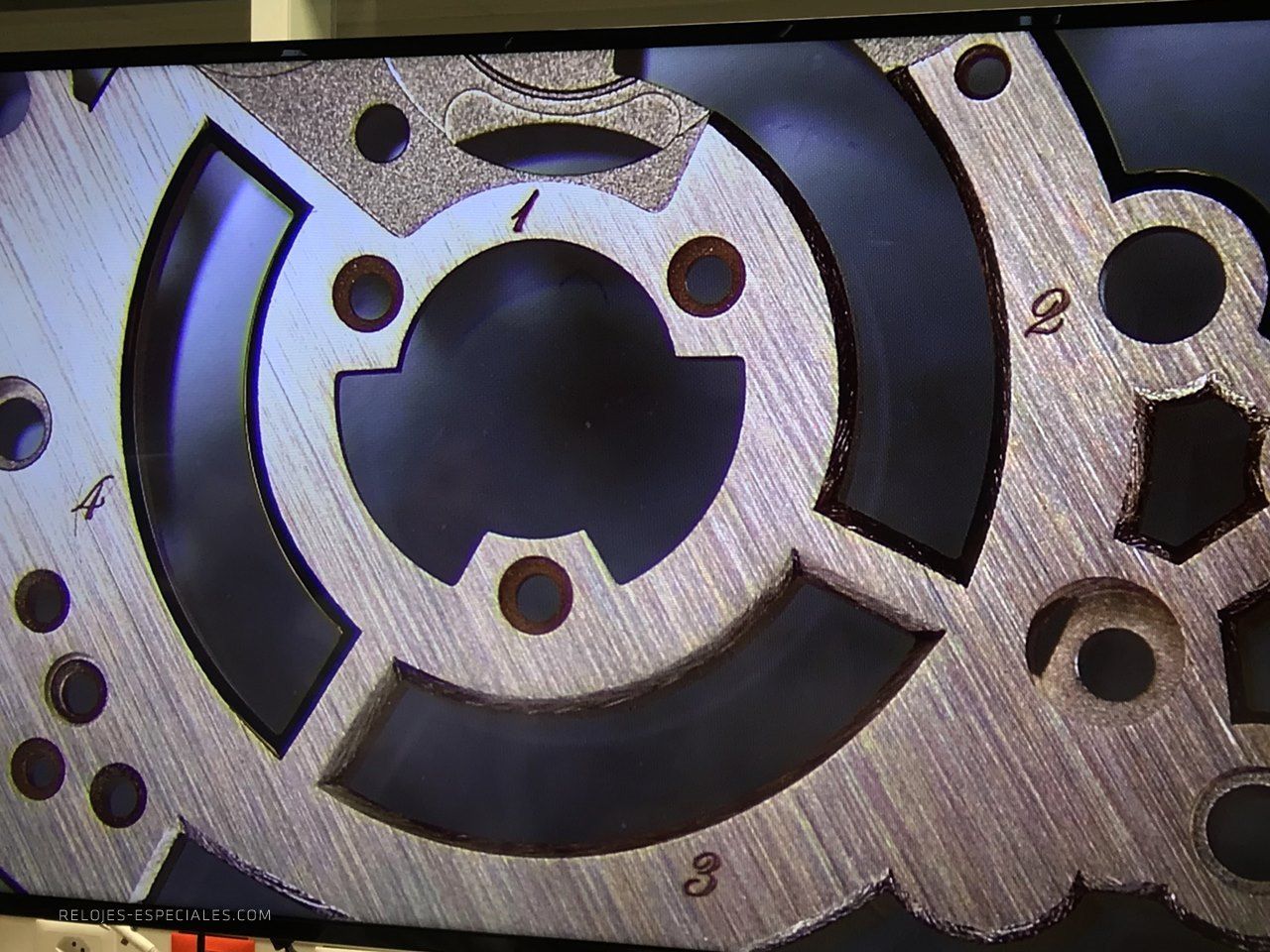
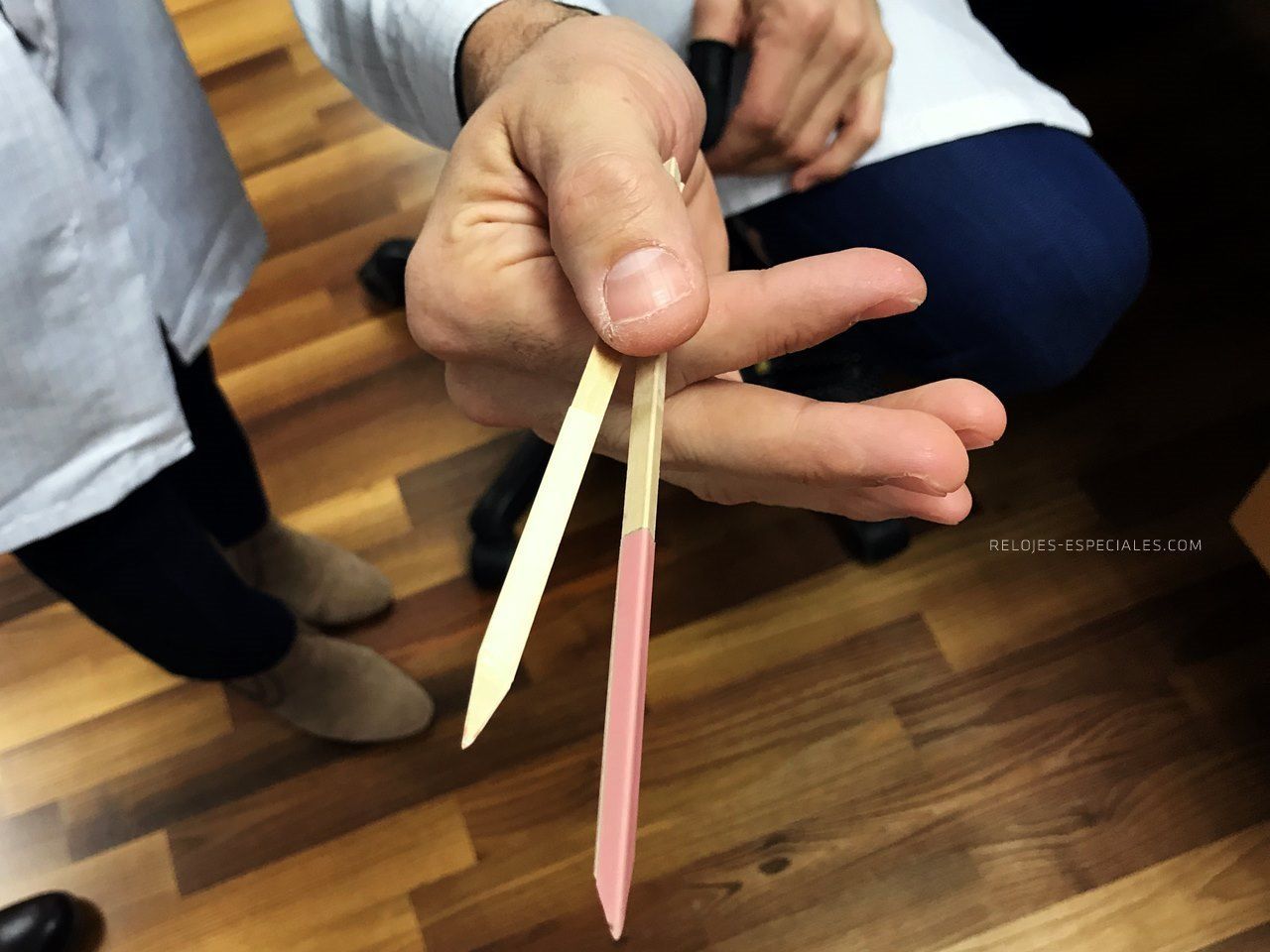
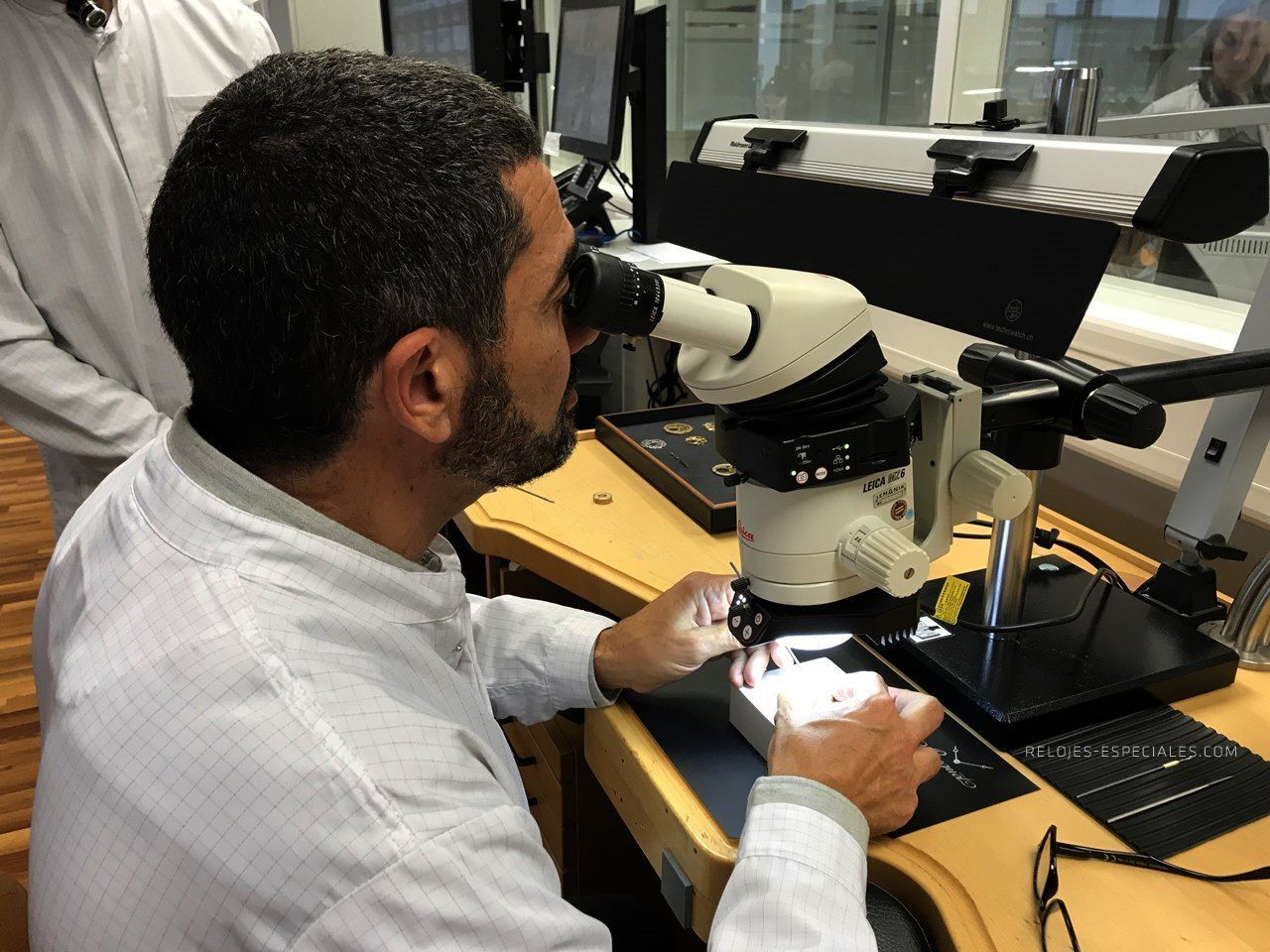
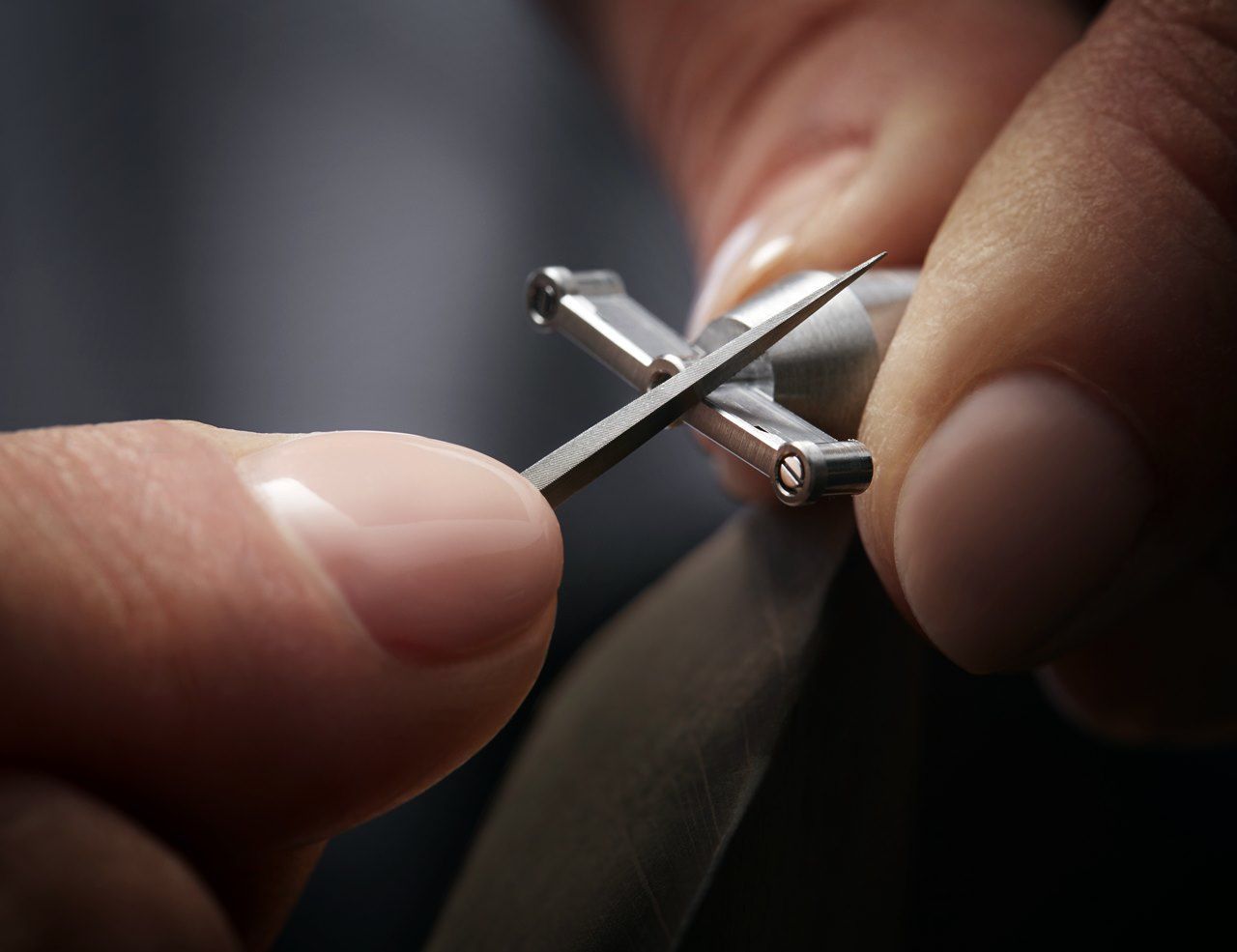
I also learned first-hand why "anglage", the technique of chamfering the edges of plates and bridges, is considered a craftsman's work if not an art in itself. By handling really fine grain files and finishing with wooden sticks and abrasive pastes, spectacular effects are achieved that will delight the future owner of one of these watches. I won't say that it's not as easy as it seems because in reality it doesn't seem easy at all when you get down to it, I also attest.
Recorded
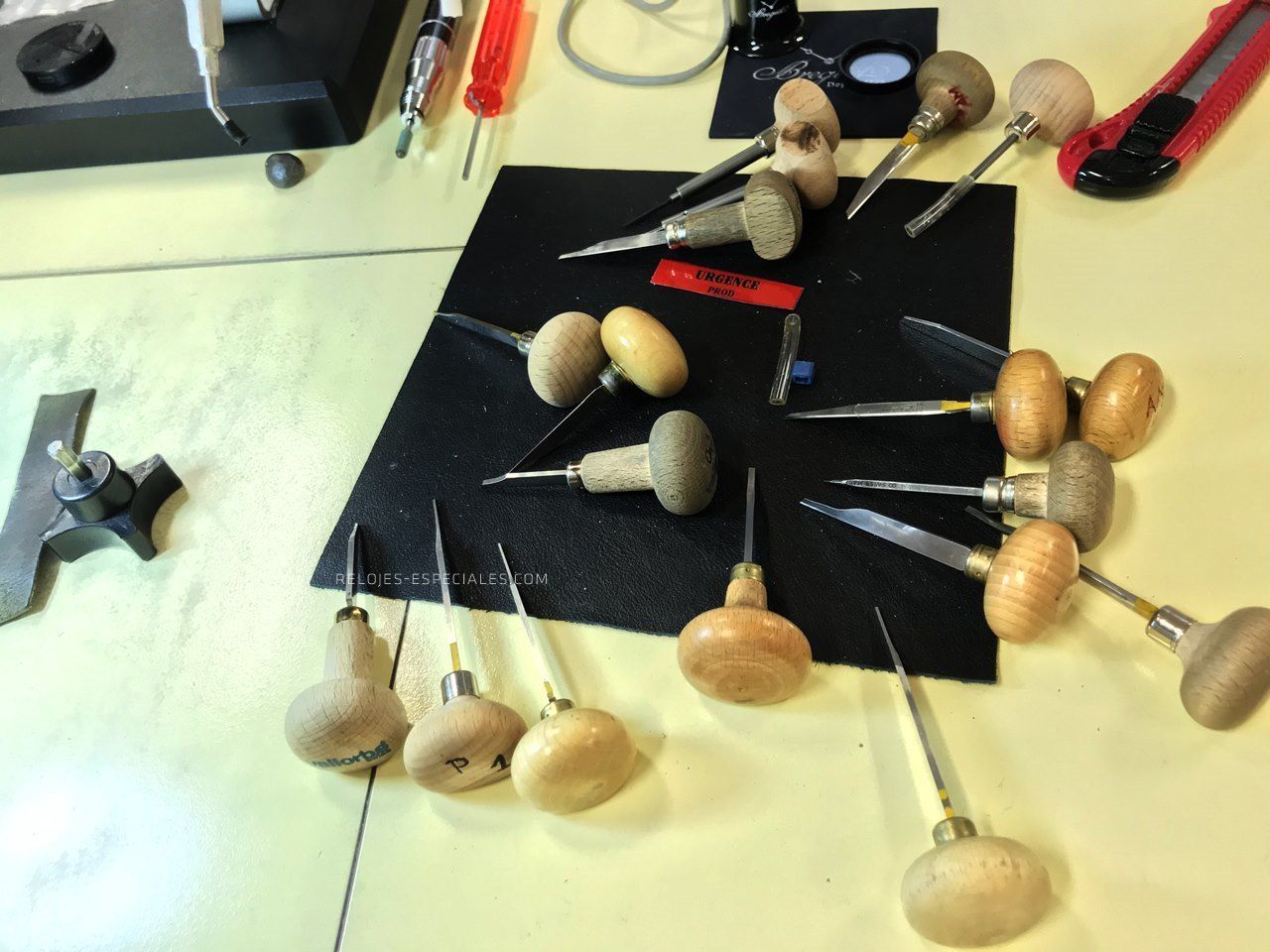
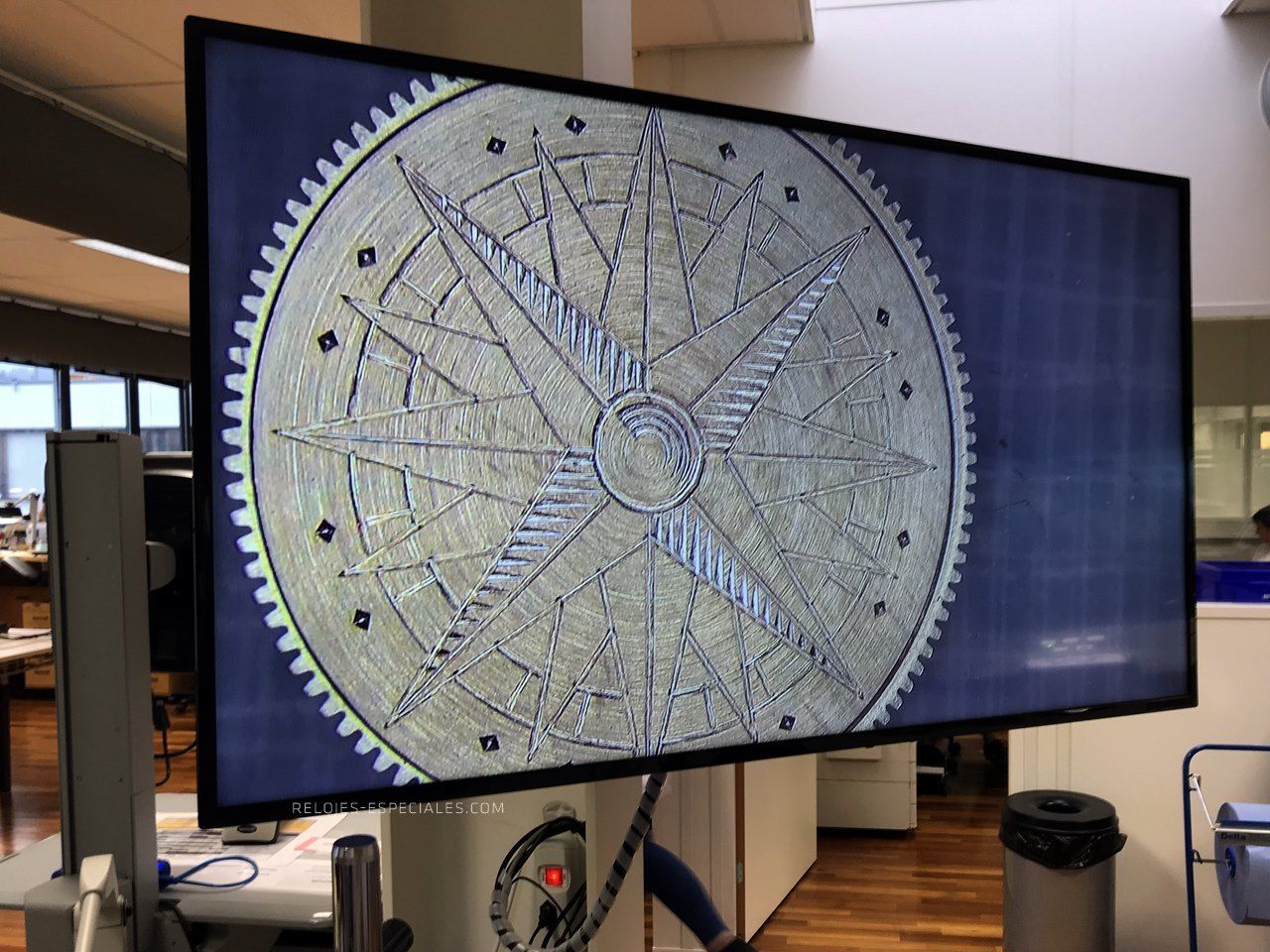
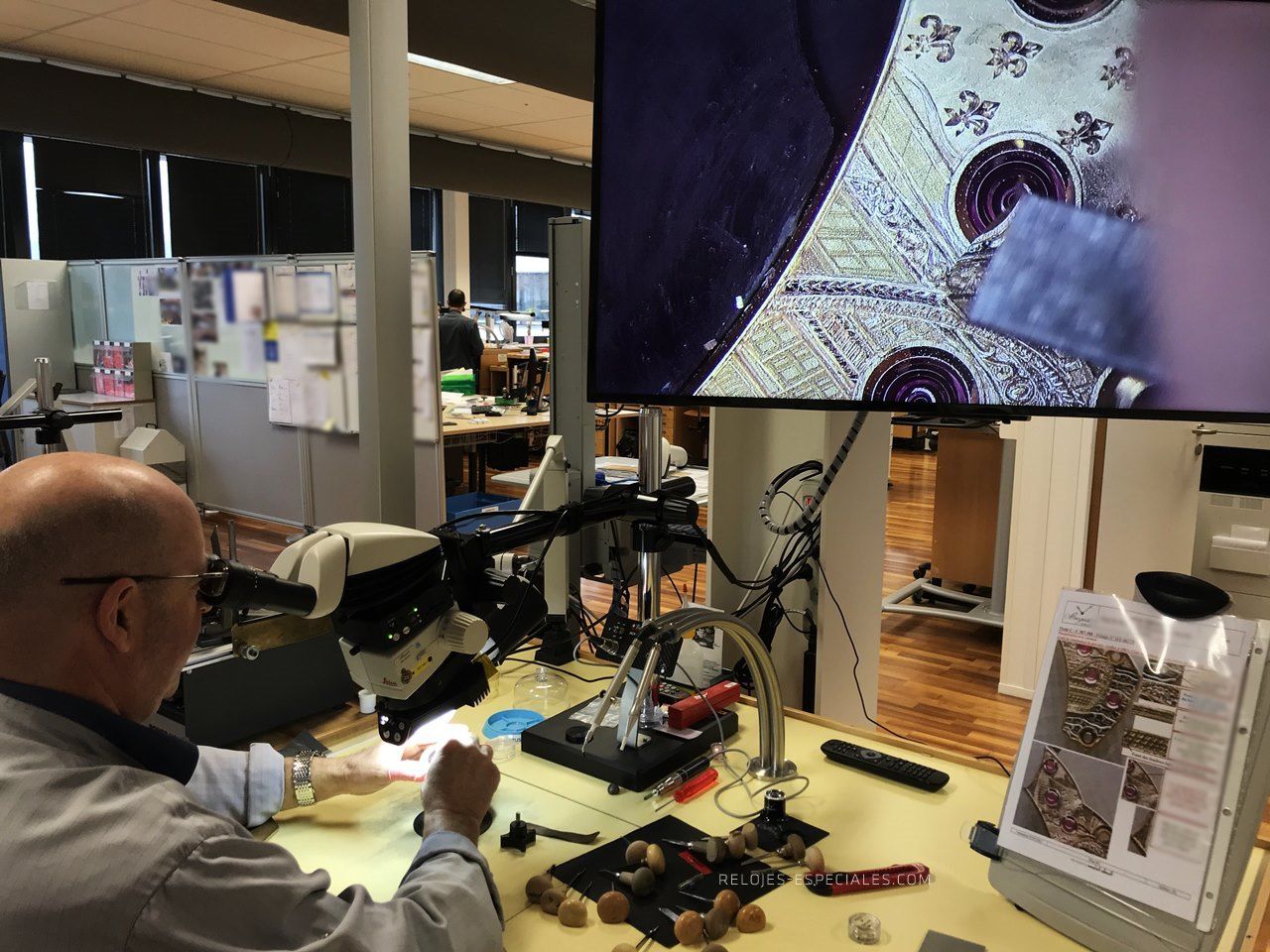
What I didn't dare to do was the engraving. Not only because they didn't offer it to me but because one of the sacred principles of this craft - and more so in Breguet - is that you cannot fail in any pass, since a mistake will force you to discard the entire piece, no matter how it is. The number of different burins used on that table is almost countless, and the experience, patience and concentration required is worthy of someone who practices meditation. As in the previous section, they have powerful binocular magnifying glasses - almost microscopes - but the mastery of the craftsman/artist is personal and non-transferable. Bridges, plates and rotors can be engraved, and the most intricate designs (about three days of work) are reserved for the highest ranges.
Fine Watchmaking
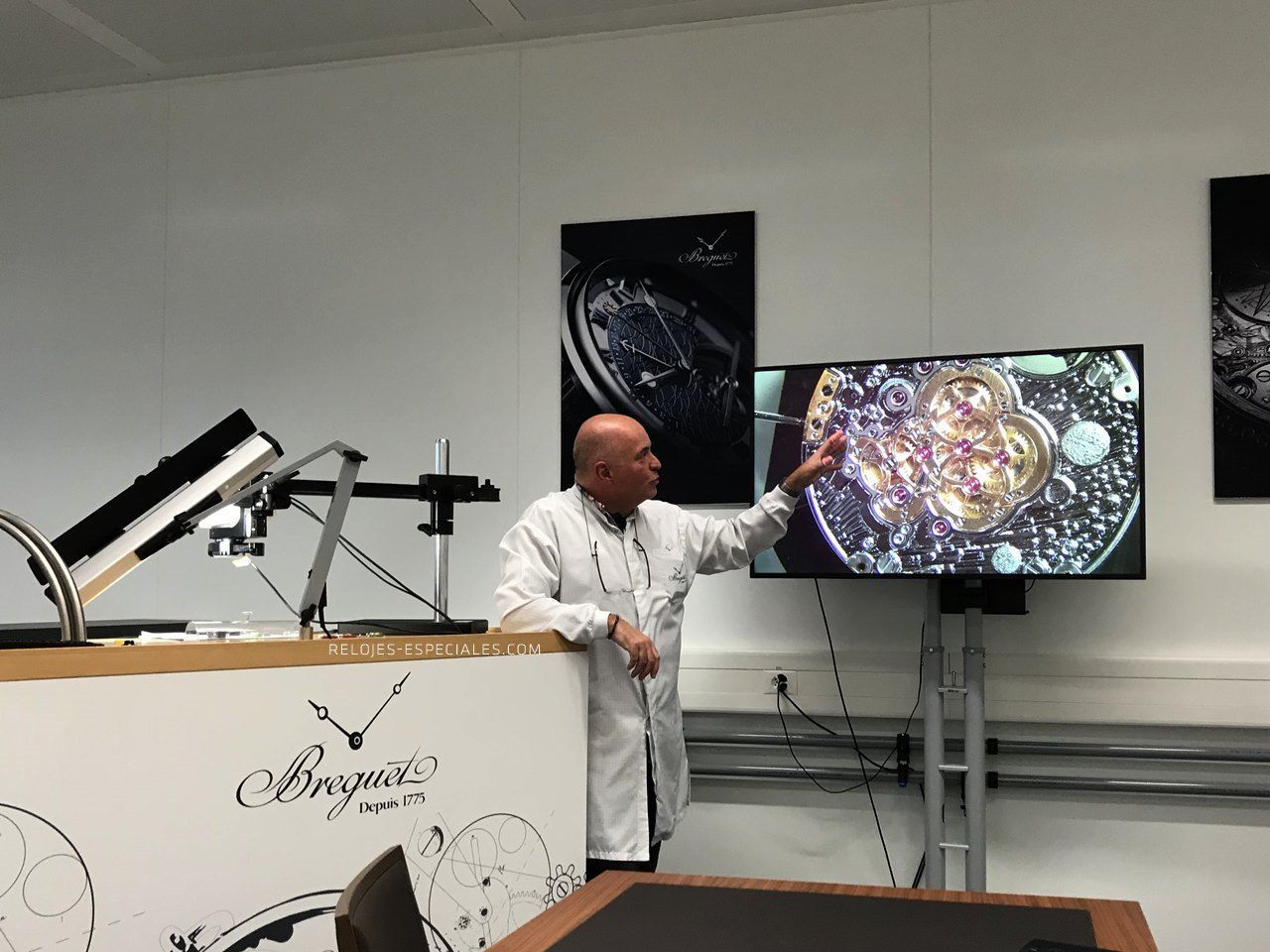
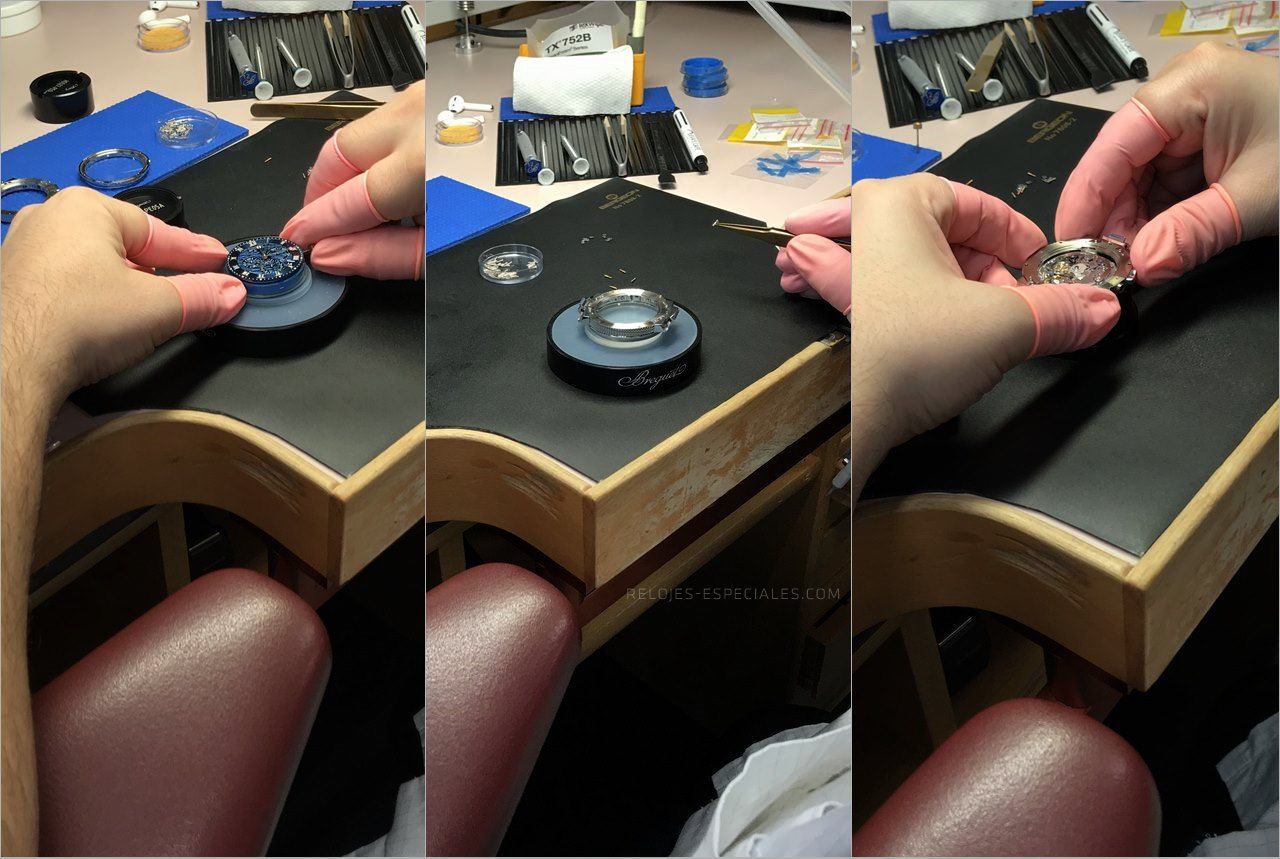
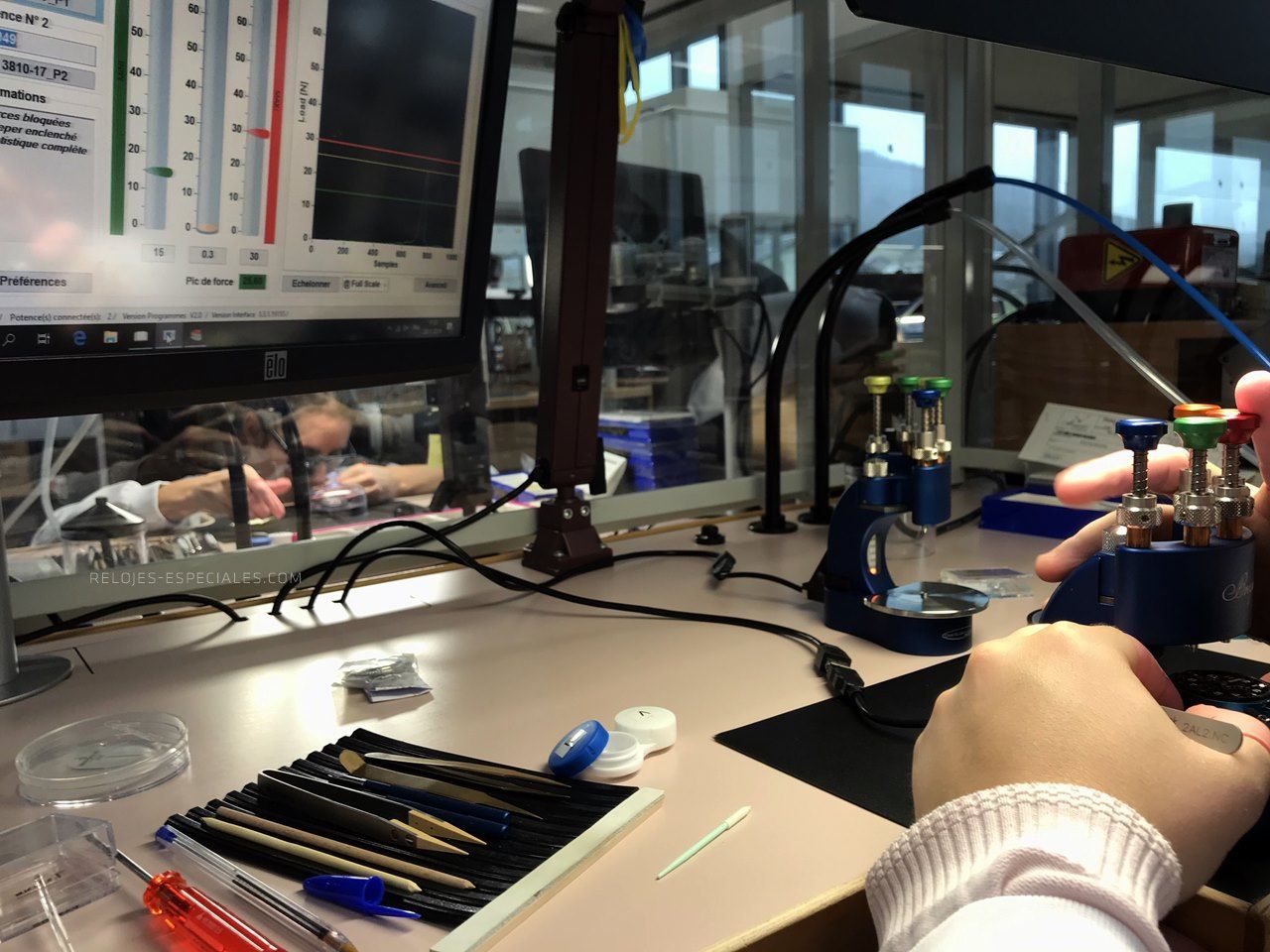
In some of the Swatch Group factories they are reluctant to let you see the movement assembly benches. In fact, I arrived here tied: in Glashütte Original I could see it - from behind some glass - while in Blancpain they simply skipped the step. At Breguet we had a mix: I was able to photograph the origin of everything (the straps at the top), but we went very quickly through floor 1, where the caliber is manually assembled and the escapements are adjusted. However, I was able to see up close the assembly of the dials and hands, and the assembly of the whole. And the most important - and attractive - a talk with the director of complications in his domain, the tourbillon workshop. Here everything from new materials to the use of magnetism for minute repeaters is studied. Or the weights of the tourbillons. Did you know that a seatpost - the rod that, attached to the crown, winds or sets the time - weighs one gram? And that a tourbillon cage with 84 components (!) only half that?
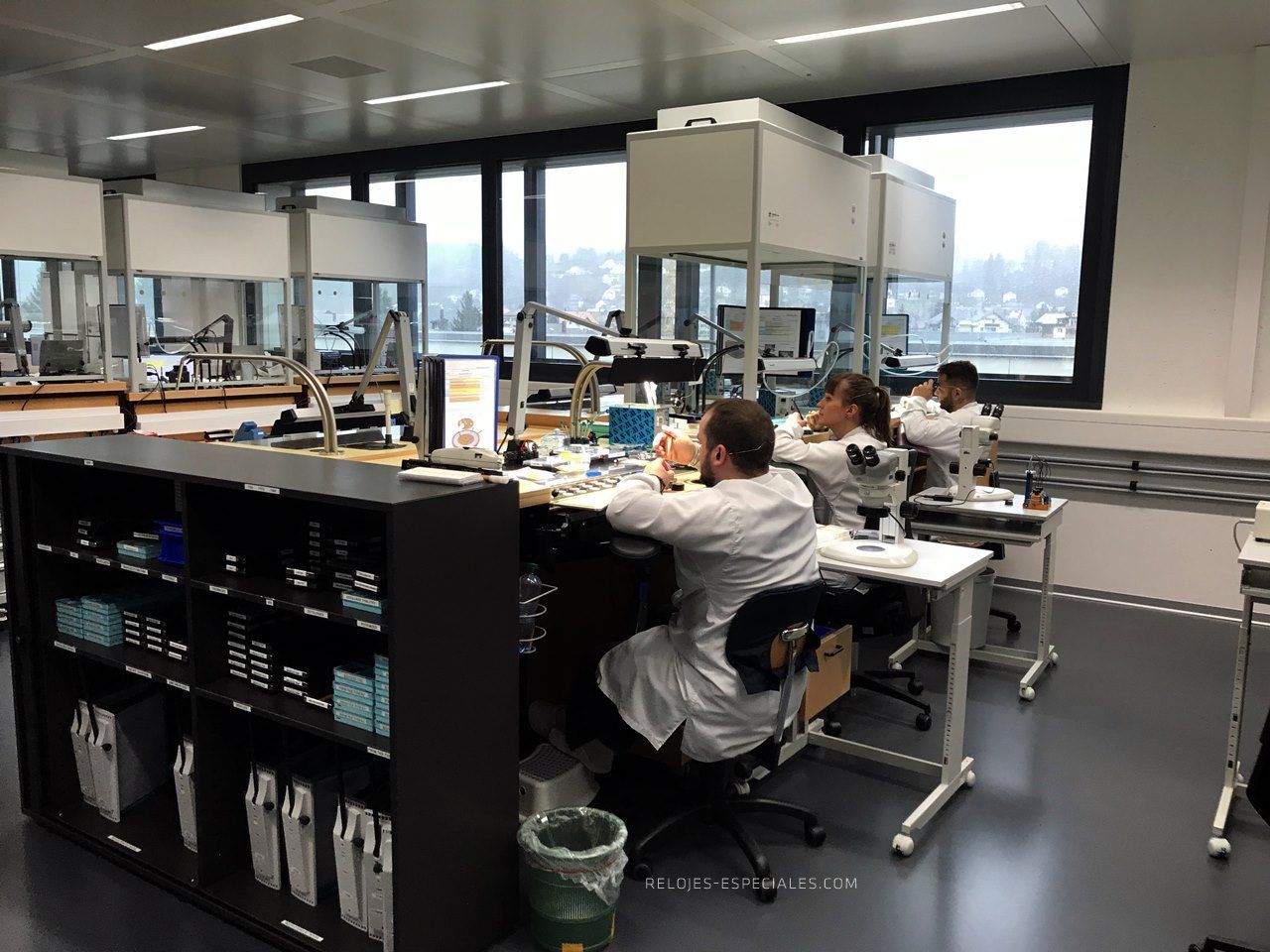
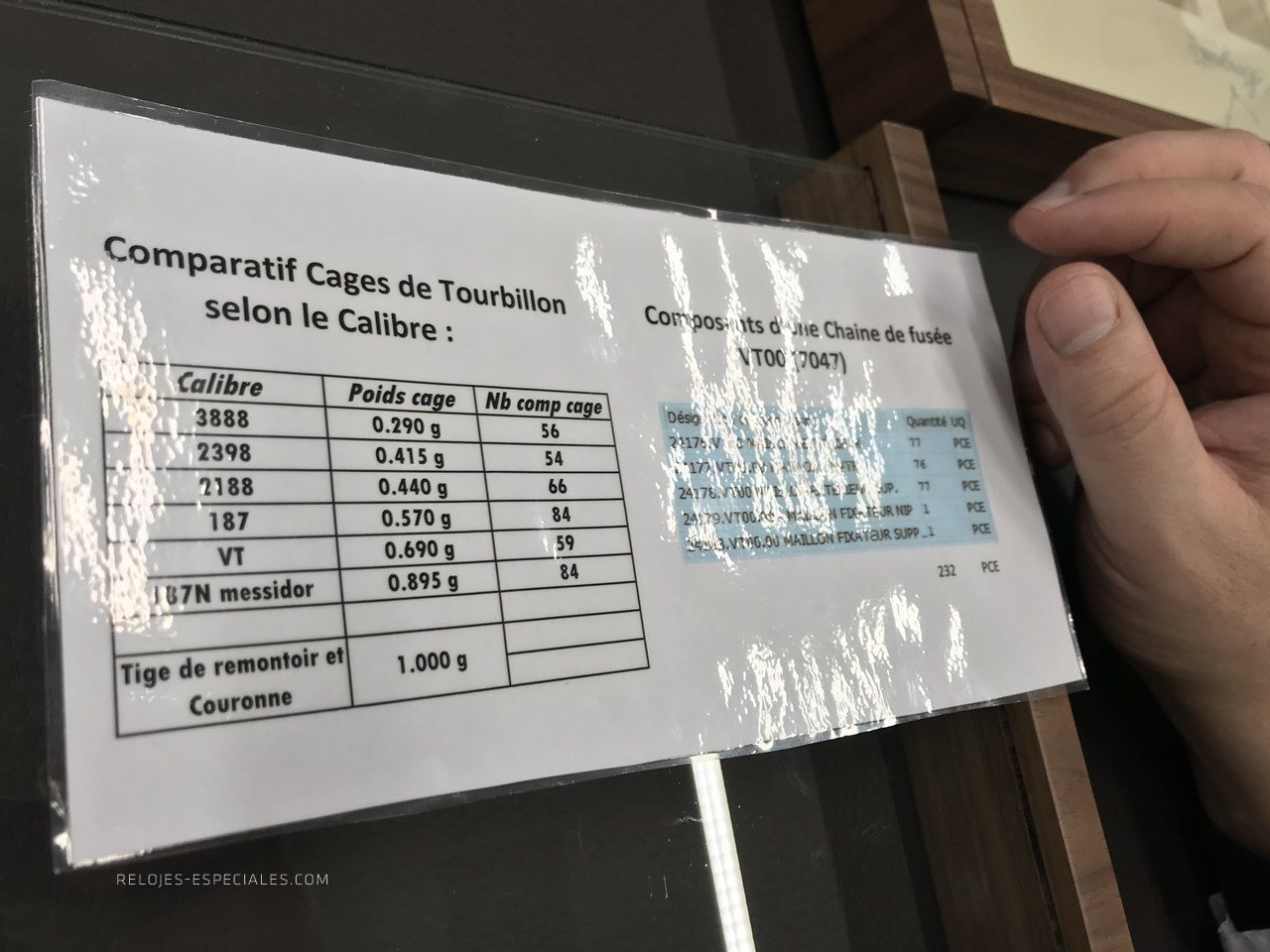
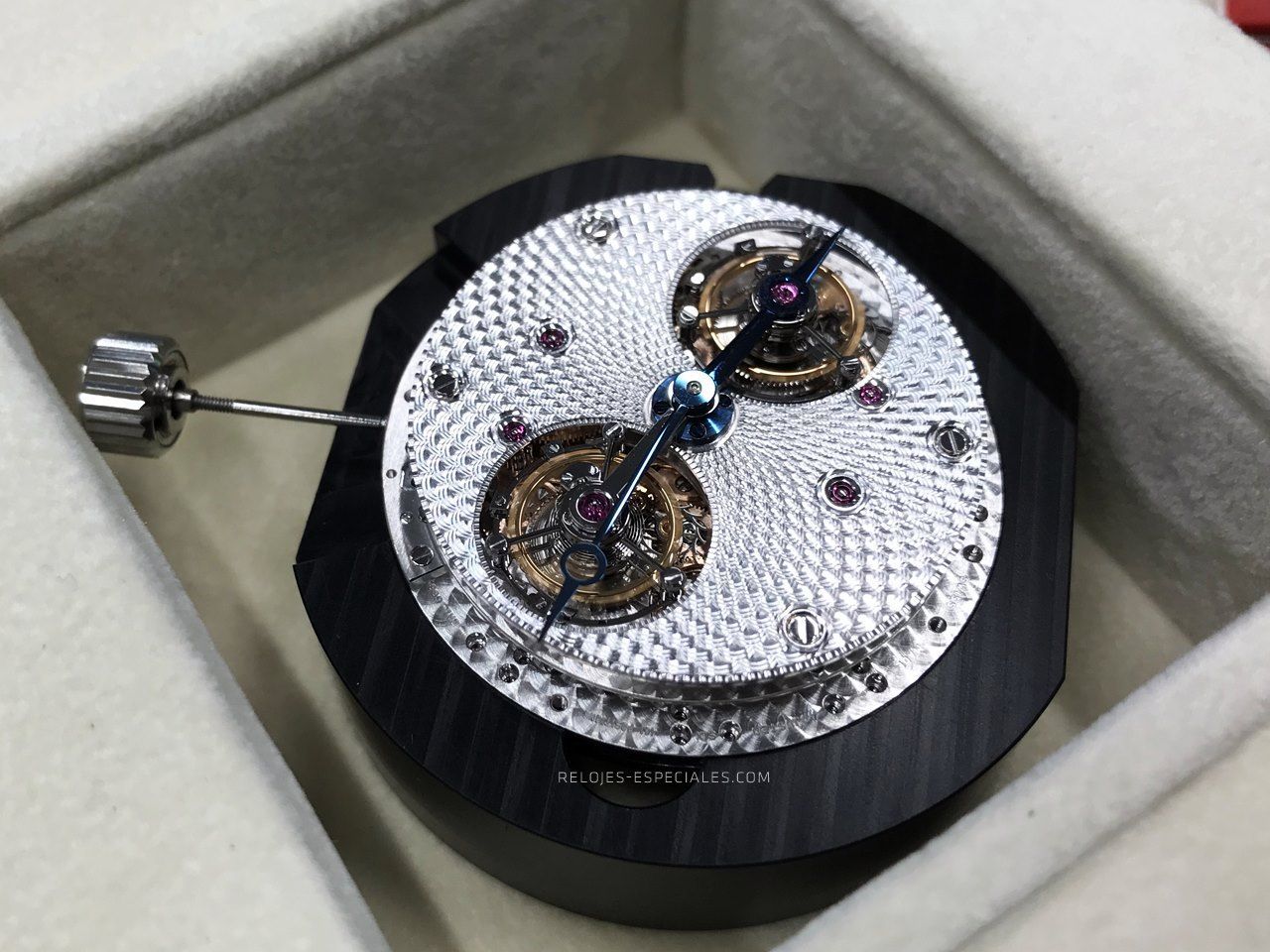
If watchmaking mechanics are already precise, here the tolerances reach the thousandth of a millimeter. Not only in manufacturing but also in assembly itself: the screwdrivers are adjusted to a certain tightening torque so as not to "overtighten" the various bridges and components. Likewise, the instruments for placing the needles are connected to a computer to control the exact positioning.
Uniquely numbered parts
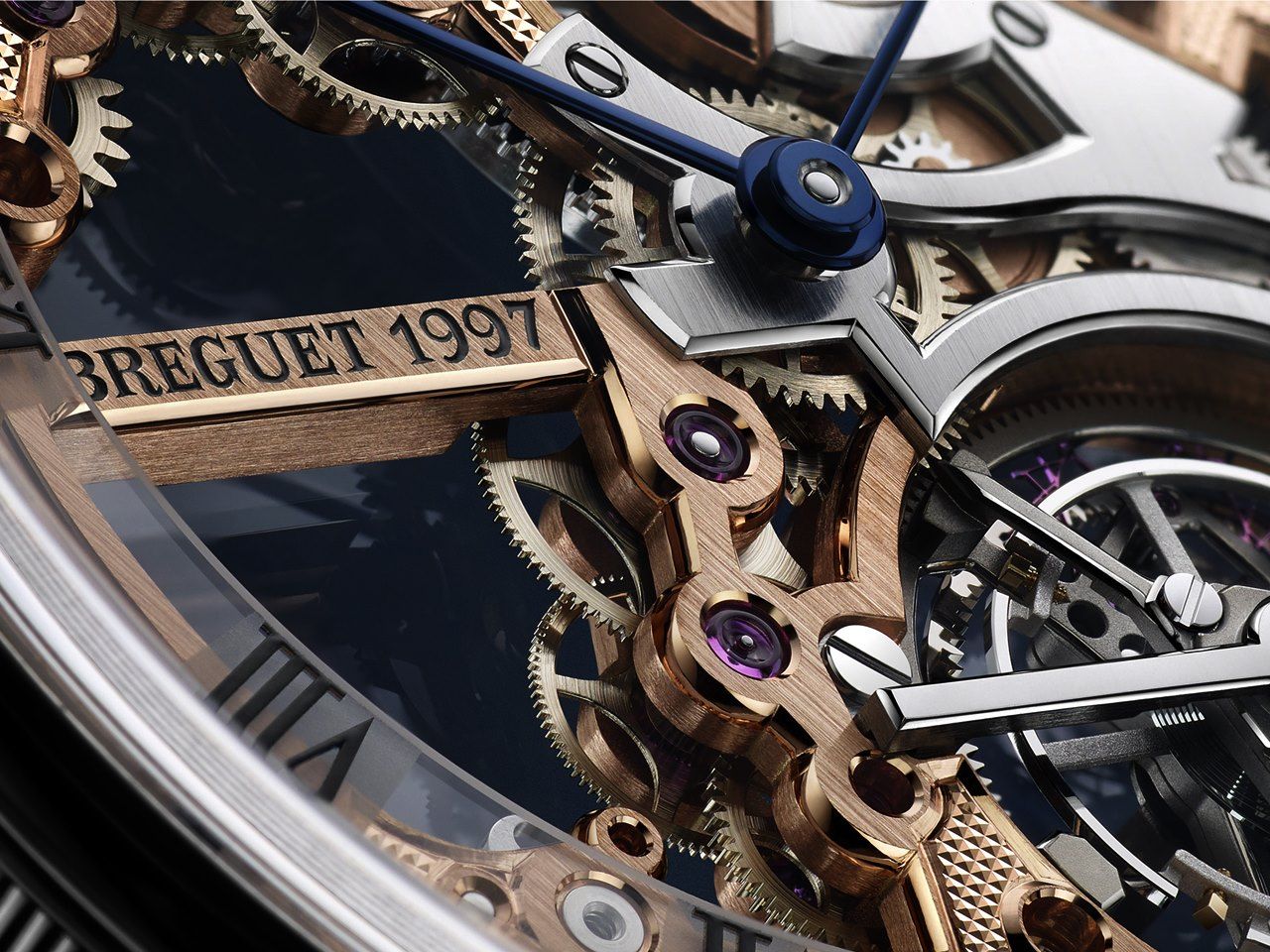
Due to its success, Breguet was perhaps the first watch brand to suffer the scourge of large-scale counterfeits. It was for this reason that he developed not only a "secret signature" technique that was practically uncopyable at the time, but from the beginning he numbered and documented each of the pieces that left his atelier. This numbering not only remained in the records of the House but was also inscribed on the watch itself, something that remains today. Each watch has its individual number stamped or engraved as the case may be, but with the particularity that it does not exceed the number 5500, a tradition that comes precisely from the origins, when there were more counterfeits than authentic watches, and that today helps to identify them with greater precision. What was not clear to me is how they differentiate the different series of 5500 watches. When I have data on that, I'll edit.
Repair and maintenance of antique watches
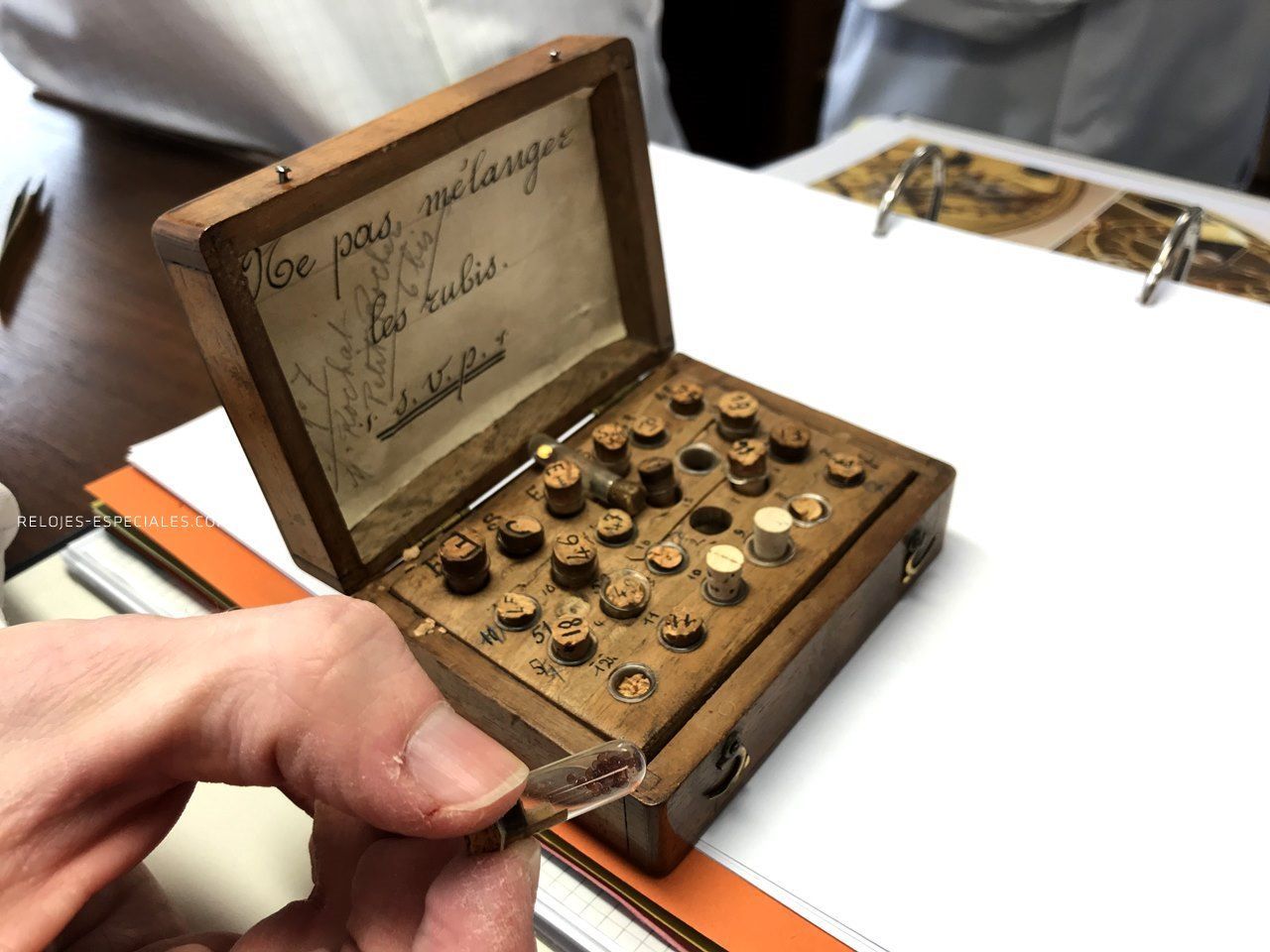
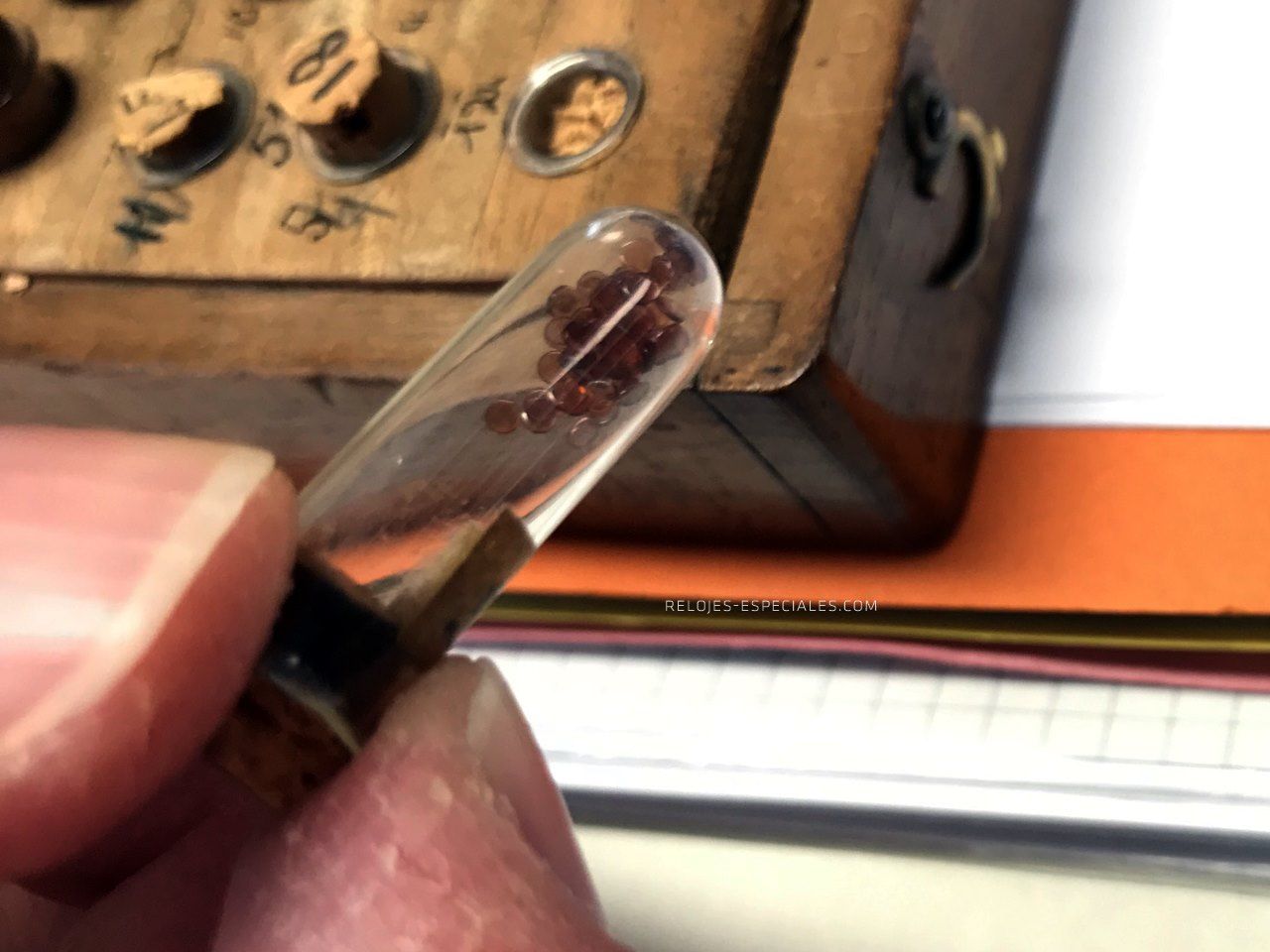
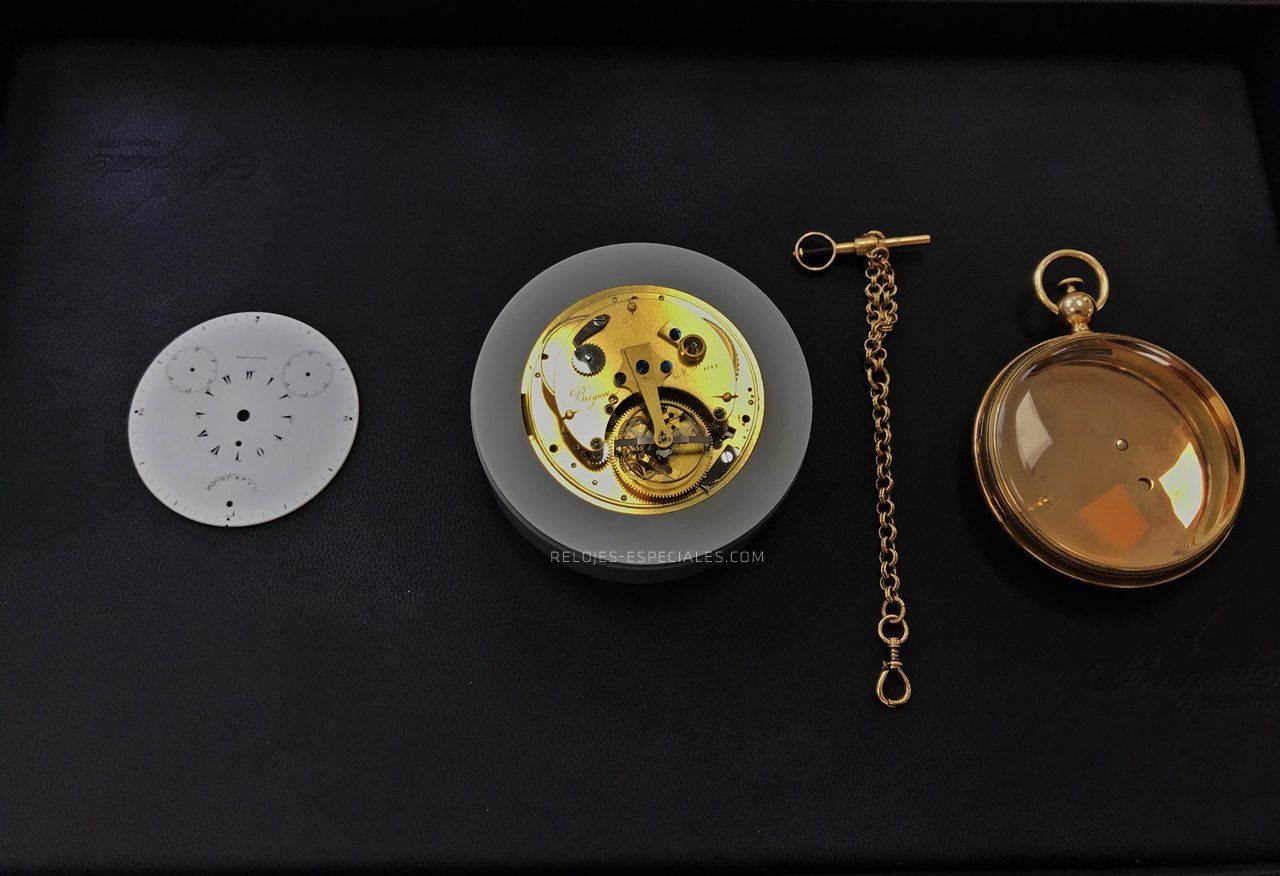
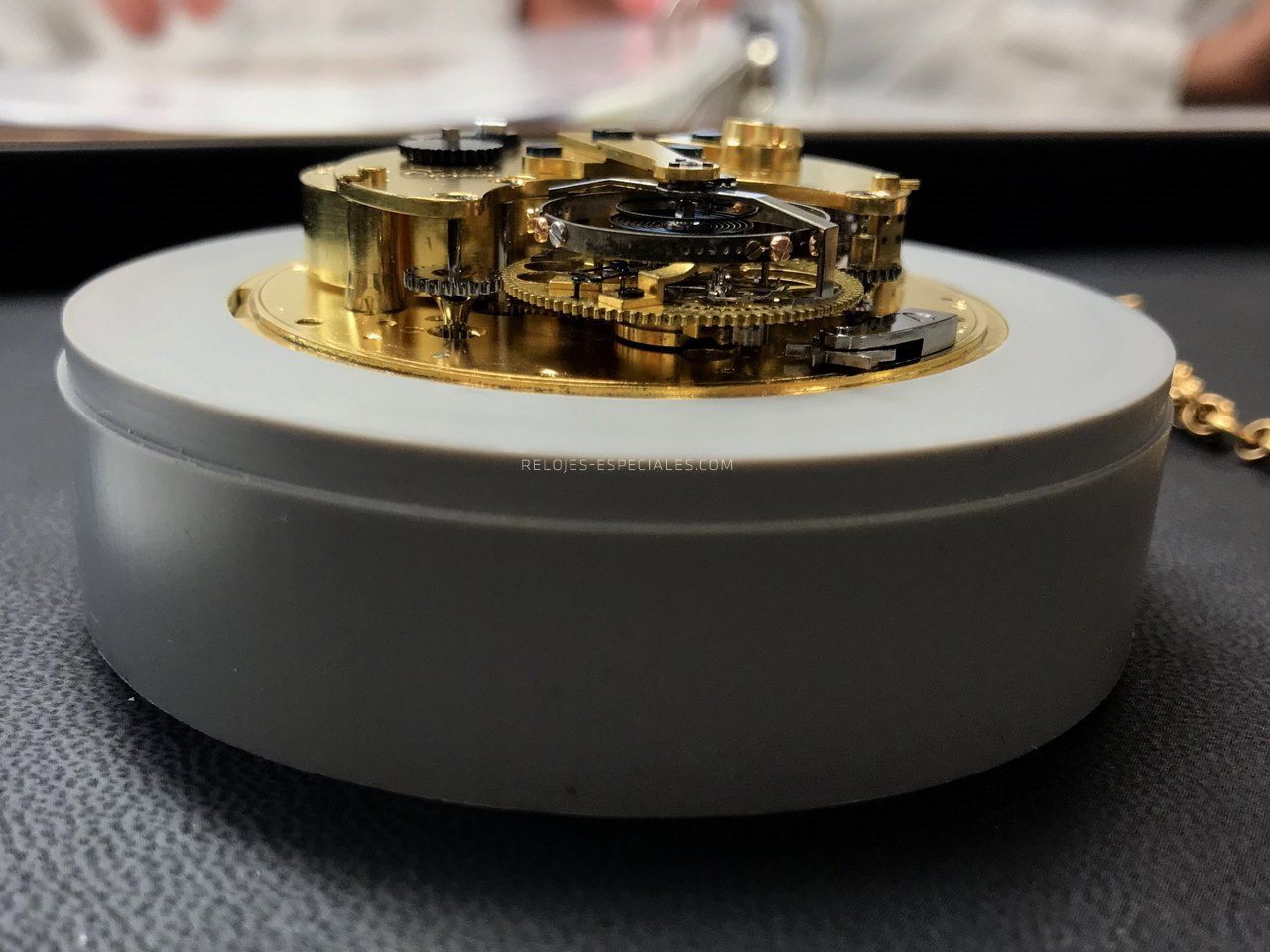
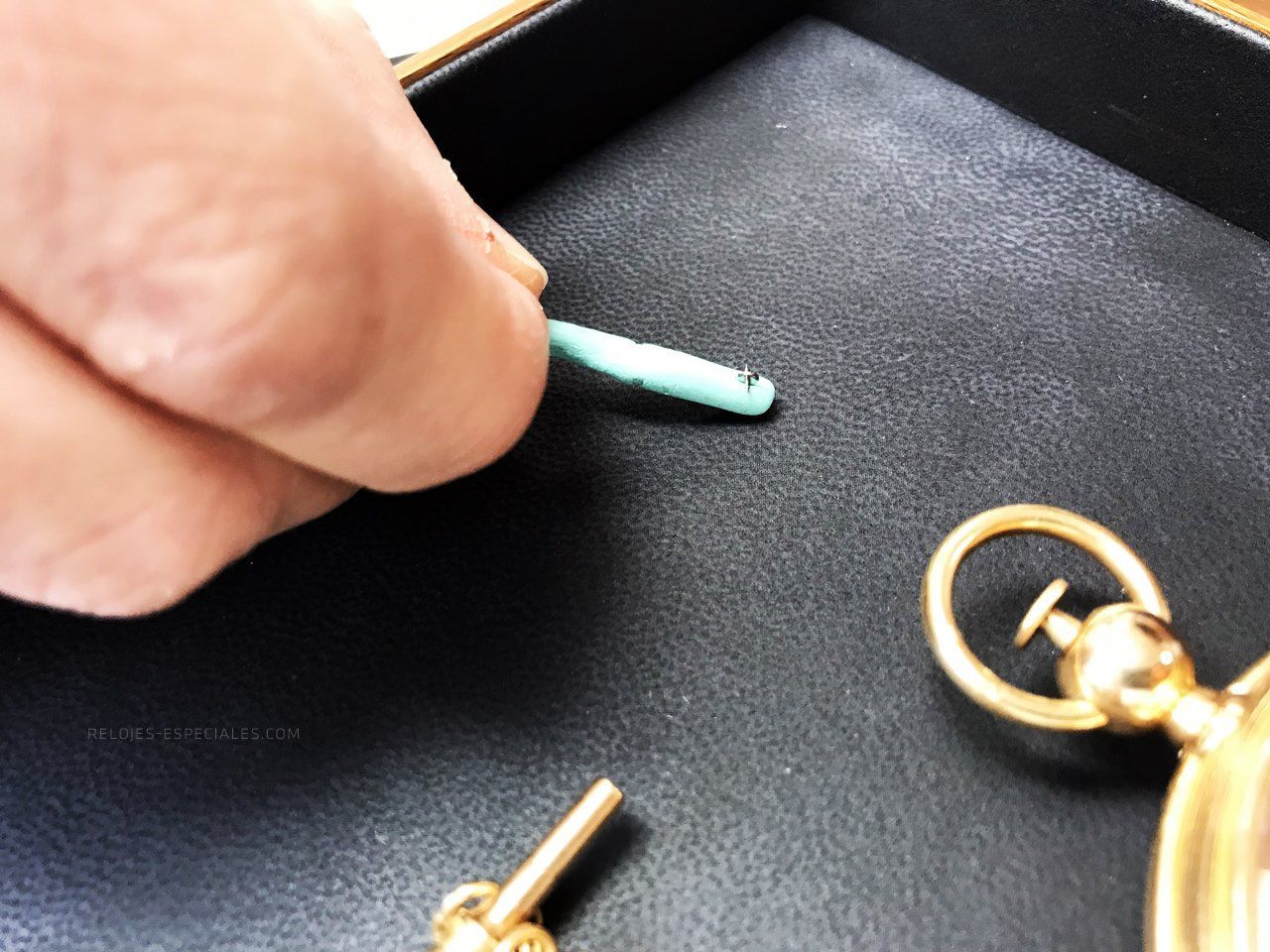
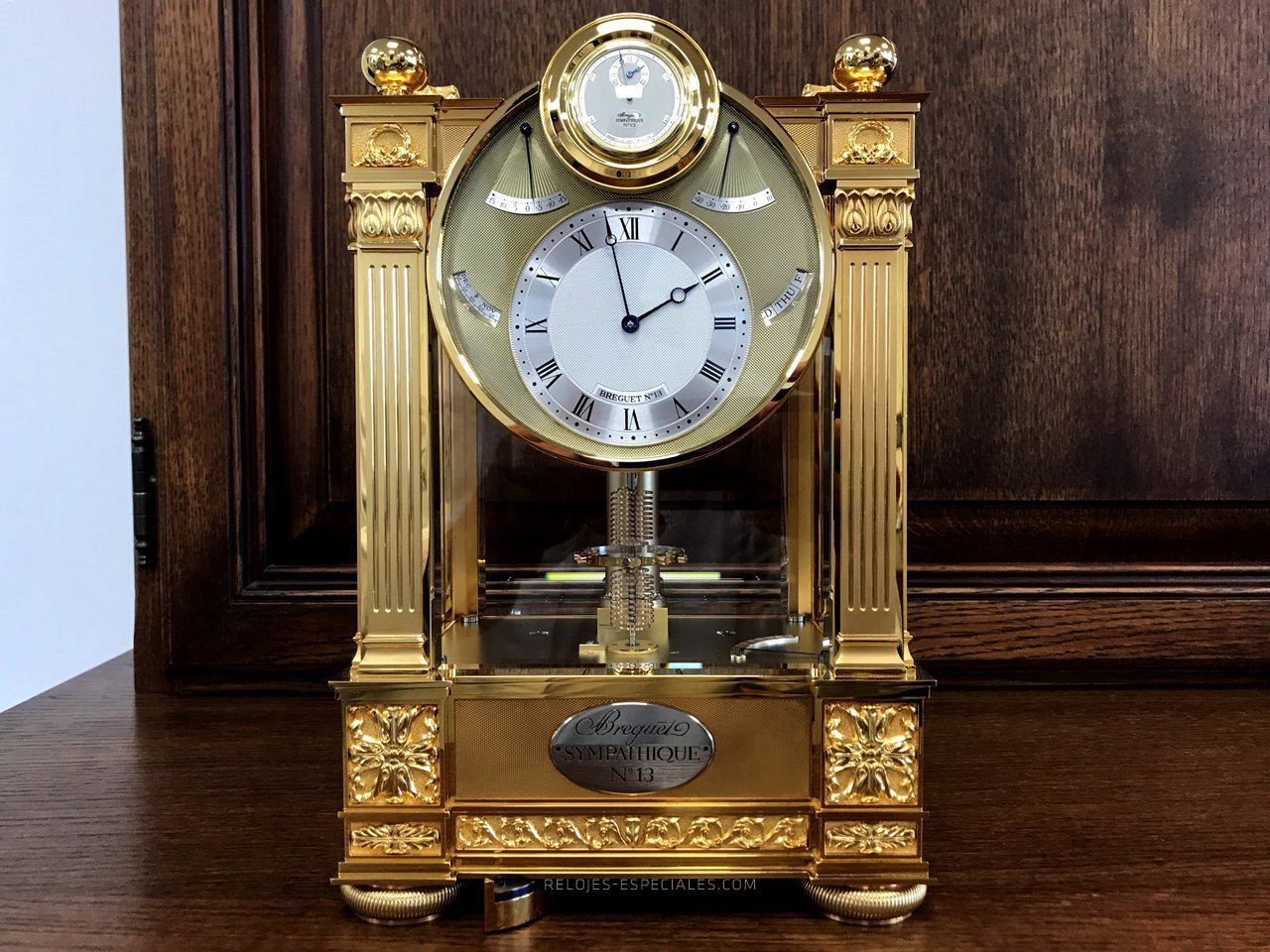
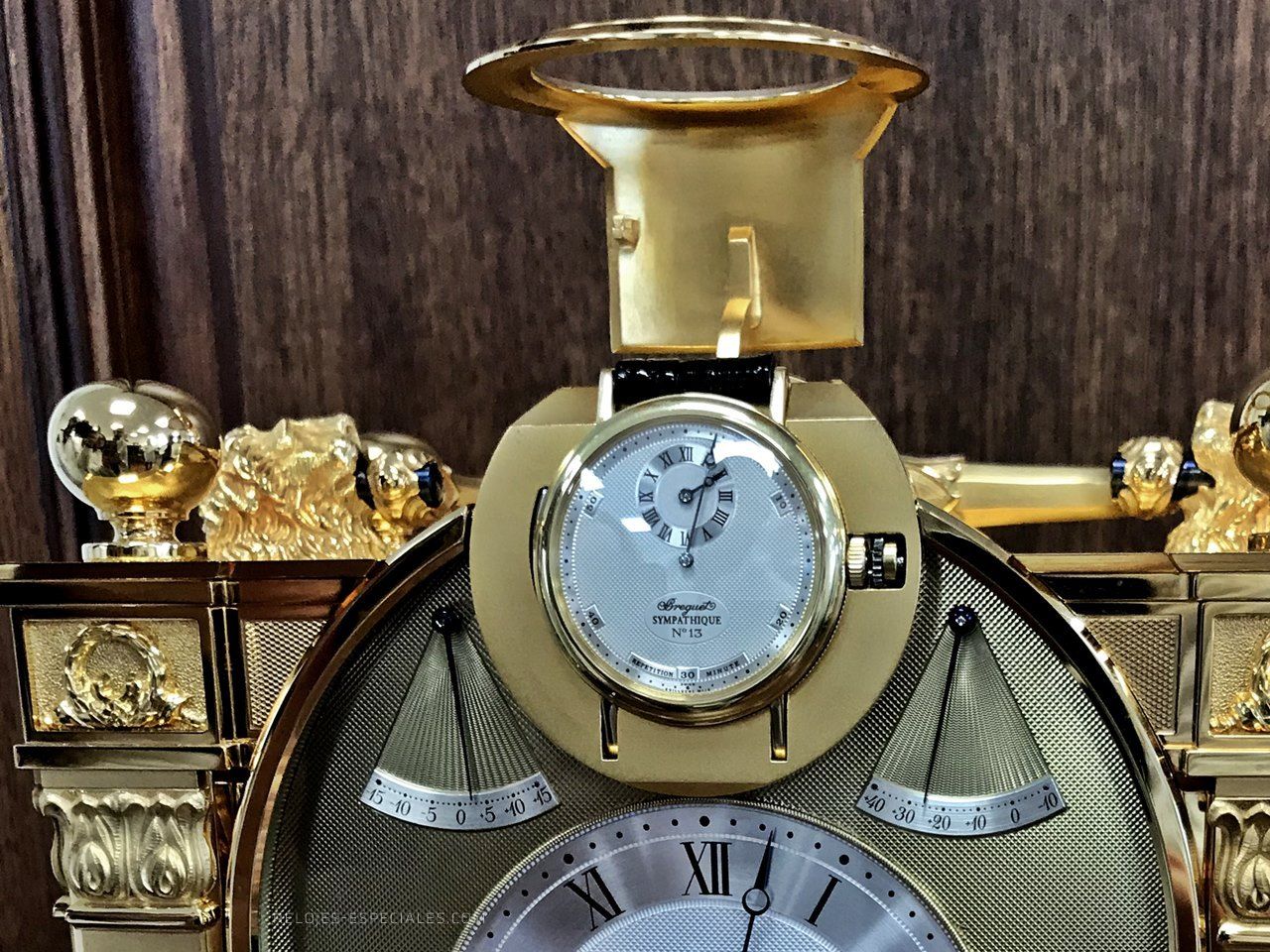
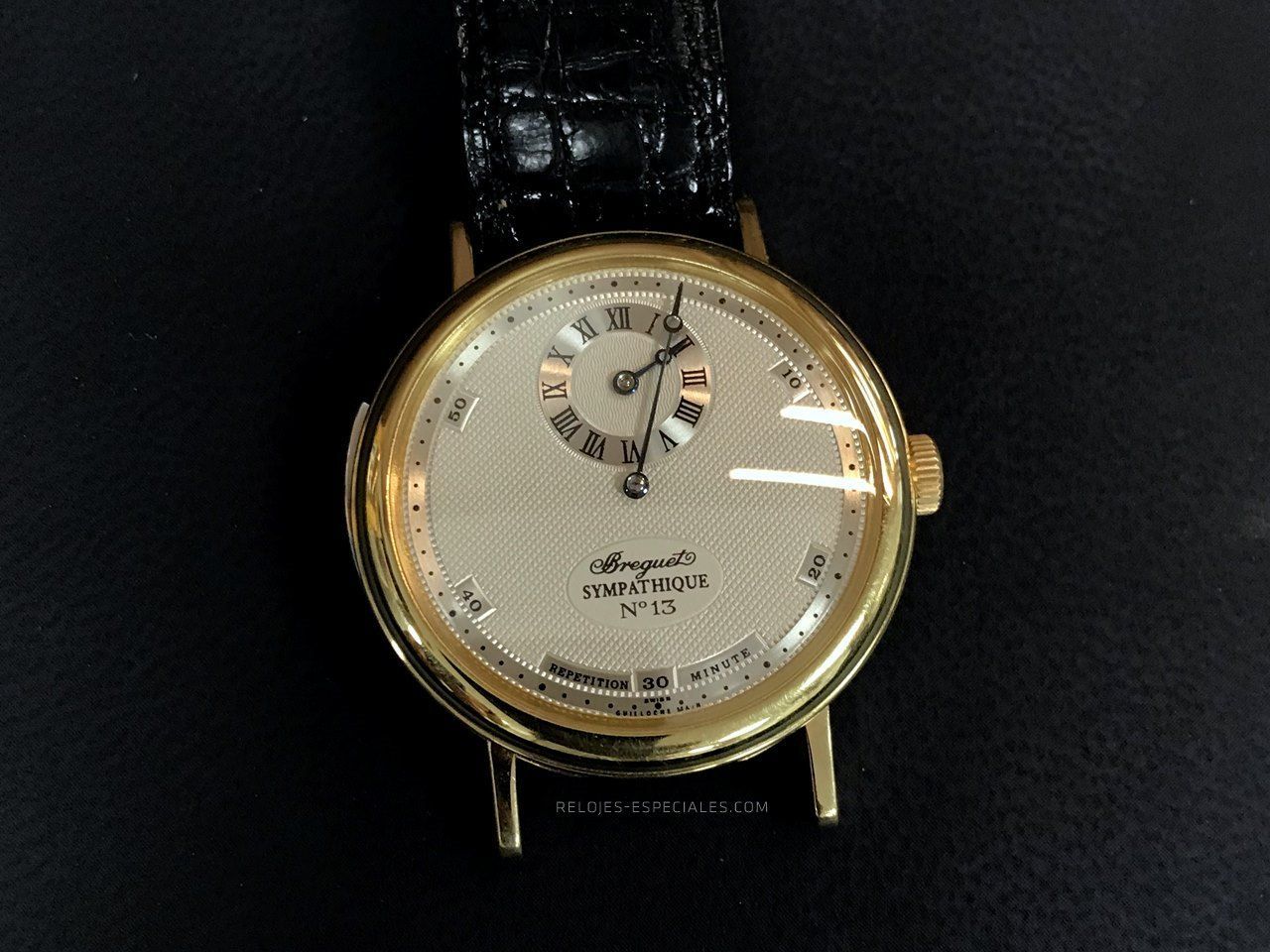
Precisely because it is a historical manufacture and thanks to the records kept, Breguet has a team of artisans capable of bringing back to life watches that the founder himself would have handled. From adjusting gaps to manually manufacturing the part necessary for a mechanism to work again. They even preserve natural rubies (currently, and for many years now, they have been synthetic) stored by size in a box from the time. I saw two unique specimens there. One belonged to a Turkish client who had had the dial changed to see Arabic figures (the ones that are really Arabic) on a watch with a chain and snail, an ultra-sophisticated mechanism that serves to maintain the constant force of the mainspring and thus maintain almost perfect precision along its entire winding. I will comment on the other a little later. I was also able to see a "friendly clock", made up of a wrist watch mounted on a table clock. By installing the first in the second - say at night, when going to rest - the principle of synchrony (or "sympathy") causes both to keep in rhythm and the bracelet (a regulator and minute repeater) recovers the correct time.
One of two unique pieces
I know it sounds counterintuitive, but there was a time when it did: watch number 160, the most complicated watch ever made, which was commissioned for Queen Marie Antoinette (and which she never saw) in 1783, was completed in 1827, thirty-four years after the queen's death and four after Breguet's own death. By then there was no longer a client to whom to deliver a piece whose price exceeded almost any budget... until 1887, when it was sold to a rich Australian industrialist of Scottish origin. In the 1920s it passed into the hands of an expert collector of the brand, who died shortly after, bequeathing it - along with 56 other exceptional Breguets - to the L. A. Mayer Museum in Jerusalem. From there it was stolen in 1983, and has been missing for more than twenty years. In 2005, with Nicolas G. Hayek already in charge of the company, it was decided to make an exact copy of the piece with the same instructions as for the original: without time or cost limits. I said a little above that the House carefully keeps all types of documentation from the origins of the brand. It was with her and with photographs of the original that in three years a perfect replica of the so-called Marie Antoinette, the Breguet 1160, was made. And, to my fascination, it was here, inside the lavish box made of oak wood that adorned the Petit Trianon, the refuge of the queen who lost her head. This is where once again the expression “a picture is worth a thousand words” takes on its full value. I was left without them...
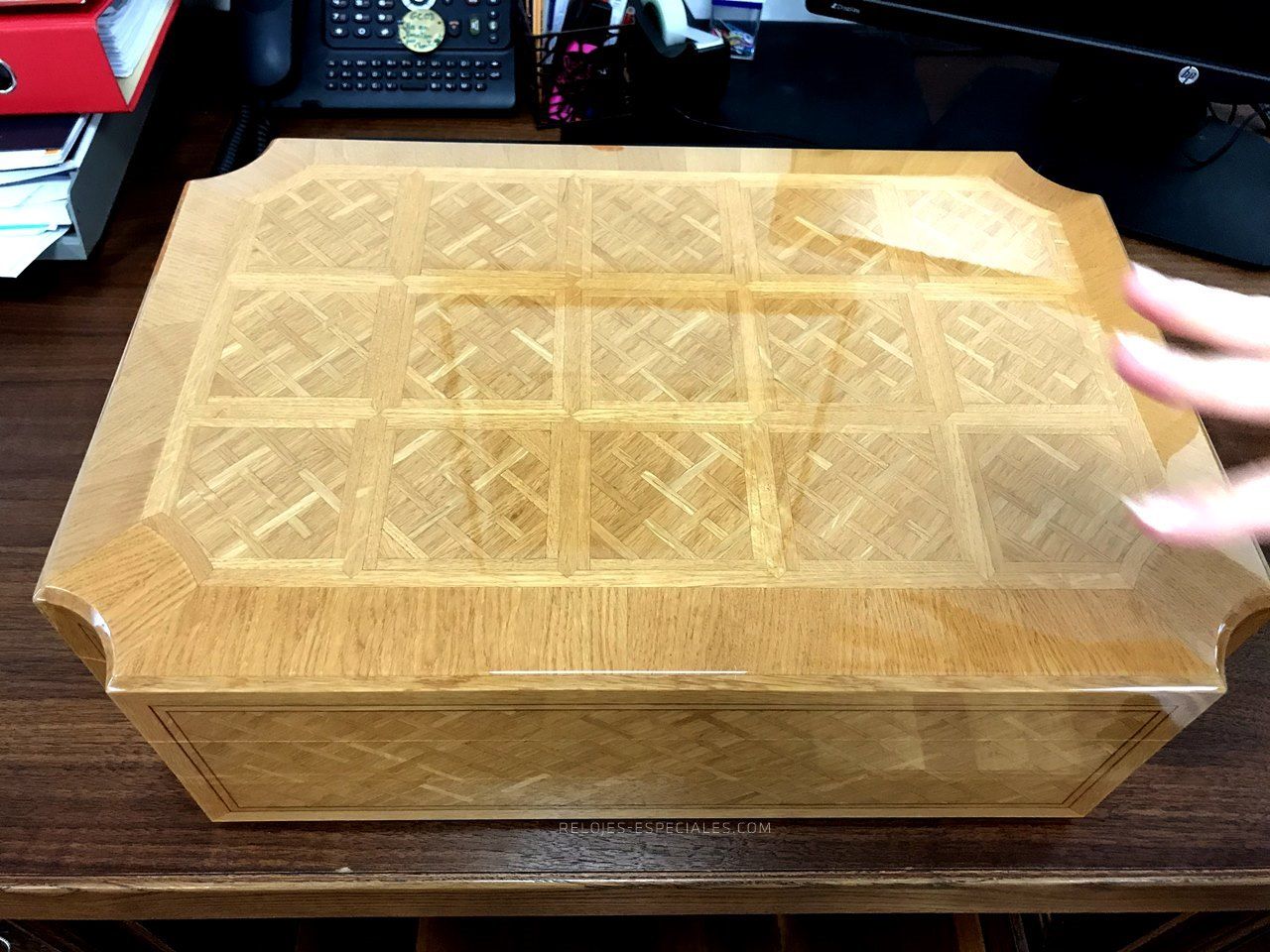
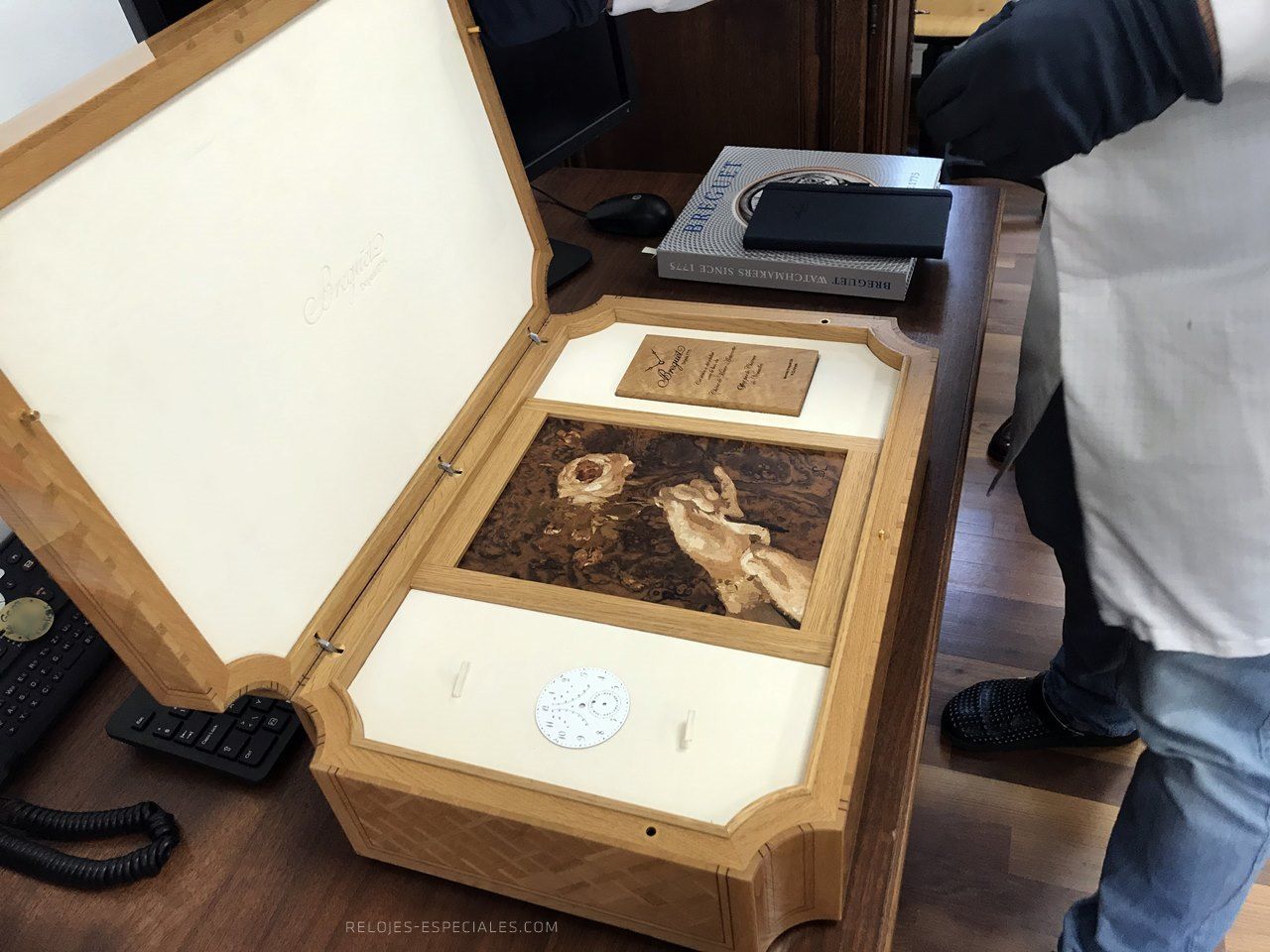
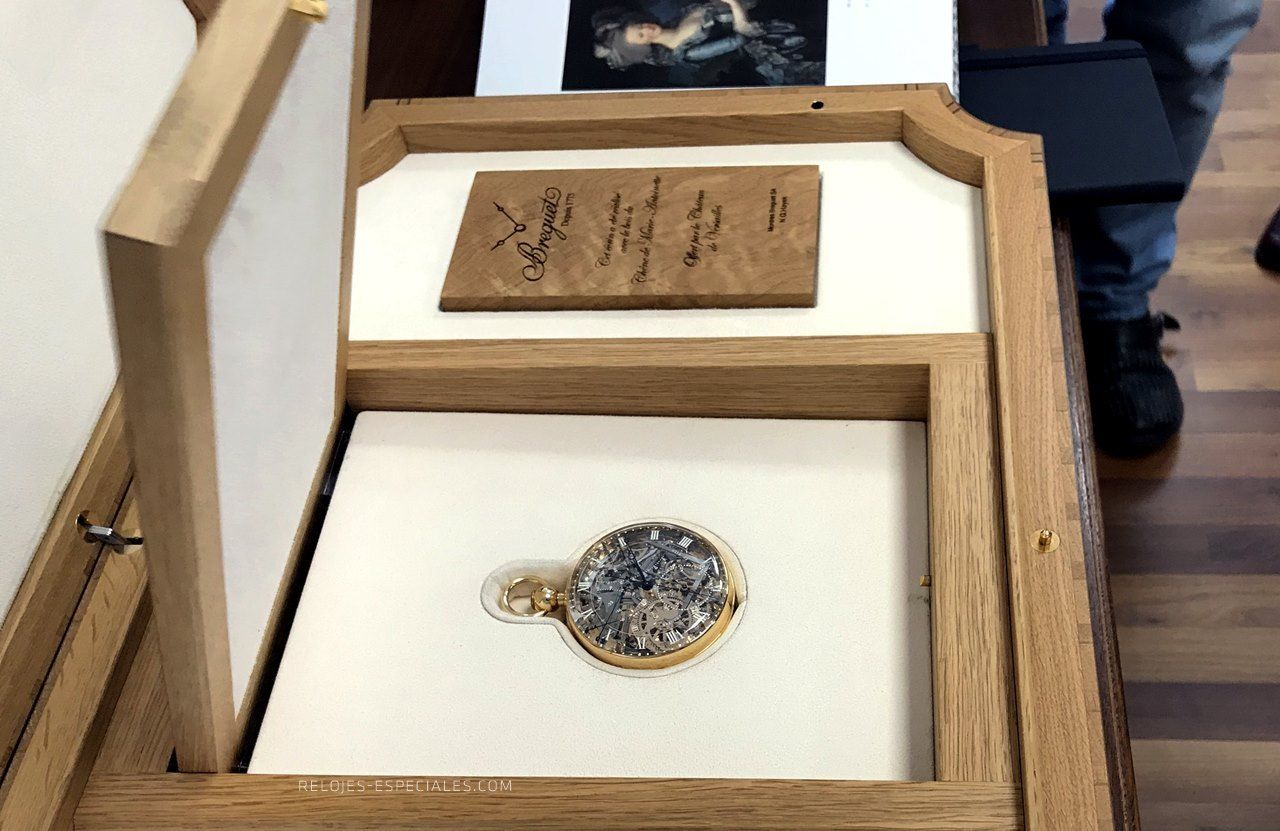
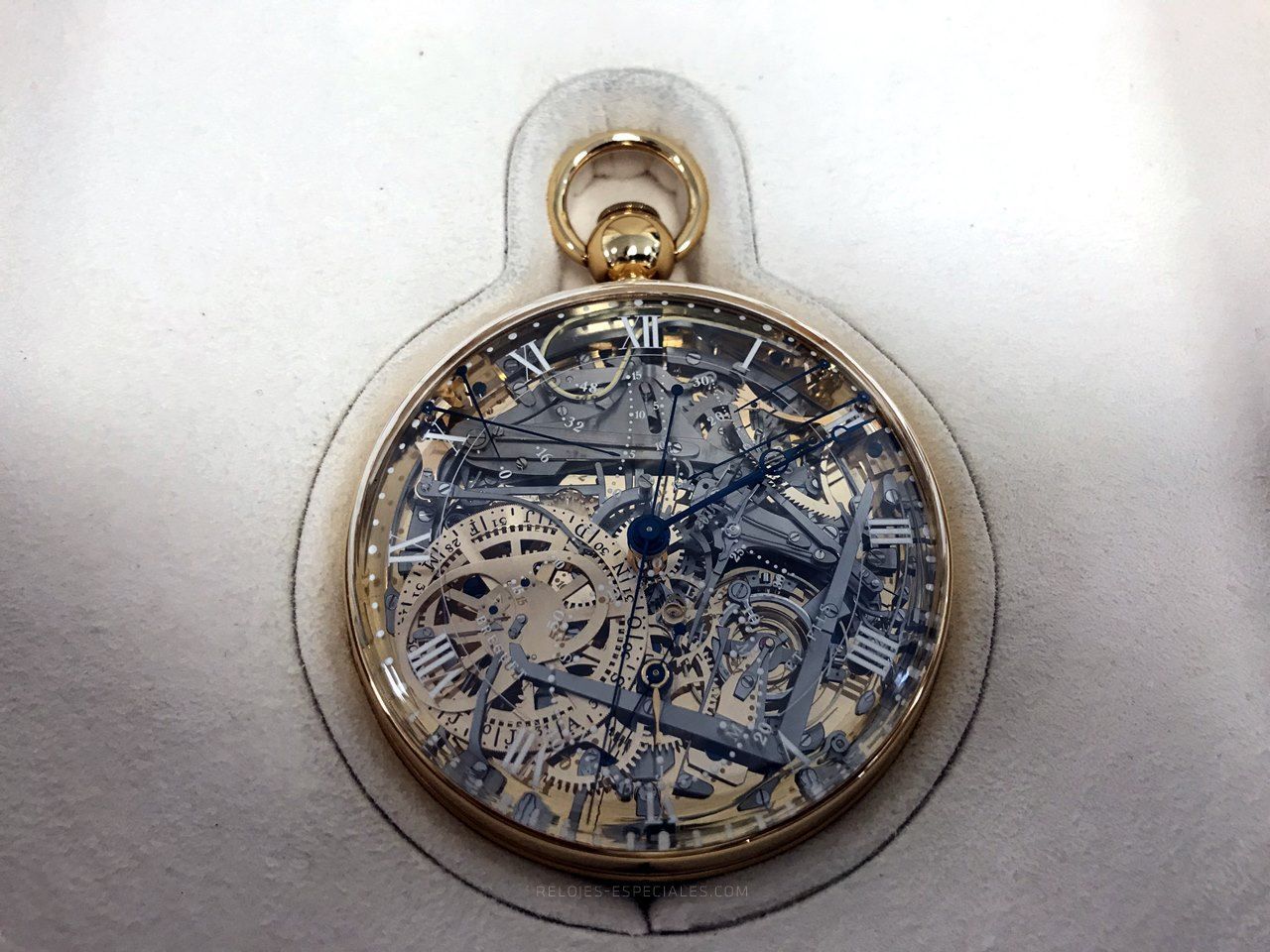
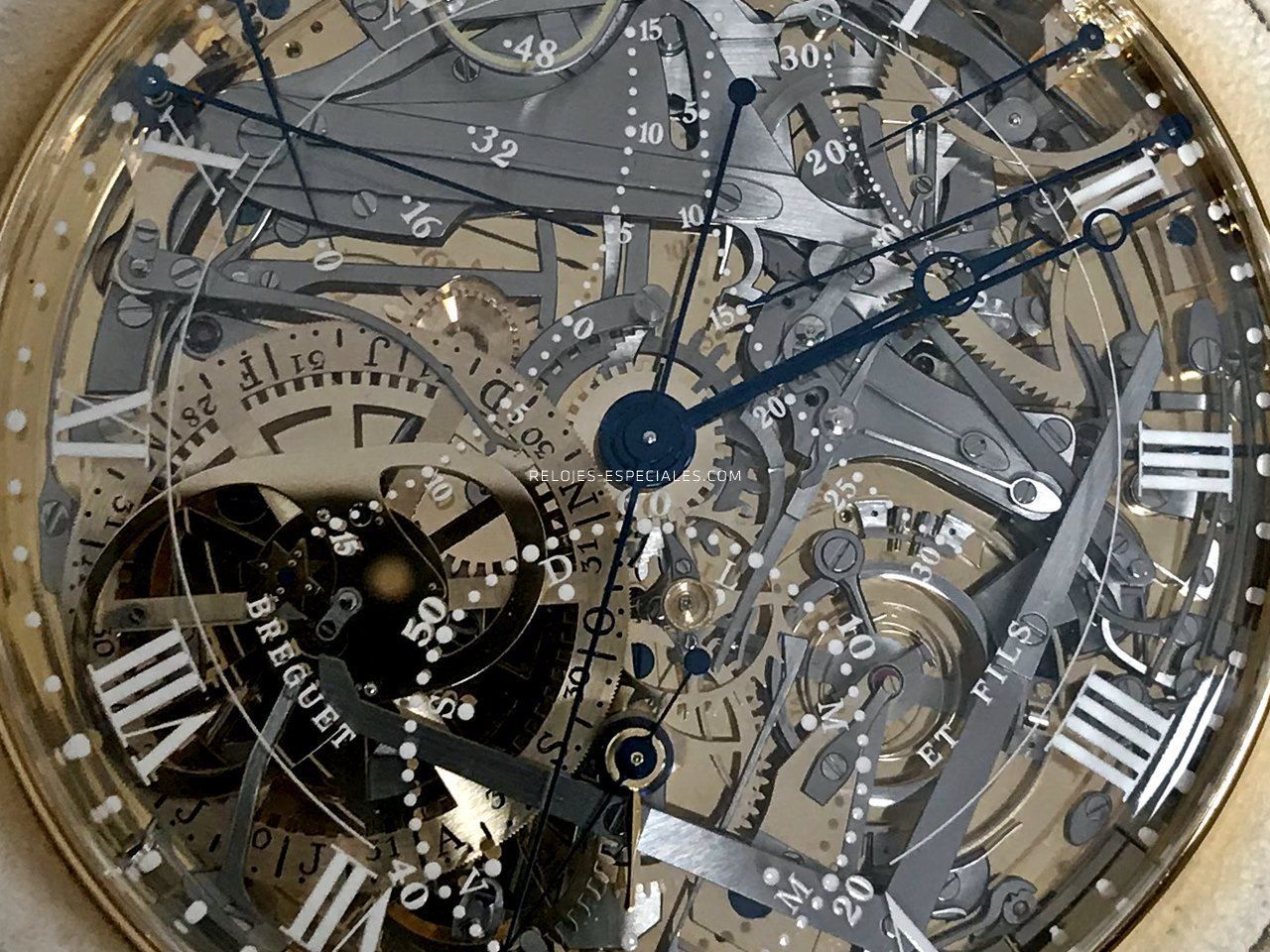
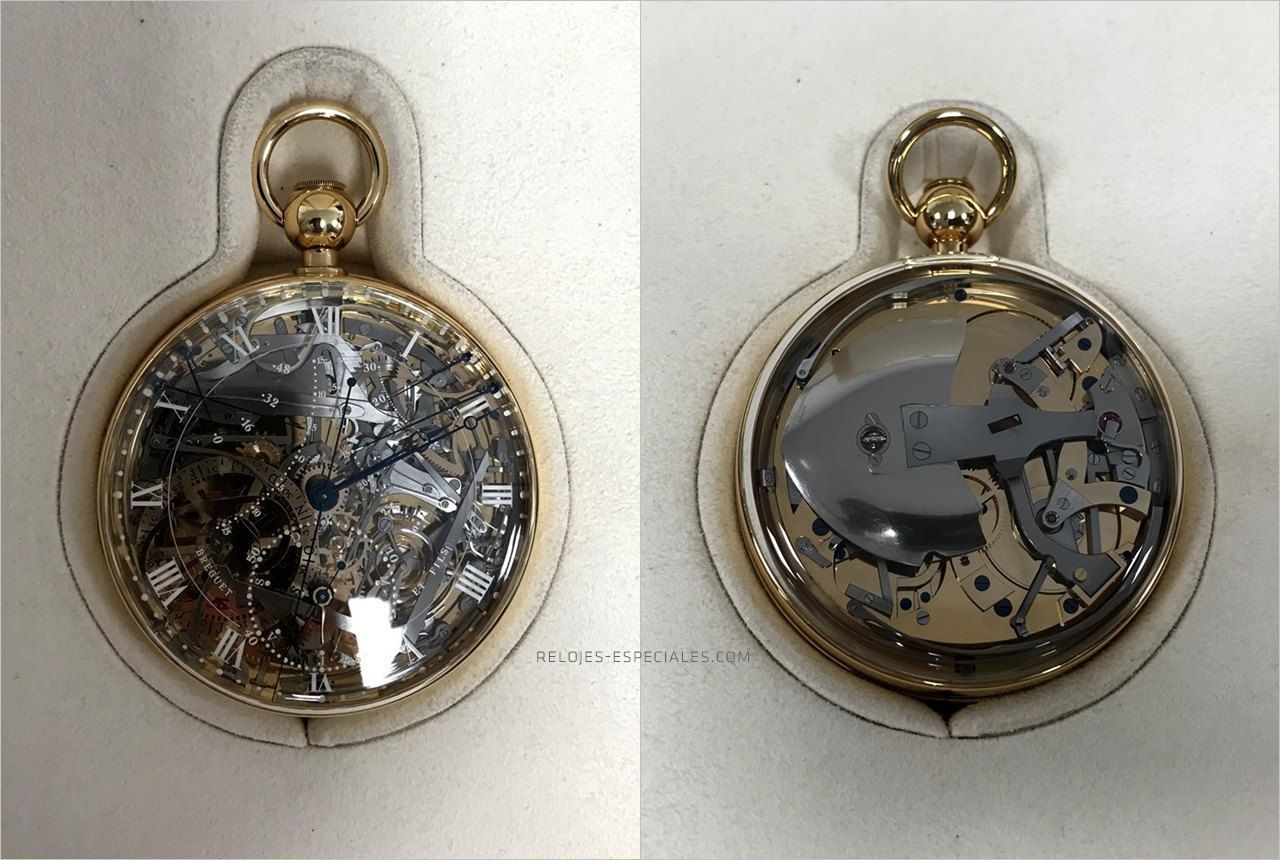
The presentation of the watch in society by the hand of Nicolas G. Hayek himself followed by the process of creating the watch and the box! It is not a paragon of publishing, but it has high historical value. Interesting to see in minute 6 how a chain - the snail one - is made piece by piece.
The characteristics of Breguet, one by one
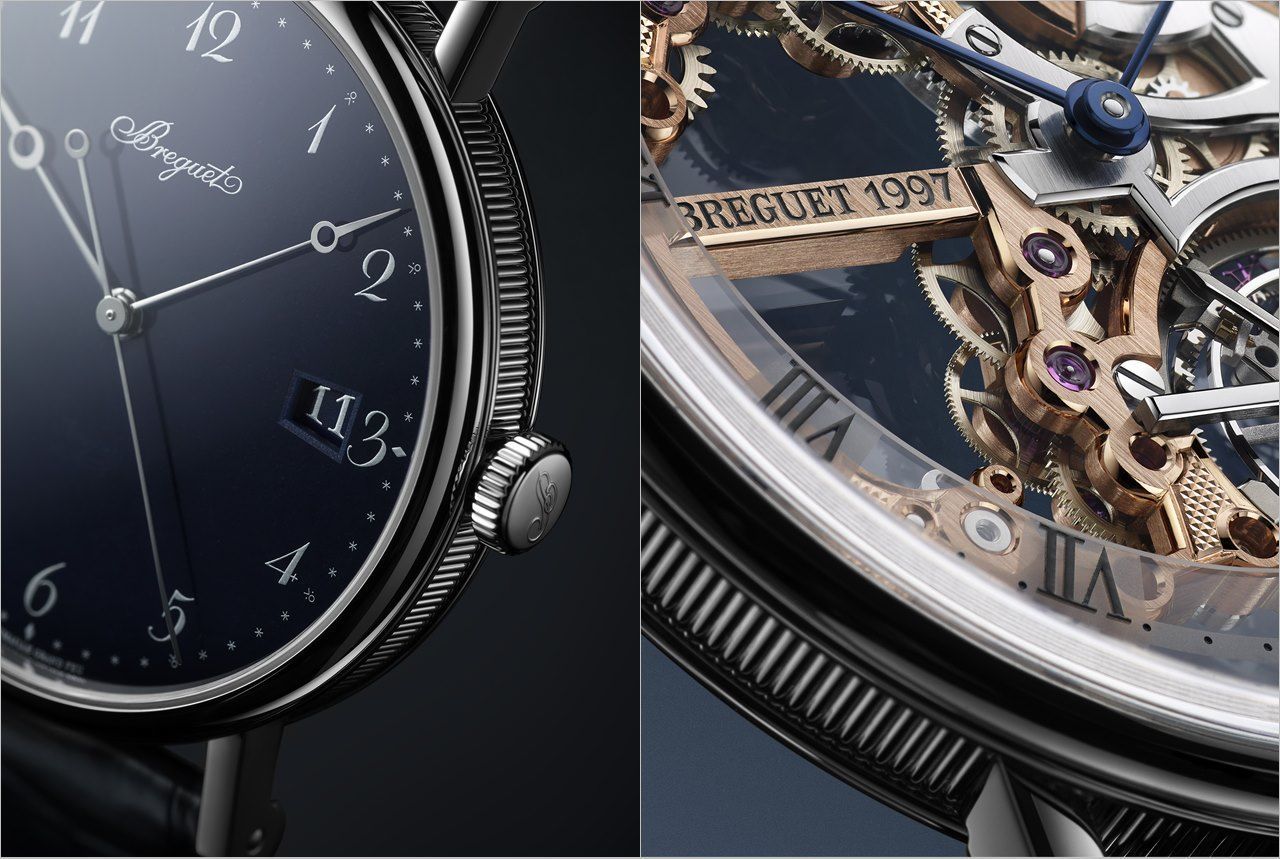
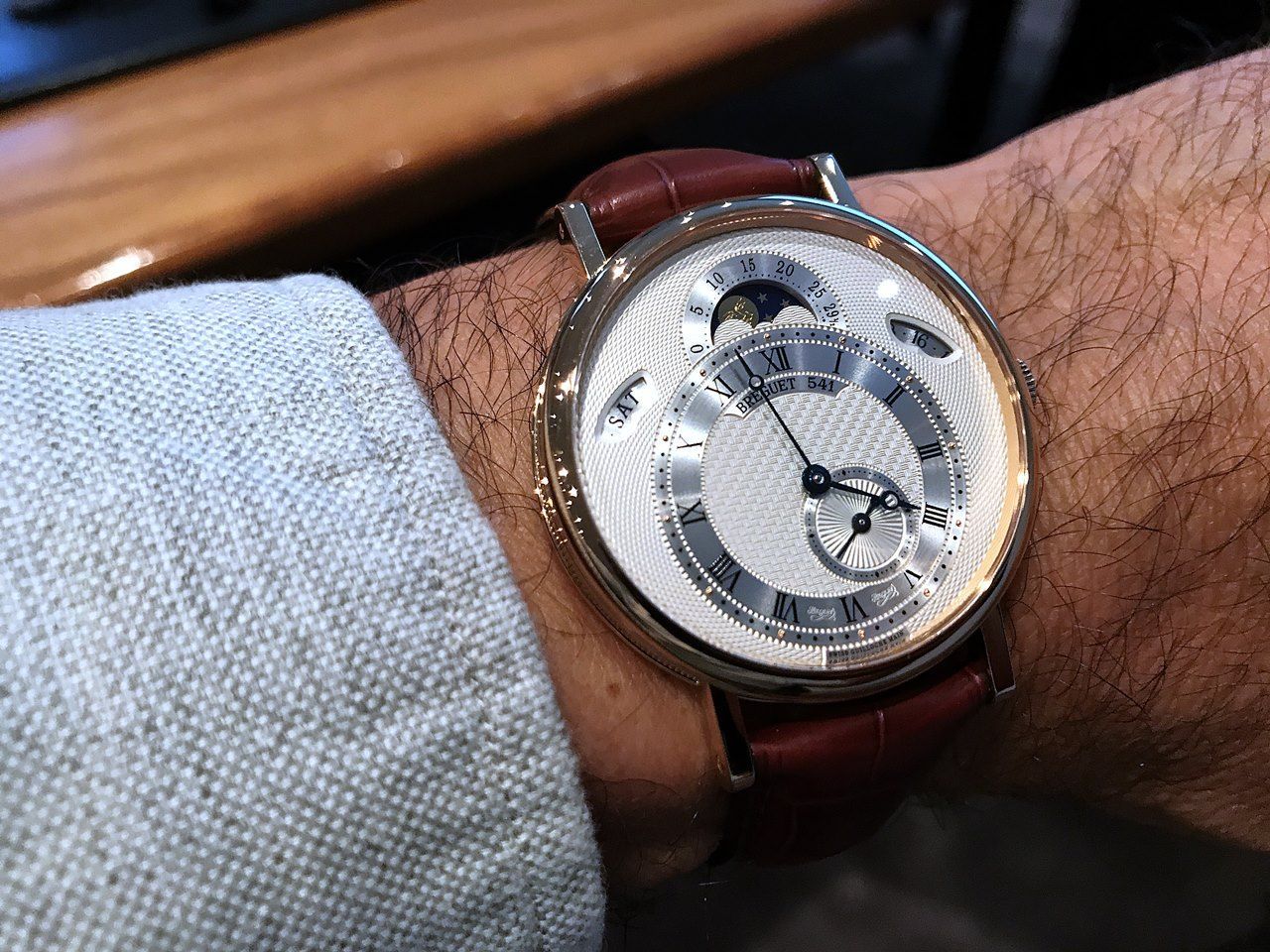
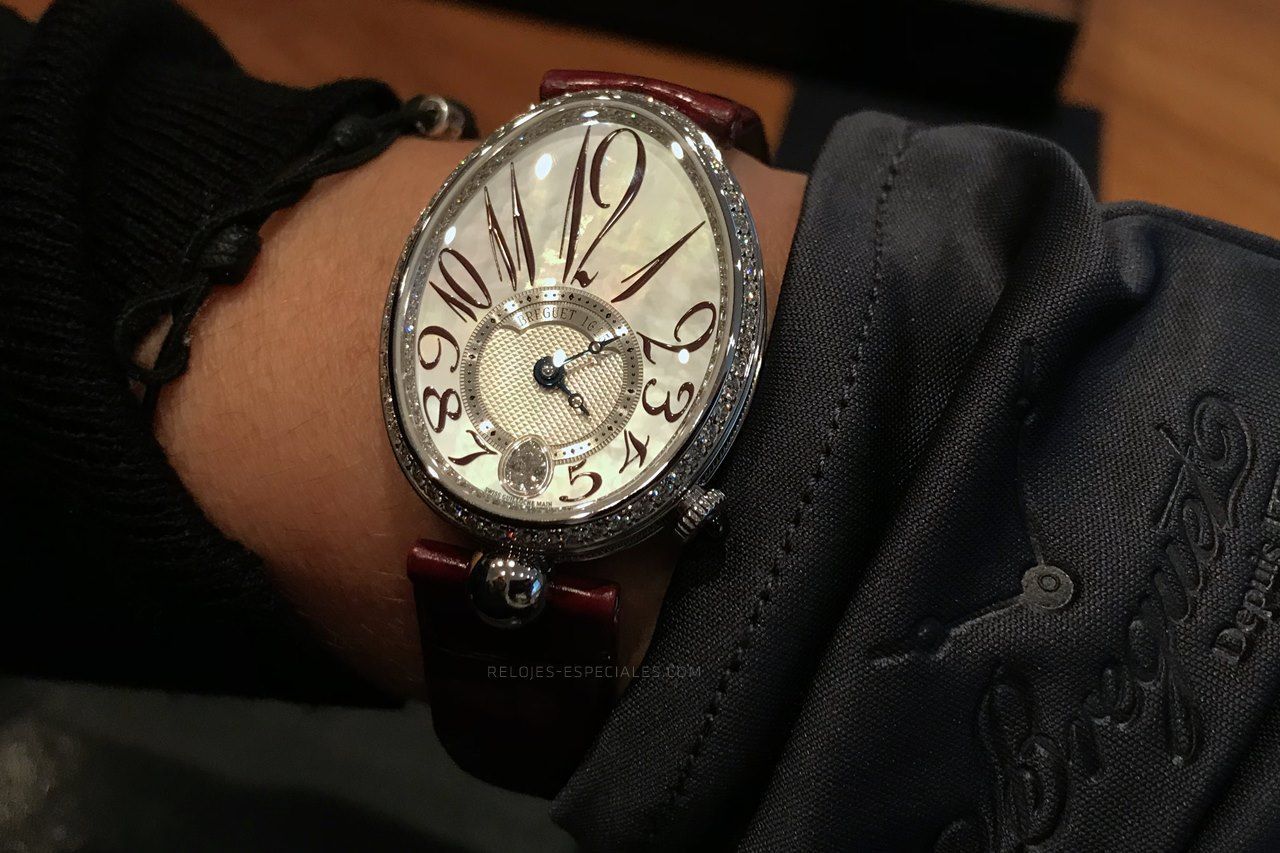
In addition to his watchmaking genius, Louis Abraham Breguet also stood out for other abilities. He demonstrated great financial and commercial ability but above all communication skills, getting an exquisite product - his - to the right ears, a guarantee of success. However, he added another facet: what today is called, not without some frivolity, the "DNA of the brand." In more earthly language, he created a series of aesthetic codes that make virtually all Breguet watches recognizable. In addition to the secret signature and individual numbering, the guilloché on the dial, the figures inscribed on that dial or the hands that fly over it have the unmistakable touch of the master and retain his name (Breguet hands, Breguet figures...), as well as the coin-type case that adorns the most classic models. Beyond their timeless beauty, all of them have - like the secret signature - a practical purpose.
Current collection
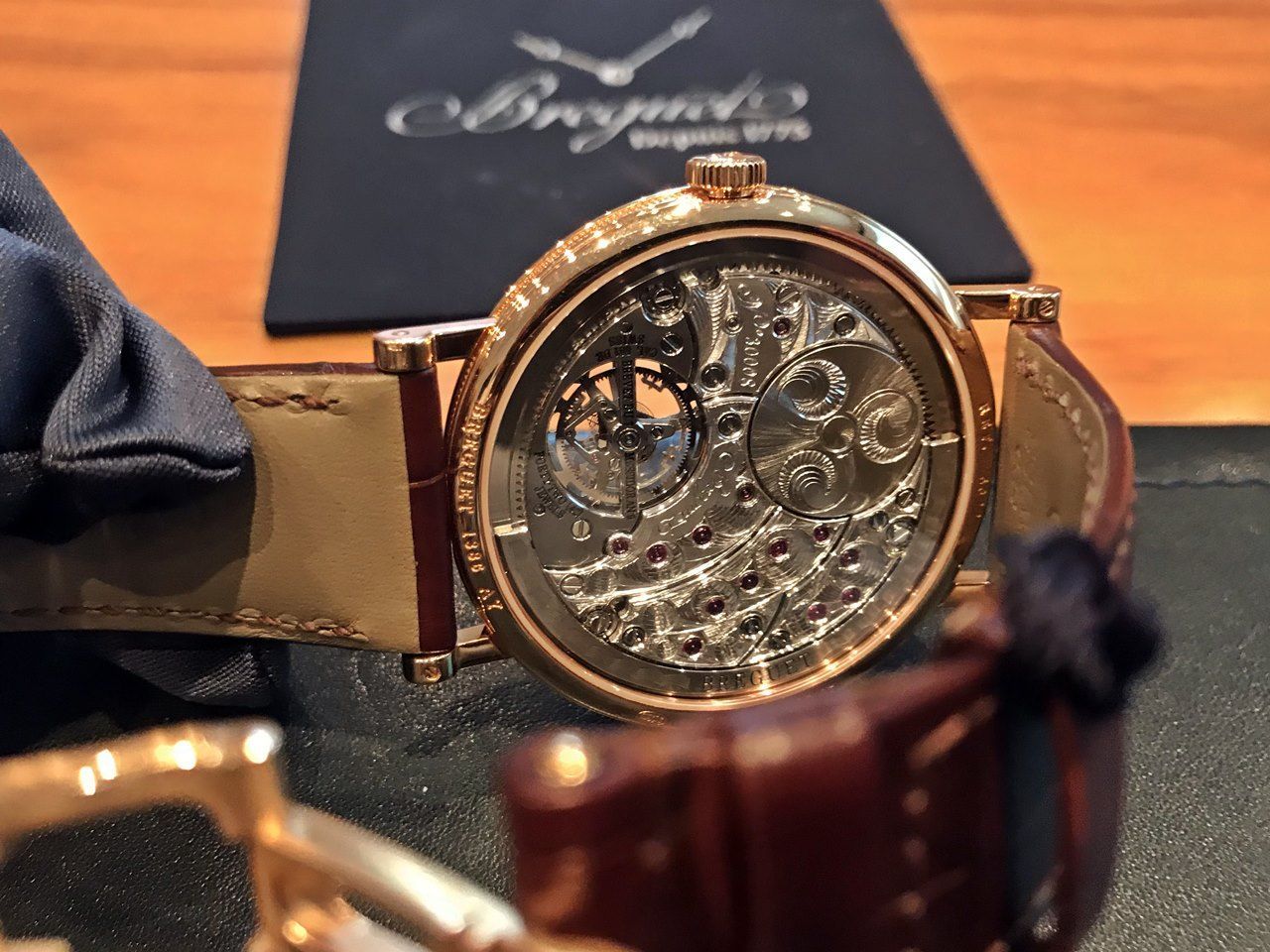
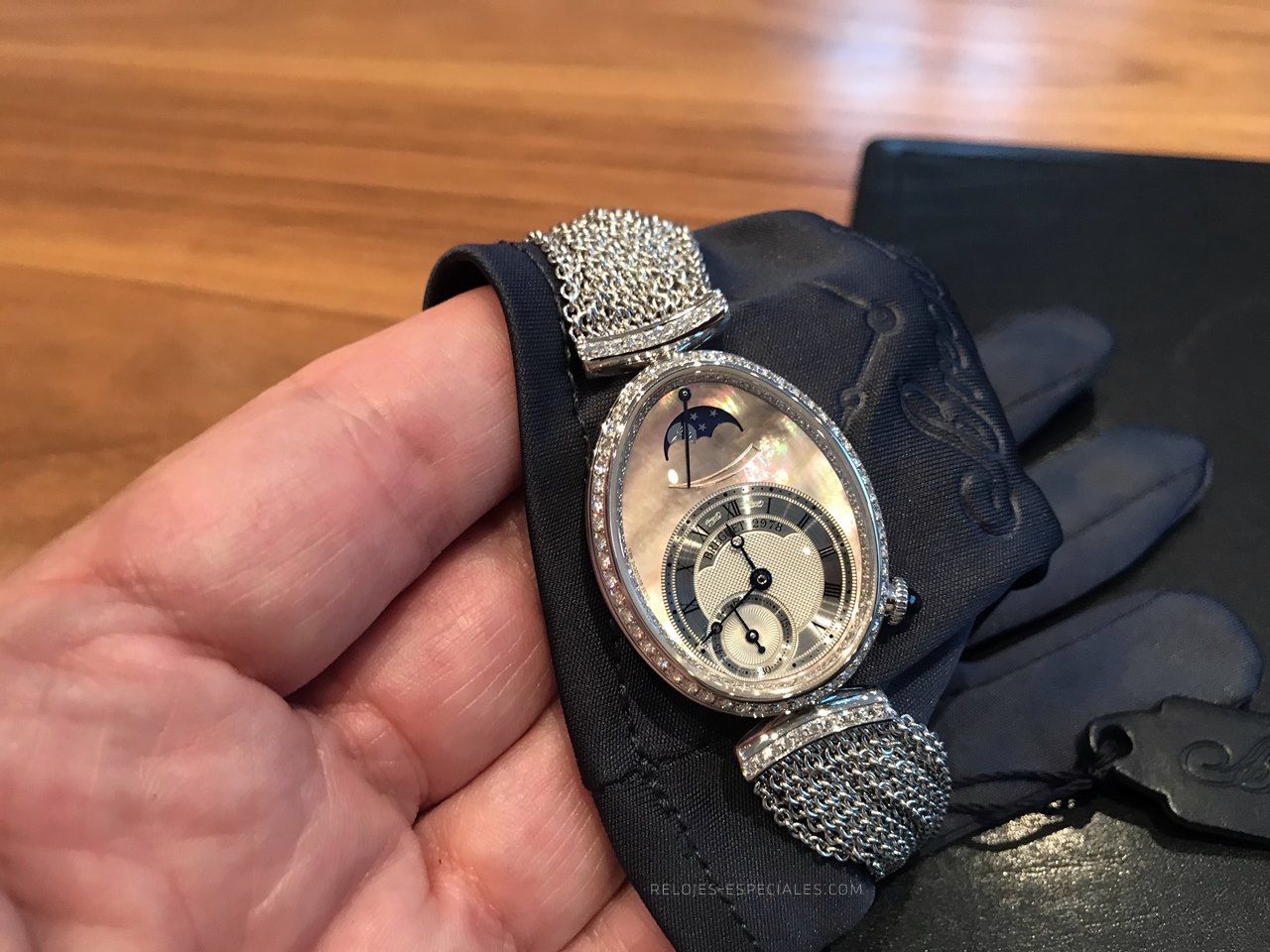
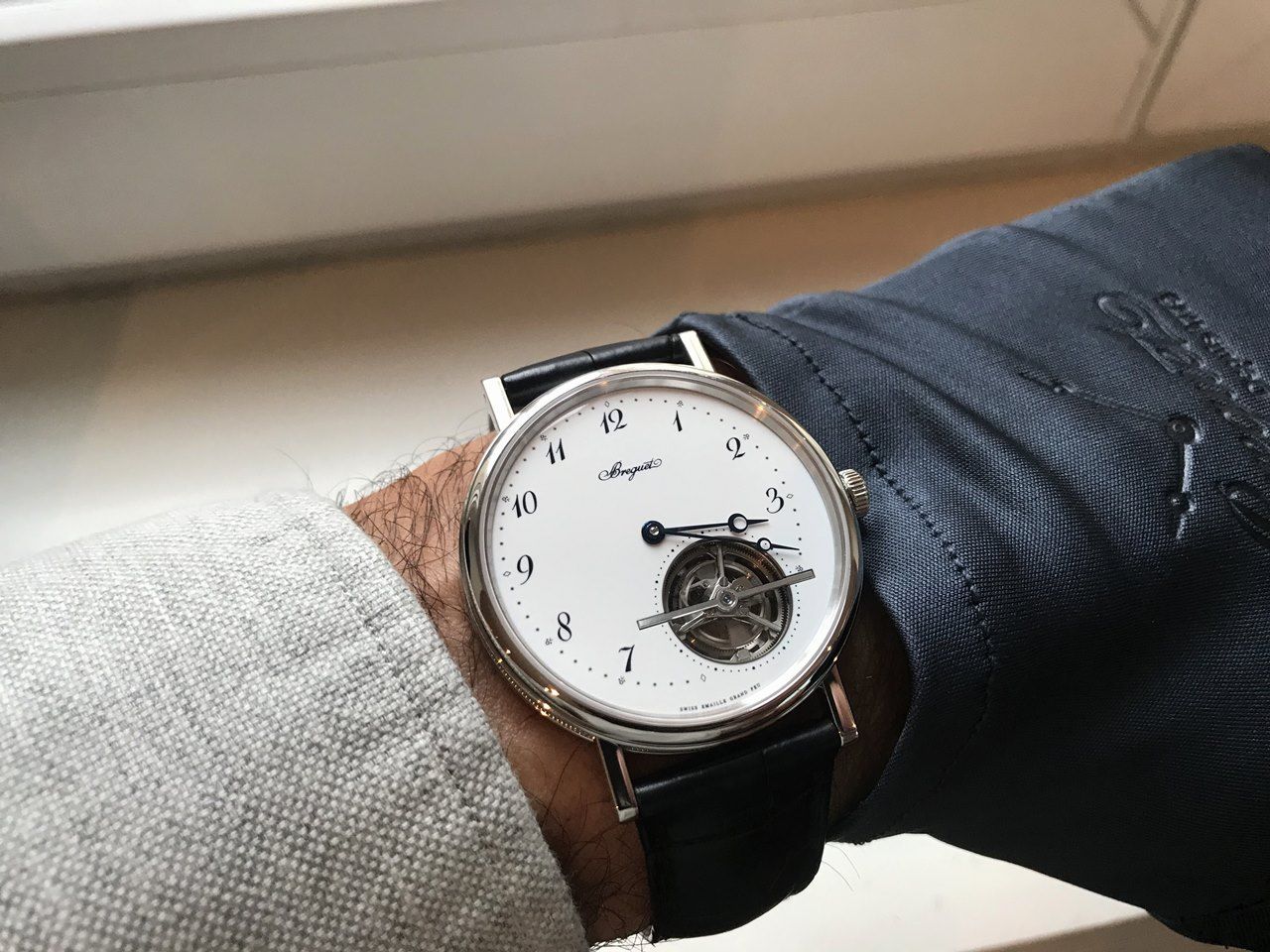
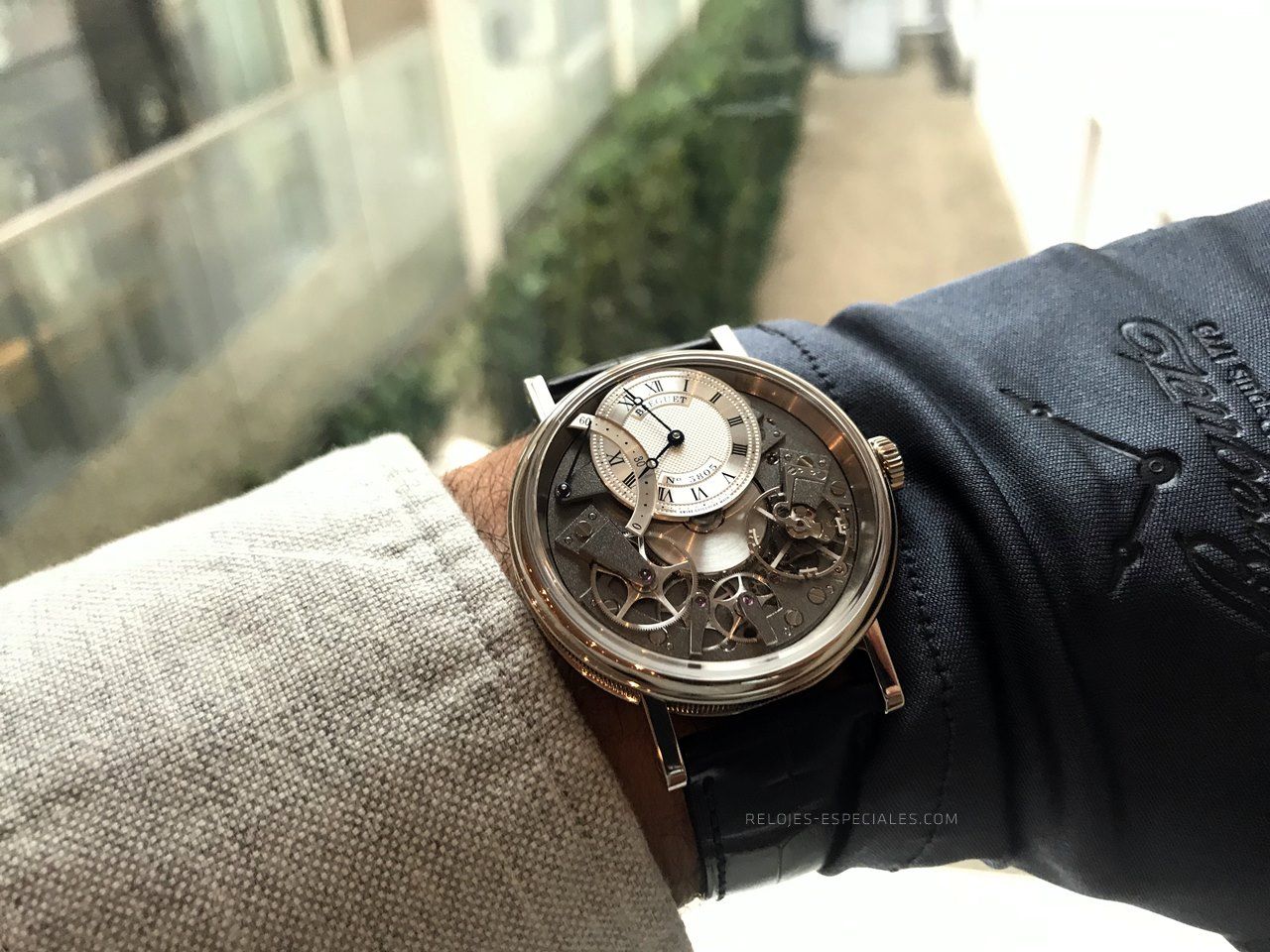
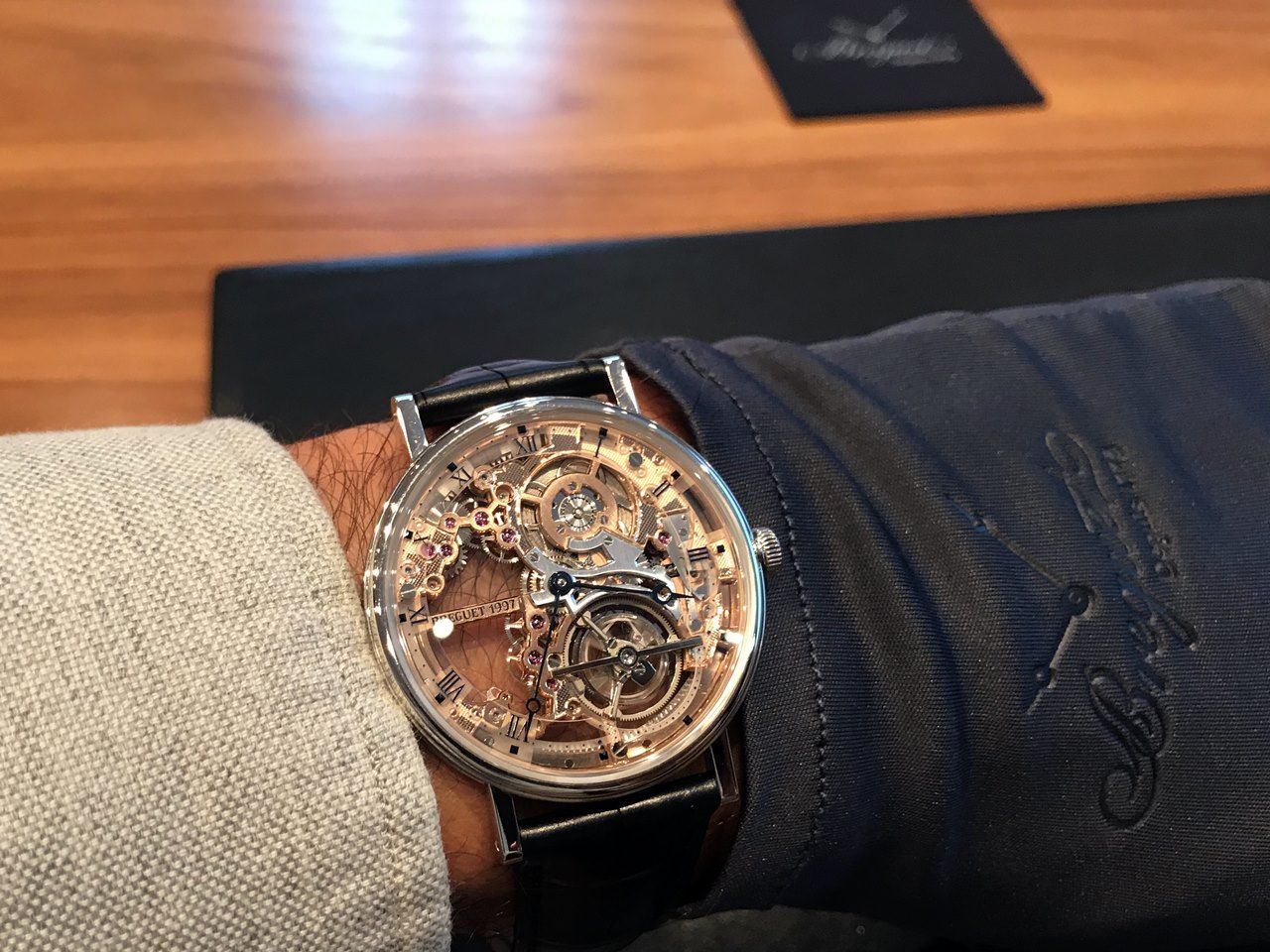
Finally, and as the culmination of an ideal day for any fan, we had access to the models from the current collection, from the Marine to the extra-plate Tourbillon or the Classique with their exquisite porcelain dials… with a secret signature. A pleasure for the senses.
More information atbreguet.com