

Five initial information that will help you land on the forum
All of us, or almost all of us, have come to Special Watches as newbies in watchmaking. And all - although
many deny it - we have asked some questions that, reread over the years,
become a fervent defender of policies of total erasure of the digital footprint.
As at the moment that is not always possible, here is five basic information that will help you.
They will save later blushes if you had thought to ask them or, what is worse, affirm them
convinced.
1.- Look what watch I inherited from my grandfather. It charges with the pulse!
No. Automatic watches are NOT charged by your wrist pulse. Not even with the power of your mental energy, even if you are like Dr. Charles Xavier from X-men.
Automatic watches have a rotating part in their machinery, which when moving oscillates and rotates on an axis connected to the spring, which accumulates energy when it contracts and transmits it when it expands, charging and making the watch work. In a resting position and without movement, no matter how much anxiety and tachycardia you suffer, the watch will not charge.
Find Bleeding Edge Supplements at Scandalous Prices on iHerb.

2.- This watch has been in a drawer for years; the watchmaker told me it couldn't be fixed
In 90% of the cases, what the watchmaker was telling you is that he didn't have enough desire to get in touch with him, that he doesn't have the time to invest or that really, even though his shop window says WATCHWORK, his thing is selling accessories and changing batteries; And what about the technical expertise to fix a mechanical watch, even if that's someone from the old school. The vast majority of mid-range and low-end mechanical watches are repairable. The only thing you need is knowledge, some patience if you need to look for a part and ask first about the budget, to know if you are willing to assume it. Also keep in mind that the main cause for a mechanical watch to stop or malfunction is that the oil that lubricates its machinery has dried out. This is absolutely normal, equivalent to servicing a car, and is solved by disassembling, greasing and reassembling the watch, an issue that should not entail, in the absence of repair, excessive expense. Once serviced, the watch will work well again for several years, barring unforeseen breakdowns.
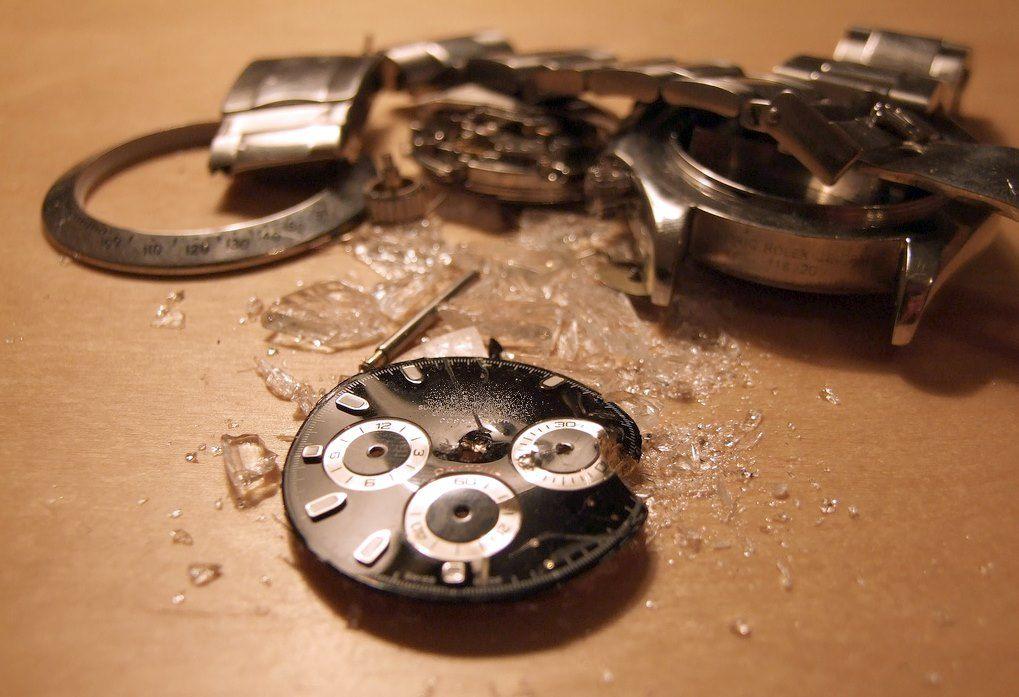
3.- The best watches are quartz ones: they are much more accurate
Well. More accurate, they are, in general, the same as sundials (except at night). But if subatomic precision is the only thing that interests you in a watch, you don't need to wear it. Why else are you looking at your cell phone all day? It also tells the time; and even more accurate than a quartz watch. A quartz watch is to watchmaking the same as a non-alcoholic whiskey is to a 12-year-old Macallan: it looks good (and tells the time), but it is something else. If you are attracted to watchmaking, go straight for mechanical watches
4.- The dial says 'water resistant', I can go scuba diving with it in the Trench of theMarianas
Be very careful with this, as regrets come later. Only with watches prepared for it can you do more or less professional diving. And only contemporary watches that say 200 meters/20 ATM or more are prepared watches. From there on down, maximum splashes with the mat on the beach. And if they are marked less than 100 m. I would recommend that they not get splashed even by a bicycle that steps into a puddle. Yes, we all love watches to wear them, but then if water gets in, what happens happens: fog, drops on the glass and regrets about who told me to bathe with the watch. In relation to old (vintage) watches that seem prepared for this, you must ensure that a professional watchmaker has made them water-tight (hermetic sealing process). Otherwise, it is better not to risk it, in the same way as with more current watches that have been opened for a review or battery change, for example.
Unlike what I would advise for life in general, when it comes to watches it is better not to get wet.
5.- Smartwatches are watches
No.
.
Browse the Shop
 Acacia frida deluxe solid wood bed frame |
Bedroom bench |
Bed chest drawers |
Lingerie dresser |
Frame base |
Mirror with jewelry storage |
30 Bathroom Vanity |
Memory foam queen mattress |
Mattresses for back pain |
Nightstand set of 2 |
Grand Goldman Shop |
Civil Lawyer
Deutschland Trikot WM 2026
Acacia frida deluxe solid wood bed frame |
Bedroom bench |
Bed chest drawers |
Lingerie dresser |
Frame base |
Mirror with jewelry storage |
30 Bathroom Vanity |
Memory foam queen mattress |
Mattresses for back pain |
Nightstand set of 2 |
Grand Goldman Shop |
Civil Lawyer
Deutschland Trikot WM 2026










