

a little history
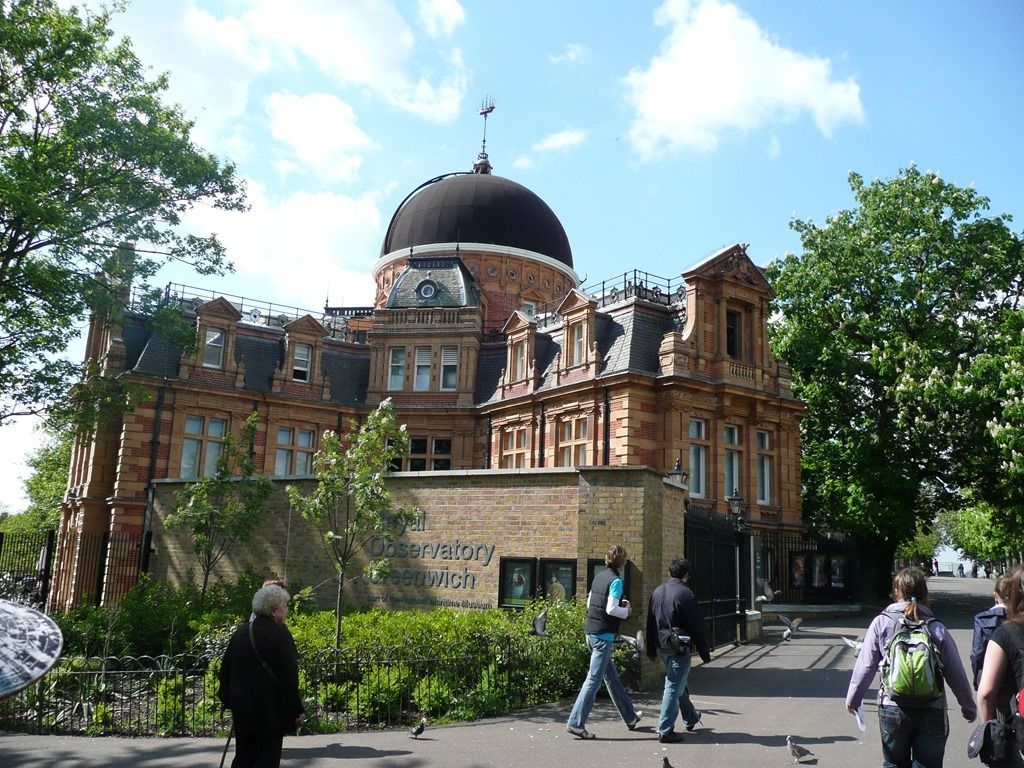
Before 1884 there were no World Hours, but on the contrary, local hours were counted in the hundreds. Because each country, but also each city, had its own local time, defined by astronomical observatories. The oldest observatory is that of Leiden (Netherlands) in 1633, followed by that of Paris in 1667 and that of Greenwich (London) in 1675. The agreement that establishes the famous zero reference meridian GMT (Greenwich Mean Time) was made at the Washington Conference held in 1884 and which brought together representatives from about 25 countries. To please the French, who felt they had priority because their observatory was older, the British promised in return to adopt the decimal metric system, a child of the French Revolution... Surely that was why France did not accept it until 1911.
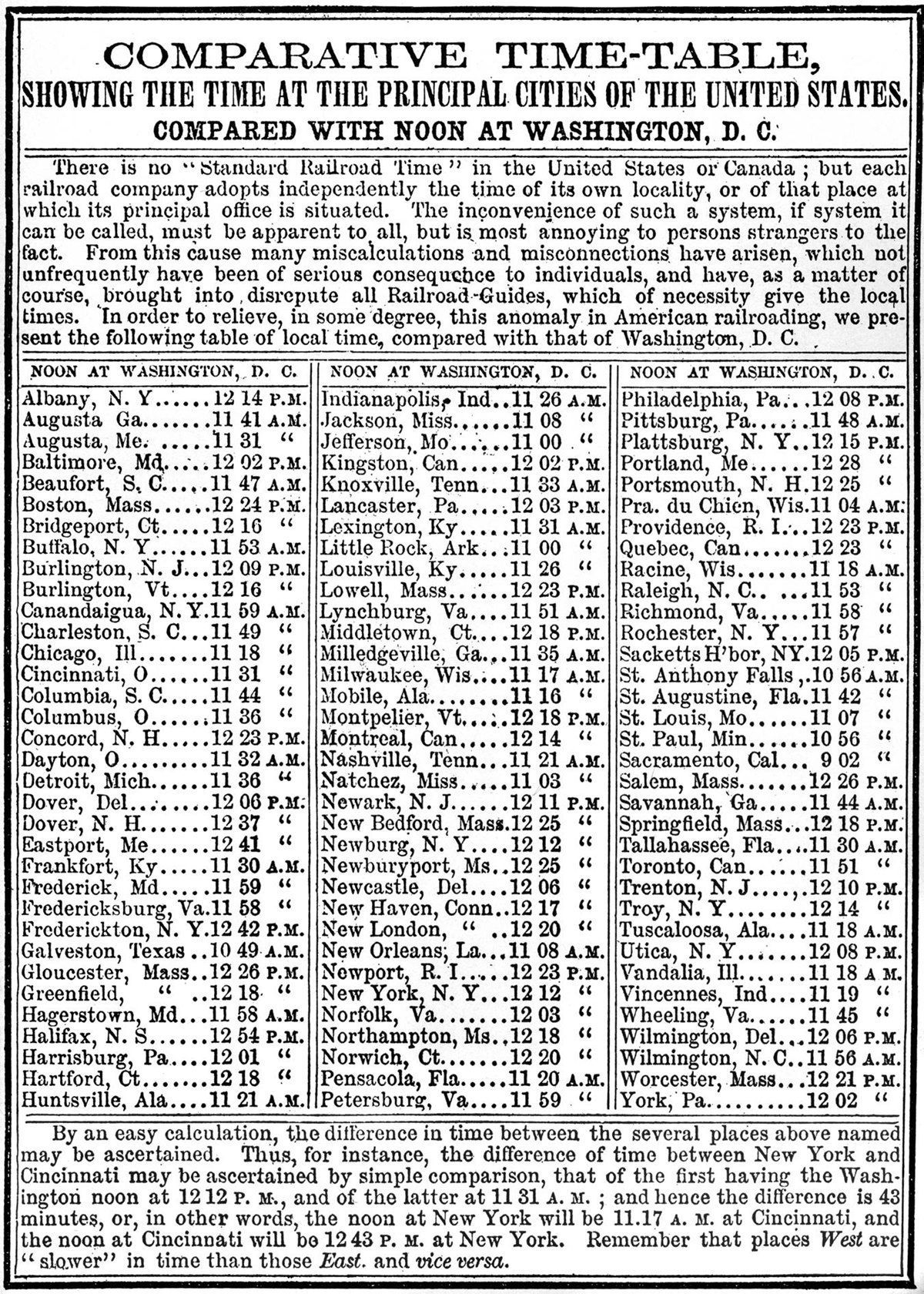
The need to establish such a common standard was given mainly by the development of means of transport, but above all its speed of travel. The first of them, the railway. To get an idea of the prevailing chaos we can read the header of the table of comparative schedules used by the railway companies in North America (USA and Canada): There is no standardized railway schedule in the United States or Canada, but rather each railway company adopts the schedule of its own locality or that of where it has its headquarters»… and explains that this table tries to help by referring those hours to noon in Washington DC. What it does not say - although it suggests it - is that real railway catastrophes occurred because of that time chaos. It's not that there was a big problem over local (short) distances, but the lags and therefore the problems increased proportionally to the distance.

The first steps
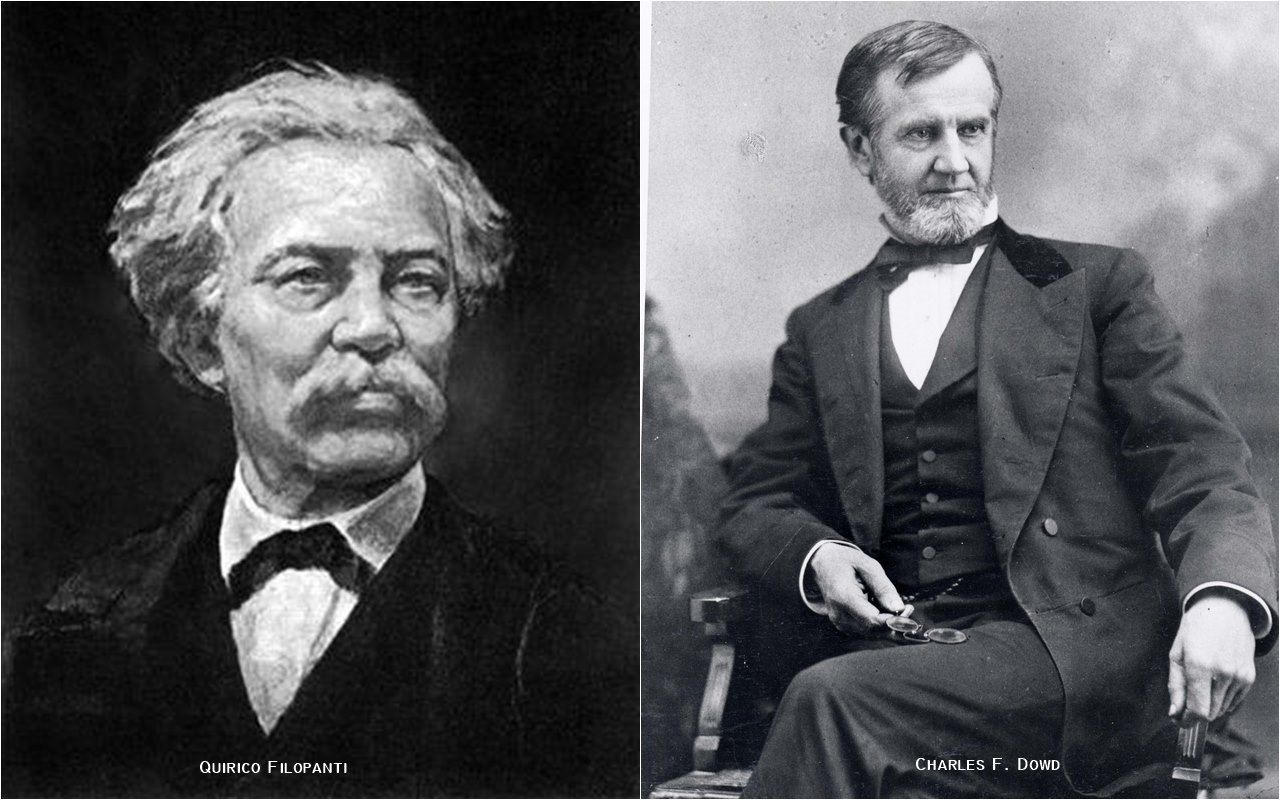
Charles F. Dowd, a school director from New York, was the first to propose (1870) to the superintendents of his city's railroads to divide the country into four time zones of 15º each and marked by meridians, which would have an hour difference between them. The reference would be, of course, Washington. The idea did not prosper, but it was the starting point for Sandford Fleming, a Scottish engineer expatriated to Canada to develop its railway network, to propose in 1879 dividing the globe into 24 time zones (15 degrees each) and establishing a universal time. A somewhat macabre anecdote: Dowd died in 1904... hit by a train.
The Washington conference of 1884 was the seventh! which had been held since 1871 with the same objective, and even so it took seven years from Fleming's proposal. To add an extra twist: the original idea of dividing the world into 24 time zones was neither Dowd's nor, of course, Fleming's: the Italian mathematician Quirico Filopanti (1812-1894) had already exposed this possibility in his book "Miranda!, a book in three parts" from 1858. Unjustly forgotten names to which we owe essential parts of our current way of living.
Louis Cottier, a watchmaking genius
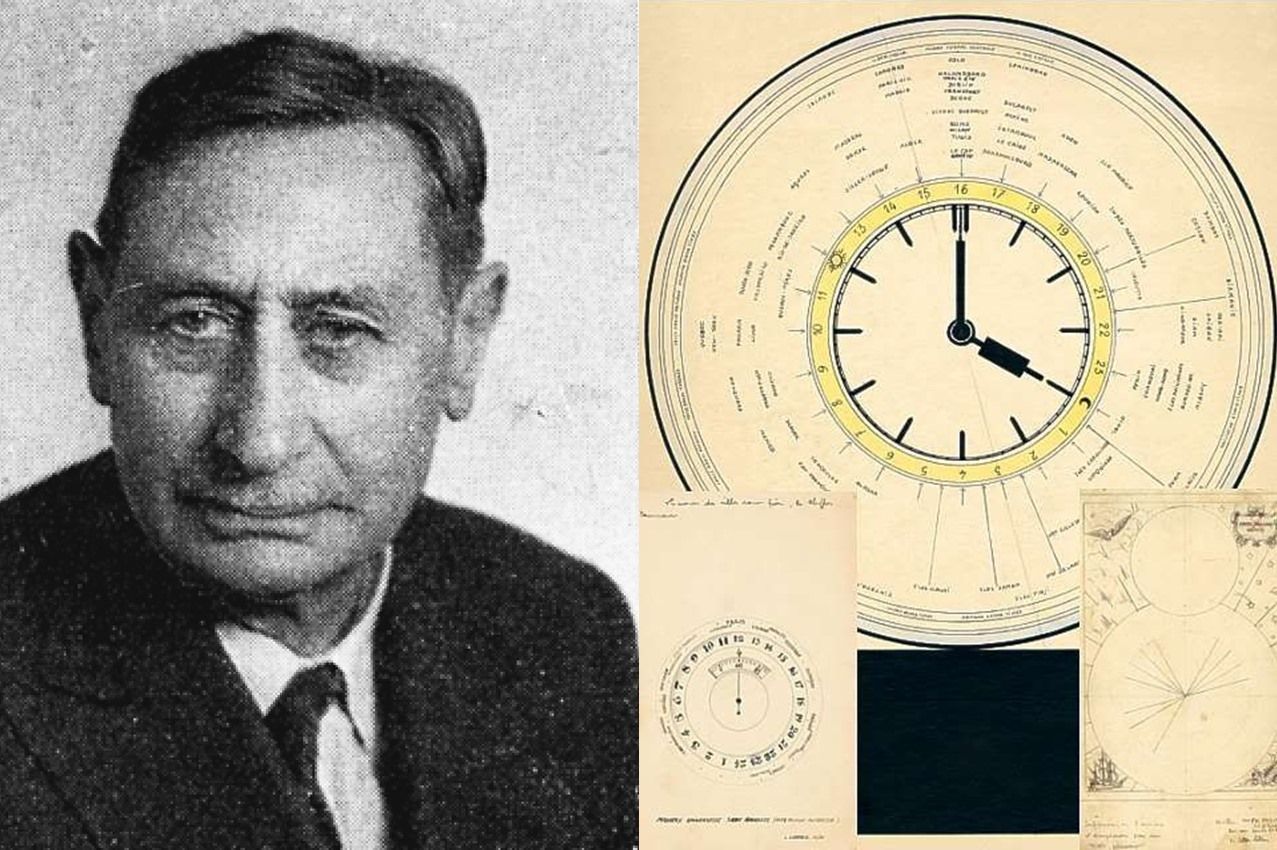
Almost forgotten has been the name of a genius, Louis Cottier, watchmaker-inventor, who in 1931 created an unprecedented mechanism, capable of simultaneously indicating the hours of those 24 time zones into which the world had been divided. It basically consisted of a ring that rotated on a disk where the names of the main cities located in the different zones were inscribed. Almost 50 years had passed since the Washington agreement, and actually much less since all countries finally implemented that agreement. He proposed his invention - installed in a pocket watch - to the then well-known jeweler Baszanger, but the large houses soon became interested in him.
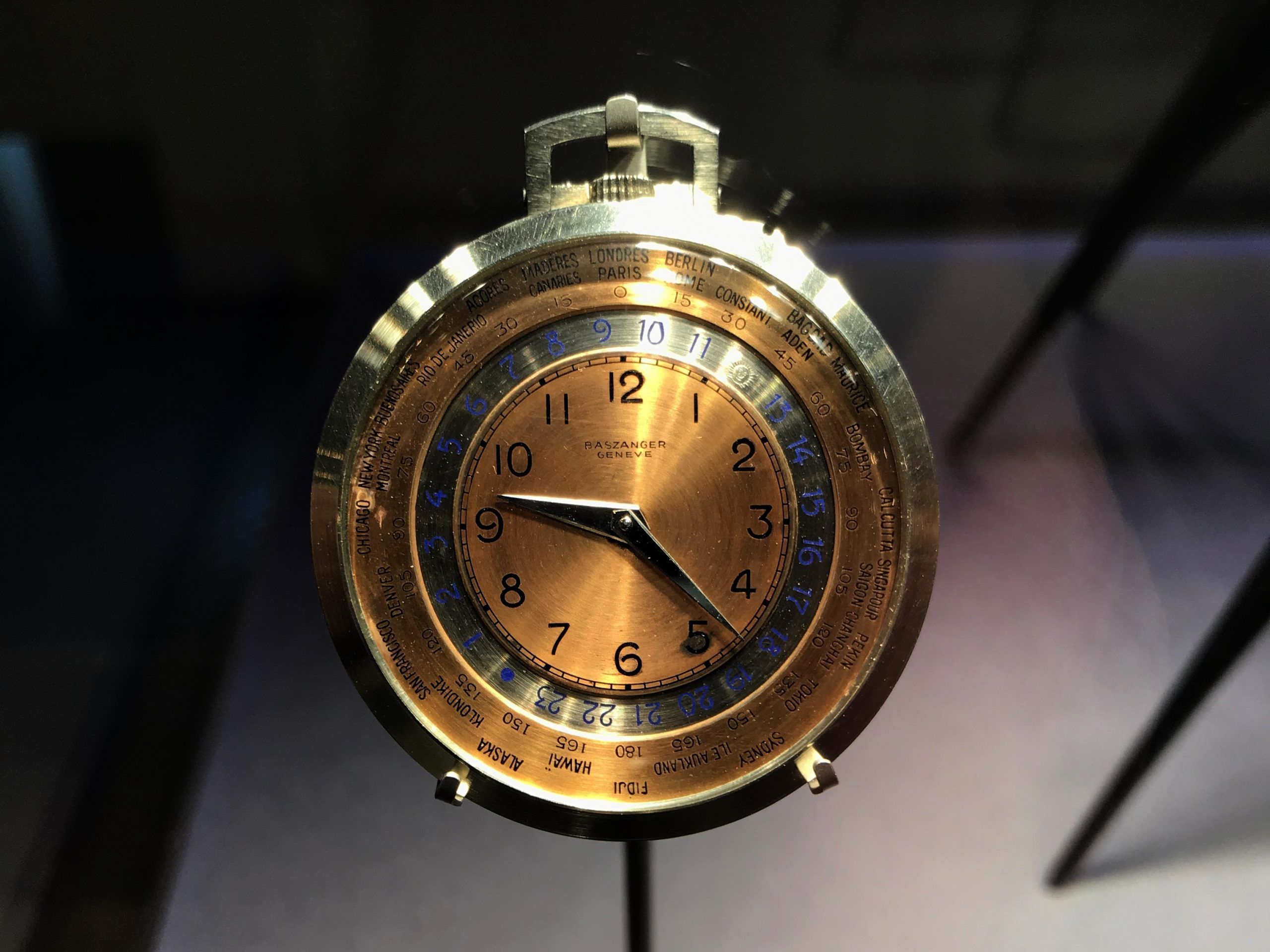
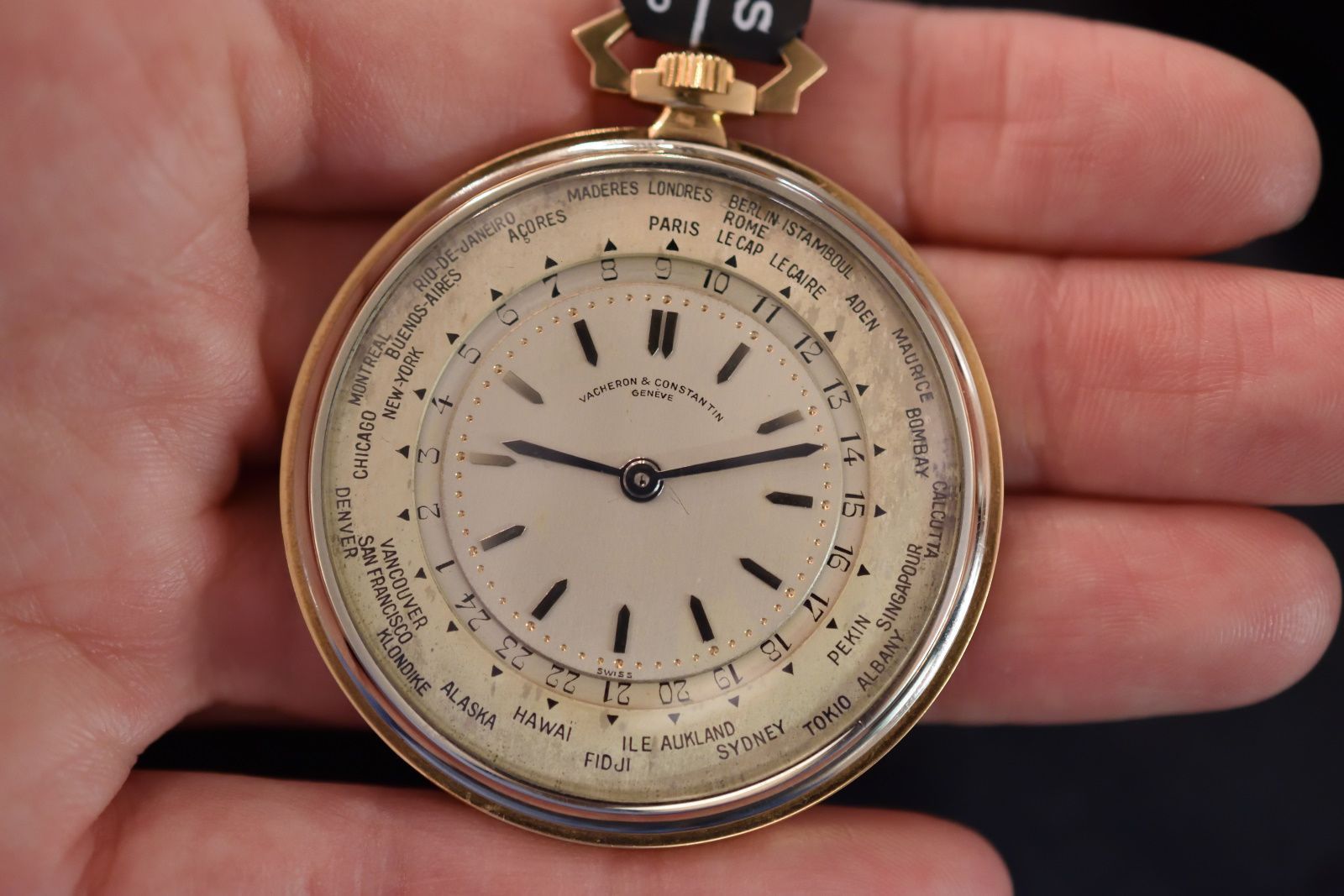
Vacheron Constantin (for whom Louis's father had already worked), Agassiz, Rolex (Cottier was later hired to look after Hans Wilsdorf's own watch collection) and Patek Philippe already perceived the practical usefulness of the complication developed by Cottier. And it was precisely Patek who had the most intense and long-lasting relationship with the watchmaker: since 1937 there have been countless (it's a way of speaking) world time references. It should be said, however, that after Baszanger's the first watch with the Cottier mechanism was made for Vacheron Constantin in 1932. And that Rolex only ordered twelve watches: six in 1943 and six more in 1947.
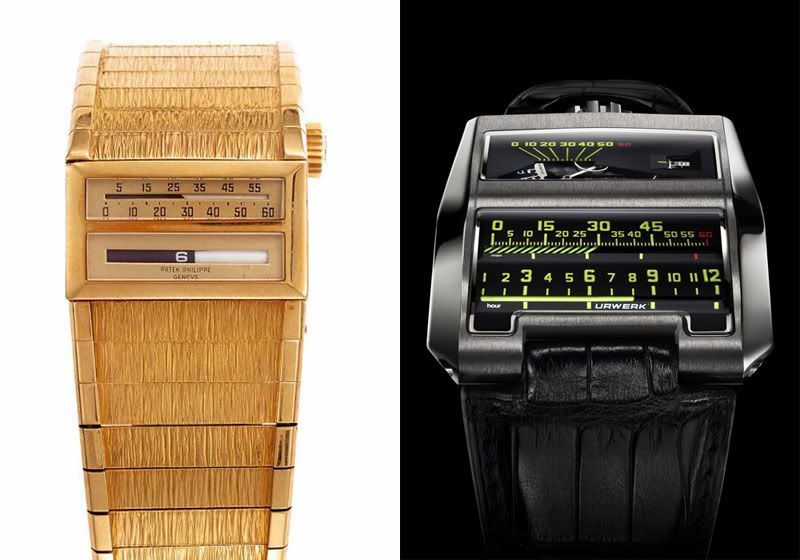
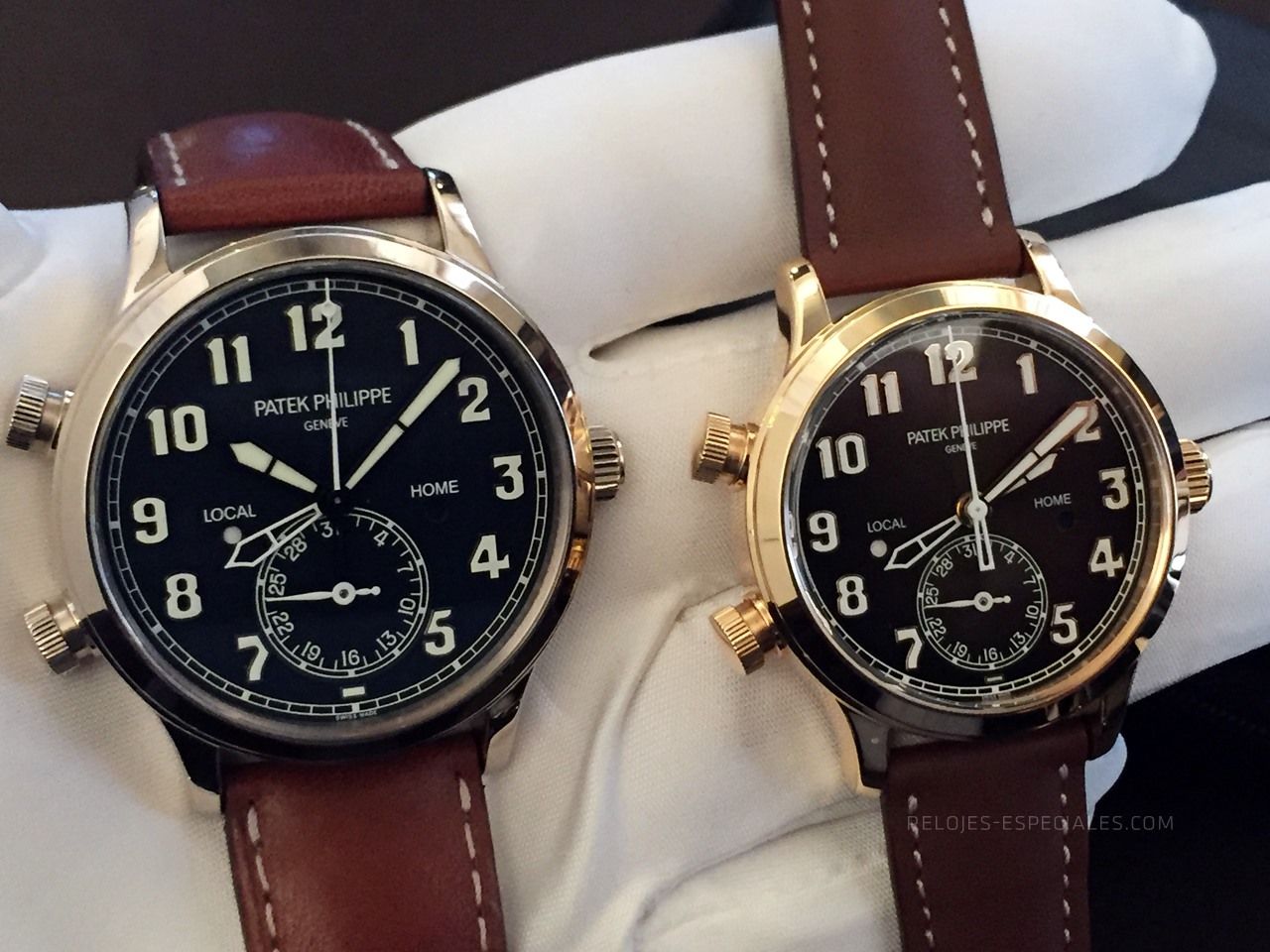
In the years after this first watch, Louis Cottier produced all kinds of variations on the world time theme, creating a rectangular movement (1937), then a small women's watch (1938), to which he added a chronograph (1940) and a second crown, and also simplified its use (1950). Like a good inventor, he imagined new solutions. Like a watch with a single movement that controlled two dials, or a watch that showed the time of a second time zone with the help of a third hand... (which Patek used in its Calatrava Travel Time). By the time he died in Carouge, a small town almost adjacent to Geneva, in 1966, Louis Cottier had designed and built no less than 455 different movements. And he had left to Patek the technical development of the legendary Cobra, a watch that was never manufactured commercially but that forty years later inspired the innovative Urwerk team.
How a World Hour works
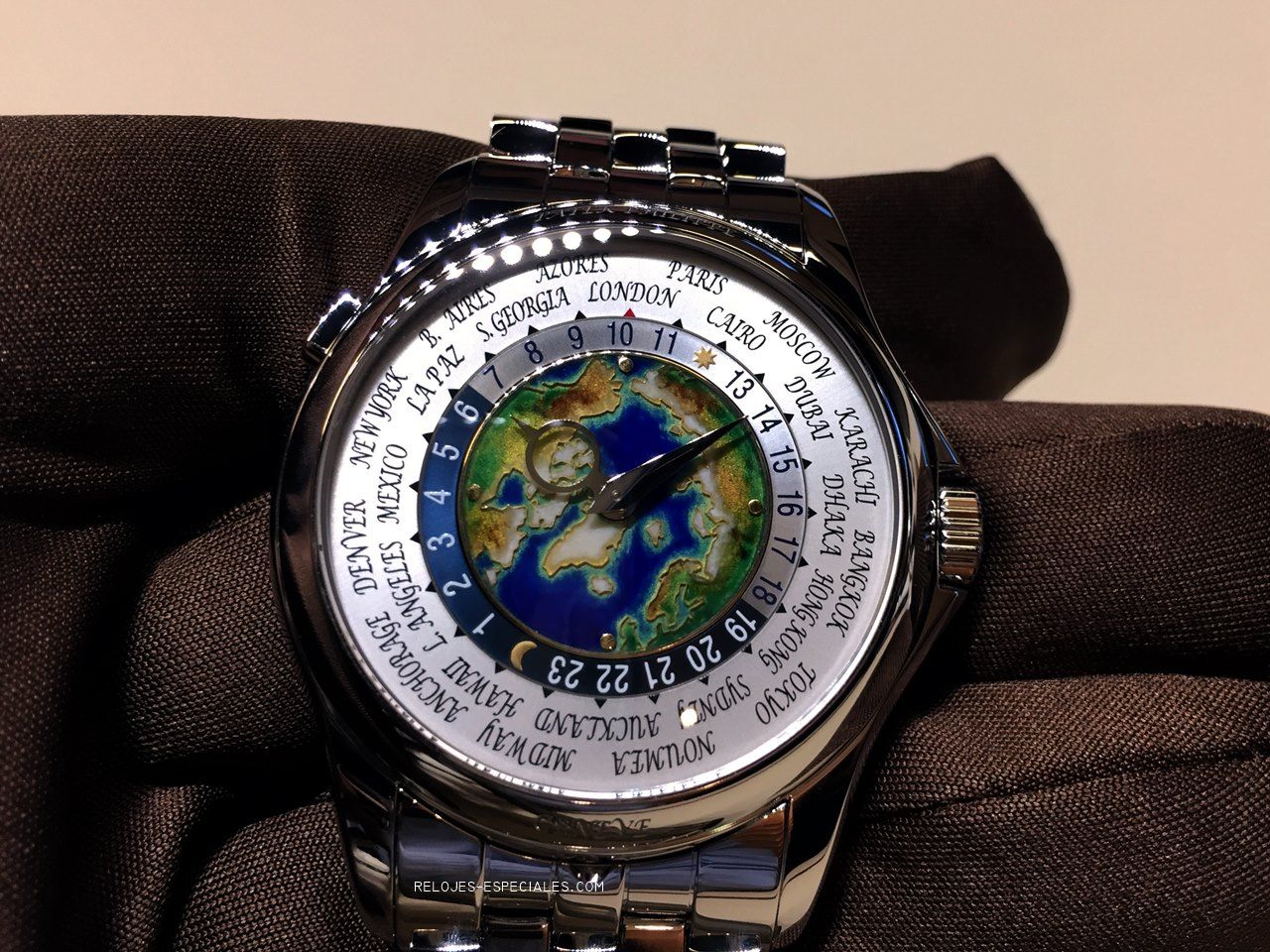
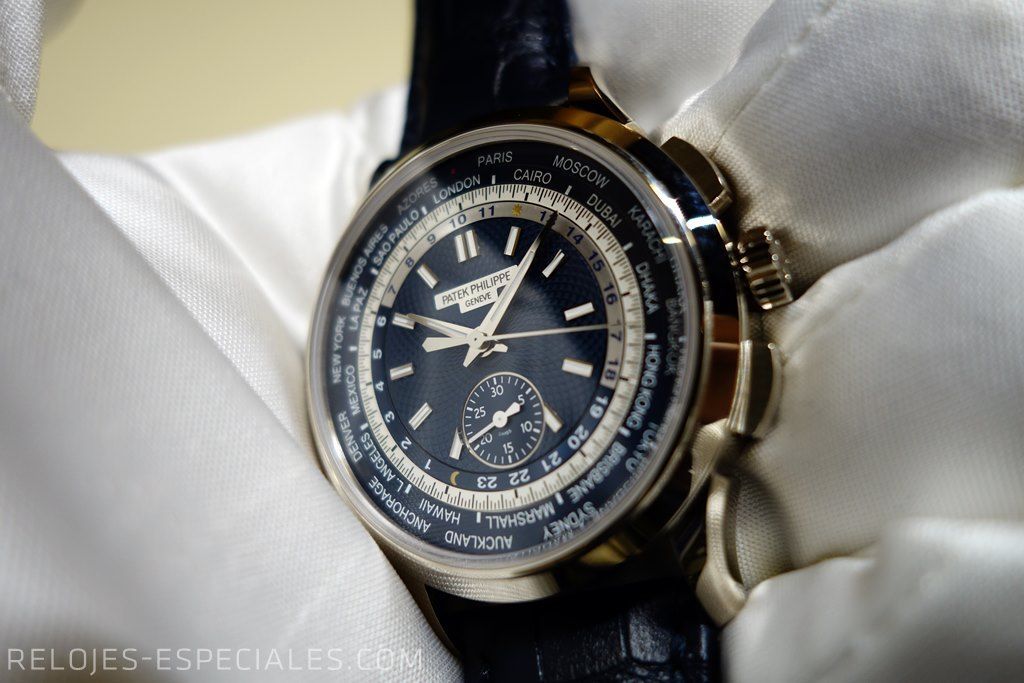
Cottier's basic principle is ingenious. Around the central dial with hour and minute hands indicating the chosen local time, a 24-hour disc automatically rotates, one skip each hour counterclockwise. On the periphery of the latter there is another disk (ests fixed) that shows the reference cities. A practical example: It is 10:10, you are in Geneva, whose name is next to the number 10 on the 24-hour ring. London is next door, opposite 9 in the morning. An hour later, the hands indicate 11 in the morning, the ring made a turn and announced that it is 10 o'clock in London, 7 o'clock in Rio, 20 o'clock in Sydney... and you have 24 hours of the day in view. Later, Cottier himself would improve his own invention by also making the external disk mobile through a second crown. By the way, the World Hour records say a lot about the time, the geopolitical context or the fluctuating importance of the places mentioned, because the reference cities have changed over the years: there was a time when Caracas appeared...
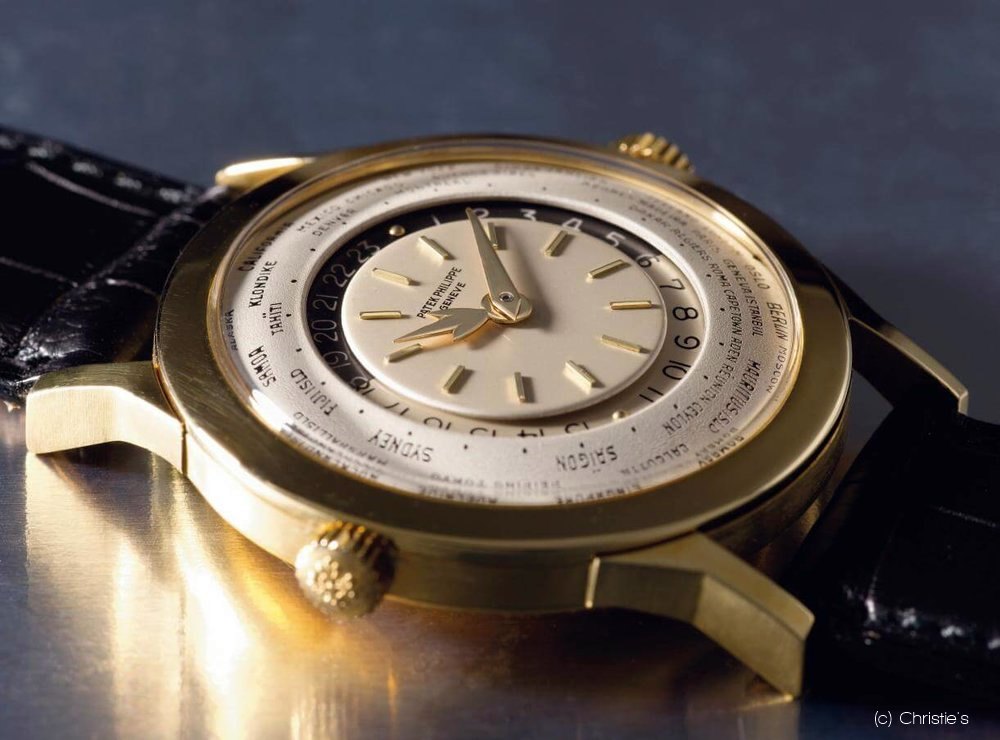
Finally, and in case it was not clear...
Simple, perhaps. but coveted
World time is a modest complication in the strict sense of the word if you will, but it has not prevented one of these watches from being on the Olympus of auction records since 2002: A platinum Patek Philippe 1415 produced in 1939 fetched 6.6 million Swiss francs at auction. This was seventeen years ago.
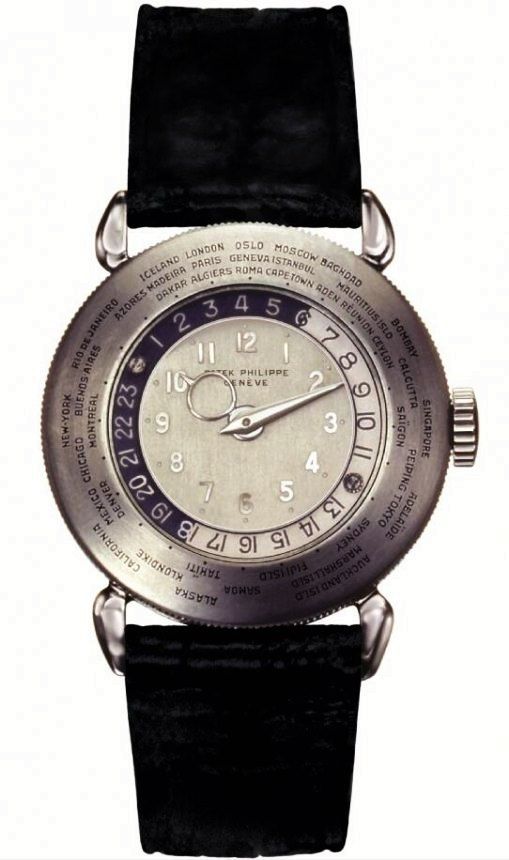
Patek Philippe Exhibition: “Le Voyage”
This very long introduction serves to evoke the exhibition that Patek Philippe recently organized precisely on the occasion of "travel watches" and World Hours. "Le Voyage" is an exultant exhibition of technique and good taste nuanced, as always, by the elegant discretion that characterizes the Geneva manufacture.
And the effort deployed was no small feat, because in addition to displays explaining the history, they had brought some pieces directly from the Patek Museum (a visit, by the way, that I fervently recommend).
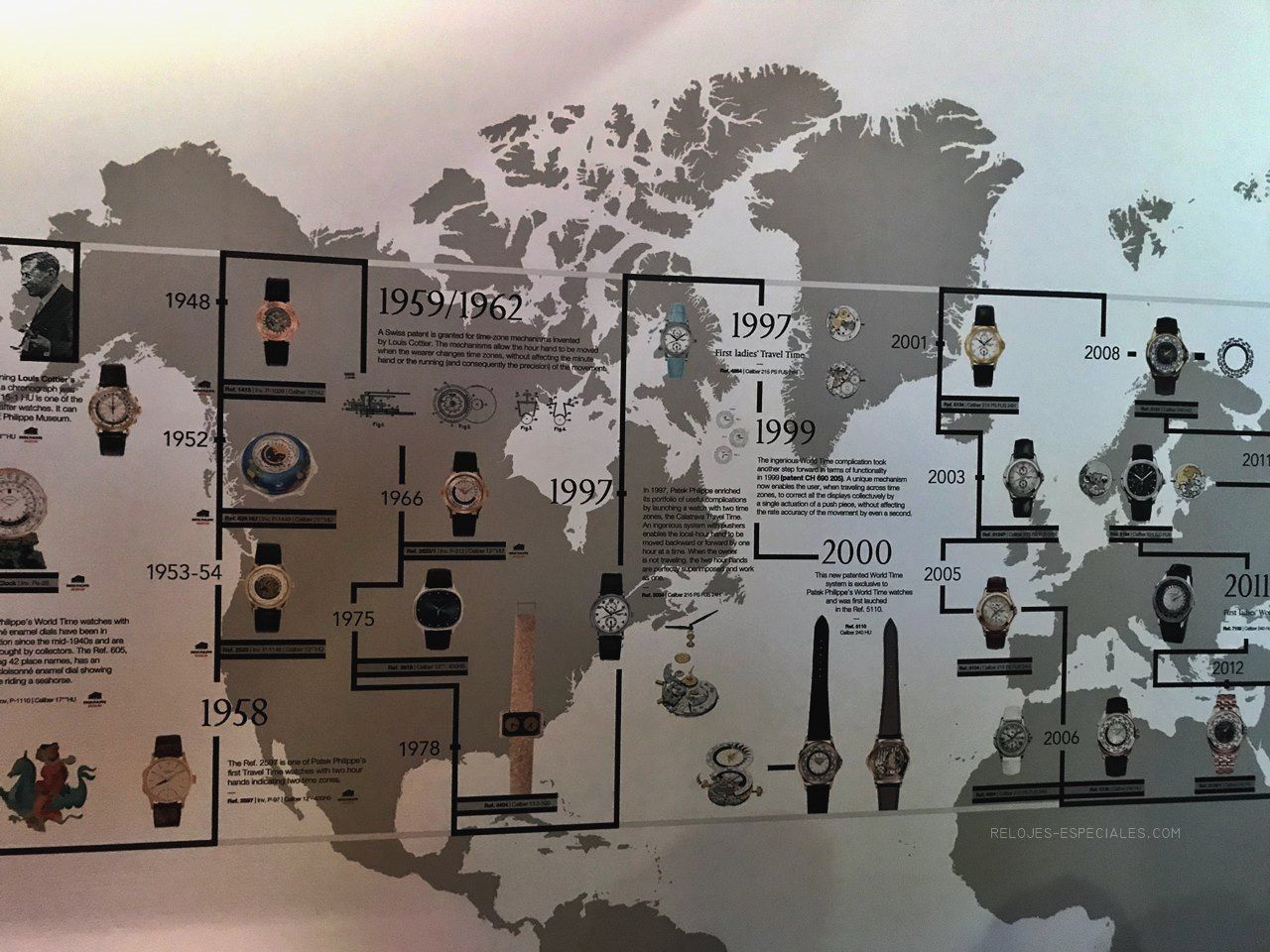
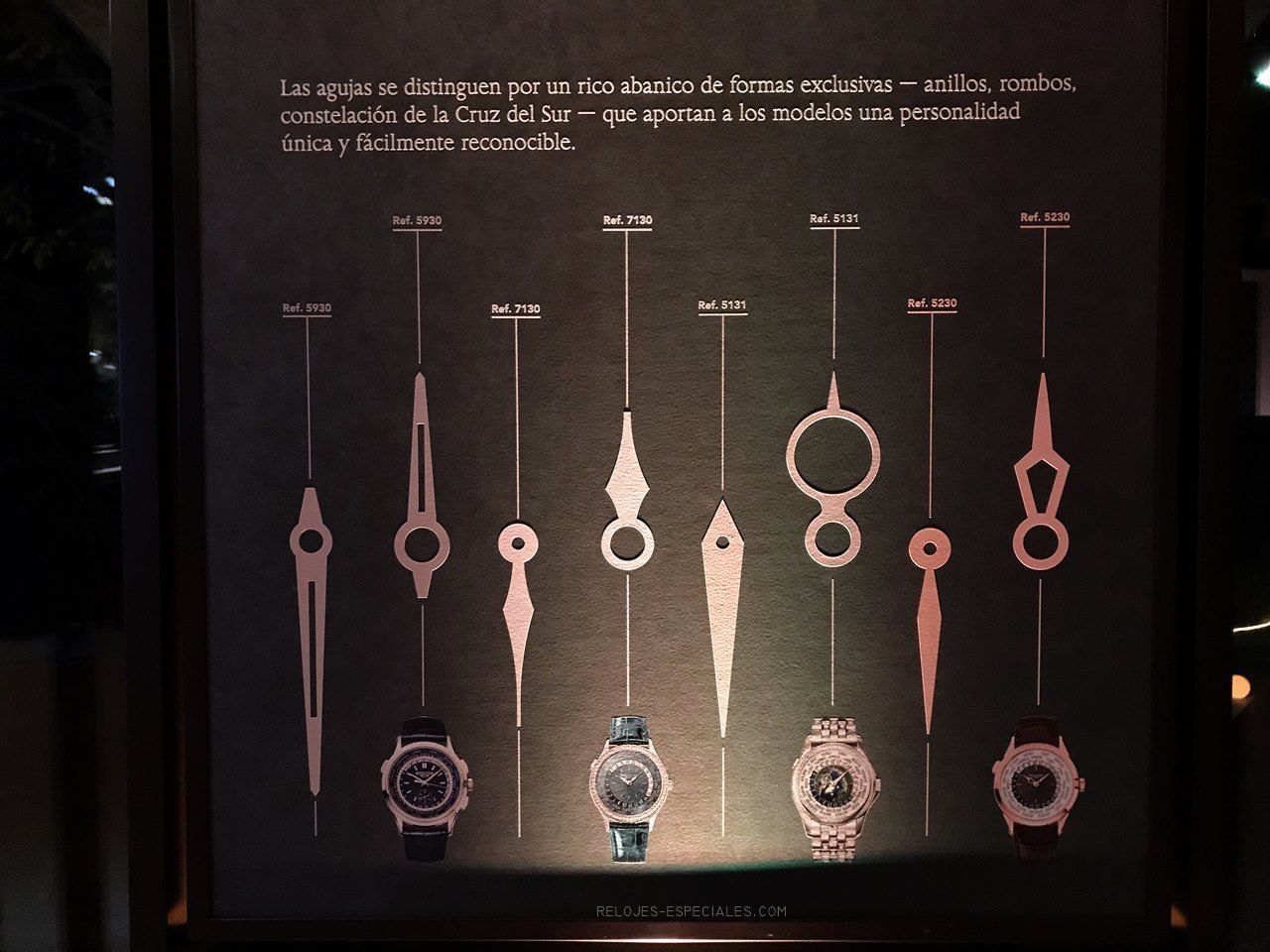
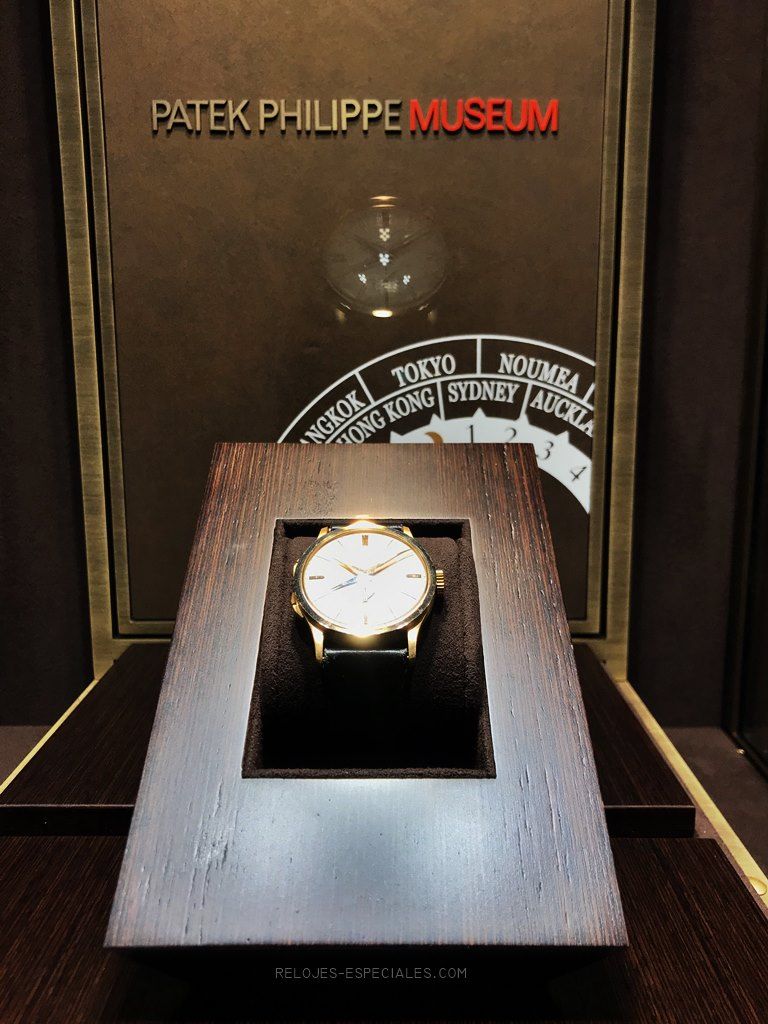
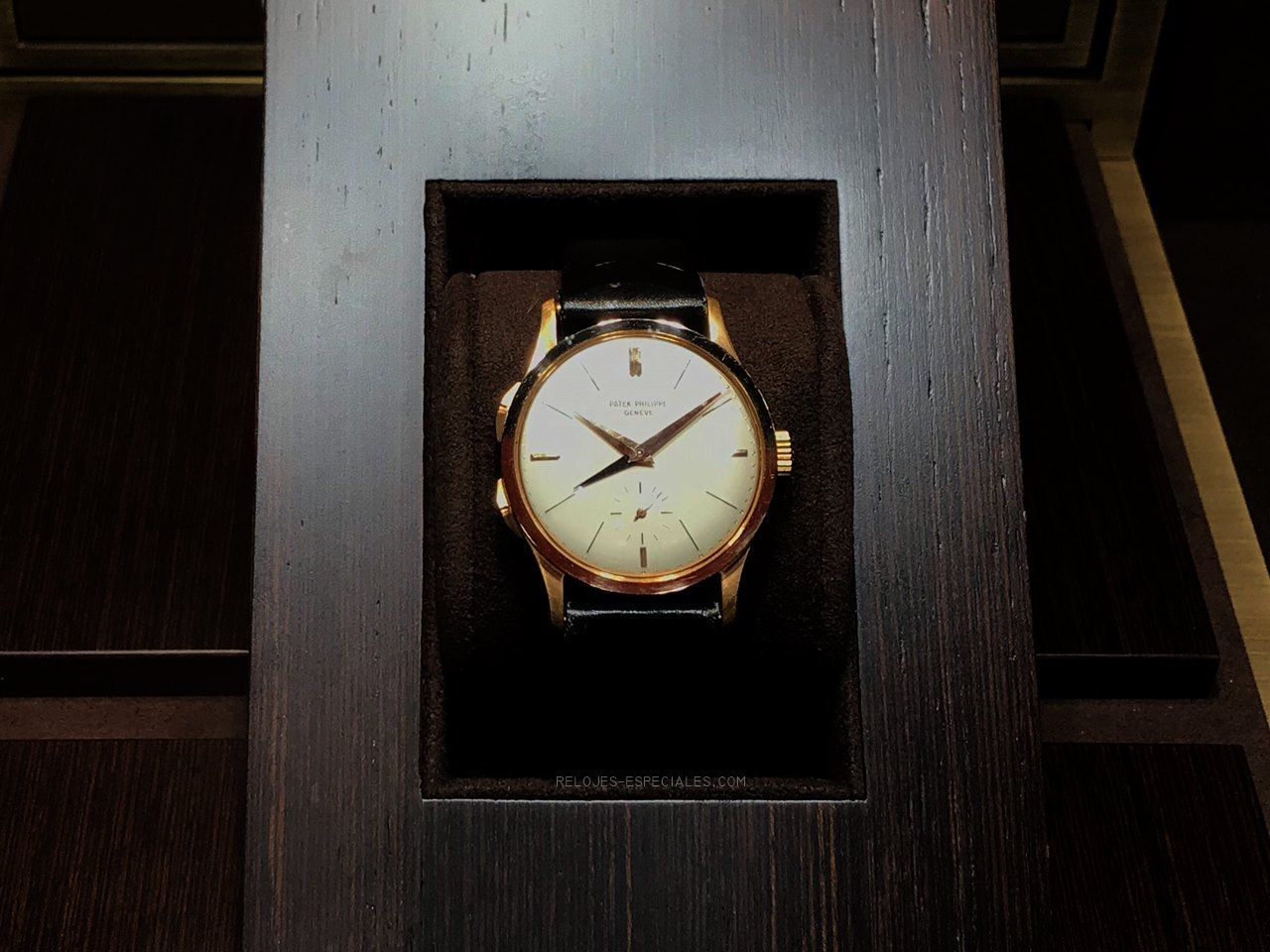
But the explanations were not just static: Patek's "chief" watchmakers were also there to reveal "live and direct" the mysteries of dual time and world time.
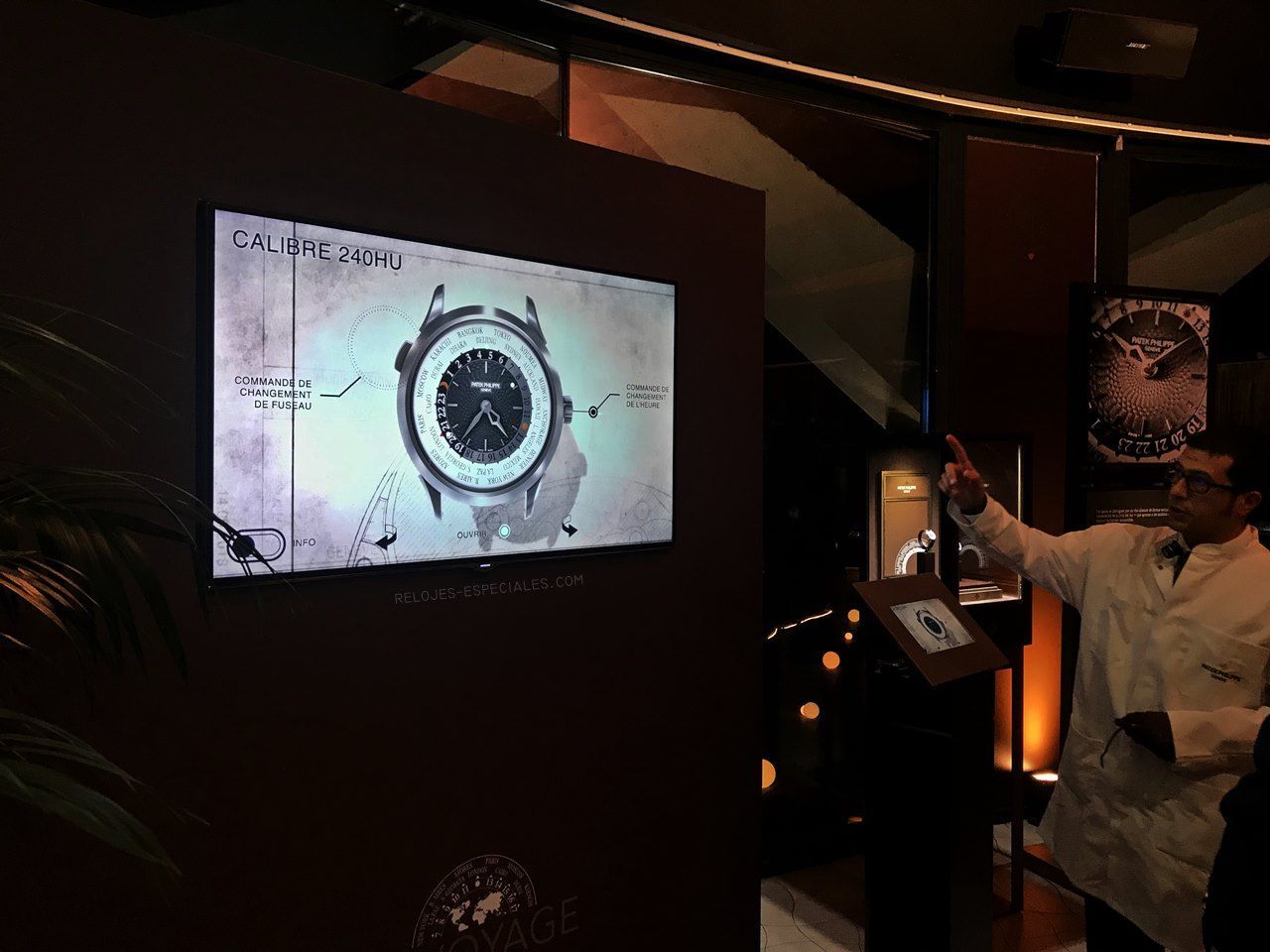
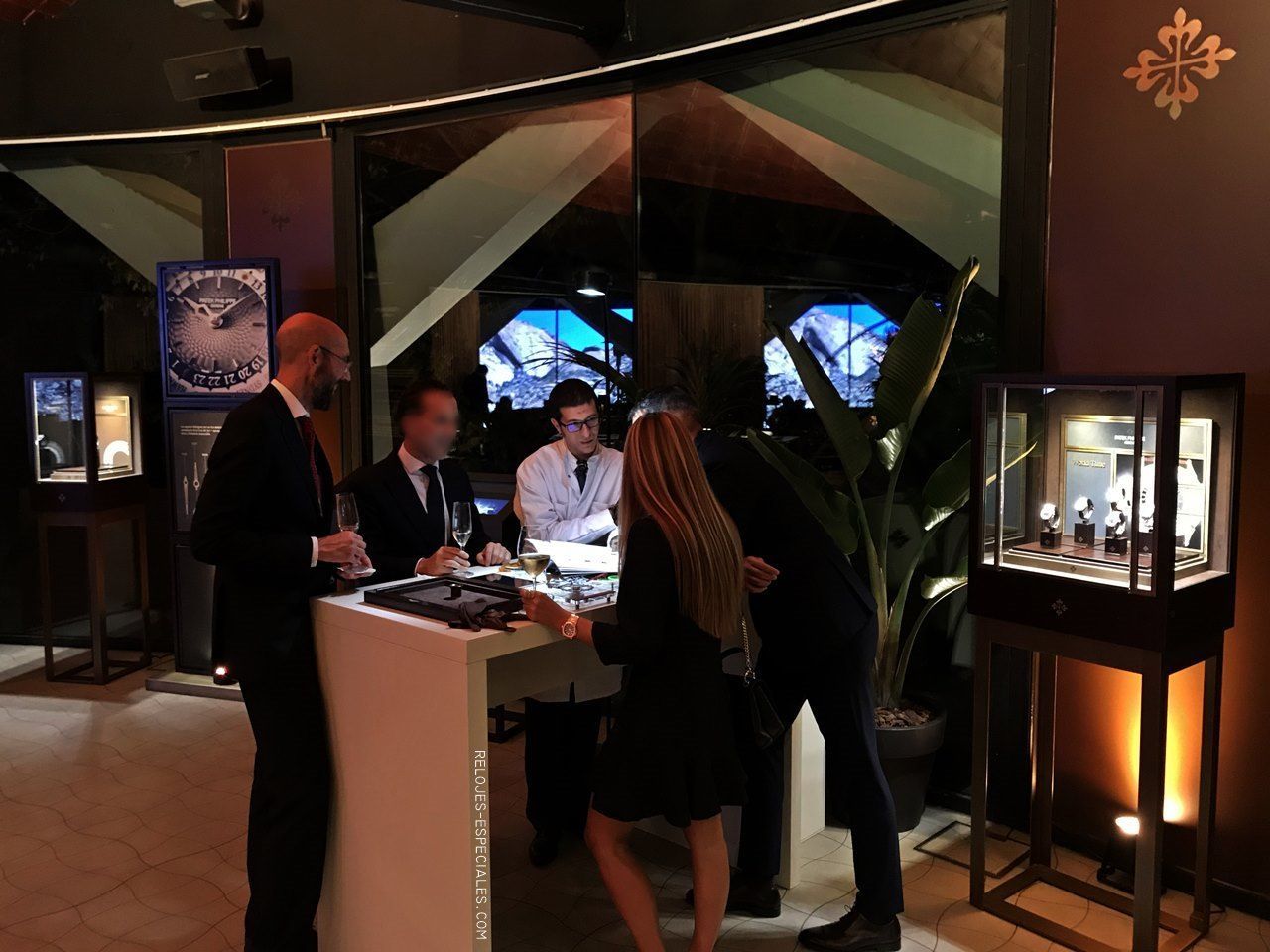
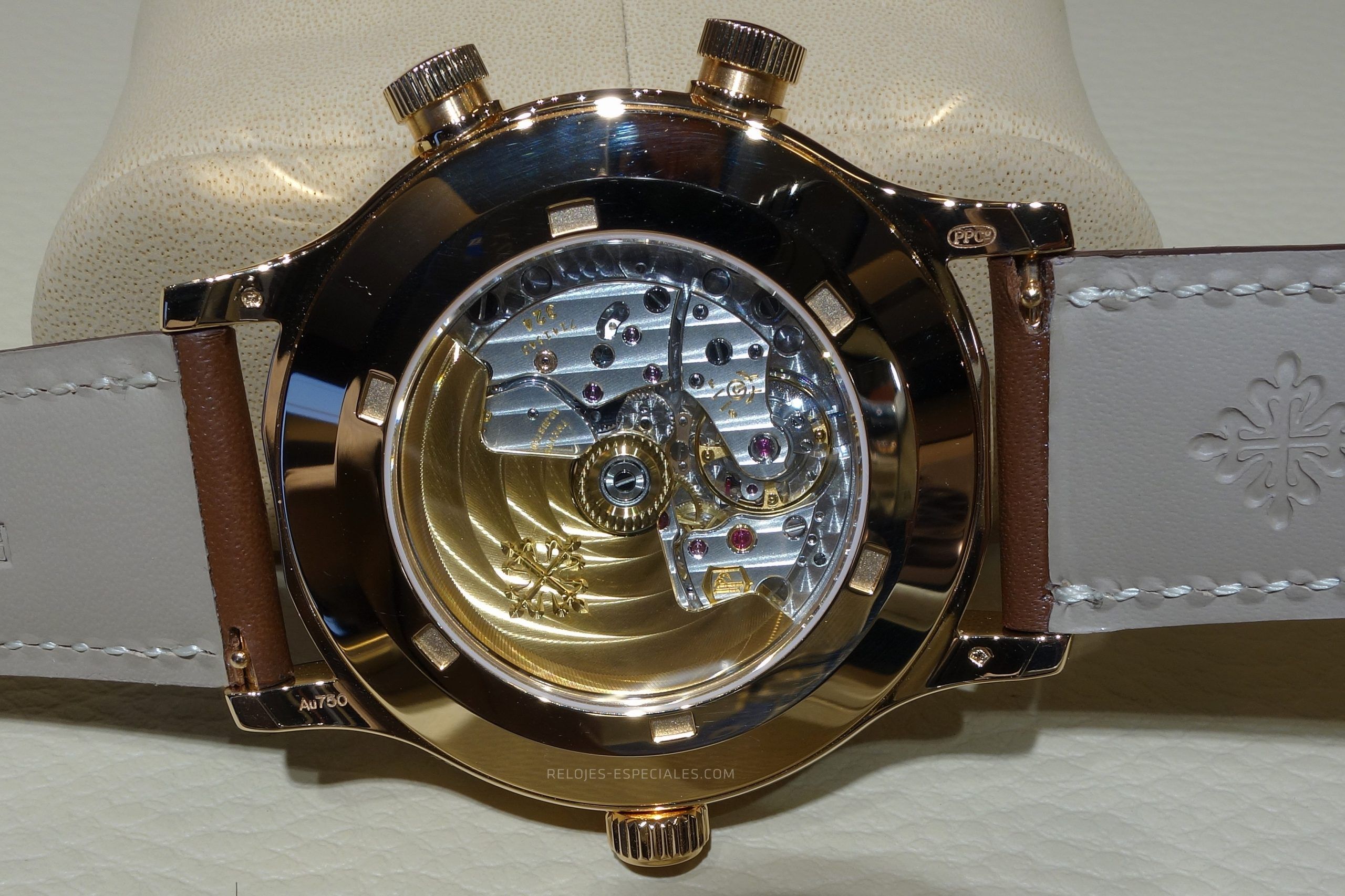
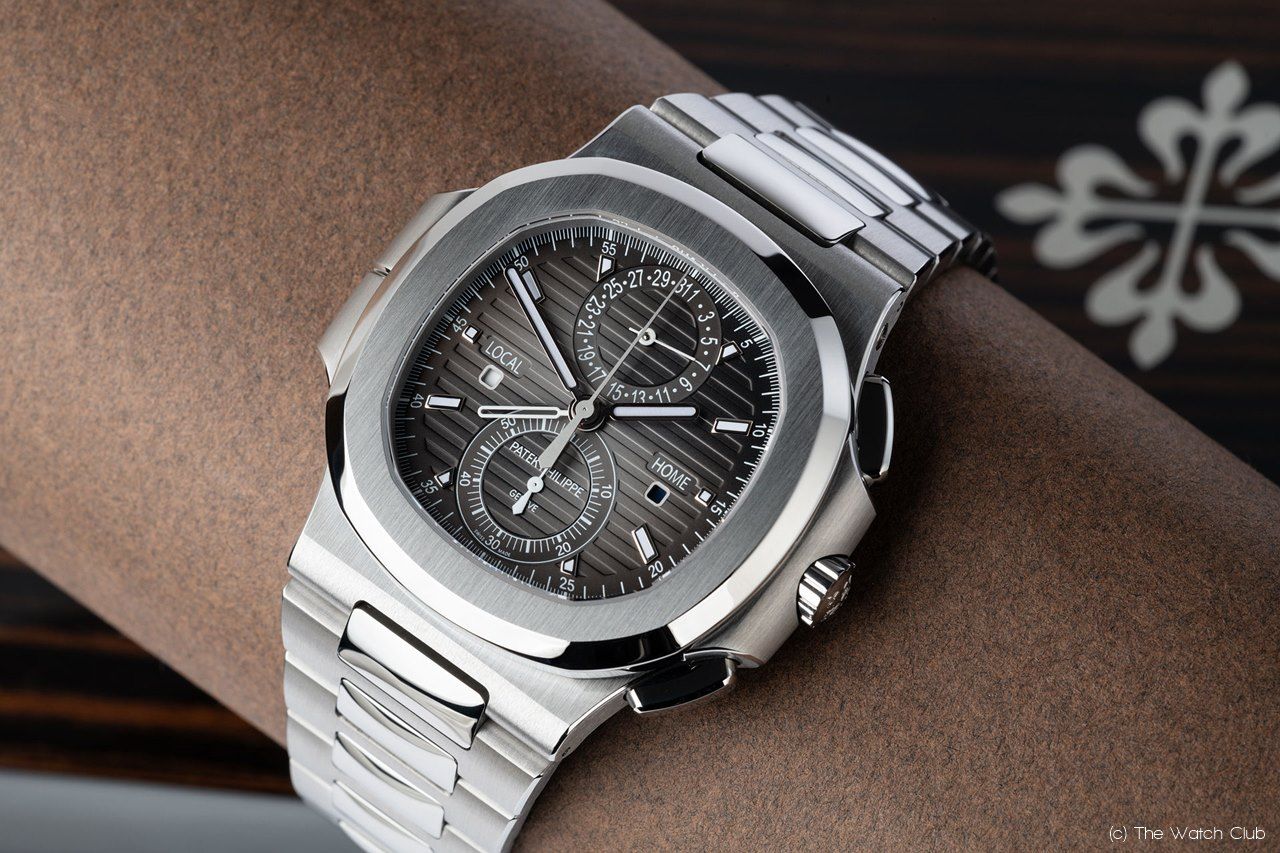
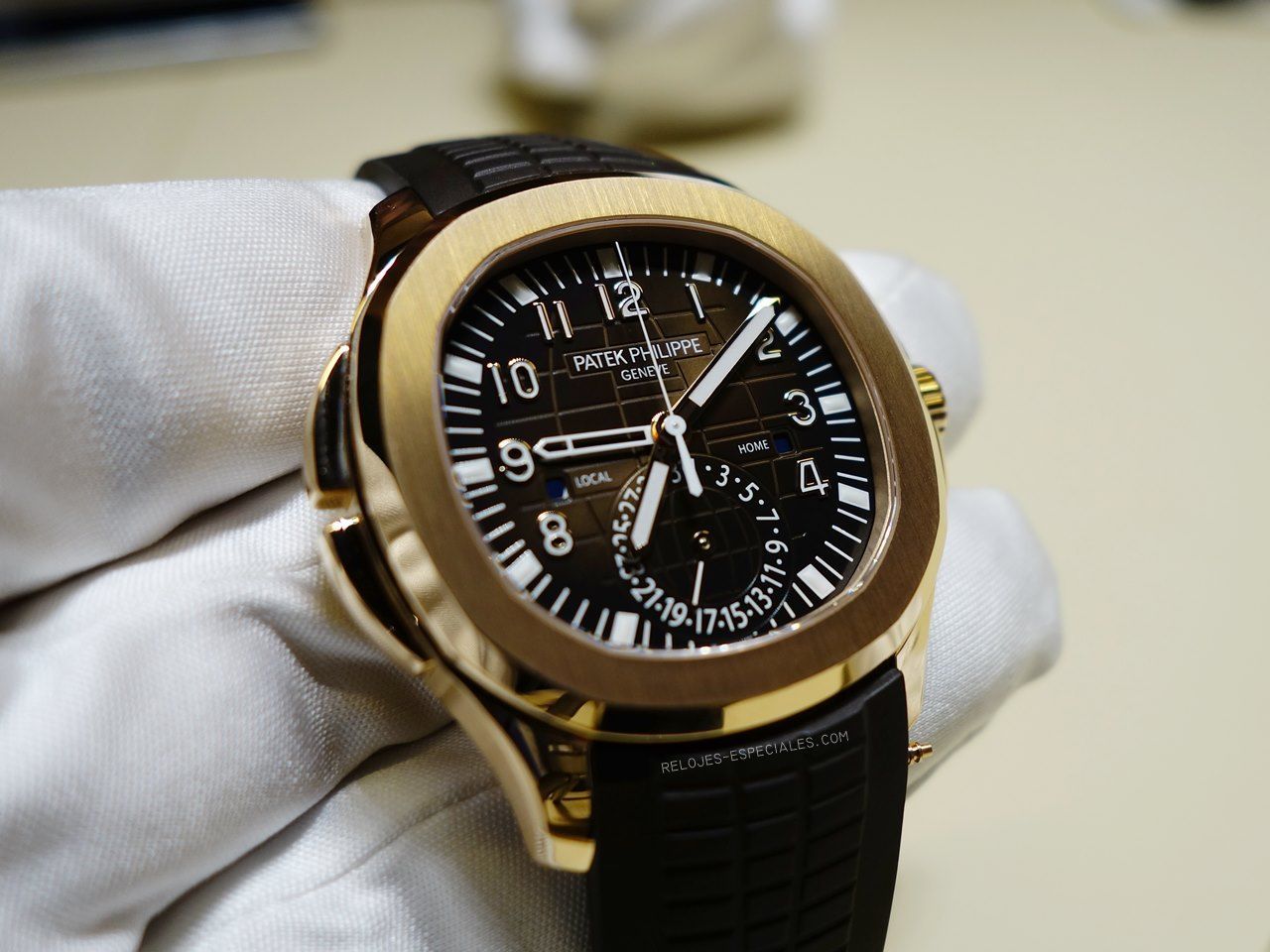
The current Patek Philippe collection consists of more than 160 models (not counting the different references per model) grouped into eight families. Two of them are dedicated to travelers: World Hours and Travel Time. The first includes the watches that give rise to this article, with the ingenious invention of Louis Cottier as its alma mater, while Travel Time houses members of different families, such as Calatrava, Nautilus or Aquanaut.
More information atpatek.com










