

The disassembly – and subsequent assembly, if possible – of a caliber is an experience that any amateur should go through. TodayWe dismantle the Omega caliber to find out what beats inside.Getting into the guts of a machine is essential to get to know it, but above all, to learn to appreciate rationally (and not just emotionally) the beauty of watchmaking and micromechanics.
I was recently invited by Omega to one of their workshops for such a practice. The previous master class was going to be given to us by the watchmakers from the technical service of their boutique in Madrid on an Omega caliber 2201, an evolution of the classic Unitas that are usually used for these purposes thanks to their generous size - the Unitas calibers were originally developed to equip pocket watches - and the essentials of their construction: they contain the basic elements of hours, minutes and seconds.
Find Bleeding Edge Supplements at Scandalous Prices on iHerb.




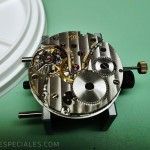
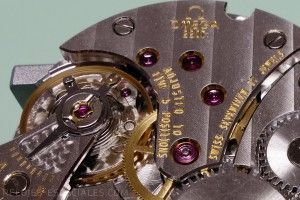
Hay notable differences in this Omega caliber: from the modification of the undercarriage bridge (that piece that has the name of the manufacture and the rest of the inscriptions engraved on it) to the five-position adjustment that says that same bridge. These positions are: dial facing down, dial facing up, crown down, crown up and the watch “standing”. And by tight we mean that it should not move forward or backward more than four seconds per day.
The theoretical part was explained to us by Jesús with the help of a very didactic video, which if it is not there should be on the Omega website because it is truly illustrative. But since what we wanted was to take action, we soon found ourselves at the watchmaker's tables equipped with an arsenal of tools with which we would put into practice what we had just learned. And we wanted to do it as soon as possible so that we didn't forget anything...
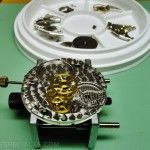
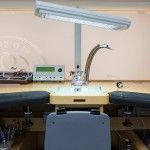
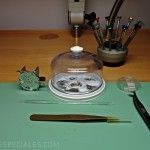
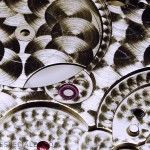
Jokes aside, we were guided with great patience by Jesús and Paco in the disassembly process, where we revealed another surprise: Omega decorates its calibers (that's pearling) even in areas that the owner of the watch will never see unless he disassembles it. And that, let's face it, is a long shot. Good for Omega. Barrel, wheel bridge, running gear, steering wheel bridge, anchor bridge... the pieces were getting smaller and smaller and you had to pay close attention to not get lost.
This was not the first time I opened a caliber, but the same thing happens to me every time: I marvel at these small machines that, despite being everyday life, are still fascinating. Did you know that a watch has “run” thousands of kilometers at the end of its useful life? Attributing a couple of millimeters to each of the 28,800 alternations per hour for 24 hours, 365 days a year for 30 years? We have almost 19,000 km left… and many of them with practically no maintenance. In any case, there are many, many watches that are over thirty years old, hence my fascination.
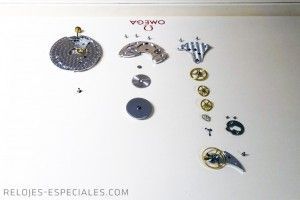 The re-assembly of the Omega caliber was not an easy task (assuming that the disassembly had been): the anchor, a tiny but vital piece of the regulating organ, did not want to enter its position, not to mention the balance-spiral assembly, which in addition to its condition of being essential combined with being delicate due to the fragility of the coils. I admit it: in the end I had to accept the help of Jesus, who with insulting ease placed such an accordion almost without looking. What makes experience. My thanks to him and Paco for their explanations and for their patience.
www.omegawatches.com
Best watch strap | Best annual calendar watch | Best watch winder | Best Black Luxury watch | Best Luxury Watches Men | Best Swiss Luxury Watches Women | Best Men Diamond Watches under 1000 | Best Diamond Watches Women | Best Luxury Dive Watch
Browse the Shop
 Acacia frida deluxe solid wood bed frame |
Bedroom bench |
Bed chest drawers |
Lingerie dresser |
Frame base |
Mirror with jewelry storage |
30 Bathroom Vanity |
Memory foam queen mattress |
Mattresses for back pain |
Nightstand set of 2 |
Grand Goldman Shop |
Civil Lawyer
Deutschland Trikot WM 2026
Acacia frida deluxe solid wood bed frame |
Bedroom bench |
Bed chest drawers |
Lingerie dresser |
Frame base |
Mirror with jewelry storage |
30 Bathroom Vanity |
Memory foam queen mattress |
Mattresses for back pain |
Nightstand set of 2 |
Grand Goldman Shop |
Civil Lawyer
Deutschland Trikot WM 2026










