

"A Patek Philippe is never entirely yours. Yours is the pleasure of guarding it until the next generation" is, perhaps, the best advertising slogan in the history of watchmaking. Like everything he doesPatek Philippe, who not only has excellence as his banner but also tries to improve those around him. Like, for example, Fluckiger.
Special Watcheshas had the privilege of being invited to what I called the level two visit, since the components of this expedition had “exceeded” level one (visit to the manufacturing, the watch workshops and the pre-cutting of cases) at the main headquarters of Plan les Ouates, next to Geneva, and the Salon de la maison in the capital itself. This time our trip was destined for the no less mythical towns of Saint Imier and La-Chaux-de-Fonds, in the Jura Valley, famous for being the cradle of countless historical brands.
Find Bleeding Edge Supplements at Scandalous Prices on iHerb.

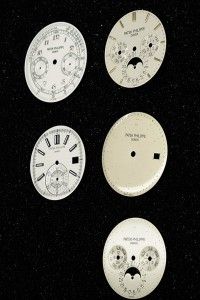 The reason was none other than to know the manufacturing process of somethingas important in a watch as the Patek Philippe dials are(or quadrants, or covers), where it is almost inevitable to remember Cicero's phrase that says that the face is the mirror of the soul. How could it not be otherwise,Fluckiger, as the company is called, shares Patek's excellence:Not in vain is it a 100% owned subsidiary of the Geneva maison and is imbued with the same principles. But not only that, we would also see the finishing (turning and polishing) of cases and – truly impressive – the “sertisage” or setting of stones, both on dials and on cases, this time in La-Chaux-de-Fonds where they are found.Calame, SHG y Poly-Art, the three companiesalso owned by Patek Philippewho are in charge of these tasks and which will be told in another article.
It should be said here that what we could call the most emotional part of a manufacturing such as this is combined with a solid business vision that has madein just ten years Fluckiger(founded in 1860 and owned by Patek Philippe since 2004)has gone from forty to one hundred employees, and that in both Plain les Ouates and La-Chaux-de-Fonds there has been plenty of room for imminent growth. And if there is something that Patek Philippe masters perfectly, it is the combination of the “metiers d'arts” or artisanal trades with the latest technologies available such as five-axis CNC machines, and all this needs space.
 The first stage of our trip was aimed at St. Imier, the headquarters of Fluckiger, as I said. Its production capacity is 100,000 spheres per year, an amount that clearlyexceeds Patek Philippe's annual watch production, encryptedbetween 53,000 and 55,000 units. Fluckiger also supplies other major brands, including Audemars Piguet, IWC and some of the Swatch Group. They divide their offer into large (500 spheres), medium (100 spheres) and small series (one to five) for which they carry out between 50 and 110 operations, and the average manufacturing time can be four months... yes, yes: I am talking about a single sphere.
Los Materials used to make a dial are varied, and range from brass to gold, including enamel and mother-of-pearl.. The latter are deposited or adhered respectively on a brass base (or an alloy called tombac in the case of enamel) and undergo a particularly delicate process. In the case of mother-of-pearl, due to its extraordinary fragility because sheets of tenths of a millimeter thick are used, while enamel requires great skill - the result of experience - to obtain smooth surfaces like a mirror, since it has the annoying tendency to form bubbles that once out of the oven appear as small craters. Afterwards, the indices can be printed using a pad. Although that will not be the end: we will have to make the holes for the needles, weld the feet that will fix it to the movement and finish cutting the metal base plate.
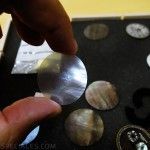

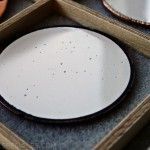
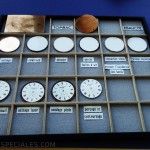
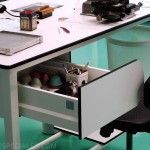
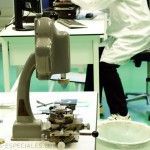
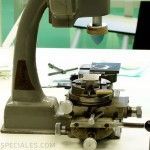
However, the most artisanal part in a sphere factory is guillocheing: it requires what could be called an artist-technician (or an artist-technician) because the sensitivity necessary to develop a job like this is combined with the ability to "understand" and, above all, combine the different wheels and templates that will give drawings as varied as the imagination and skill of the craftsman can extract from them using machines with more than a hundred years of service, conveniently maintained. These drawings will be all the more complex the more sensitivity the craftsman puts into handling his tool; The operation is carried out entirely by hand, of which the instrument is nothing more than its extension. There is no school of “guillocheadores”: knowledge is transmitted from master to apprentice, with the added difficulty that there are few teachers willing to teach. The guilloche dials are made on gold plates, and are normally reserved for the most sophisticated models, although they are also worn by a classic in the catalog such as theGondolo reference 5098. We've talked about that too.in the forum.

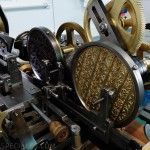
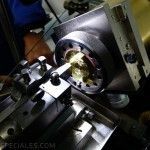
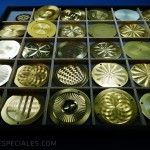
Galvanizados por inmersión para el color, cepillados manuales (vertical paralelo) o automatizados (efecto soleil), arenados… todos estos tratamientos consiguen texturas diferentes justo antes de pasar al barnizado, que se realiza en una sala muy parecida a la que se emplea para pintar carrocerías de coche: aspiración permanente y los operarios vestidos como astronautas para evitar partículas en el aire. El resultado es ese brillo hipnotizante que a veces vemos en algunos relojes.


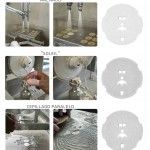
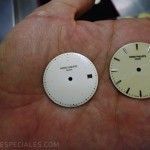
Perhaps you have ever noticed all those elements arranged on a dial, from the mark (when it is not painted) to the indices, to the tiny dots that indicate the minutes or the frame of the date window... all these elements are assembled here by hand, one by one, by the expert hands of operators (they are almost always women: traditionally they have shown a better ability to concentrate than men) who treat each dial as if it were the first one they touch. And not a single drop of glue is used, since each element has one or more pins that are inserted through a hole made for this purpose in the sphere and which are subsequently folded. The way to check that all of them have been perfectly fixed is by dropping said sphere from a certain height onto a metal stop. When they are not inserted, the dial indications are stamped using a pad in clean rooms such as those in laboratories (with appropriately equipped operators) to avoid the slightest speck of dust that would spoil all the work that has brought the dial to this point in the process.
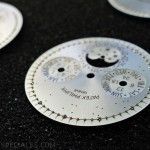

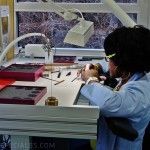

Finally, and after dozens of operations (more than a hundred in some cases), the dial will be installed on one of the Patek Philippe watches, thus contributing to the sensations of its wearer, although the wearer may not know that in addition to the timepiece he will admire another small work of art every time he checks the time.
Best watch strap | Best annual calendar watch | Best watch winder | Best Black Luxury watch | Best Luxury Watches Men | Best Swiss Luxury Watches Women | Best Men Diamond Watches under 1000 | Best Diamond Watches Women | Best Luxury Dive Watch
Browse the Shop
 Acacia frida deluxe solid wood bed frame |
Bedroom bench |
Bed chest drawers |
Lingerie dresser |
Frame base |
Mirror with jewelry storage |
30 Bathroom Vanity |
Memory foam queen mattress |
Mattresses for back pain |
Nightstand set of 2 |
Grand Goldman Shop |
Civil Lawyer
Deutschland Trikot WM 2026
Acacia frida deluxe solid wood bed frame |
Bedroom bench |
Bed chest drawers |
Lingerie dresser |
Frame base |
Mirror with jewelry storage |
30 Bathroom Vanity |
Memory foam queen mattress |
Mattresses for back pain |
Nightstand set of 2 |
Grand Goldman Shop |
Civil Lawyer
Deutschland Trikot WM 2026










