

GMT is the acronym for Greenwich Mean Time, established in 1884 at the International Meridian Conference, where it was adapted as the global standard with the Greenwich Mean Time (England) as the reference point for time zones around the world, dividing the Globe into 24 time zones with which the time in a given location was denoted as roughly the number of hours in relation to GMT. For example, Sydney, Australia, is GMT +10.
The GMT standard was replaced in 1961 by the more scientifically determined Universal Time Coordinated (UTC). However, GMT is still said in modern speech as most people still largely identify with this term; Consequently, watches with time zone functions are often called GMT watches.
Find Bleeding Edge Supplements at Scandalous Prices on iHerb.

Before GMT was adopted, most countries used the Sun to determine noon (when the Sun was directly overhead), using that measurement as a reference to establish local time. This method worked well until people started traveling and 'noon' appeared at a different time depending on the distance traveled west.
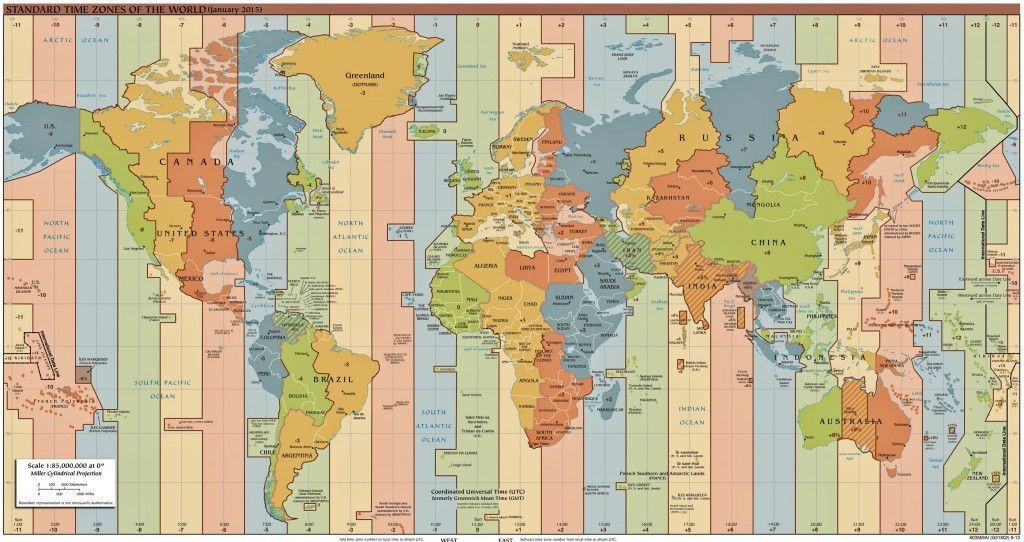
With the adoption of GMT it was seen that some very large countries had more than one time zone, and each applied its own solution: India decided that it wanted to maintain a single time zone, and decided to set the time for the entire country halfway between two; that's the reason for its 30 minute time zone. Or China, which even though it occupies up to four time zones, maintains a single time zone (GMT +8) for its entire territory while Russia has up to six different times. The official date line (Monday to Tuesday, for example) runs between Alaska, on the American continent, and Siberia, on the edge of the Russian Federation.
Watches with a GMT function present the simultaneous indication of two or more time zones, generally with an extra hand or needle on a specific scale, although sometimes they do so by means of an additional subdial with its own hands (only the hour or even the minute hand), by means of a window or even with a disc added to the main dial indicating twenty-four names of cities coinciding with the twenty-four zones: they are the so-called "World Hours".
Detect True North with the GMT needle
The GMT hand can also be used as a compass for orientation in the Northern Hemisphere: with the watch positioned parallel to the ground and the hour hand pointing in the direction of the Sun, the GMT hand set to the same time on the GMT indication will point to true North.
Read next: Best watch strap | Best annual calendar watch | Best watch winder | Best black luxury watch | Best Luxury Watches Men
Browse the Shop
 Acacia frida deluxe solid wood bed frame |
Bedroom bench |
Bed chest drawers |
Lingerie dresser |
Frame base |
Mirror with jewelry storage |
30 Bathroom Vanity |
Memory foam queen mattress |
Mattresses for back pain |
Nightstand set of 2 |
Grand Goldman Shop |
Civil Lawyer
Deutschland Trikot WM 2026
Acacia frida deluxe solid wood bed frame |
Bedroom bench |
Bed chest drawers |
Lingerie dresser |
Frame base |
Mirror with jewelry storage |
30 Bathroom Vanity |
Memory foam queen mattress |
Mattresses for back pain |
Nightstand set of 2 |
Grand Goldman Shop |
Civil Lawyer
Deutschland Trikot WM 2026










