

He had to retire, but he preferred to revive one of the most important European watchmaking firms, he should have rested as befitted his age but he preferred to embark on a project that today employs more than 1,300 people in his hometown. Nothing can surprise you in the life of this expert watchmaker who spent his childhood playing with a watch kit. On the occasion of his 90th birthday,Walter Lange (Glashütte, 1924), refounder of Lange & Söhne, gives an interview to international mediain which he talks about his years of training in Germany, the expropriations after World War II, the process of revitalization of the company once the Berlin Wall fell and the brand's absolute commitment to innovation and quality. A written testimony on the bases of improvement and absolute love for watches.
"Nowadays, children play with remote-controlled cars or computers. When I was young, I had a watchmaking kit. I don't remember how old I was, but I made a watch with the parts," recalls Lange. Coming from a watchmaking family, it could not be otherwise in the heart of a house whose pieces were valued among the best pocket watches of the moment. “The owners of the historic Lange watches from all over the world still maintain contact with us today,” he points out with pride when referring to those historic examples designed by his great-grandfather Ferdinand Adolph Lange.
Find Original, High-end Home Decor that spark conversation at Grand Goldman Shop.
At just 16 years old and to continue the family tradition, Lange was sent to Karlstein, Austria, to train in watchmaking expertise. An apprenticeship interrupted by his recruitment into the army and which would not continue until after the war, when he joined the master Alfred Helwig at the Watchmaking School in his native Glashütte. By then, Saxony was already part of the German Democratic Republic (GDR), which would lead to the expropriation of most of the factories by the government. And the story ofLange & SöhneIt cannot be understood without the social and political fracture derived from World War II. Lange - along with other firms such as IWC, Stowa, Laco and Wempe - would manufacture the "B-Uhr" or observer watches for German Luftwaffe pilots, which is why, in 1945, Allied bombings would destroy the factory. As the watchmaker recalls, "once the war was over we tried to continue working and rebuild the bombed production plant. We began to develop the caliber 28 for a wrist watch, but before it went into mass production, the company was expropriated in April 1948."
«After the War, we began to develop the caliber 28 for a wrist watch, but the company was expropriated before mass production began»
As part of the state-owned company VEB Glashütter Uhrenbetriebe or GUB, from 1951Lange & SöhneIt stopped engraving the brand name on the watch faces and its role as a reference brand was stopped. It took almost a quarter of a century for circumstances to become favorable for the brand again.
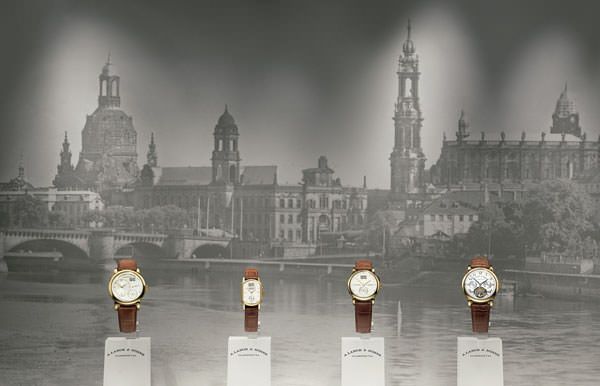
Already retired, the opportunity to revive the family business returned with the fall of the Berlin Wall in 1989. "I couldn't pass up the opportunity. December 7, 1990 was one of the best days of my life. I re-registered the brand using the address borrowed from a former classmate at primary school in Glashütte," says Lange, who was starting from scratch with a staff of only 15 people but with the certainty that they would regain the international success that his ancestors had achieved with pocket watches. "Initially, we wanted to sell our new watches in Germany and other parts of Europe. But soon we received requests from abroad," he recalls.
Currently, Walter Lange recognizes himself as “not involved in the daily business” of his ancestors' brand. Your presence, essential at the events ofLange & Söhne, recalls the desire to improve of a firm that, in its own words, has managed to become a “reference brand” thanks to its quality.
Read next: Best watch strap | Best annual calendar watch | Best watch winder | Best black luxury watch
Browse the Shop
 Acacia frida deluxe solid wood bed frame |
Bedroom bench |
Bed chest drawers |
Lingerie dresser |
Frame base |
Mirror with jewelry storage |
30 Bathroom Vanity |
Memory foam queen mattress |
Mattresses for back pain |
Nightstand set of 2 |
Grand Goldman Shop |
Civil Lawyer
Deutschland Trikot WM 2026
Acacia frida deluxe solid wood bed frame |
Bedroom bench |
Bed chest drawers |
Lingerie dresser |
Frame base |
Mirror with jewelry storage |
30 Bathroom Vanity |
Memory foam queen mattress |
Mattresses for back pain |
Nightstand set of 2 |
Grand Goldman Shop |
Civil Lawyer
Deutschland Trikot WM 2026










