

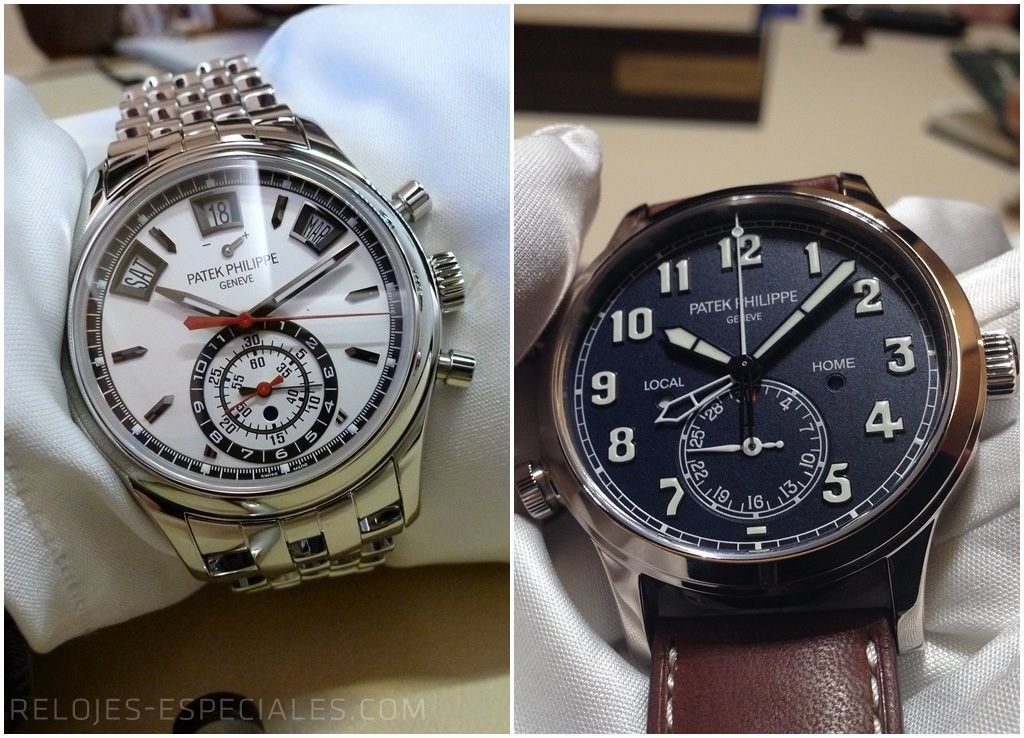
It seems that something is moving inside the Grande Maison. ThePatek Philippe news at Baselworld 2016They once again contain a point, if not discordant, but different from what had been the general trend: very classic watches “condemned” to very formal environments (discounting the Nautilus or Aquanaut collections). It already started in 2014 by presenting the 5960 in steel with its bracelet, the first steel watch outside of these two sports collections. Last year, coinciding with the 175th anniversary, he showed an unexpected Pilot (yes, in white gold), we could say a descendant of the one exhibited in the Patek Philippe Museum. It was at that presentation that I heard from a journalist: "I don't like it. It's very un-Patek." It would not be Patek, but as a rarity and taking into account the collector nature of the majority of its clients, once again demand greatly exceeds production capacity. By the way, five units pre-sold – not yet delivered – in Spain.
Production that, according to figures provided by the brand, amounts to 60,000 watches, of which 9,000 are quartz (mainly the Twenty-4®, for women). And that for a company with 2,400 employees around the world, including those in its own boutiques and the rest of the commercial structure, which gives a ratio of 25 watches per employee. Few can afford such... luxury.
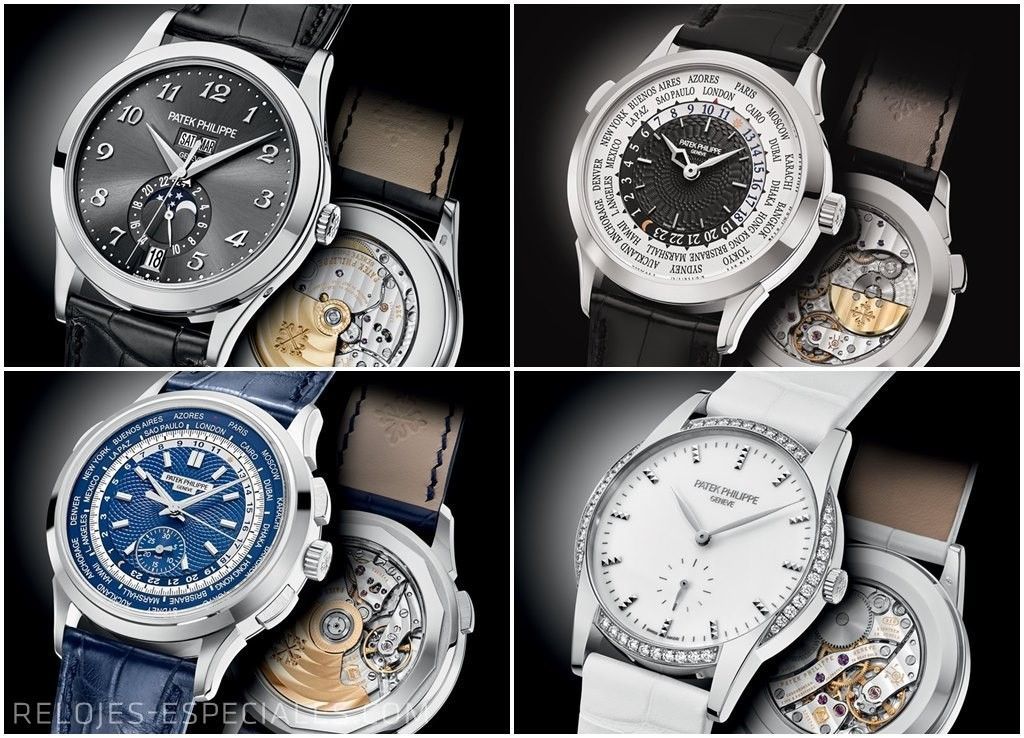
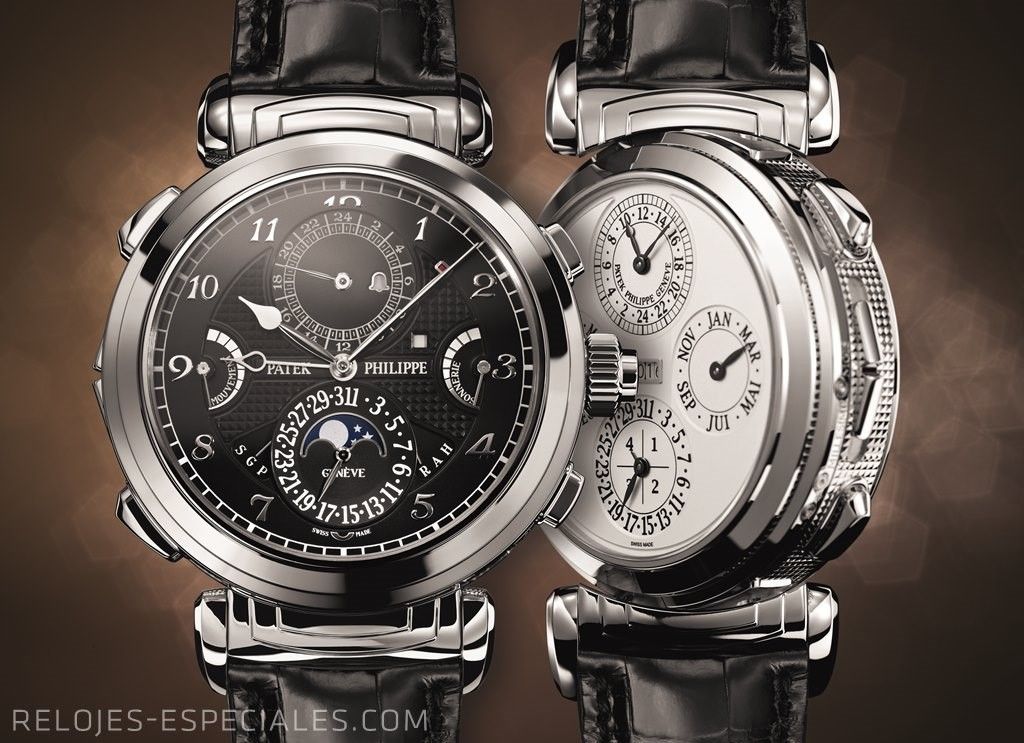
This year, five novelties have been presented, of which we could say that strictly only one is: the chronograph with universal time reference 5930. The Grandmaster Chime reference 6300 is the “normalization” of the watch with the same name but reference 5175 that was shown in 2015 to celebrate the 175th anniversary of the brand and of which only 7 examples were made (one for the Museum and the other six for clients, I suppose very special). The 5396 annual calendar with moon phases celebrates twenty years since the launch of one of Patek's most successful models in 1996: the 5035, of which countless versions have been made. As a women's watch, there is a manual Calatrava reference 7122 in white, and finally the emblematic 5230 World Hours with an update of the cities that indicate the 24 time zones.
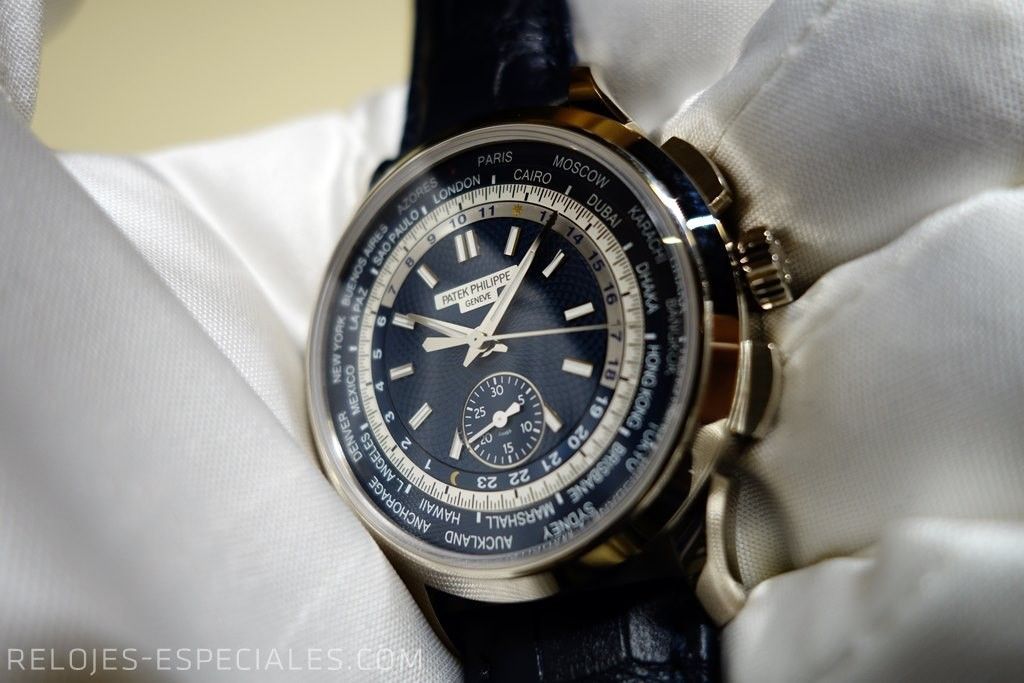
And it is the 5930 that has led me to this long introduction. A typically Patek watch, with two “minor” complications (World Hours and chronograph) and which, due to its intense blue dial, I would dare to describe as sporty. I have the feeling that Thierry Stern, the third generation at the helm of the House, although I sense that also under the watchful eye of his father, intends to leave his own mark on the legacy of a brand that is much more than that, which we already know is his pleasure to guard until the next, etc. The 5960 in steel was the first warning, and this chrono we could say UTC is for now the last example. This is an unusual combination that has its reference in a unique piece made by Patek Philippe itself in 1940 and which is now exhibited in the Patek Philippe Museum.
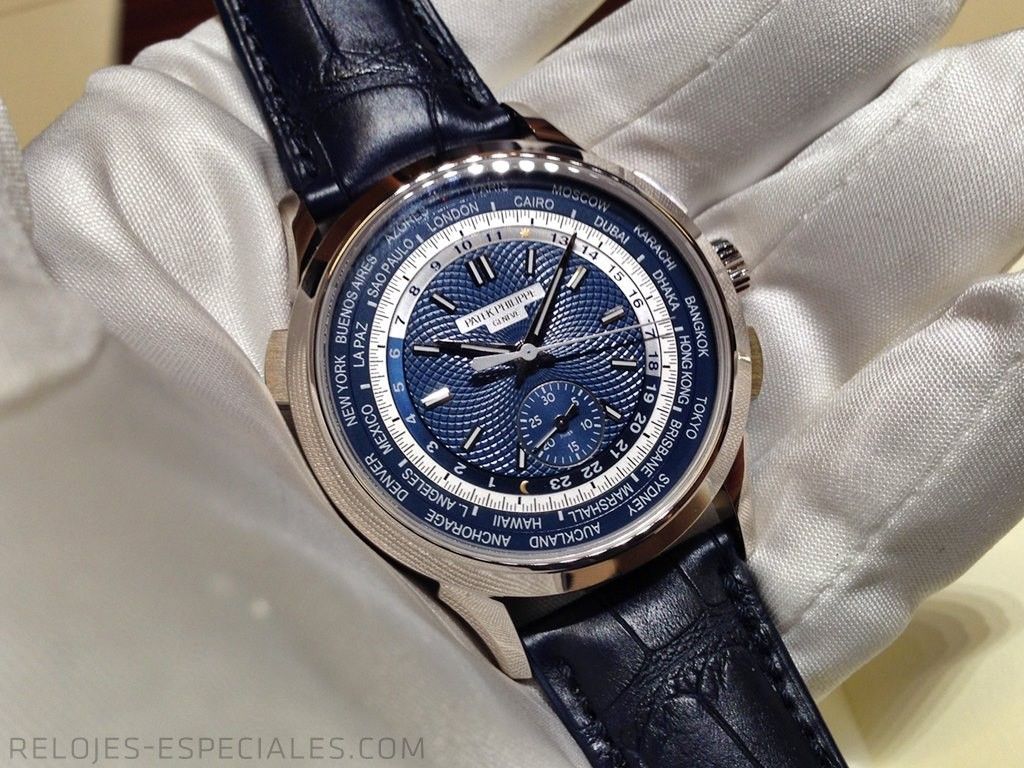
It must be admitted that as a chronograph it has limited usefulness since its counter (at six o'clock) is only thirty seconds. But, to be honest, who uses their wrist chronograph to measure events? Honestly, I can't imagine a 5930 owner controlling the parking meter time or the egg cooking time with it (be very careful with induction hobs: they magnetize the mechanisms). Admitted that – like most watches – it is a “toy for (wealthy) boys”, let us admire its delicious guilloché dial of that bewitching blue color whose Patek formula (or ratherFluckiger, his sphere factory) keeps secret.
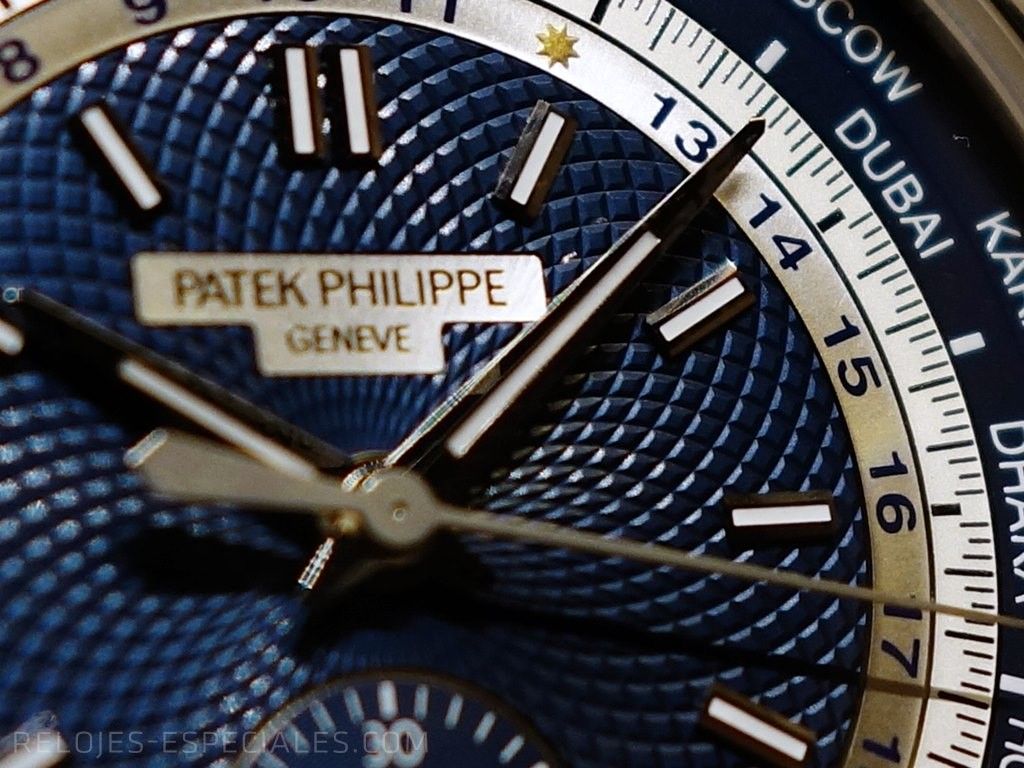
Much more “justifiable”, if that were necessary, the Universal Time function stands out for its great ease of use. The central hour and minute hands indicate the time of the time zone (city) whose name appears at 12 o'clock. The hours of the other 23 zones can be read at a glance thanks to the city and 24-hour disc, located a little further to the center. The division of the latter into white and black zones indicates whether it is day or night in the desired location. When the user reaches another time zone, they only have to activate the button located at 10 o'clock. The city and 24-hour discs rotate in one-hour increments counterclockwise, while the central hour hand also advances in one-hour increments clockwise. The correction ends when the name of the desired city appears at 12 o'clock. During this process, the Universal Time mechanism and hour hand are disconnected from the base movement in order not to disturb the amplitude of the balance or the accuracy of the minute hand. The chronograph hand, if activated, would continue to advance equally. And it would not be something crazy considering that the 5930 lacks continuous seconds.
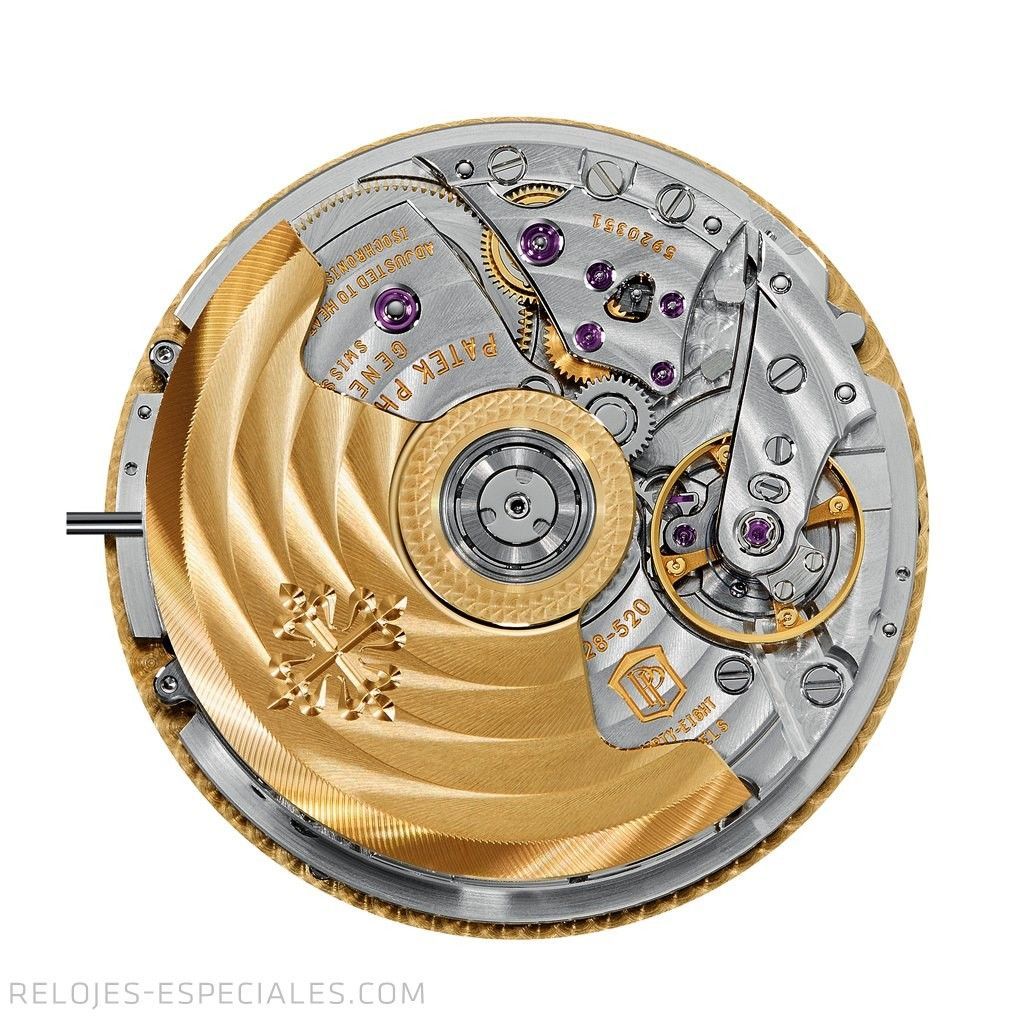
The transparent back of the white gold case reveals the automatic CH 28-520 HU caliber, with a column wheel and vertical clutch with the house's usual finishes. Like many manufacturers that design and develop their own movements, Patek chose at the time to create base calibers (it currently has 14 for wristwatches) in order to install modules in them. In this case the base caliber CH (for CHronographe) 28-520 carries a HU (Universal Time) module. But it is not only because of the beauty of its movements that Patek holds its place in watchmaking: the CH 28-520 HU has a Gyromax® balance and a patented Spiromax® hairspring made of Silinvar®. Thanks to the final Patek Philippe curve with which it is equipped, this hairspring combines the concentric oscillations of a Breguet hairspring with the reduced height of a classic flat hairspring. The price of this “classic sports car” will be €67,000
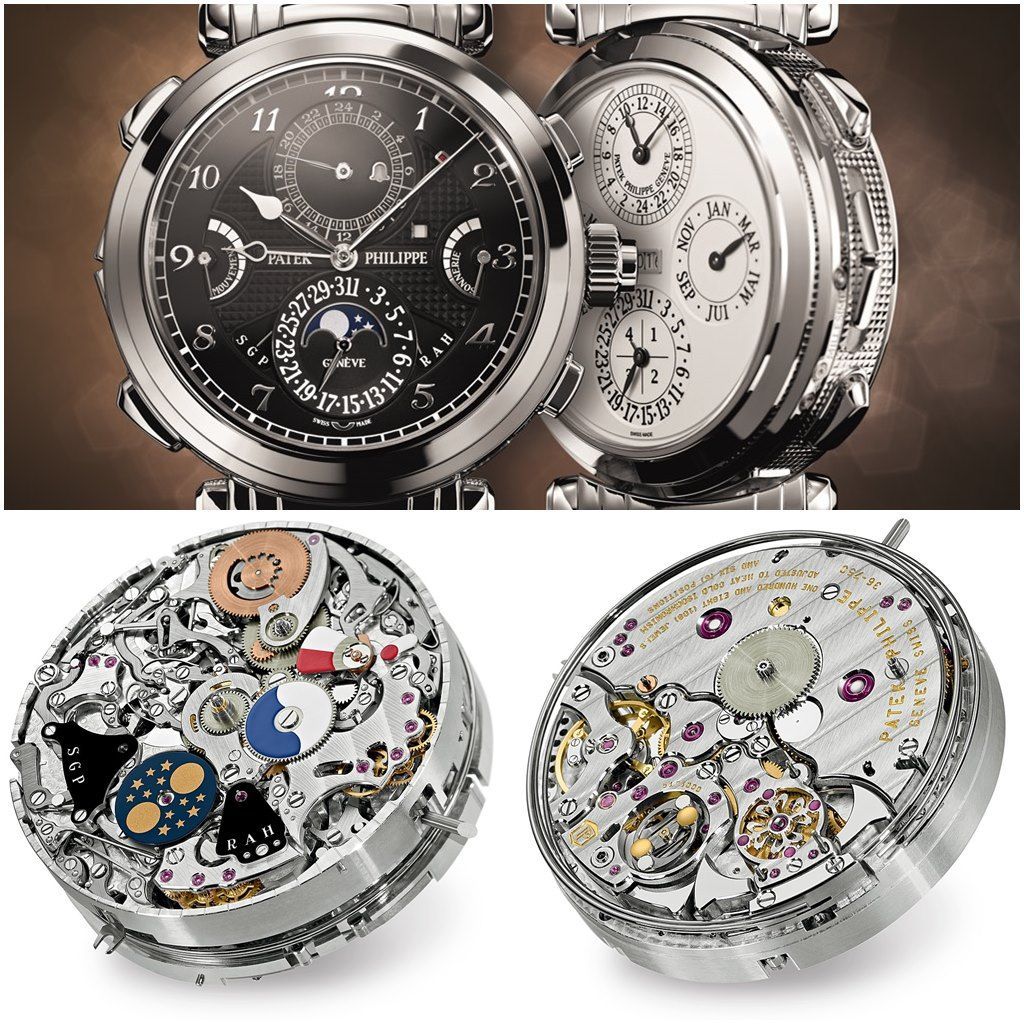
After several years of absolute hegemony of the 6200 Sky Moon Tourbillon model as the most complicated watch in the current collection, the 6300 snatches that first place. 20 complications, two faces with different indications on each one, manual winding, strike in 3 bells with 5 different types of strikes, second time zone, perpetual calendar, moon phases, on-off indications for all strikes... all this in a 37x10.7mm caliber made up of 1332 pieces of which 108 are rubies. The box that contains such a machine is not far behind, with clous de Paris work and a pivoting mechanism that allows the user to decide which face of the watch they will wear today. Obviously, it is not a watch for all tastes nor certainly for all budgets (almost two and a half million euros). In that regard, I believe that in watchmaking what applies in so many areas of life: you cannot (or at least you should not) criticize what you do not know, and sometimes I have blushed reading in the forum depending on what comments from truly undocumented people about the appearance, for example, of the 5175 of the 175th anniversary. I sincerely think that for everything you have to have an “educated palate”, whether in food, watches or literature, and that can only be acquired with experience. Money helps but does not replace it, and that is why I applaud Patek's habit of selling its most extraordinary pieces (ok, the most expensive) to proven clients, collectors of other complicated pieces: it is the way to ensure that in addition to being able to pay for them, the buyer will know how to appreciate them.
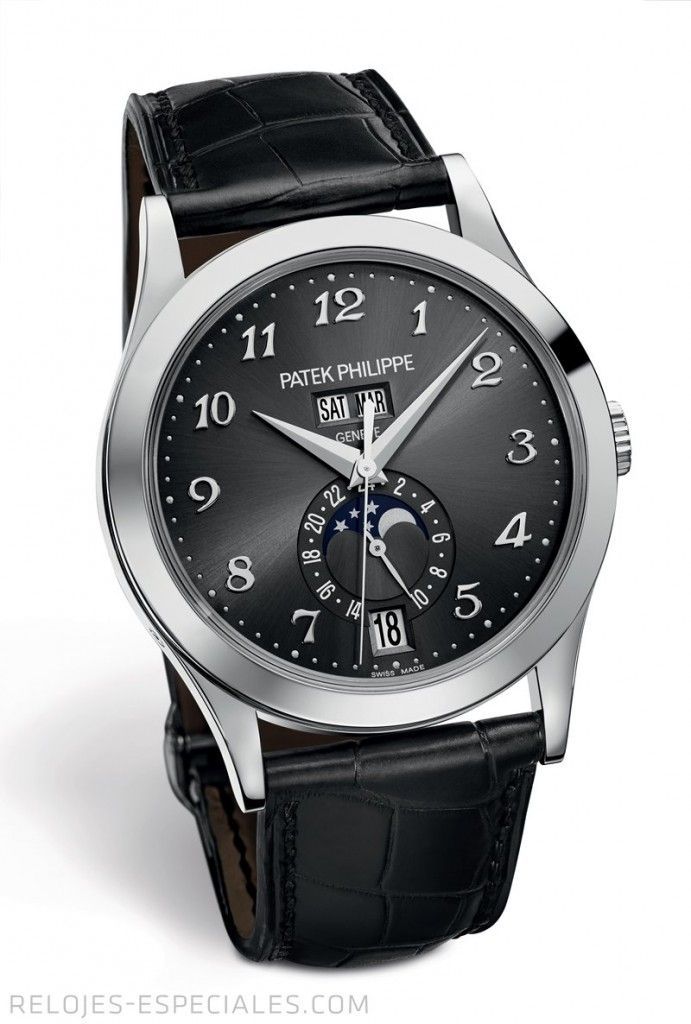
The annual calendar is a complication that Patek Philippe patented in 1996, the year in which the Swiss magazine Montres Passion named the first model that incorporated it “watch of the year”: the 5035J (J, for “Jaune”, yellow gold). As can be deduced from its name, the mechanism recognizes months of 30 and 31 days and only needs to be adjusted at the end of February. The case of the moon phases is different: if in other brands they need to be corrected every ten years (more or less), in this caliber 324 S QA LU 24H it takes 122 years for it to deviate a single day. The 5396 is the twenty-second model in the saga of Patek Philippe annual calendars, of which there are another ten still in the catalogue. Calatrava case, smooth bezel, domed sapphire... it would fall within what we could call "quasi-youthful watches"... if it weren't for those Breguet figures that in my opinion are not entirely flattering but above all they dwarf the dial. Otherwise, I think it is one of the most beautiful designs the house has ever made. And not only me, there area brandwho has had no problem quasi-cloning it directly. Let's take it on the positive side: you can measure your success by how many times you are copied.

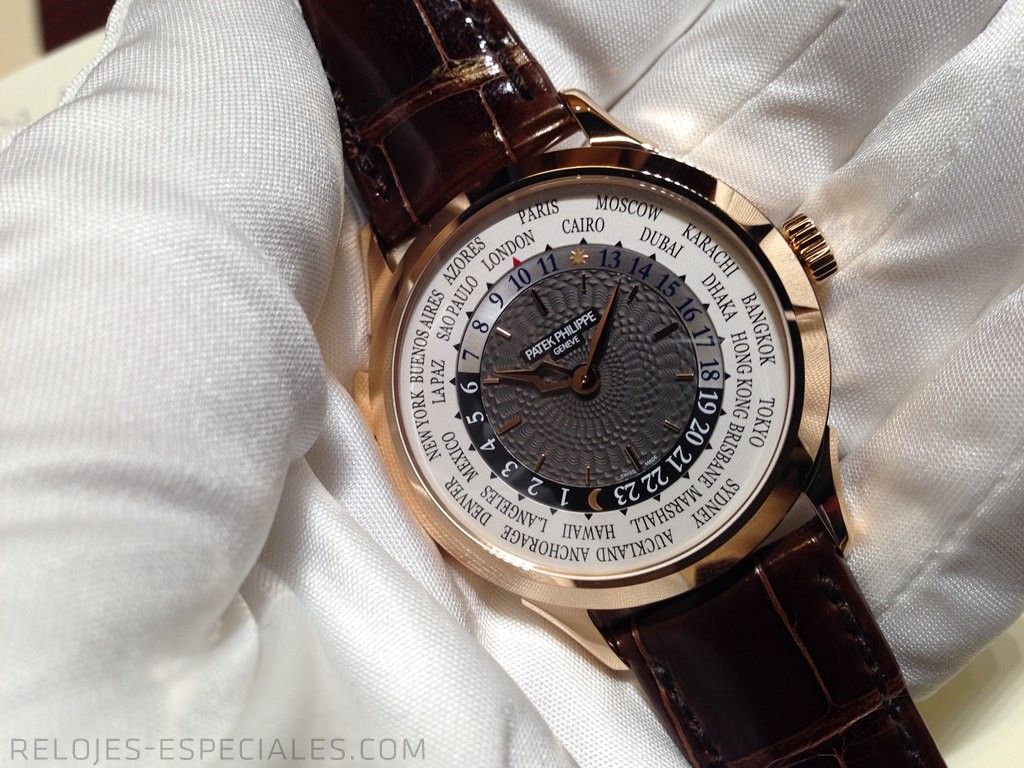
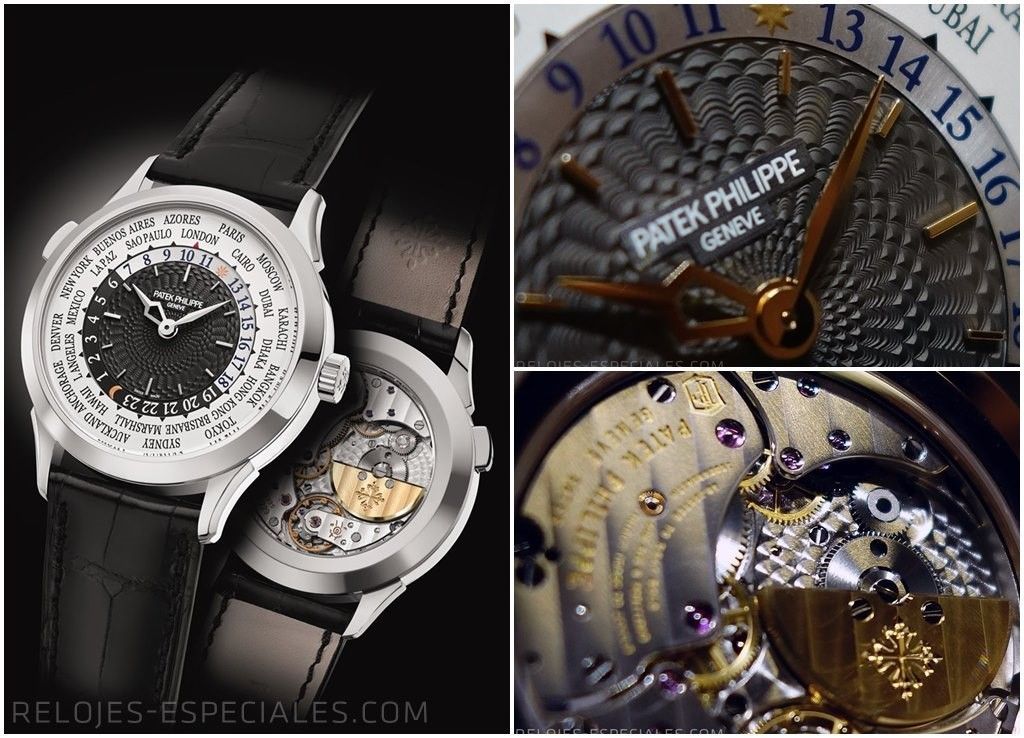
The Universal Time or Worldtime is one of the oldest members (eighty years) of the Patek Philippe collection. The new 5230, without being a novelty in the strict sense, incorporates slight modifications to the case, hands but above all to the dial: the division of the planet into 24 time zones, each of which covers 15 degrees of longitude, may seem simple on paper, but its implementation on a political level is much more complex. Some time zones are now defined with new city names (Dubai instead of Riyadh, Brisbane instead of Noumea, to name just a few examples). Having long lived at UTC+4 time, Moscow has moved closer to Western Europe by adopting UTC+3 local time. The guilloché of the dial is simply hypnotizing, especially if one has seen how it is done (and here I return to the previous paragraph: you love what you know). I must admit, it is one of the few Pateks that would make me consider doing something crazy... if it were within reach, which is very difficult given the demand for this type of pieces.
And having a Patek is like having a Rolls Royce in the garage: How many cars before that do you have to have had for you to “feel the need” to enjoy a classic of classics?
Read also:The Patek Philippe case factory, where excellence continues
Read also:Fluckiger, the Patek Philippe dials
Best watch strap | Best annual calendar watch | Best watch winder | Best Black Luxury watch | Best Luxury Watches Men | Best Swiss Luxury Watches Women | Best Men Diamond Watches under 1000 | Best Diamond Watches Women | Best Luxury Dive Watch










