

Among the plethora of Soviet watchmaking, there are three whose presence is inexcusable in the collection of any self-proclaimed fan. All of them are military models involved in space exploration and are appreciated for their historical value and the quality of their movements, which, of course, were perfected from Western designs.
They surpassed their Swiss and American counterparts in almost all space milestones and it can be assured that they were only surpassed in the most momentous one, stepping on the Moon for the first time. To locate them we will remember three legendary space missions.
Find Bleeding Edge Supplements at Scandalous Prices on iHerb.

Vostok-1
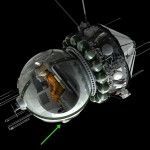
«The ship is operating normally. I can see the Earth through the Vzor(*). "Everything is progressing as planned.". These were the words of Yuri Gagarin, aboard the Vostok 3KA vehicle, shortly after entering orbit on April 12, 1961. A historic flight that sent a man into space for the first time and that lasted just one hour and forty-eight minutes.
(*) The Vzor was an orientation device equipped with a porthole and eight reflecting mirrors installed on the floor of the Vostok 3KA ship.
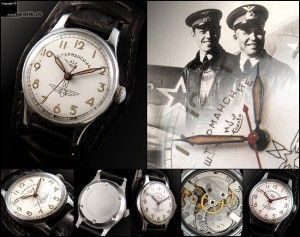 On his left wrist he wore a small watch, thirty-three millimeters in diameter, with a chrome case and a screwed back cover. The same type of watch that had been given to recent graduates of the prestigious Orenberg flight school since the late 1940s and that Soviet watchmaking had perfected based on a French model, the LIP R26. Since 1936, this French brand had collaborated with the Soviets in the development of more precise calibers than the Dueber-based “Type 1”. For its military aviators, the industry perfected the LIP R26 caliber by providing it with a central seconds hand with a stop function, essential to be able to synchronize the watch with a time signal and for aircraft position calculations. A navigator watch that received the same name: “Sturmanskie”, in Cyrillic ШТУРМАНСКИЕ.
Little more information can be referenced about this watch except that calibers with fifteen and seventeen jewels were manufactured, the latter probably being the one used by Gagarin. The watch in question was donated to the First Moscow Watch Factory and is currently on display in the Moscow Museum.Zviozdni Gorodok (City of Stars). It is speculated, although not certain, that Valentina Thereshkova, the first woman to fly into space in 1963, also used a Sturmanskie model similar to Gagarin's on her mission.
Voskhod 2
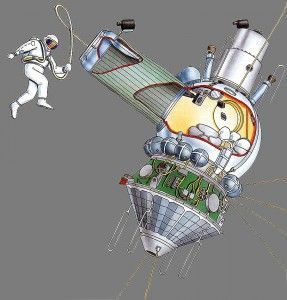 After twelve minutes floating freely in space connected by a thin umbilical cord to the Voskhod 2 spacecraft, cosmonaut Alexei Leonov became the first human being to perform a spacewalk –EVA, Extra Vehicular Activity-. Upon returning to the ship, a small mishap occurred: his space suit had swelled in the vacuum of space and was so rigid that it almost did not allow him to move, so he was forced to reduce the internal pressure of his clothing until he managed to pass through and seal the hatch. Fortunately, he only suffered heat stroke, raising his body temperature almost two degrees and soaking his suit in sweat. The trance had probably been worth it, because during those historic minutes he saw a breathtaking panorama of the Earth, which in his own words spanned from the Strait of Gibraltar to the Caspian Sea.
So the first watch to float freely in space on the outside of a spaceship was the one Leonov was wearing at the time. Although there is no official certification, in almost all the documents consulted it is stated that such a watch was a chronograph called “Strela” (Arrow) -СТРЕЛА in Cyrillic- equipped with a Poljot 3017 movement derived from a Venus caliber 150/152, with two subdials to count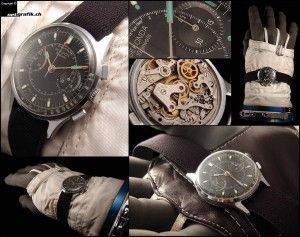 up to forty-five minutes and up to sixty seconds respectively. Manufactured since 1959 by the “First Moscow Watch Factory”, it was part of the equipment of numerous Russian space missions for almost twenty years. Models were manufactured with the name “Poljot” as well as copies for export called “Sekonda” and were used by a restricted group of Russian citizens: scientists, military aviators, cosmonauts and officials of geographical departments or the railway network. Most likely it was this last mark that appeared on the dial of Leonov's watch.
Soyuz 23
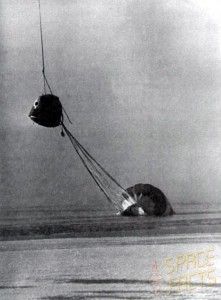 It was without a doubt one of the most eventful missions of the Soviet space program since the capsule in which cosmonauts Vyacheslav Zudov and Valery Rozhdestvensky were returning to Earth landed - rather landed - in an unforeseen place: Lake Tengiz. That day, October 16, 1976, the lake was partially frozen. The rugged landing, the very low temperatures – twenty-two degrees Celsius below zero – and the complicated rescue seriously put the lives of both crew members at risk. An attempt was made, without success, to recover them using amphibious vehicles. Both crew members spent the night with practically all of the systems turned off due to lack of electric battery. The next morning several divers managed to rescue Zudov and Rozhdestvensky safely. It was a complex operation, in which helicopters were used that could not lift the capsule due to its weight, finally deciding to drag it somewhat violently to the shore of the lake.
About two years before this eventful adventure, the Soviets had acquired the necessary machinery in Switzerland to produce a new caliber to replace the Poljot 3017. The Valjoux 7734 movement would serve as the basis for developing the new Poljot 3133, more robust and precise, with several modifications compared to the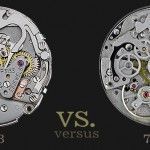 original Swiss caliber, which included increasing the number of jewels and modifying the balance. It was the first chronograph in Soviet watchmaking with anti-shock protection, it beat at 21,600 vibrations and its power reserve was more than forty-three hours. New chronographs began to be produced with this caliber in 1976, with the name “Okeah” – in Spanish “Ocean” – as they were initially equipped for officers of the Soviet Navy (BMФ) and later for both air force pilots and cosmonauts on different Soyuz missions. Until 1983 this watch could not be purchased on the civilian market. The Poljot caliber 3133 remains accessible today, although its production was announced in 2011.
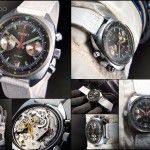
Well, both Zudov and Rozhdestvensky carried, on the Soyuz 23 mission, two “Okeahs”, and neither of them “survived” the eventful rescue. Zudov's stopped working when it hit the instrument panel in a sudden movement of the capsule while it was being dragged by the helicopters towards the lake shore.
The one from Rozhdestvensky gave up while helping his partner take off his space suit before leaving the crashed ship. Both watches were auctioned by the houseSotheby'sin 1993 and 1996 respectively.
Best watch strap | Best annual calendar watch | Best watch winder | Best Black Luxury watch | Best Luxury Watches Men | Best Swiss Luxury Watches Women | Best Men Diamond Watches under 1000 | Best Diamond Watches Women | Best Luxury Dive Watch
Browse the Shop
 Acacia frida deluxe solid wood bed frame |
Bedroom bench |
Bed chest drawers |
Lingerie dresser |
Frame base |
Mirror with jewelry storage |
30 Bathroom Vanity |
Memory foam queen mattress |
Mattresses for back pain |
Nightstand set of 2 |
Grand Goldman Shop |
Civil Lawyer
Deutschland Trikot WM 2026
Acacia frida deluxe solid wood bed frame |
Bedroom bench |
Bed chest drawers |
Lingerie dresser |
Frame base |
Mirror with jewelry storage |
30 Bathroom Vanity |
Memory foam queen mattress |
Mattresses for back pain |
Nightstand set of 2 |
Grand Goldman Shop |
Civil Lawyer
Deutschland Trikot WM 2026










