

Mythical for its robustness and spartan construction far from any mechanical sophistication, and as its adjective suggests,Soviet watchmaking traces its origins to the Bolshevik Revolution of 1917, when the leaders of the Soviet realized the need to launch a watch industry, obviously state-owned.
Origins…American
In 1927, the Labor and Defense Council passed a resolution to start the production of watches and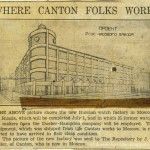 decided to send a delegation to Western Europe with the mission of acquiring the necessary machinery. The logical destination was Switzerland, but the watch industry in that country was wary of losing a vast export market. Thus, the Soviets set their sights on the United States, where the state company Amtorg (Amerikanskaia Torgovlia, Амторг) finally acquired the tools of two companies in liquidation: Dueber Hampden Watch & Co. and Ansonia Clock Company. In March 1930 former Dueber-Hampden workers left the
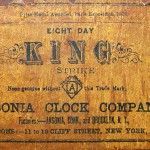 United States heading to Moscowto instruct Russian workers in the art of watchmaking, while the following month a steam ship carrying twenty-eight freight cars full of machinery set sail for the Soviet capital. With these materials, the foundations were laid for the so-called “First State Watch Factory” -“1-й ГЧЗ”-, which shortly afterwards would also be known as the “First Moscow Watch Factory” –“1-й МЧЗ”-, thegerm of the watch industry of the Soviet Union.
Find Bleeding Edge Supplements at Scandalous Prices on iHerb.

The beginnings
The first caliber of Soviet watchmaking, laconically called “Type 1”, was actually a rebuilt Dueber caliber,whose variations and modifications remained in production for many years. The production in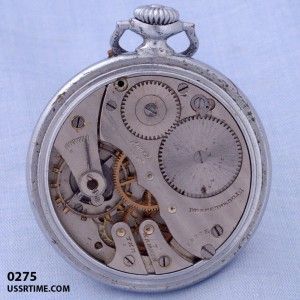 Moscow factory, between 1935 and 1941, would reach the figure oftwo million seven hundred thousand movements, installed in both pocket and wrist watches. In 1972, only the “First Moscow Watch Factory”produced no less than three and a half million pieces, which were exported to more than sixty countries. As Mark Gordon - a renowned collector of Russian watches - says on his website www.ussrtime.com, the Soviet watch industry would reach space before the Swiss one, it would provide thetime measuring instruments for one of the most powerful armies in history, the Red Army, also the clocks that would control lighthouses and sea buoys in the Arctic, time legendary games of the World Chess Championship and even those that would manage the traffic of the longest railway line on Earth, the Trans-Siberian Railway.
The brands
Marketing or branding is not something that was needed in a product monopolized by the State, so the names of this or that model emerged from the few factories dedicated to the manufacture of watches, sometimes as a tribute to a certain milestone and other times as a reference to a specific application. For example,The “First Moscow Watch Factory” began the production of a watch as soon as the Second World War ended.which he baptized with the very graphic name of “Pobeda” (Victory), in Russian “Победа”. In 1949 that same factory was commissioned to produce a watch for the air forces, the “Sturmanskie” (Navigator), in Russian “Штурманские”. And with a Sturmanskie on his wrist, Yuri Gagarin starredthe first human space flight, as we will see later. A historical milestone that the Moscow factory commemorated from then on with its “Poljot” (Flight) models, a translation of the Russian “Полет”, probably the flagship of Soviet watchmaking. Sources cite that, given the enormous global impact of such an event, what was called the “First Moscow Watch Factory” was renamed, in its entirety, by the name “Poljot.”
[envira-gallery id=”9984″]
Other times it was the vicissitudes of World War II that determined the birth of a brand. This happened when the German army besieged Moscow and its factories were evacuated to other cities. A watchmaking industry took root in Christopol that years later would manufacture the components of another of the most recognized Russian brands: “Vostok”.
And since it was also necessary for Soviet watchmakingTo satisfy the needs of the civil market, new factories appeared in different towns, with their respective trade names, such as “Raketa” or “Slava”. Although their production was not governed by military standards, the quality of these watches was by no means negligible.
Don't miss the second part.
Best watch strap | Best annual calendar watch | Best watch winder | Best Black Luxury watch | Best Luxury Watches Men | Best Swiss Luxury Watches Women | Best Men Diamond Watches under 1000 | Best Diamond Watches Women | Best Luxury Dive Watch
Browse the Shop
 Acacia frida deluxe solid wood bed frame |
Bedroom bench |
Bed chest drawers |
Lingerie dresser |
Frame base |
Mirror with jewelry storage |
30 Bathroom Vanity |
Memory foam queen mattress |
Mattresses for back pain |
Nightstand set of 2 |
Grand Goldman Shop |
Civil Lawyer
Deutschland Trikot WM 2026
Acacia frida deluxe solid wood bed frame |
Bedroom bench |
Bed chest drawers |
Lingerie dresser |
Frame base |
Mirror with jewelry storage |
30 Bathroom Vanity |
Memory foam queen mattress |
Mattresses for back pain |
Nightstand set of 2 |
Grand Goldman Shop |
Civil Lawyer
Deutschland Trikot WM 2026










