

El Perpetual CalendarIt is one of the most evocative and mysterious complications of fine watchmaking, since there is something magical about the fact that such a small mechanical machine can predict the future and inform the wearer of the day, date and phases of the moon exactly.
Why a Perpetual Calendar?
The fundamental reason for the existence ofPerpetual CalendarIt is obvious to anyone who has ever owned a mechanical watch with a date window. Firstly, the months do not have a uniform length and the 31-day wheel needs to be readjusted when the month is shorter; and secondly, not all years last the same: since the year of the Gregorian Calendar, used in most countries in the world, does not correspond exactly to the length of a real year, we add an extra day to the month of February of each year that is a multiple of four -except those ending in 00-. It is what we know as a leap year.
Get Lifetime Access to Top AI Tools
Find Bleeding Edge Business Software at Scandalous Prices on Appsumo.

A quartz watch resolves the varying lengths of months and the periodic advent of a leap year without flinching, but for a mechanical watch to manage these variations is a feat worth mentioning. For watchmakers, the self-sufficiency of their creations has always been a cardinal virtue, and since the establishment of the Gregorian calendar, gradually adopted starting in the 16th century, they insisted on making machines that would properly accompany the pilgrimage of said calendar without choking every four and twenty-eighth of February.
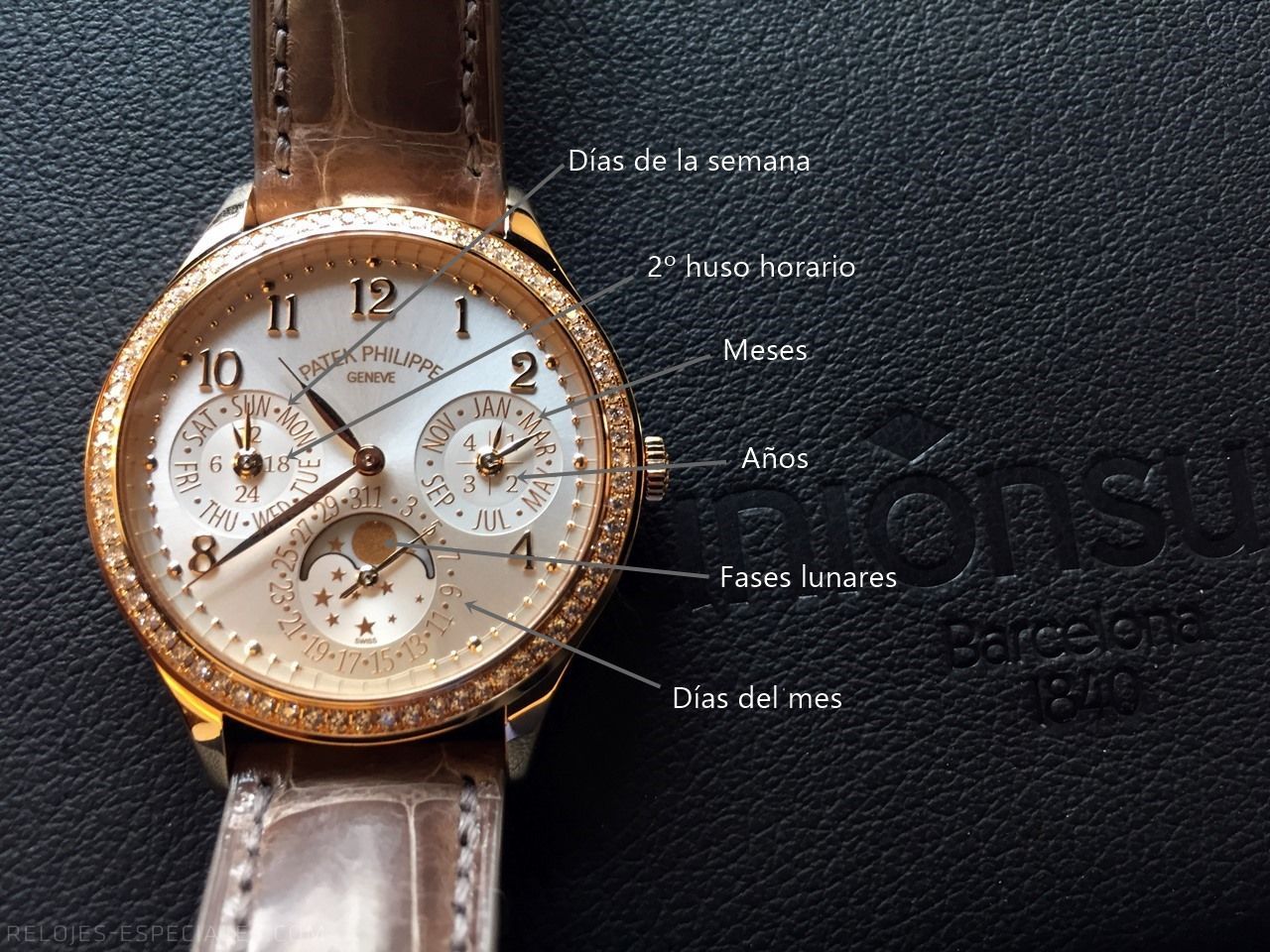
Like everything in fine watchmaking, precision in calendar calculation is a matter of levels. In the first of them is theSimple Calendar, which requires the date to be adjusted five times a year. HeAnnual CalendarIt shows a greater degree of complexity since it calculates what month it is and keeps track of the days each has, thanks to which it only has to be adjusted once every four years when the leap year occurs. At the top is thePerpetual Calendar, which in addition to knowing what month we are in, also calculates what year and whether it is a leap year, so that it will add February 29 to the calendar when it is mandatory.
A little history
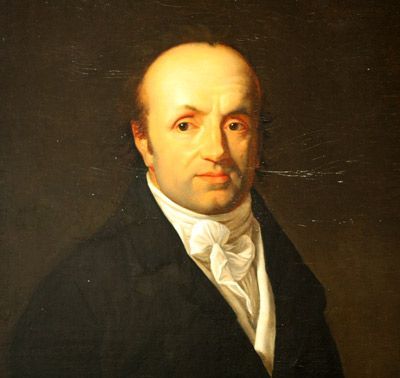
The Annual Calendar was already included in large watches in 1700, moving to hand watches as soon as its size could be reduced. However, the hand watch withPerpetual Calendaris attributed to the fertile ingenuity and skillful fingers ofAbraham Louis Breguet, acclaimed inventor of the Tourbillon and watchmaker to the court of Louis XVI, at the end of the 18th century.
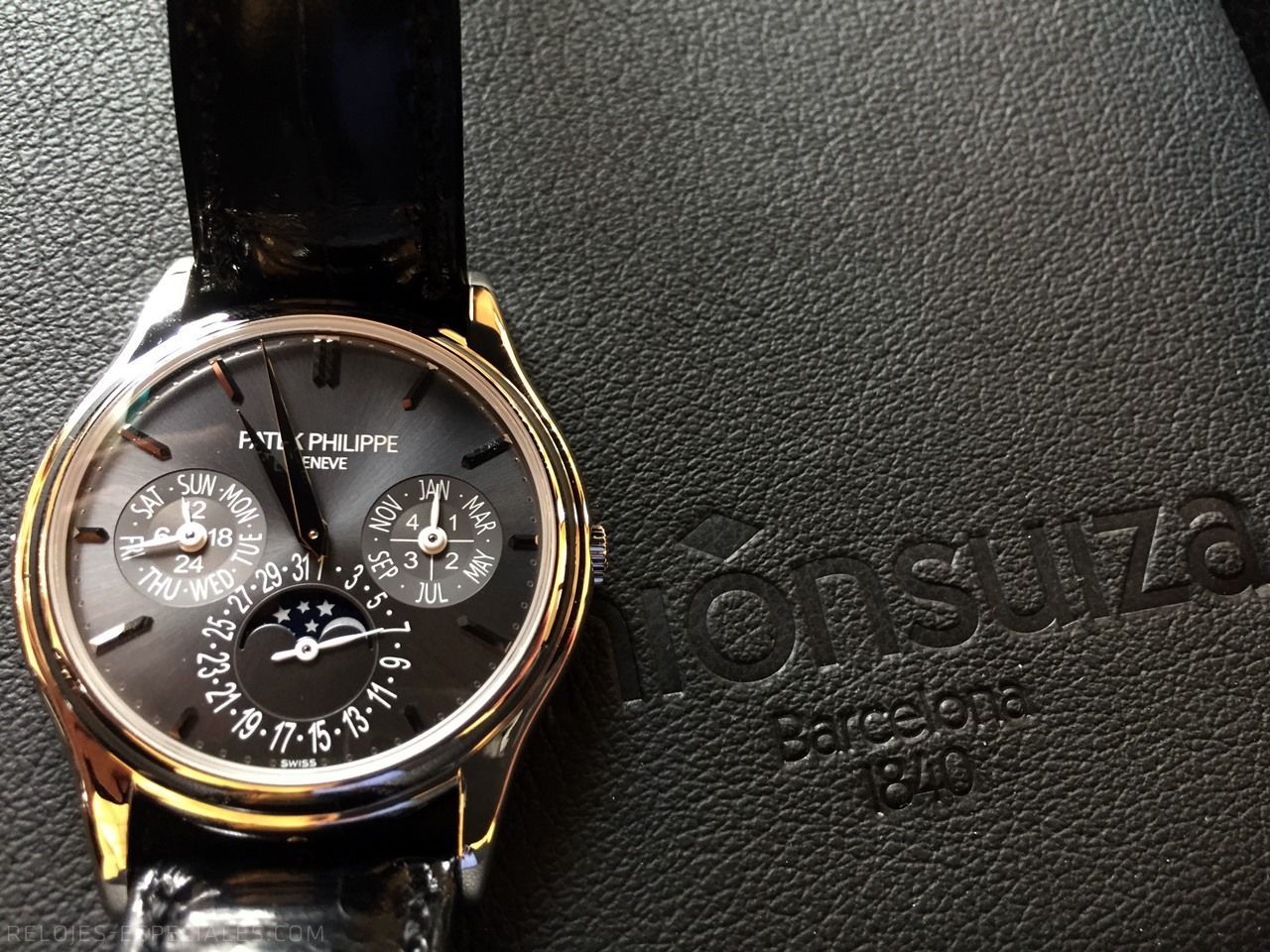
Already in the 19th century, thePerpetual CalendarsThey stopped being an unusual element in large watches, and from time to time they were also incorporated into pocket watches. The basic design of the mechanism of thePerpetual Calendar, with its unique star wheel, its cam mechanism for the months and its leap year counter in the shape of a Maltese cross, was beginning to become known, being associated from its dawn with the appearance of the companyPatek Philippe. In 1898 Jean Adrien Philippe's talent and ingenuity in mechanical invention was recognized with Swiss patent No. 1018 protecting the design of the mechanical mechanism.Patek Philippe Perpetual Calendar.
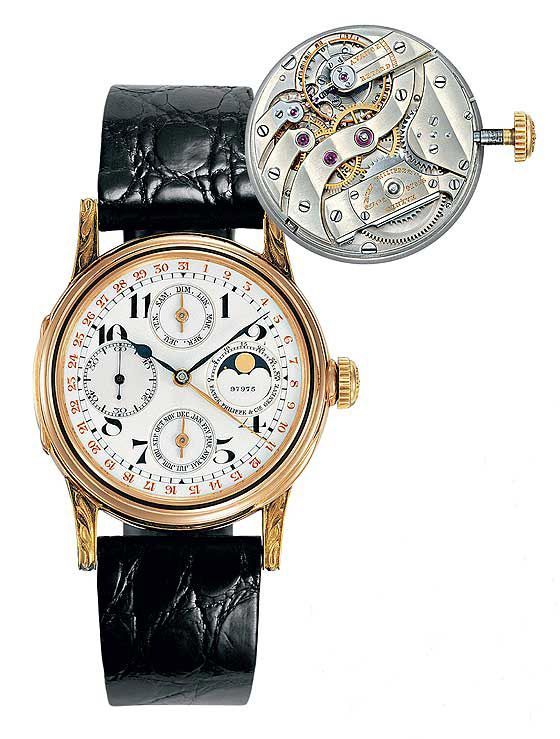
El Patek Philippe No. 97 975It had been built on that date and consisted of lunar phases, indications of date, day of the week and month. But it was not until 1925 when it was introduced in a wristwatch case, to be purchased by Thomas Emery in 1927. It featured four secondary dials, placed symmetrically like points on a compass, two blued steel “sword” hands running the time and a third hand to indicate the date. Its case also showed a beautiful carving on the lugs that attached it to the strap. In addition to its complications, all indicators were automatic jump. The launch of this watch marked a pivotal moment in the world of watchmaking, as it allowed the wristwatch to come of age.
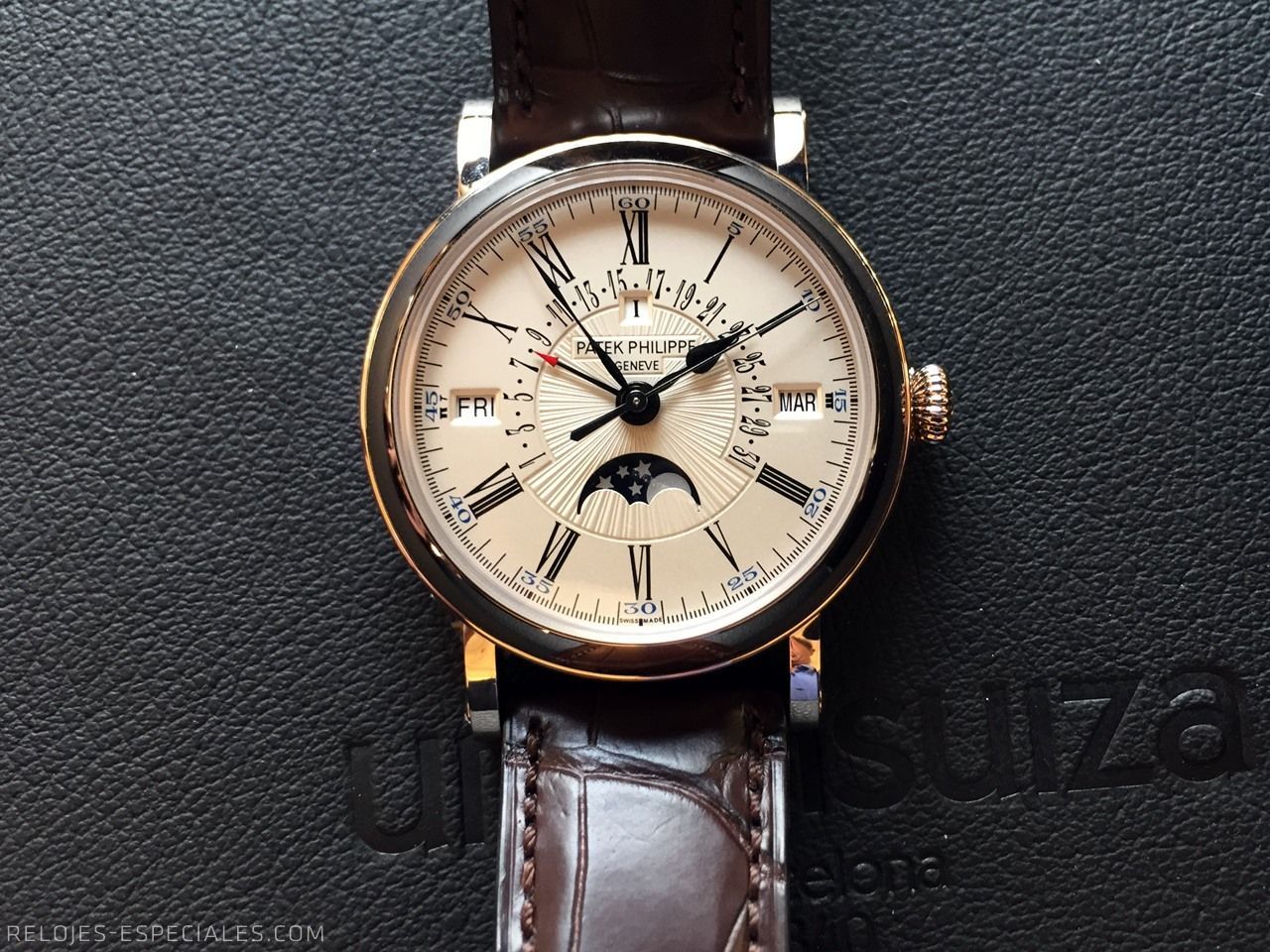
However, the culmination of the incorporation of thePerpetual CalendarThe wristwatch would not be produced until 1941, with the appearance of thePatek Philippe Ref. 1526, the first mass-produced watch of its kind. Equipped with a manually wound caliber 12-120 Q, it was produced between 1941 and 1952, and established the characteristic dial configuration of two rectangular windows indicating the day of the month at the top of the dial, with the phases of the moon and the date on a central auxiliary dial below.
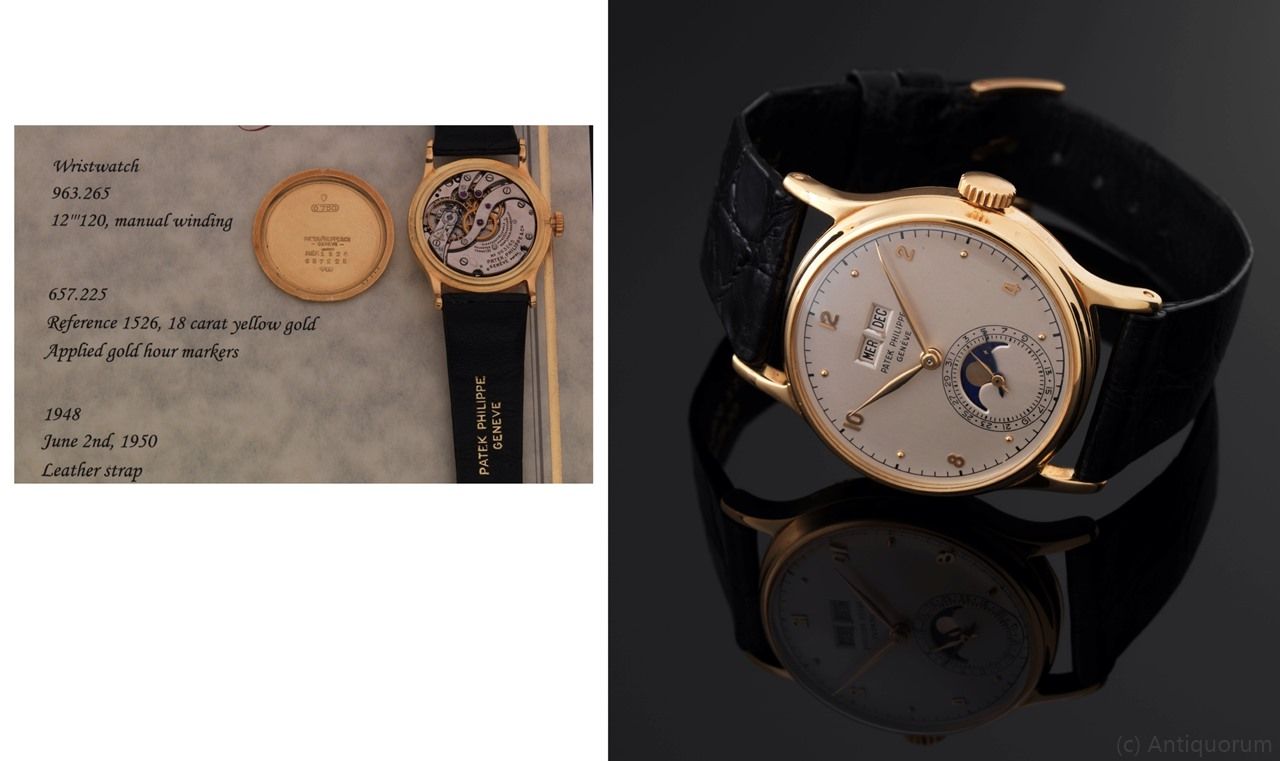
Over the four decades that followed, this dial design became an axiom of watchmaking. This Patek Philippe model was followed by others, such as the 2497 and 2438/I, in the 1950s and the 3448 in 1962, an automatic wristwatch with its famous caliber 27 460 Q, and the 3450, in the mid-1980s, the last of this illustrious line. Other brands also incorporated this Complication into their watches, and thePerpetual CalendarIt became one of the essential features offered by luxury watch brands.
Already in 1985, we witnessed the resurgence of complicated mechanical watches, whose survival had been compromised with the appearance of Japanese quartz movements, thanks to the appearance of the Patek Philippe 3940, equipped with the caliber 240 Q and characterized by a 22-carat gold mini planetary rotor embedded in the movement. The architecture of this caliber allowed for thinner watches, and when the movement was transformed into a Perpetual Calendar with 275 pieces, it only measured 3.75 mm thick, an almost miraculous feat. This model, and those that have followed until today, changed its image a little, but maintained the essential elegance of its predecessors.
1985: two unsolved problems
However, and despite the great advances, until 1985 thePerpetual CalendarsThey had a big drawback: the indications of the day of the week, the date, the month, the year and the Moon Phase were not synchronized. That meant that every time your watch stopped you had to change every indication and dust off your pocket almanac to determine the correct Moon Phase before adjusting the watch.
In 1985, Kurt Klaus, then head of R&D at IWC and today one of the most famous and recognized master watchmakers of our time, radically simplified thePerpetual Calendar: In addition to creating a technically superior watch that displayed the four digits of the year, he designed the Da Vinci, from IWC, a watch in which all the information on the day of the week, date, month, year and Moon Phase was synchronized. So, if your watch stopped, all you had to do was pull the crown and set it to the correct date, and everything else would correct itself automatically.
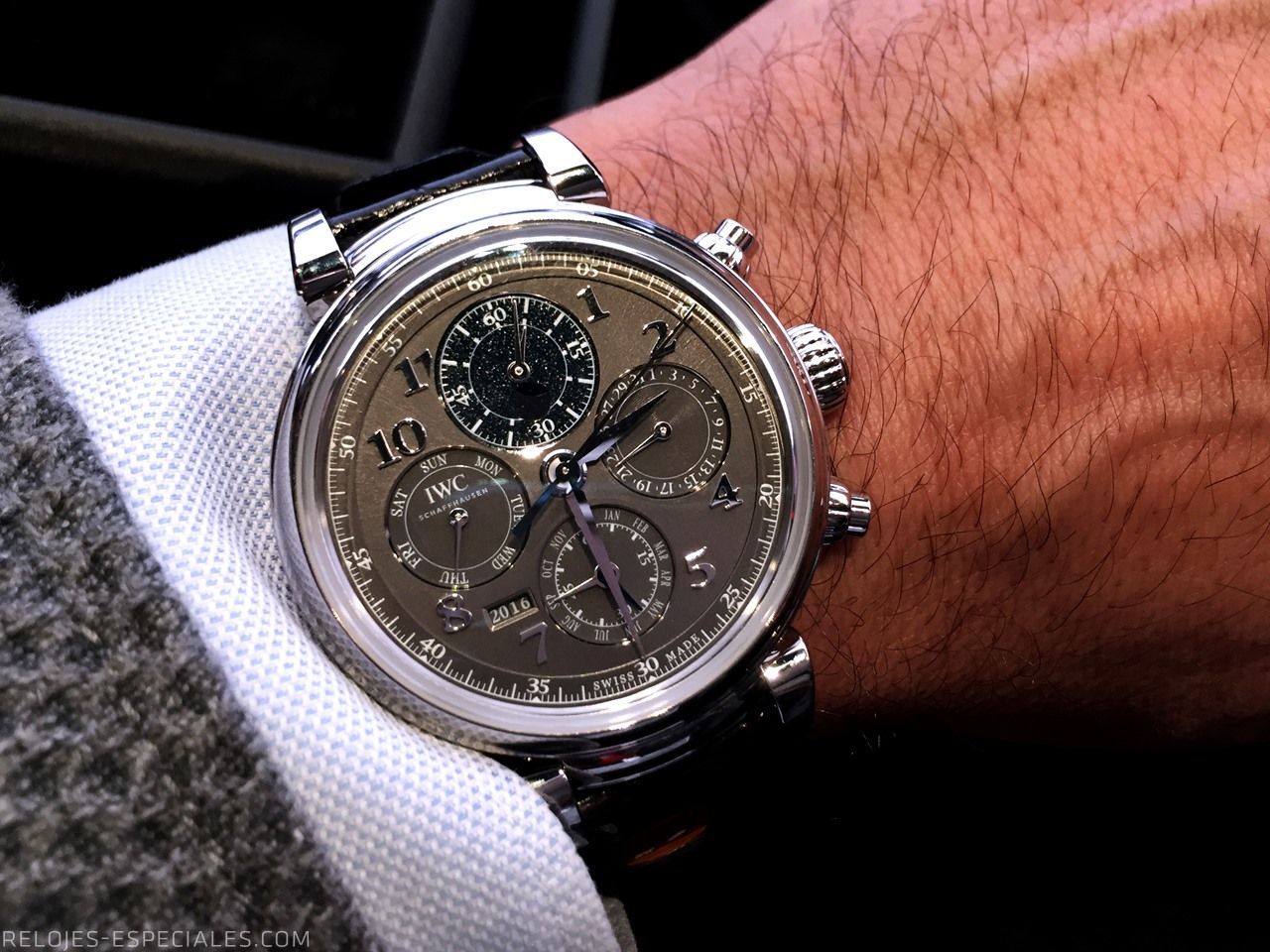
Although the IWC Synchronized Perpetual Calendar was a revelation, it still had one problem: if you accidentally moved the date forward, there was no way to turn it back. Furthermore, when traveling to previous time zones it was necessary to stop the clock until the correct time was reached, since once the midnight threshold was passed, it was impossible to reverse the date.
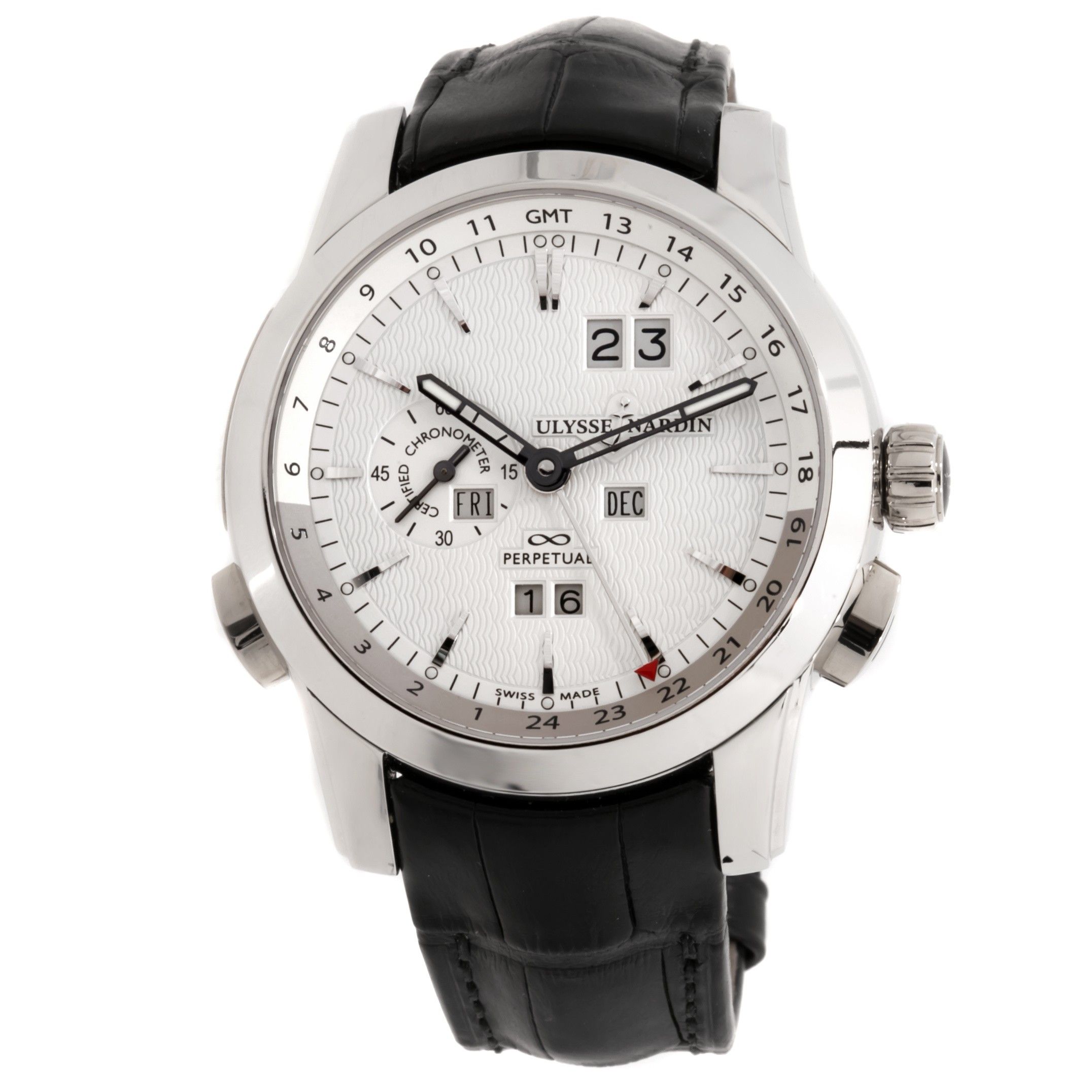
Ludwig Oechslin, then technical director of Ulysse Nardin, came up with the solution while working on the famous Farnesian Clock. He discovered epicyclic gears, in which the smaller gear was placed on the perimeter of a larger one, and applied them to create Ulysse Nardin's first Perpetual Calendar model in 1996. It relied solely on gear trains to move its calendar mechanism, not springs, so each indication could be quickly adjusted back and forth.
Therefore, in 2100, which despite being a leap year will not have an extra day in February, all Perpetual Calendar watches on the market will have to be taken to the factory to correct this deviation, except for Ulysse Nardin watches, whose owners will be able to adjust only by changing the day of the week independently.
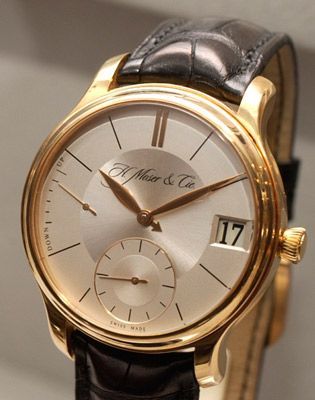
In 2005, Ulysse Nardin's was the most advanced synchronized Perpetual Calendar on the planet, until H. Moser & Cie.'s Perpetual 1 appeared, designed by Andreas Strehler, with the latest advance: the Instantaneous Calendar. With a special double-pulse crown system, and thanks to the use of two superimposed date discs, one with the days from 1 to 14 and the other from 15 to 31, it managed to make the date jump from the end of one month to the beginning of the next without the need for intermediate steps. That is to say, from a performance point of view, the Perpetual 1 makes Moser the current market leader.
In this way, Fine Watchmaking has managed to tame the flow of time and its irregularities and today brands continue to advance day by day with new and varied wonders to be able to enclose a little piece of eternity in our wrists.
Best watch strap | Best annual calendar watch | Best watch winder | Best Black Luxury watch | Best Luxury Watches Men | Best Swiss Luxury Watches Women | Best Men Diamond Watches under 1000 | Best Diamond Watches Women | Best Luxury Dive Watch
Home Decor Shop
 Acacia frida deluxe solid wood bed frame |
Bedroom bench |
Bed chest drawers |
Lingerie dresser |
Frame base |
Mirror with jewelry storage |
30 Bathroom Vanity |
Memory foam queen mattress |
Mattresses for back pain |
Nightstand set of 2 |
Grand Goldman Shop |
Civil Lawyer
Deutschland Trikot WM 2026
Acacia frida deluxe solid wood bed frame |
Bedroom bench |
Bed chest drawers |
Lingerie dresser |
Frame base |
Mirror with jewelry storage |
30 Bathroom Vanity |
Memory foam queen mattress |
Mattresses for back pain |
Nightstand set of 2 |
Grand Goldman Shop |
Civil Lawyer
Deutschland Trikot WM 2026










