

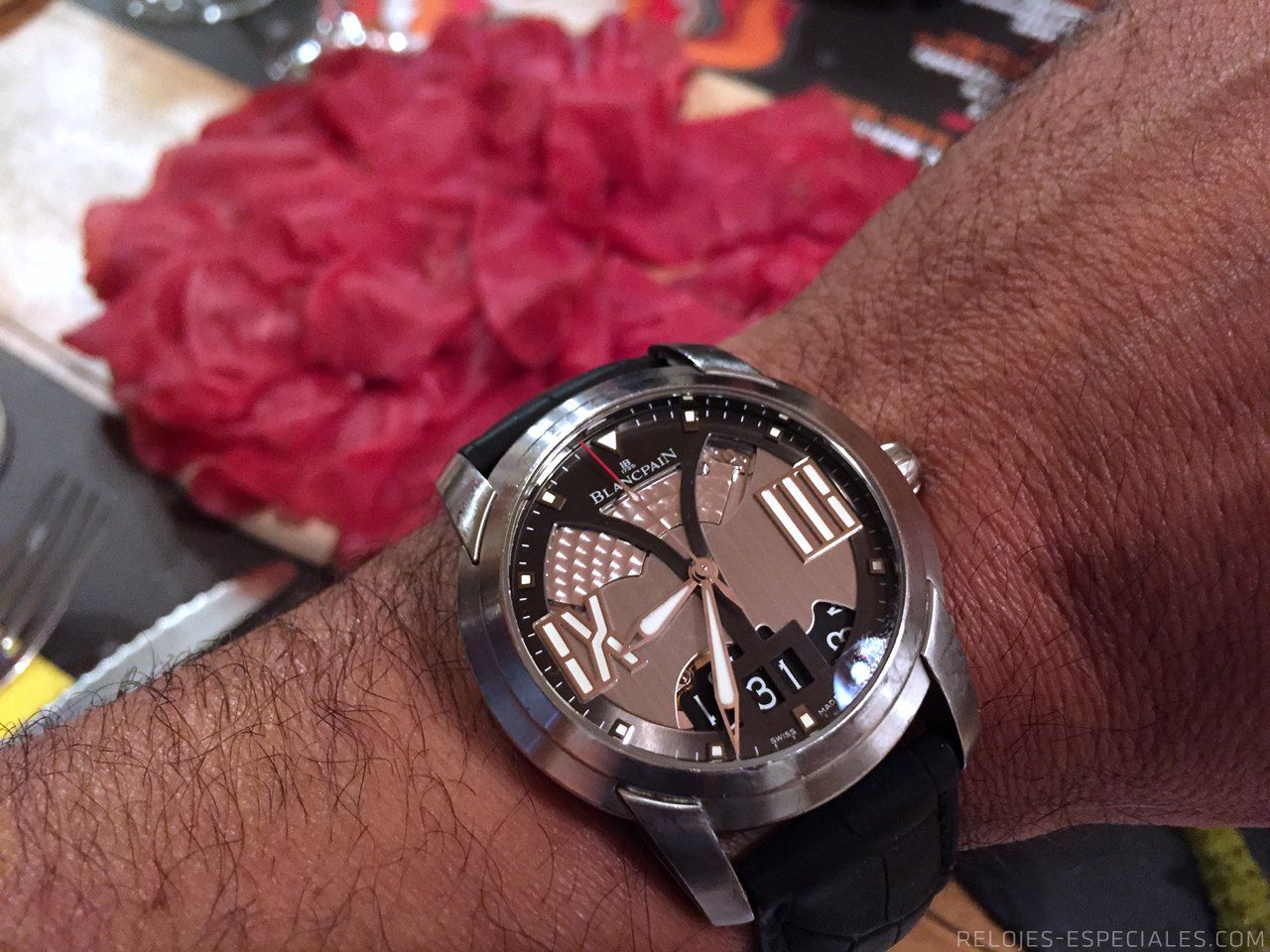
The Blancpain manufacture prides itself on being, if not the oldest, one of the oldest Swiss watch brands, known for providing calibers to third parties for many years until, like other illustrious manufacturers, it decided to put its own name on the dials. After accompanying them to Marbella to taste Dani García's 4-hands menu with Nobu Matsuisha and having them as the main partner of the presentation that Rabat gave us this past April, I was ready for the next step: the visit to the Blancpain factory in Le Sentier and the Le Brassus atelier.

Because Blancpain dominates like few others what we could call the two extremes of watchmaking: from the production of the calibers and their components to the decoration of both those same calibers and the elements that will embellish a watch beyond its practical function. And the dials – a reflection of the watchmaking soul – are Blancpain's strong point. In Le Sentier the calibers are produced, while in Le Brassus (“the farm”, although it never functioned as such) the workshops are housed where authentic artists find the peace necessary to execute their unique works.
Get Lifetime Access to Top AI Tools
Find Bleeding Edge Business Software at Scandalous Prices on Appsumo.

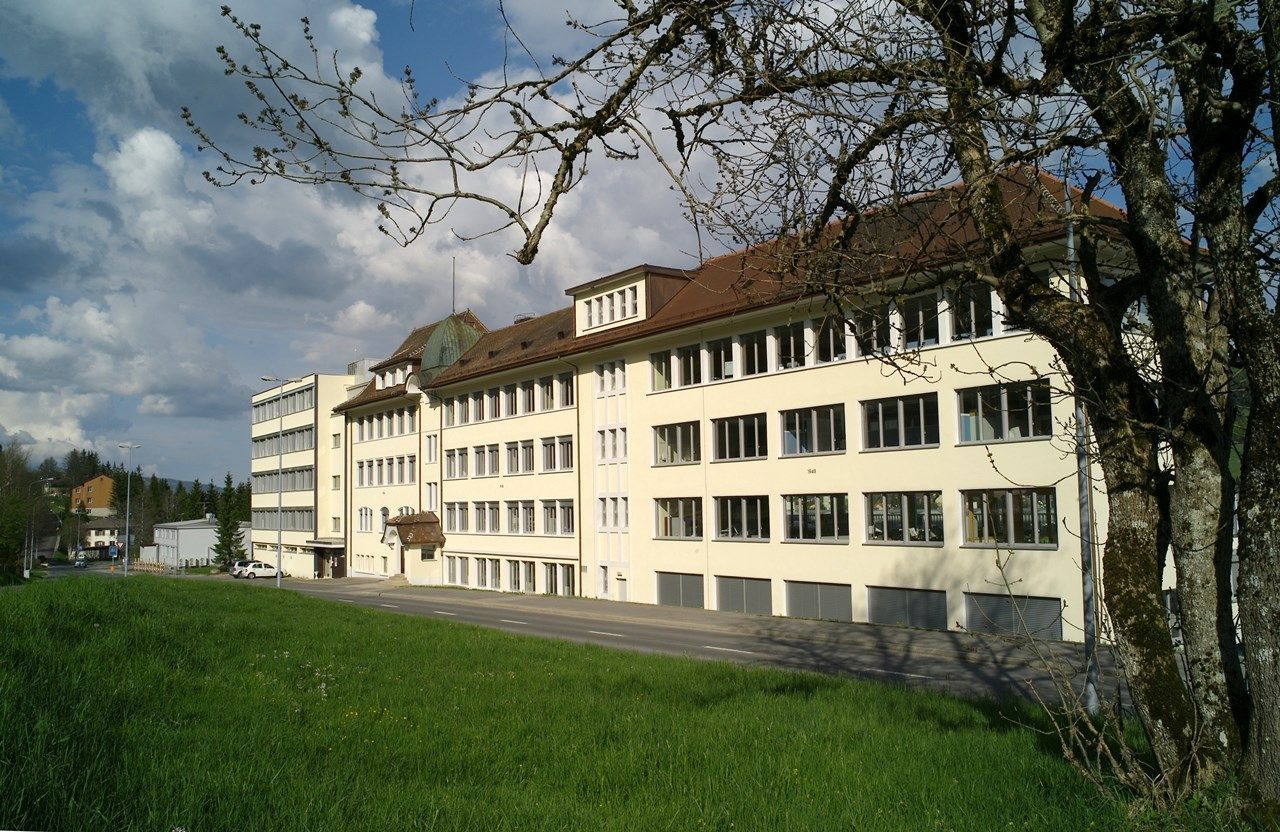

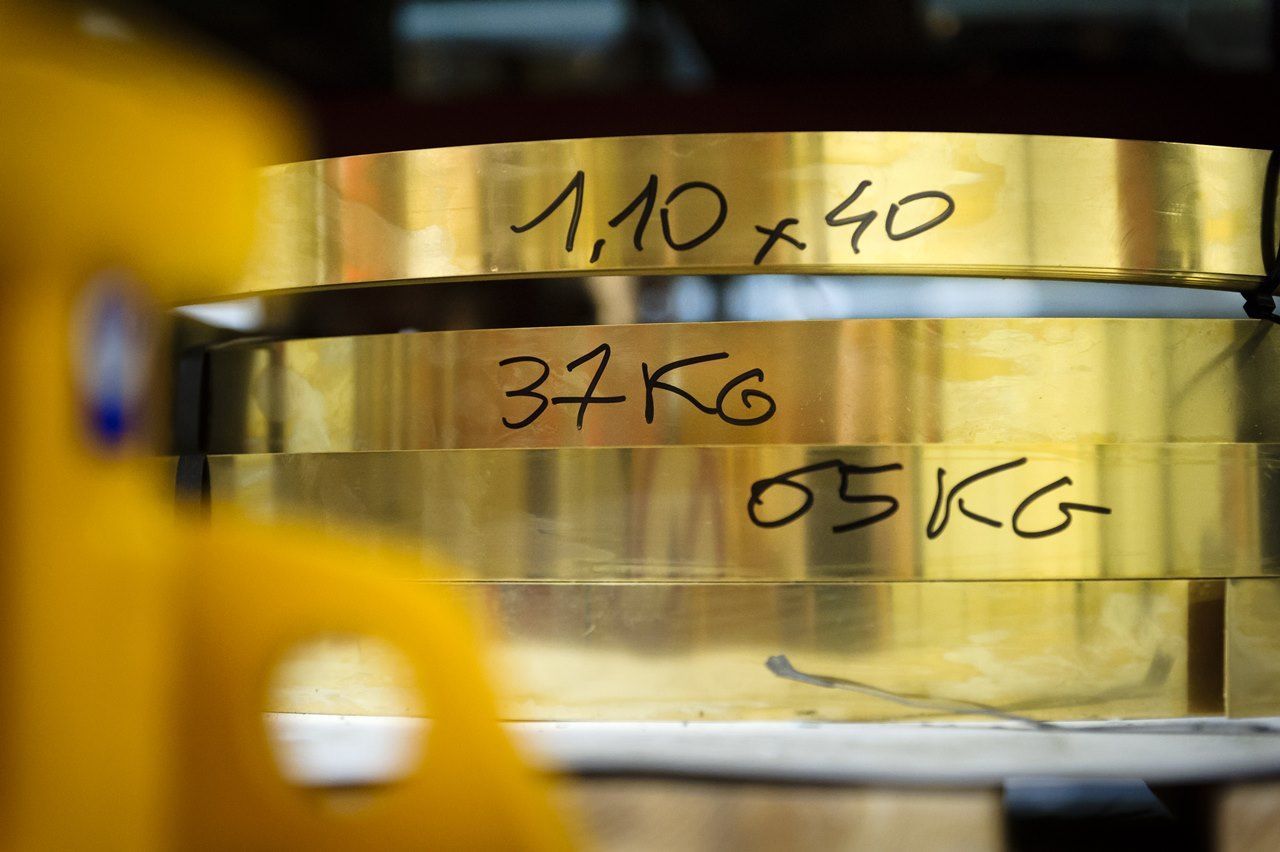
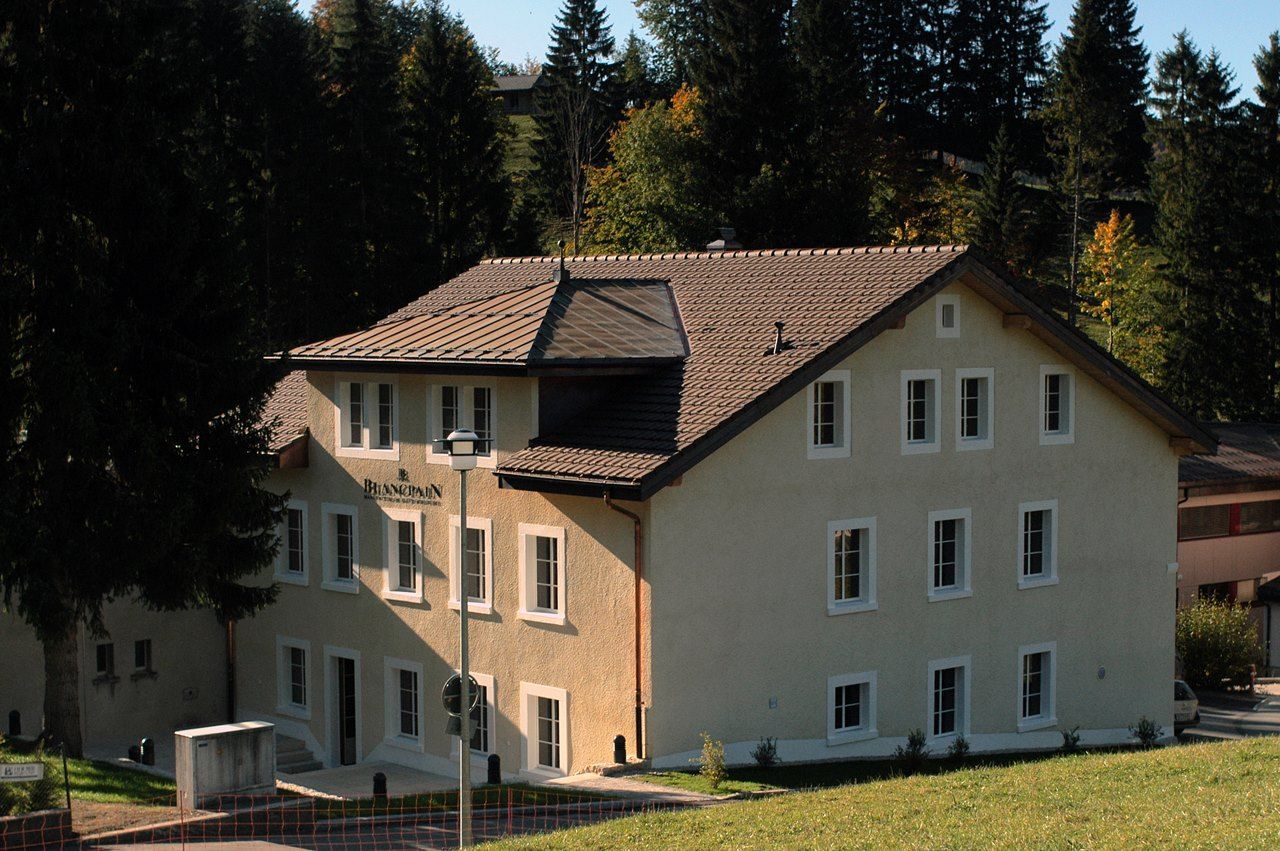
The Le Sentier building, in the heart of the Swiss Jura and surrounded by other notable names, shows the successive extensions that it has undergone over the years, being able to distinguish a more functional area – I suppose the last one – than the rest with local style roofs. It is a productive plant in every sense of the word, because on one side what could be called raw materials enter and on the other side a practically finished product comes out. To give an example, and in some ways it is the touchstone: if you see rolls of metal (generally brass) stored that will later be conveniently die-cut to produce base plates, you know that you are looking at a true manufacture.
A note before continuing: I'm not going to get into the well-worn discussion of whether manufacturing is only someone who produces their own oils or hairsprings or... Any manufacturer (even of watches) *has* to buy things outside, be they hairsprings, crystals or straps. And that should not deny it the manufacturing seal, which is measured by other parameters. My opinion, in any case.
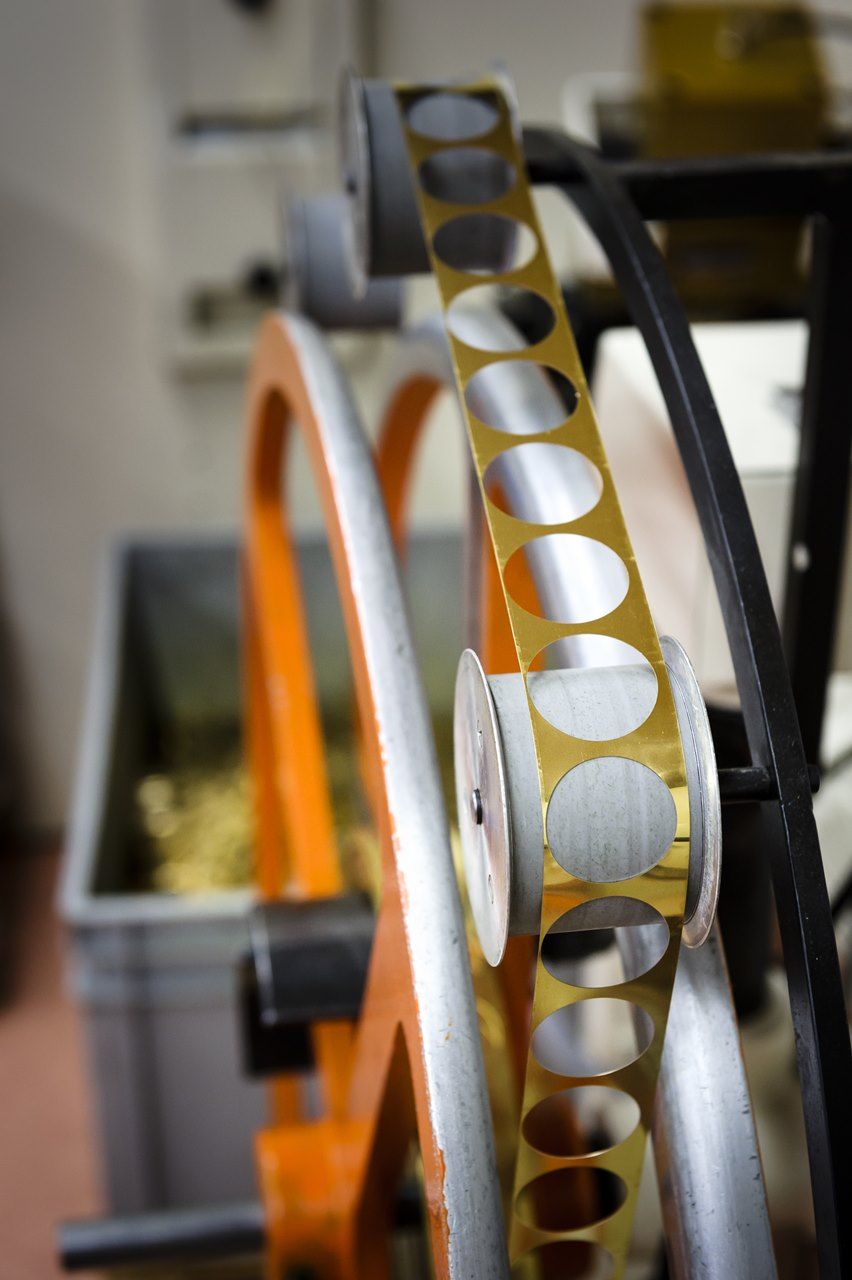
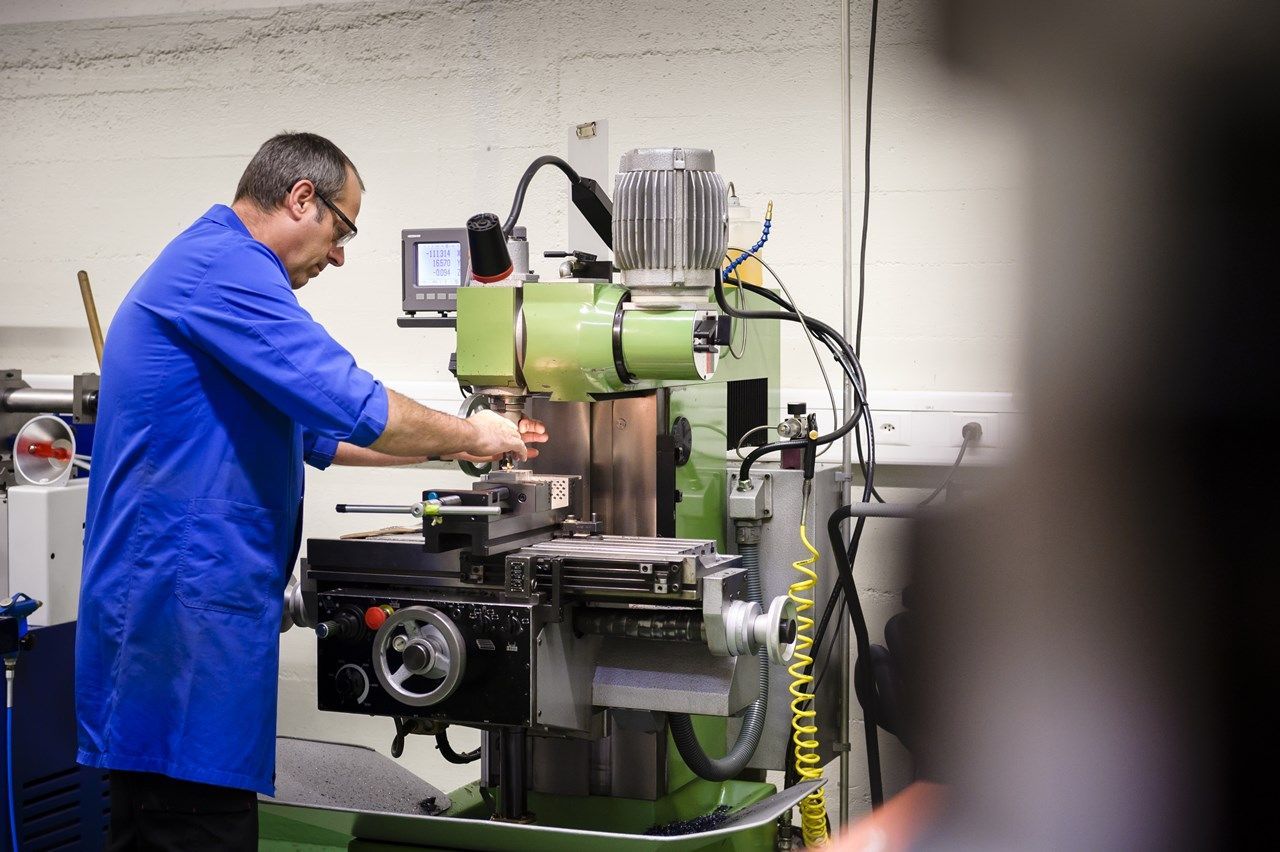
In those brass rolls is the origin of everything. From there will come the raw discs that, after an infinite number of processes, both mechanized and manual, will end up forming the base on which the entire caliber or movement will be assembled. These discs will be drilled, calibrated, ground and finally pressed to recover the molecular structure that they had lost with previous treatments. And they have not yet started working on them: some CNC machines that look like a UFO and work on a carousel are in charge of sculpting the different housings for wheels, rubies and gears. Tolerances are measured in thousandths of a millimeter and from time to time a piece is removed at random to check that it remains within the established tolerances. If not, the entire game goes back to recycle and start again after adjusting.
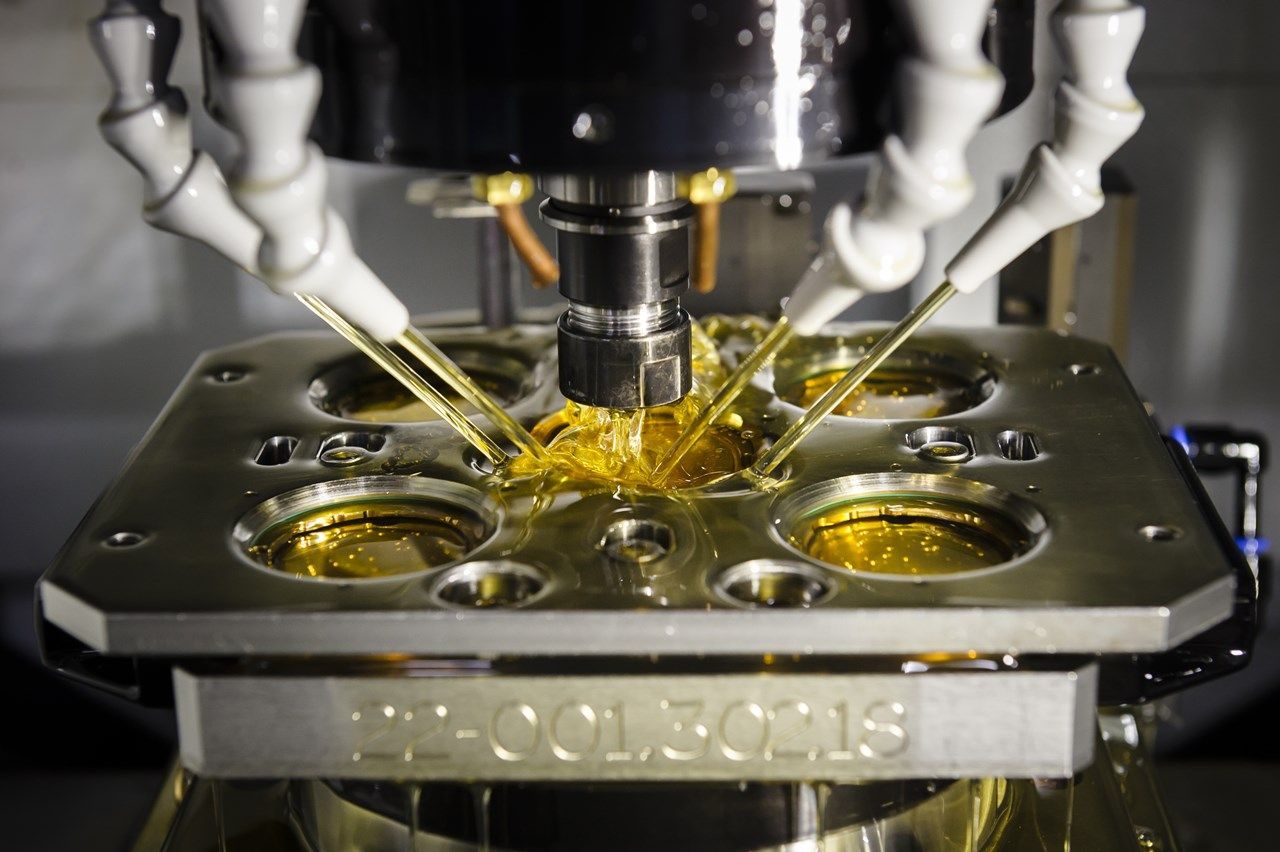
These “UFO-machines” (of which there are various sizes and functions) are as Swiss as the material they produce, and having already seen a few manufactures, one gets the idea that this industry (that of machine tools) has to be as powerful as the watch industry. But they are far from standard: a good manufacturer also has its own tool workshop where it produces elements that in some cases can only be appreciated through a microscope. An example: the watchmaker needs to create a specific hole in the plate to accommodate one of the rods that act as a gong for a minute repeater caliber. The specialists will study that gap (on the design table) and will think and create a drill bit that – mounted on the UFOs – can achieve that effect.
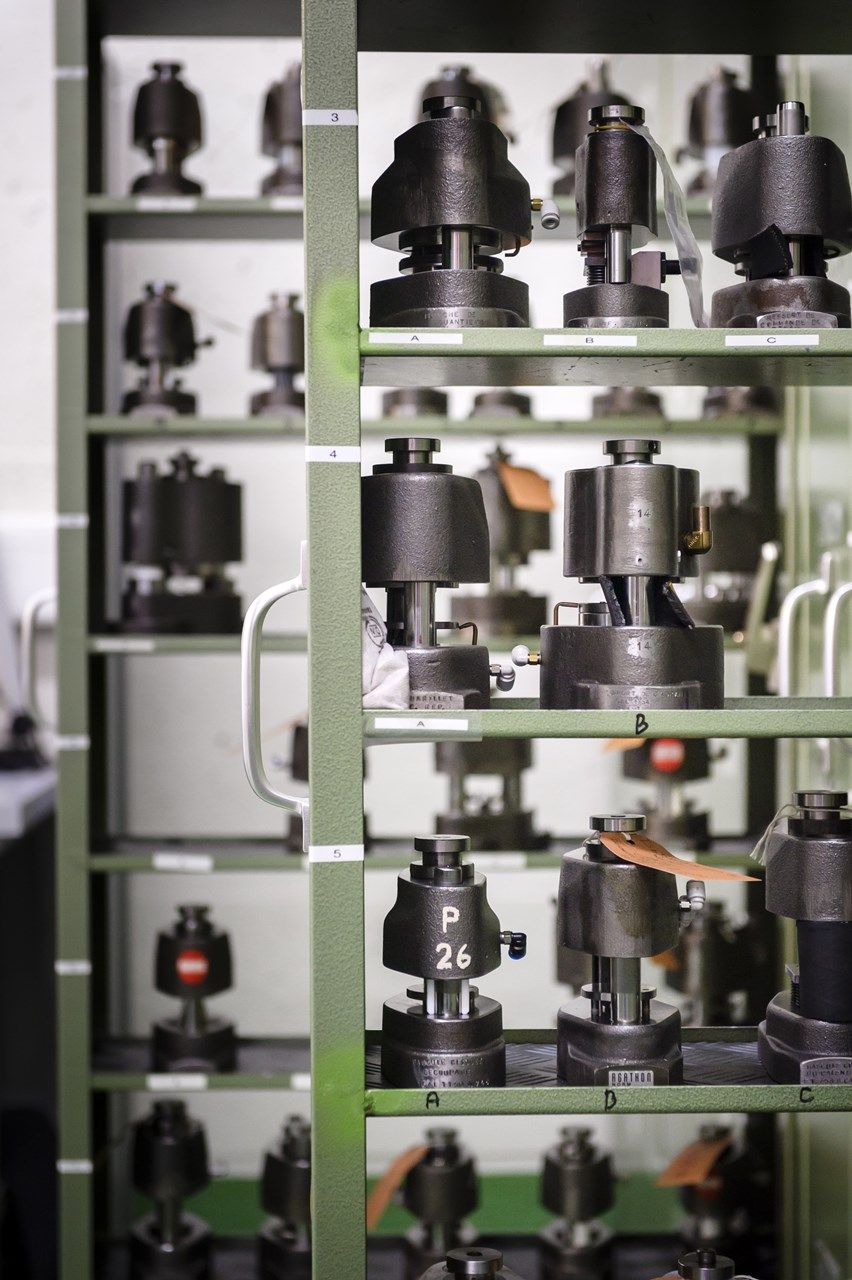
They also create dies to stamp different pieces that, after being properly treated, will become hammers for those gongs, anchors, bridges or chronograph rockers. Each die is unique because it is created specifically for a single piece. Hence, the die warehouse looks like Indiana Jones at the end of the first delivery... and not only because of the volume: the average production cost of each of these molds is around €30,000.
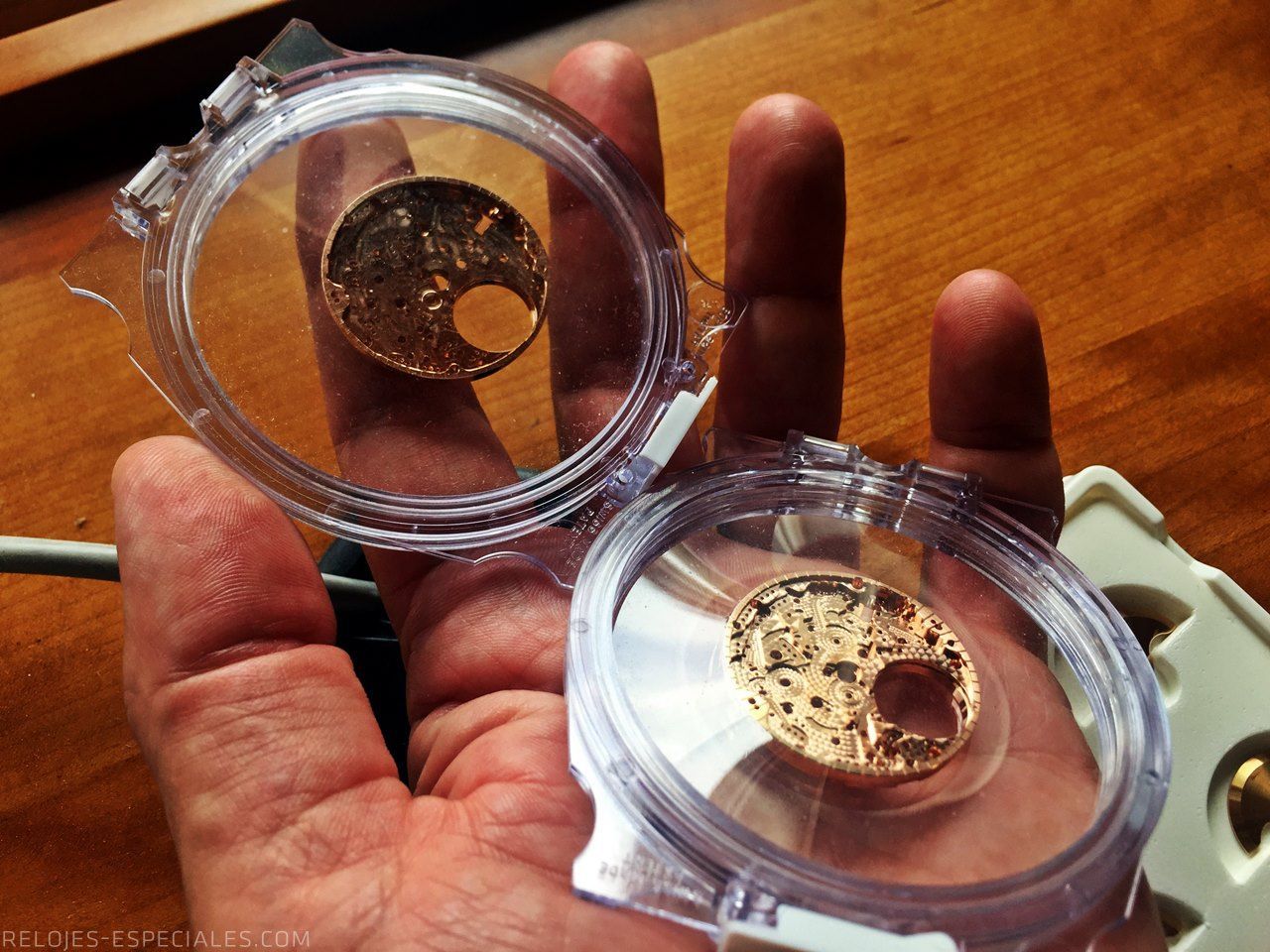
The vast majority of plates (and not only at Blancpain) are made of brass, a material with physical characteristics that make it ideal for this purpose, but a part of the production is made of gold, which in turn is ideal for transmitting the sound of the gongs of the repeating calibers. This area of the CNC machines is specially monitored by cameras and practically every gram that enters it comes out in the form of a plate or waste carefully passed through the scale.
The oscillating masses for automatic movements are like gold, since another of the properties of gold is its density. They are cut from a complete circle and, since their half-moon shape is not symmetrical, almost half of that original circle goes to recycling. The micro-rotors of the smallest calibers are made of platinum, even denser than gold. Because it does not handle precious metals in sufficient quantities to justify it, Blancpain does not have its own foundry and delegates that activity to an external supplier. Does it stop being a manufacture for that reason?
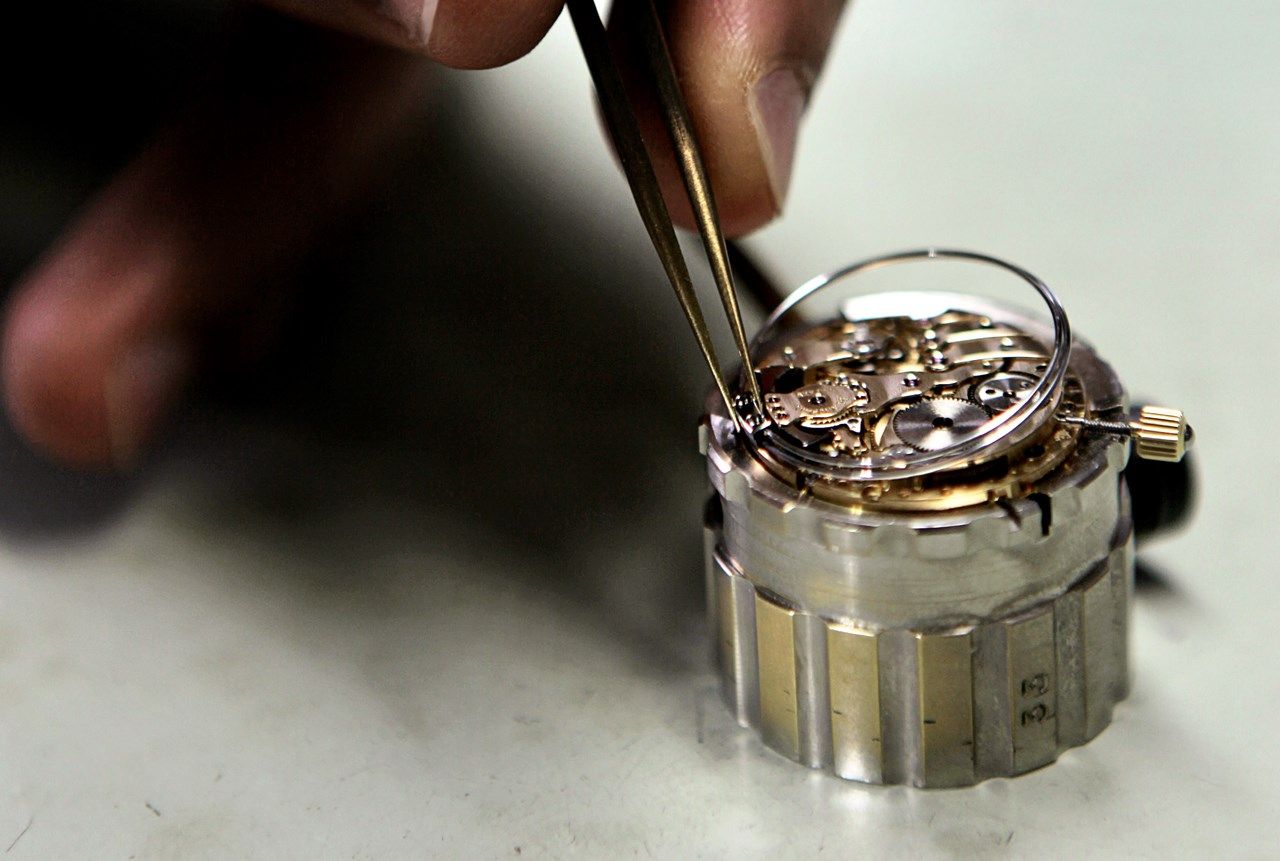
What we unfortunately could not see was the assembly part, where all the components that we had seen produced make sense in an almost magical arrangement. For that we will have to wait for more powerful winds of change within the Swatch Group. At the moment we have been able to visit Le Sentier, which compared to before (nothing) is already a lot. A fact that we fans usually ask and that brands are also usually reluctant to give: Blancpain's production is 25,000 watches a year, although having absorbed Frederique Piguet it also produces top-level calibers for other brands.
As not everything was going to be panels and workshops, there was time to taste typical dishes of the region in a place as remote as the Chalet du Pré aux Veaux, which cannot be said to be in the middle of anything because it is actually in the middle of the Jura natural park and the landscapes are simply fairytale.




I am not able to find a translation that satisfies me for the sonorous expression “metiers d’art”, so I will leave it in “artisan trades” to describe what is done in the Le Brassus facilities. High complications such as tourbillons, carousels and repeating calibers are also realized and finished here. “The farm,” as it has also been called, has that appearance that most fans imagine when they hear the expression manufacturing: a charming-looking chalet that, if it weren't for the brand name on its façade, could perfectly pass for a private residence. Big, yes...
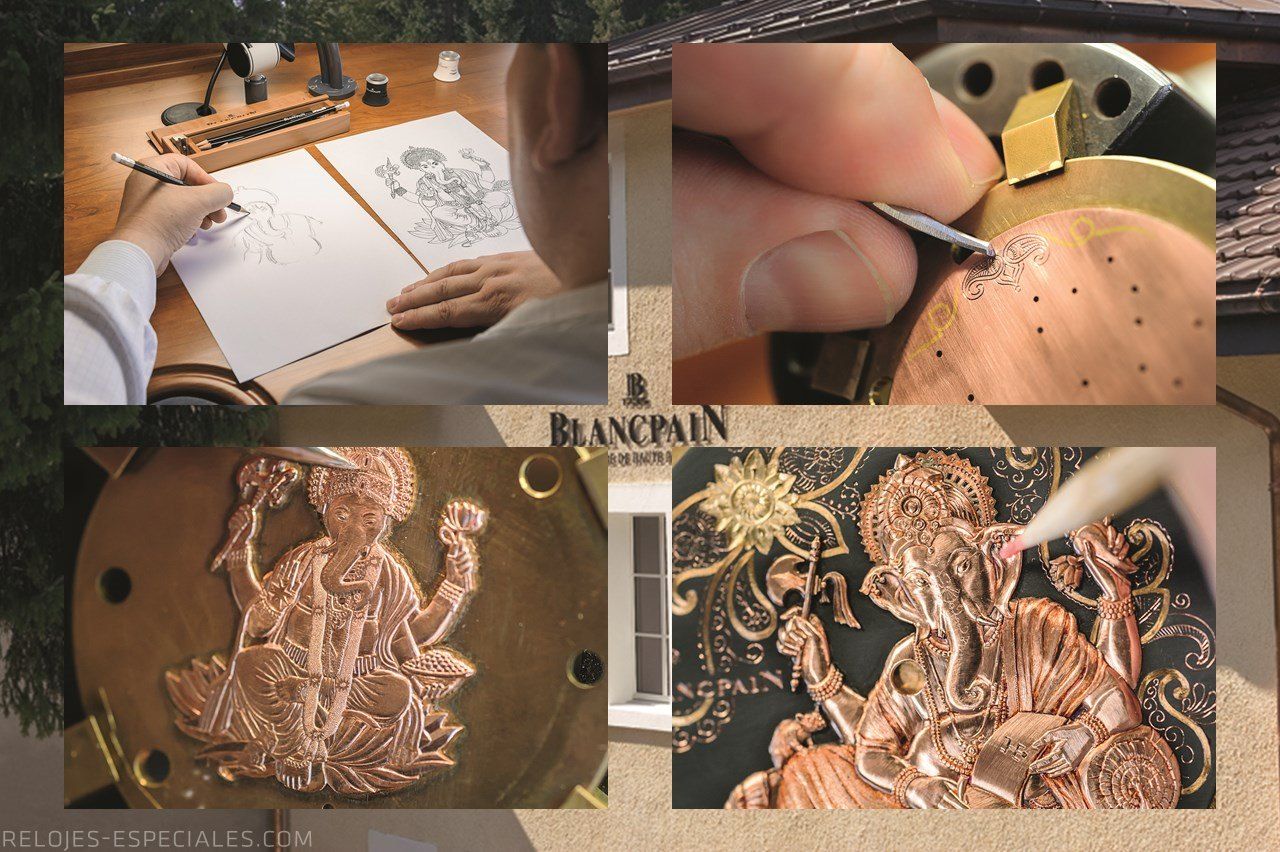
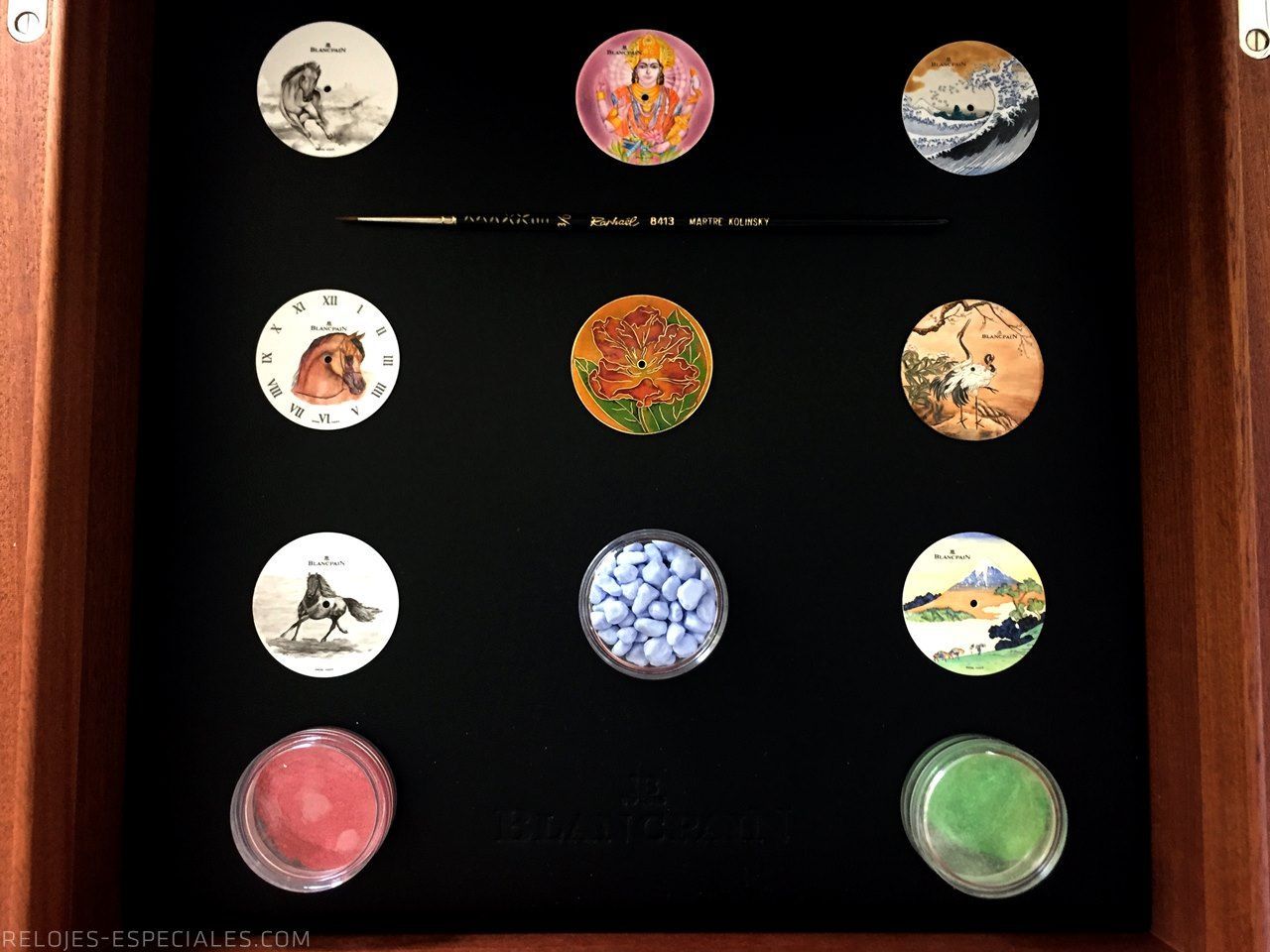
Here arts such as engraving, enamelling, marquetry, damascening, shakudo come together... that's just for the dials, because we will also find master polishers and of course master watchmakers. They are all true creative artists, because in the same way that no two paintings – or engravings, or enamels – are the same, there are no two chimes that sound exactly the same, which confirms what I said at the beginning: no two watches are the same at Chez Blancpain. At least in Fine Watchmaking.
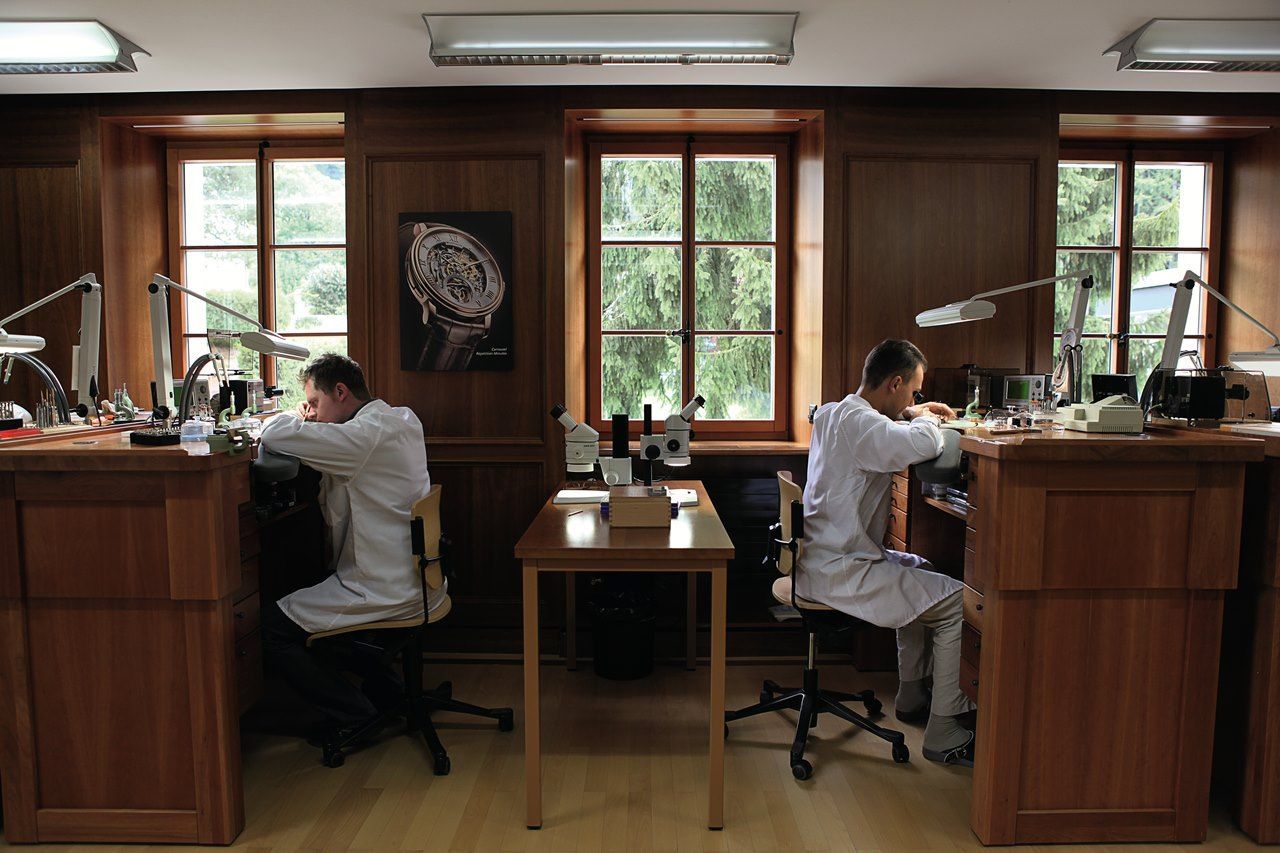
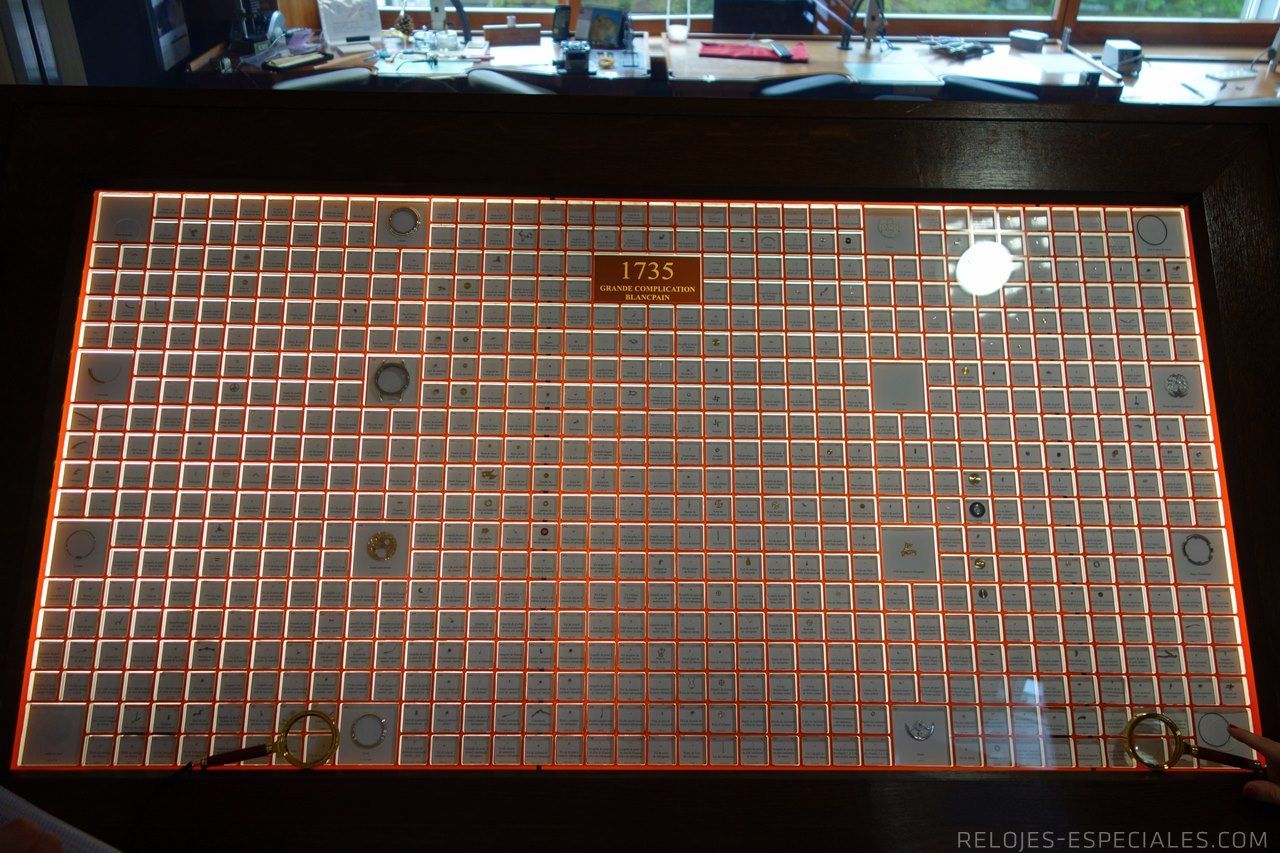
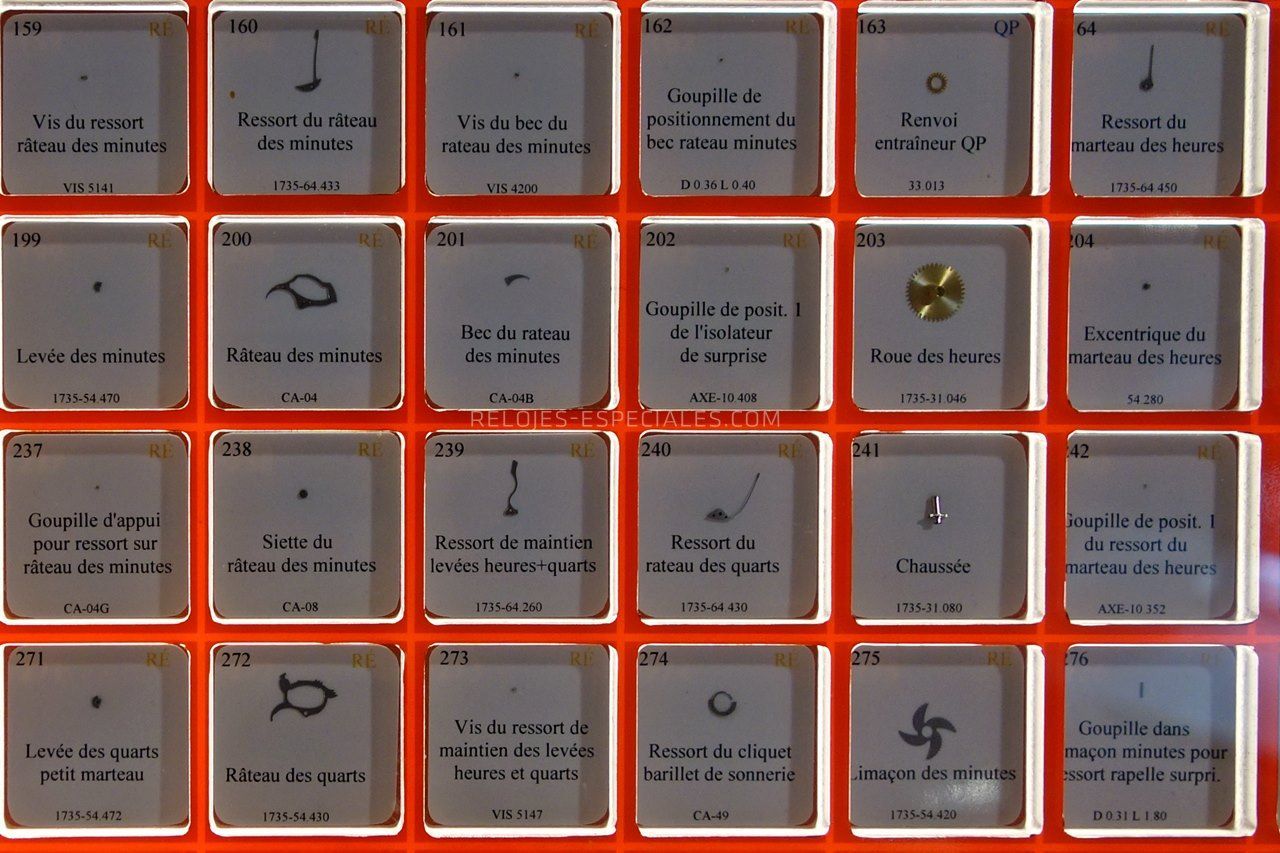
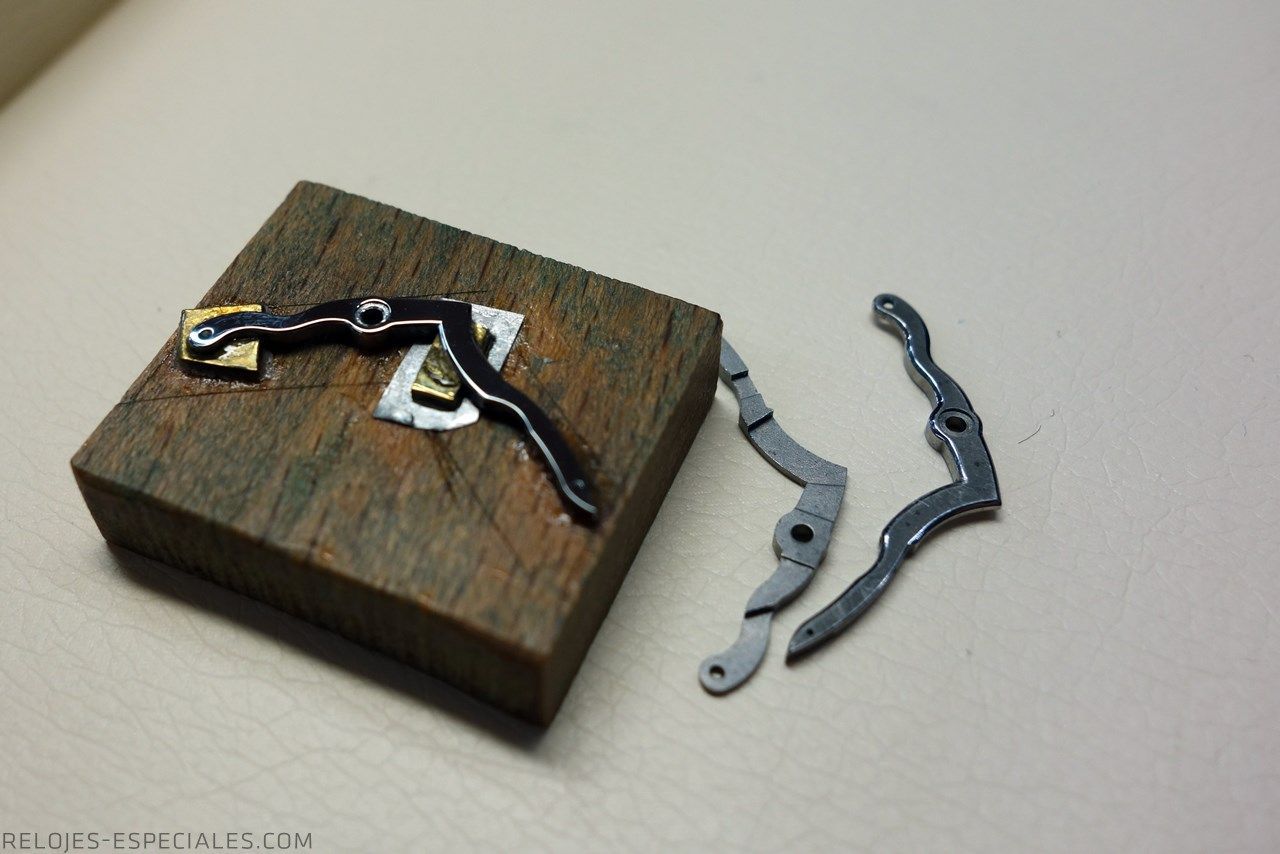
At the entrance we could see the explosion of a caliber 1735, made up of more than 750 parts and which took more than fifteen years to complete by a single watchmaker. The price, in line with all this, was seven figures. Each and every one of the pieces (even those that cannot be seen) are treated by hand by expert polishers who master the art of “black-polish” or mirror polishing, a name infinitely easier to write than to execute. The edges are beveled with rods of gentian, a plant that is abundant in alpine meadows (at least in the Jura area) and from which a so-called peculiar spirit is also extracted (we tried it at the Pré aux Veaux dinner)... Well, if I had to choose, I much prefer the usefulness of polishing.
The tourbillons and carousels that adorn Blancpain's most sublime pieces are also assembled here. Much has been said about the tourbillon but there is a similar mechanism that Blancpain recovered for the mere pleasure of doing so: it is the carousel, invented by the Danish watchmakerBahne Bonniksen(1859-1935) in 1892, which proposed a system of driving the cage by a differential effect but which did not substantially improve the invention of Lois Abraham Breguet.
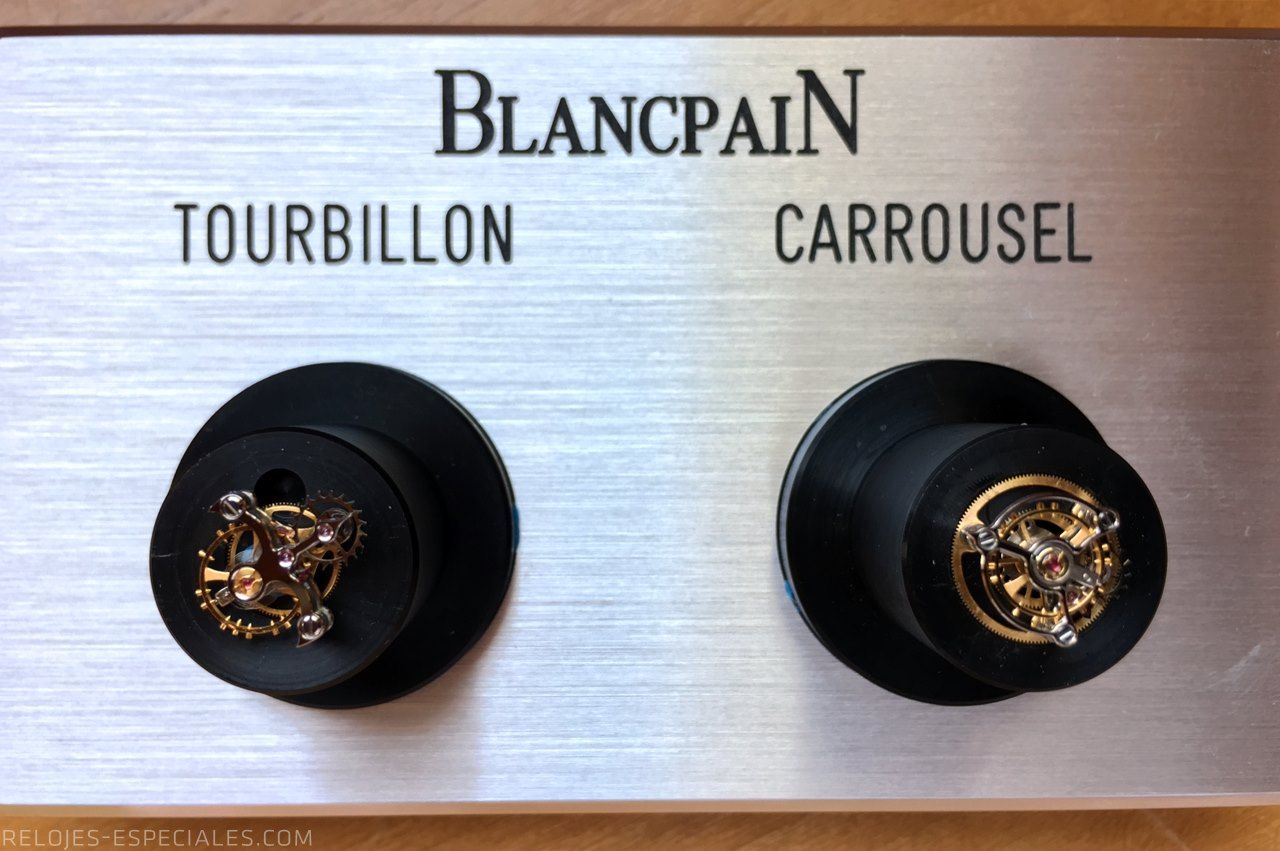
Broadly speaking, to avoid the influence of gravity, the movement encloses the regulator assembly (flywheel, spiral and exhaust) in a mobile cage and makes them rotate on their axis. Up to this point everything is similar between the carousel and the tourbillon, but the difference is in how each of them does it. The tourbillon rotates around a fixed axis while the carrousel rotates around a mobile axis. You can get more information here. Well, Blancpain mounts both mechanisms in the same caliber, which adds the complication of having to synchronize both. The result, combined with polishing, enamels and/or engravings, is neither more nor less than a small (but only in size) work of art.
However, the tourbillon has long been considered outdated as a supreme complication. Let us salute His Majesty the minute repeater, which requires not only mechanical skill but also a fine ear to achieve sounds that -literally- make your hair stand on end. And in this Blancpain also shows its mastery, with sublime mechanisms made almost entirely of gold. Mechanisms that, for the greater glory of the manufacture and the delight of the lucky recipient, end with hand engravings of excellent execution.
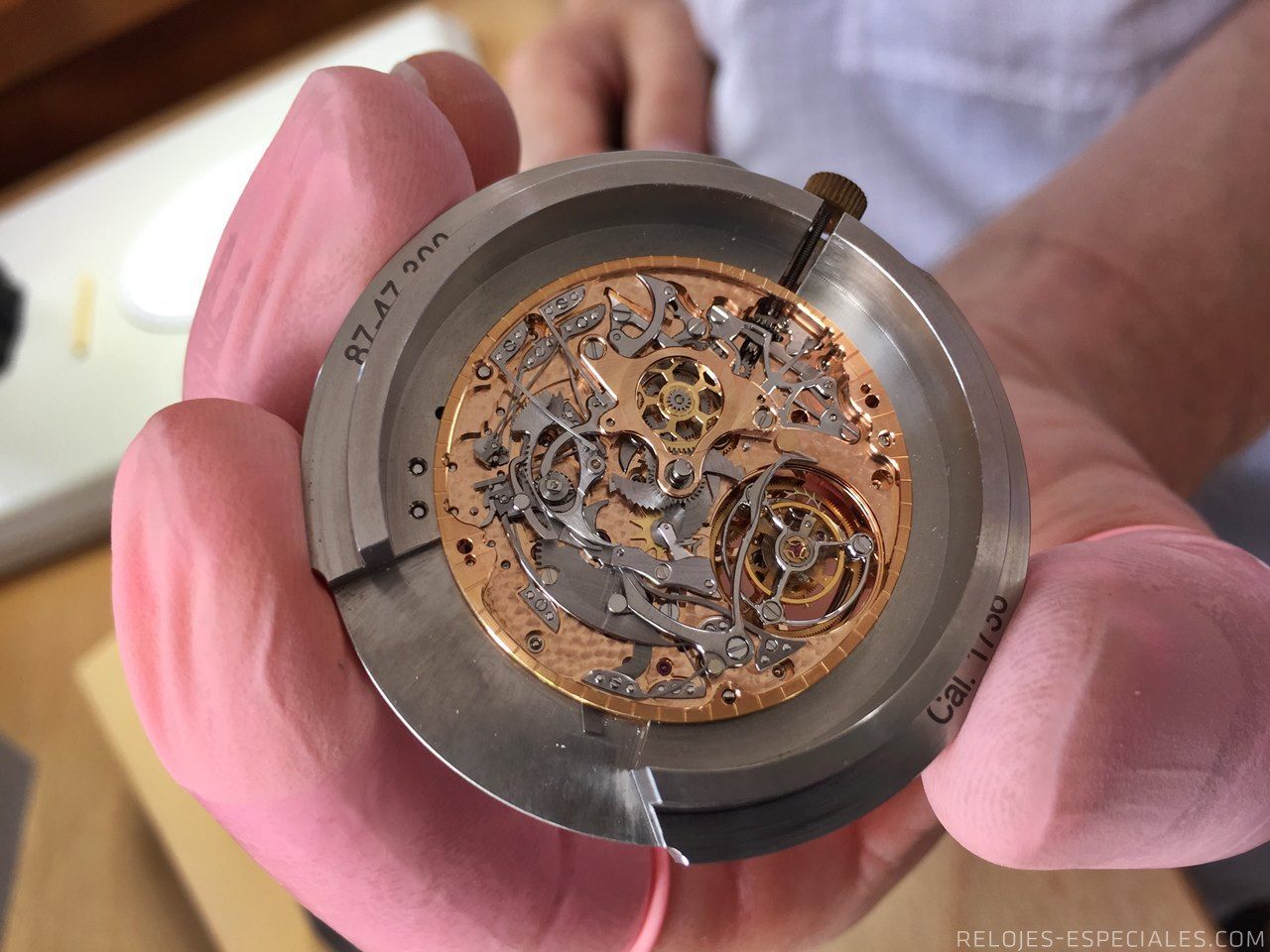
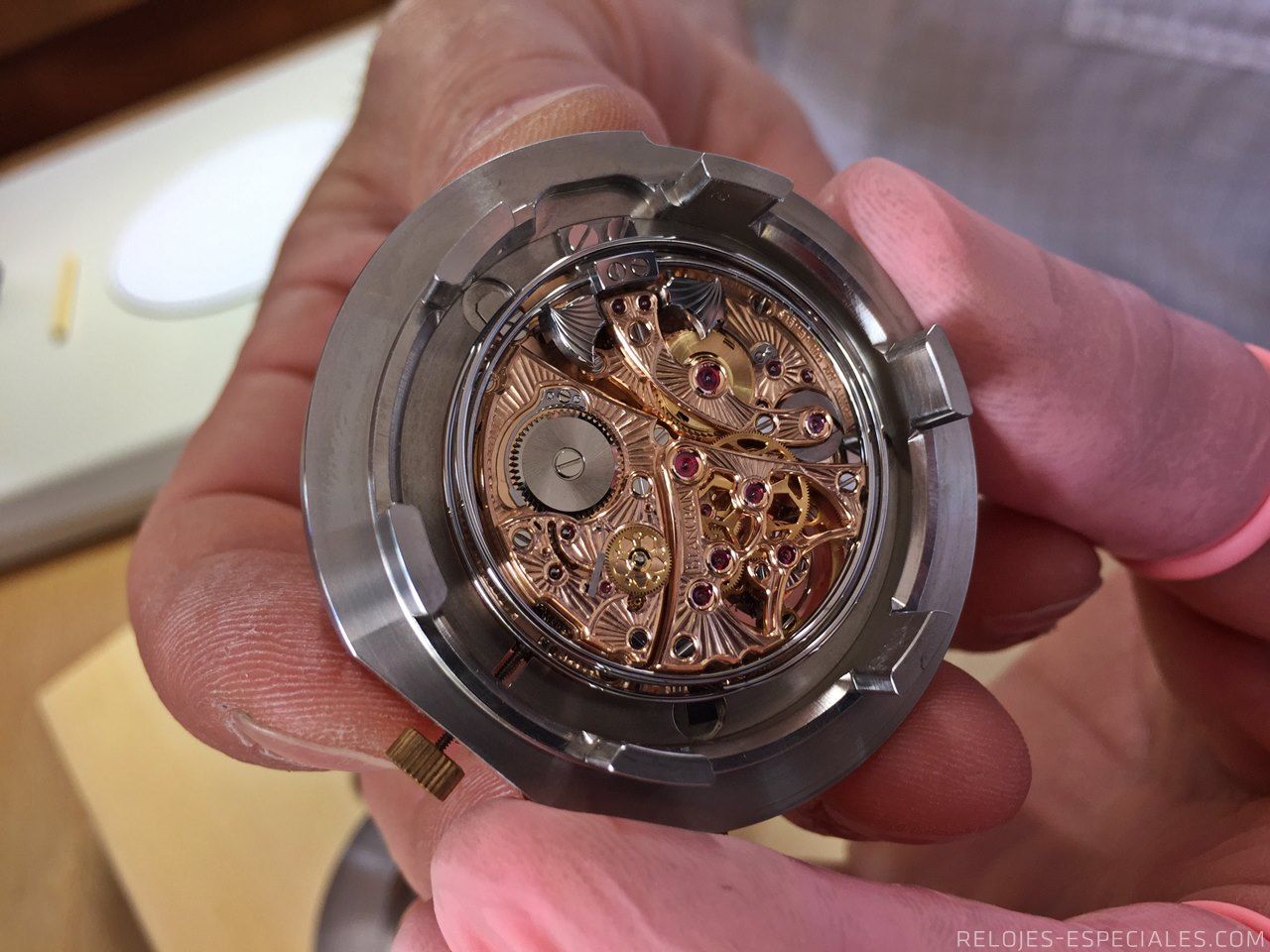
But if a picture is worth a thousand words, let's see what a short video can convey to us:
Sublime, right?
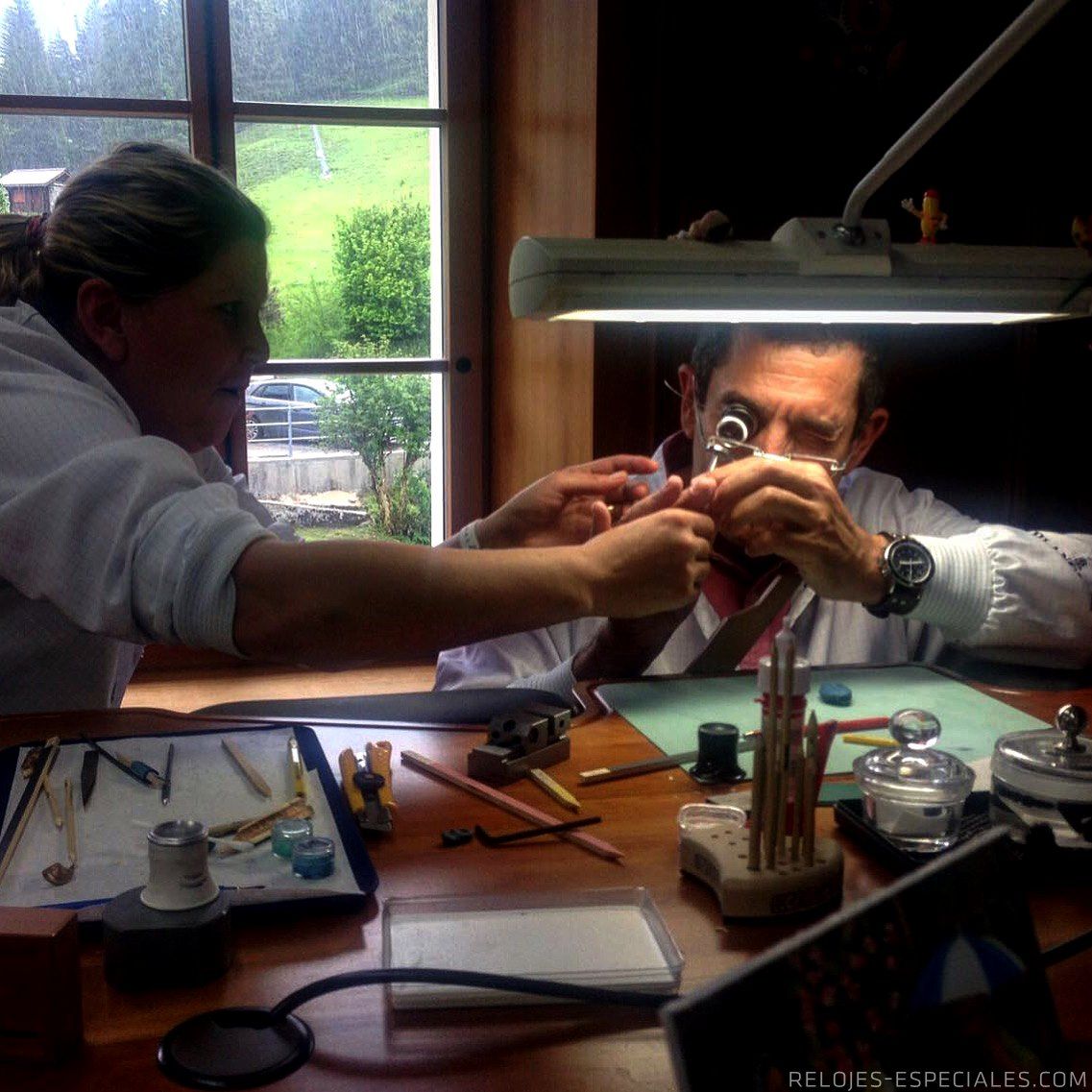
Thanks to different activities we also had the opportunity to see firsthand how difficult it is to decently perform any of the jobs gathered there, for which in addition to practice – a lot – it is necessary to have certain skills that at least I completely lack, which leads me to admire these extraordinary achievements even more.
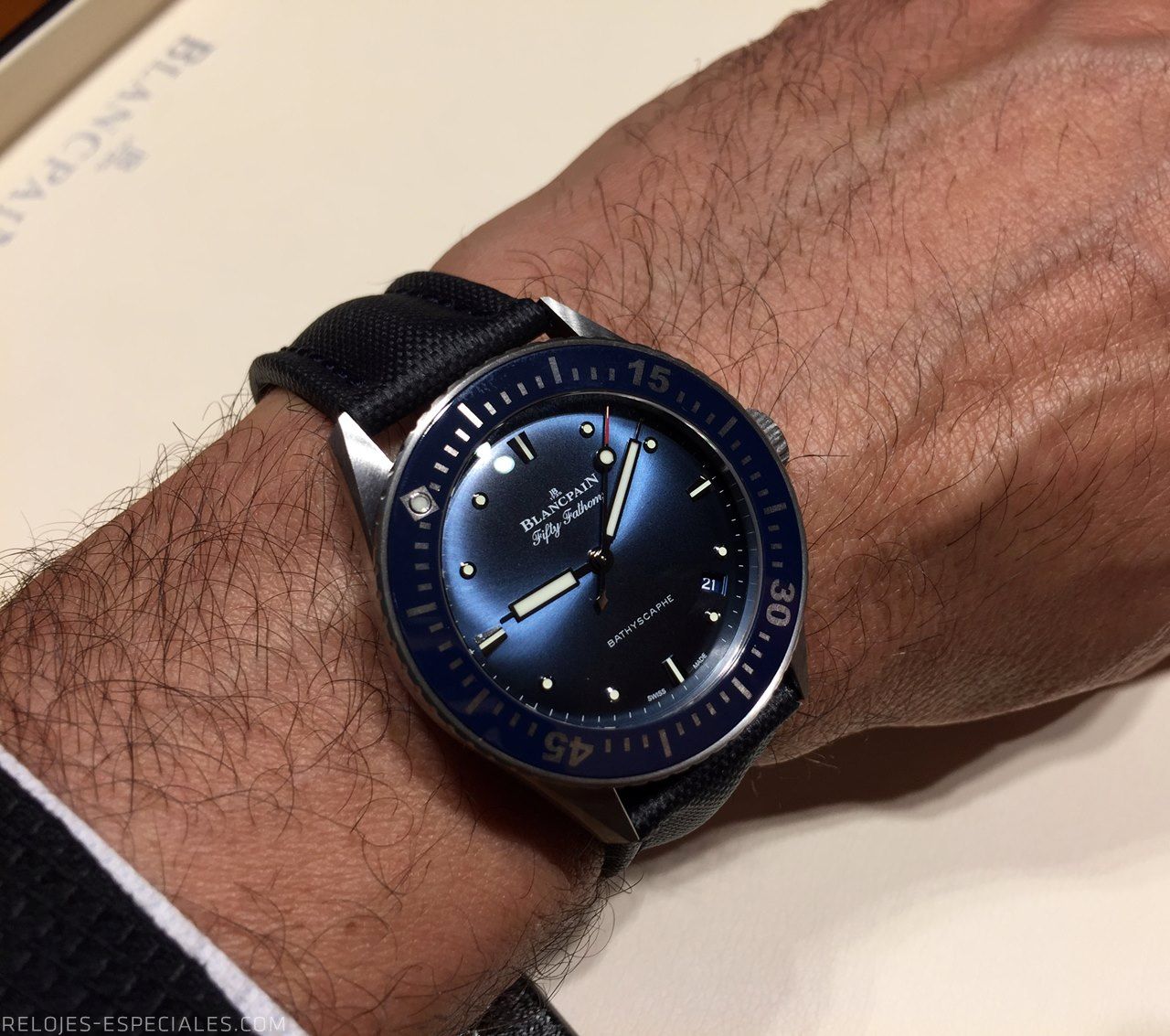
I want to expressly thank Lara Bartolomé, brand director for Spain, Mathieu Rochat, our host in Switzerland and MRA agency for the opportunity to approach a brand little known to the average fan beyond the already legendary Fifty Fathoms and more recently the beautiful Bathyscaphe. He has a fabulous journey ahead of him.
- Telegram
Best watch strap | Best annual calendar watch | Best watch winder | Best Black Luxury watch | Best Luxury Watches Men | Best Swiss Luxury Watches Women | Best Men Diamond Watches under 1000 | Best Diamond Watches Women | Best Luxury Dive Watch
Home Decor Shop
 Acacia frida deluxe solid wood bed frame |
Bedroom bench |
Bed chest drawers |
Lingerie dresser |
Frame base |
Mirror with jewelry storage |
30 Bathroom Vanity |
Memory foam queen mattress |
Mattresses for back pain |
Nightstand set of 2 |
Grand Goldman Shop |
Civil Lawyer
Deutschland Trikot WM 2026
Acacia frida deluxe solid wood bed frame |
Bedroom bench |
Bed chest drawers |
Lingerie dresser |
Frame base |
Mirror with jewelry storage |
30 Bathroom Vanity |
Memory foam queen mattress |
Mattresses for back pain |
Nightstand set of 2 |
Grand Goldman Shop |
Civil Lawyer
Deutschland Trikot WM 2026










