

Since the dawn of time, beds have been placed with the headboard against a wall, never the other way around—a rule we've carried from our origins; cavemen would never have slept with their heads facing the entrance of their shelter, turning their backs on predators. Since that danger has passed, let's try flipping this concept.
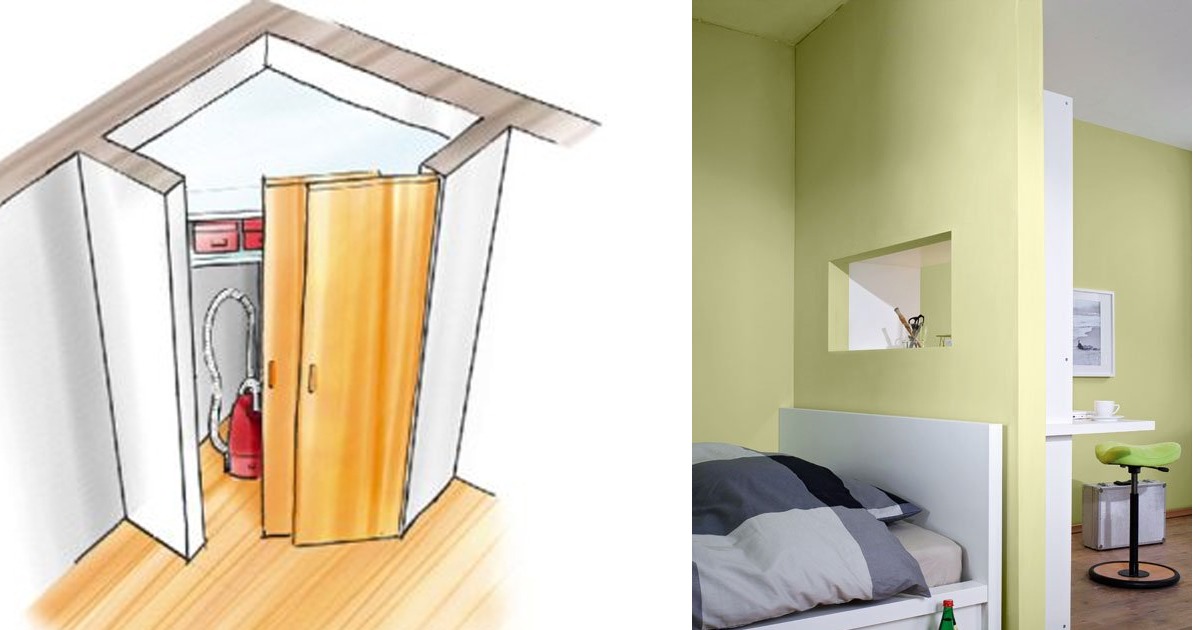
Position the bed in the corner formed by two walls, but with the headboard facing outward. The side of the bed can be flush against the wall or spaced just enough for a nightstand if you find it useful. On the front wall, you can mount a shelf at a suitable height to place the TV—the distance is perfect for watching your favorite show. Alternatively, if you want to watch TV while lying down, you can mount it higher, directly on the wall, using adjustable brackets.
Find Bleeding Edge Supplements at Scandalous Prices on iHerb.

The missing wall behind the headboard is built with a metal stud frame covered with drywall sheets, slightly wider than the headboard. Behind this, plan to place an open shelving unit, cut to a convenient height to insert a desktop: in a compact space, you've created both a sleeping area and a workstation. To make the separation less stark, cut an opening in the half wall that aligns with the dimensions of one shelf compartment. The window position should be determined when building the metal frame, with the shelf already fitted with its shelf board for perfect alignment. Materials and tools are available at DIY centers.
How to Build the Drywall Half Wall
Once the perimeter frame of the half wall is prepared, cover it with drywall sheets on the outer face and tackle the shelf modification. The two sides need to be cut at a comfortable height to insert the desktop.
Step-by-Step Construction
- Frame the wall: Use metal studs and tracks to create a frame slightly wider than the headboard. Secure it to the floor, ceiling, and adjacent walls.
- Cut the drywall: Measure and cut drywall sheets to fit the frame, leaving space for the window opening if desired.
- Install the shelf: Place the open shelving unit behind the frame, then cut its sides to the height needed for a desk surface. Insert the desktop securely.
- Finish the wall: Attach drywall to the frame using screws, tape the joints, apply joint compound, sand smooth, and paint to match your decor.
Tools and Materials You'll Need
For this project, you'll need basic home improvement supplies like a drill, drywall screws, metal studs, and a tape measure. A good work light will help you see details clearly during installation.
Design Ideas for Your Space
This half wall creates a cozy bedroom nook while leaving the rest of the room open. Add a soft rug under the bed for warmth, and hang curtains on the window for privacy. A mirror on the opposite wall can make the space feel larger.
Furnishing the Workstation
The desk area behind the half wall is perfect for a desk and an office chair. Add a small bookcase or display shelving for storage and style.
FAQ
Can I build this half wall without professional help?
Yes, with basic DIY skills and the right tools, this is a manageable weekend project. Watch tutorials and follow safety guidelines.
What type of drywall should I use?
Standard 1/2-inch drywall works for most interior walls. For moisture-prone areas, consider moisture-resistant drywall.

How do I ensure the wall is sturdy?
Secure the frame to floor and ceiling joists with appropriate anchors. Use screws at 12-inch intervals along studs.
Can I add electrical outlets to the half wall?
Yes, but consult a licensed electrician to ensure code compliance and safety.
What if I want to move the wall later?
Drywall walls are semi-permanent. They can be removed with some effort, but plan carefully if you might want to reconfigure the room.
Browse Grand Goldman Home Decor
Discover unique craftsmanship home decor and furniture at the Grand Goldman Shop.
Browse the Shop
 Acacia frida deluxe solid wood bed frame |
Bedroom bench |
Bed chest drawers |
Lingerie dresser |
Frame base |
Mirror with jewelry storage |
30 Bathroom Vanity |
Memory foam queen mattress |
Mattresses for back pain |
Nightstand set of 2 |
Grand Goldman Shop |
Civil Lawyer
Deutschland Trikot WM 2026
Acacia frida deluxe solid wood bed frame |
Bedroom bench |
Bed chest drawers |
Lingerie dresser |
Frame base |
Mirror with jewelry storage |
30 Bathroom Vanity |
Memory foam queen mattress |
Mattresses for back pain |
Nightstand set of 2 |
Grand Goldman Shop |
Civil Lawyer
Deutschland Trikot WM 2026










