

Making a floating terrarium is easy to make and maintain, as they are perfect for hanging next to a desk, a bed or by the kitchen window, where they can be admired and enjoyed.
This DIY terrarium makes a great gift, it can be put together in minutes and looks really beautiful.
Find Bleeding Edge Supplements at Scandalous Prices on iHerb.

Glass globes are now available in garden nurseries, and air plants like the Thailand one we used in this terrarium.
I think at one time air plants were harder to locate, but now they are becoming quite common.
Steps to make a floating terrarium:
#1: What you will need to make a terrarium
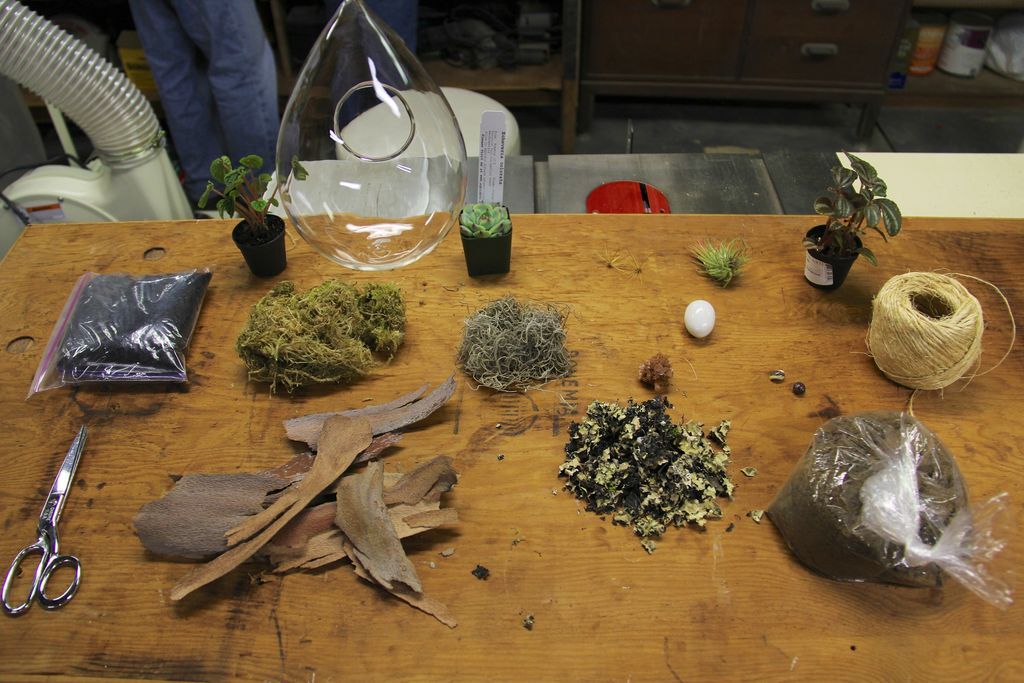
Materials for a terrarium can usually be purchased at a local nursery or hardware store. There are online retailers for most of these items, and specialty retailers.
Tool you need to make a floating terrarium:
- Glass globe to house the terrarium: you can buy a new or reused glass container or container that has a nice volume
- Sand
- Activated carbon
- Potting soil with good drainage (cactus and succulent soil can be a good option).
- Various mosses
- Small sticks or bark
- Minerals, shells or stones
- Small plants well adapted to terrarium life
- Air plant such as tilandsia or another bromeliad that you like
- Succulents, if you like, although it is not recommended to mix succulents and plants due to different watering requirements, we did it anyway
- A good hook or rope to hang it
#2: Add the sand layer to the terrarium
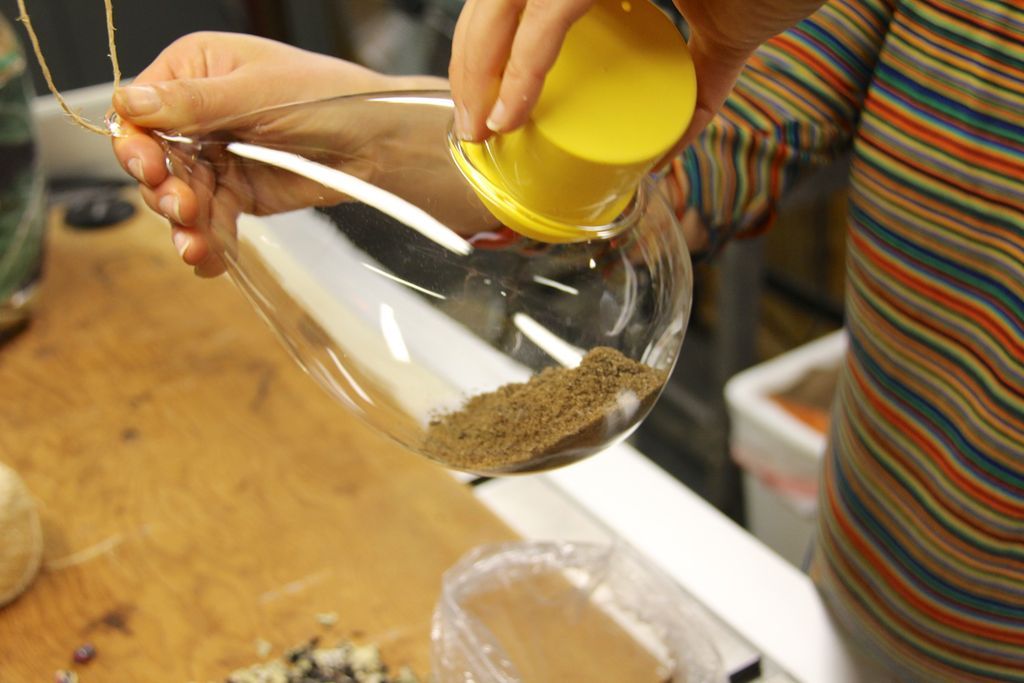
- The bottom layer of the terrarium is a thin layer of sand or pebbles for drainage.
- We chose sand because Long Island (where the terrarium was built) is literally one giant pile of sand, so if you dig a little, it's easily available and free. Small pebbles may look better.
- Find a small cup, dustpan, or funnel to load the sand into the terrarium. It doesn't take much, 1 cup of sand is probably more than enough.
#3: Add a layer of charcoal to the terrarium
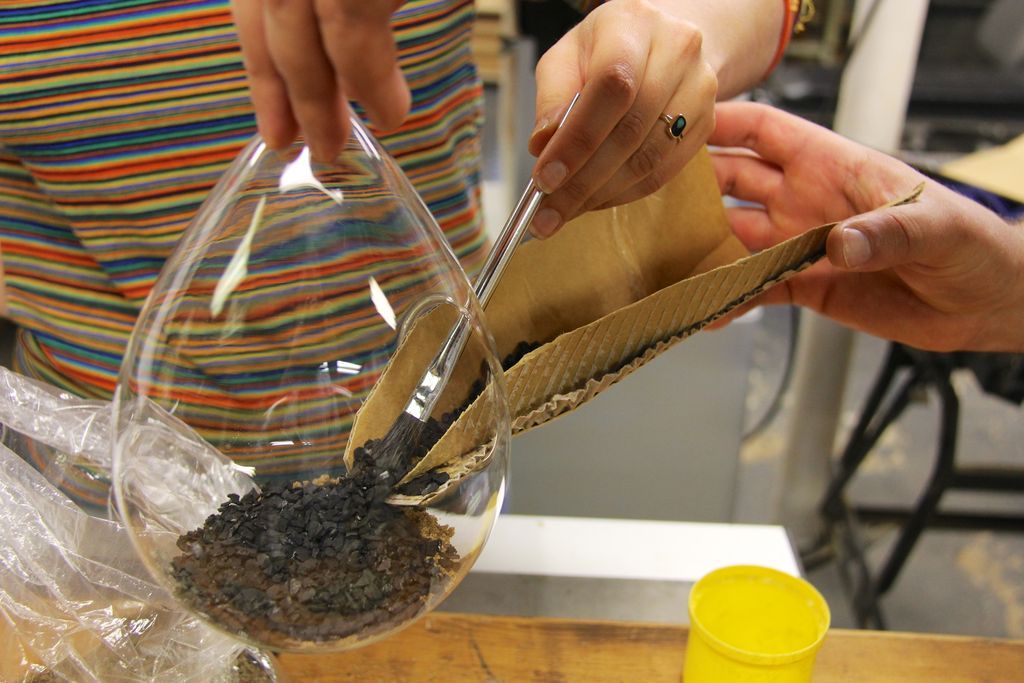
- The next layer to put in the terrarium is activated carbon, the same thing. These are the things about your Brita water filter or fish tank filter; If you have it, throw it there. Otherwise, you can buy small quantities online or skip this step entirely.
- I just had a lot of activated charcoal lying around for a future project, so we took a 1/4 cup or so and added it.
- We devised a simple cardboard chute to deliver materials precisely where we wanted them in the terrarium. The hopper, plus a push stick or brush, works much better than the dump method.
- The layer of activated carbon simply keeps things "fresh", or so I've read.
#4: Adding the terrarium soil layer
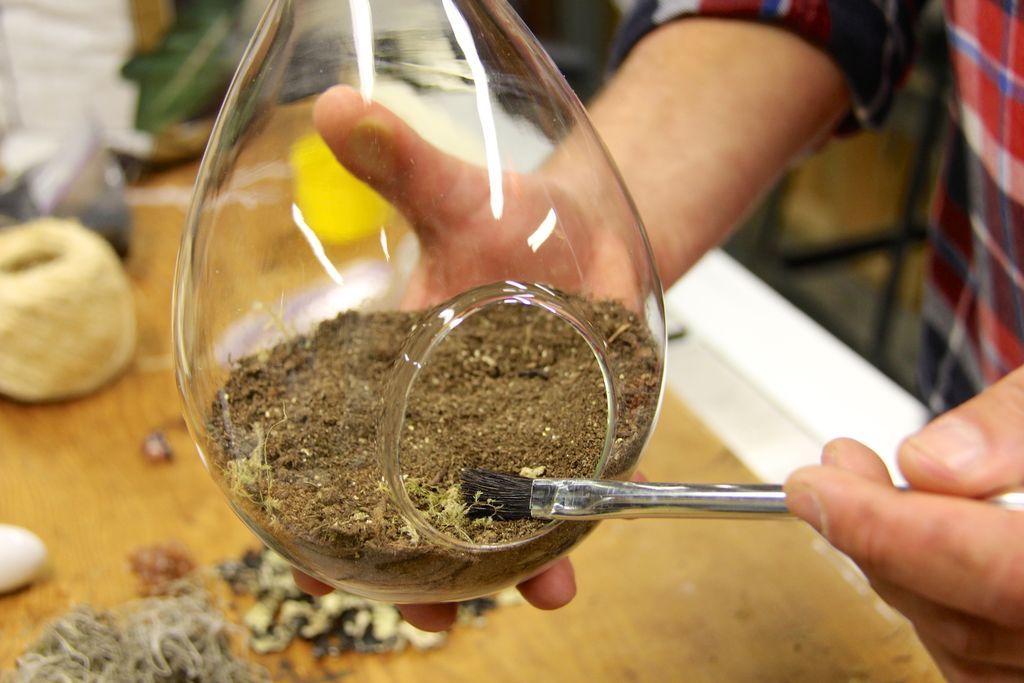
- Then, add an inch or two of well-draining soil. I mixed some potting soil with succulent soil to get a good mix. You don't need much, as the plants come with a clump of soil that will likely allow them to survive for a while.
- We found the paintbrush to be very useful for moving dirt. If I were making a larger terrarium, or working with one that had a larger hole, I think positioning plants and soil media would be much easier, but unfortunately, we liked the look of this globe and tried our best.
#5: Adding larger features to the terrarium
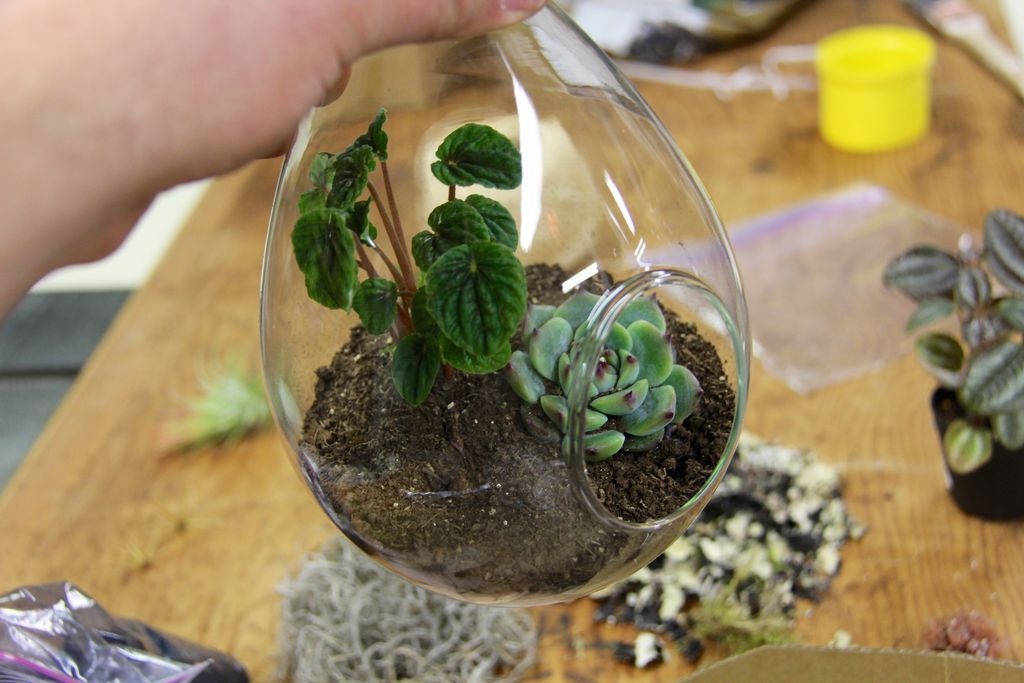
- Here we are breaking a cardinal rule of terrarium construction and including both a plant and a succulent in the same terrarium.
- It is generally believed that small plants that adapt well to life in a terrarium require different living conditions than succulents. However, I am nonconformistta and I decided to break this rule.
- The live plant we chose was abundant and strategically planted at the back of the terrarium, where it is likely to remain most humid.
- We placed the succulent on a small hill of soil so it would drain first, and placed it closer to the opening, which is probably a drier environment.
- I'm sure it won't take too long for the terrarium experts to correct my potentially fatal mistake, however, we really wanted to combine plants and succulents in one terrarium.
- It may be easier to place the plants before filling the terrarium with soil, and then fill the space between the plant roots.
- You can also just dig small holes and plant normally.
- Both methods worked well for us, but the larger the plant, the more sense it makes to put it before the soil and then add soil around it.
- Don't overcrowd the terrarium with large items! We are adding quite a few additional small elements, so it is important to leave some room to be creative with the little space that is left.
#6: How to add small features to a terrarium
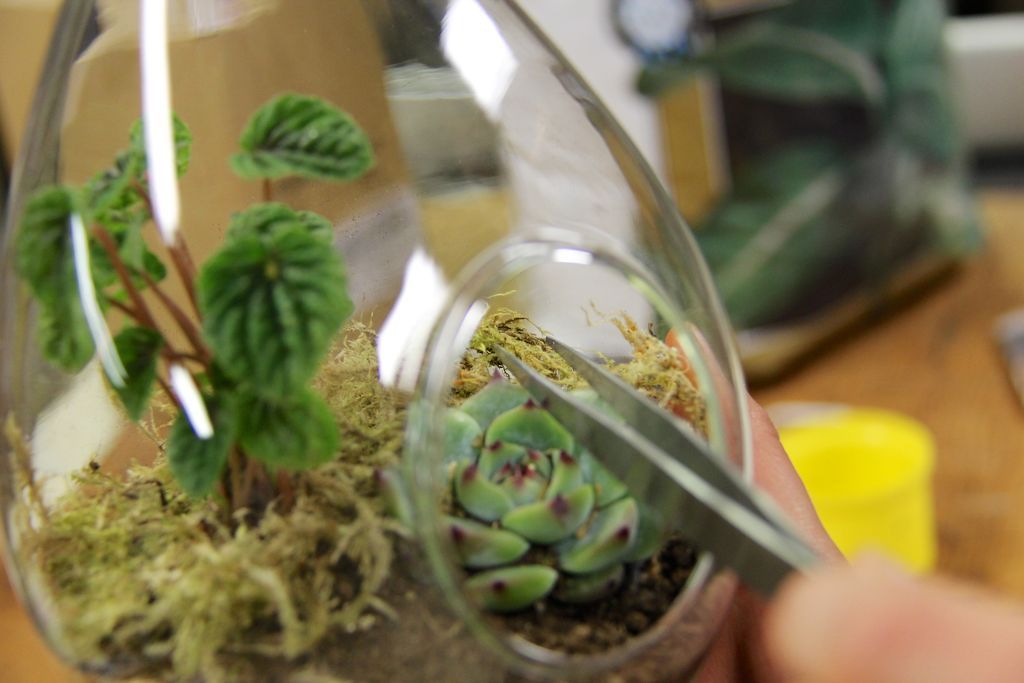
- We use a pair of long-handled tongs to place additional items inside the terrarium. Chopsticks work well too.
- We added a hearty dose of a few different types of dried and ornamental mosses, a mineral my mom really likes, and a small stone egg. (My mom has a PhD in Pre- and Perinatal Psychology, what can I say, she really likes eggs.)
- We also included some dried pieces of tree bark from some trees that were falling last fall. This was followed by the insertion of a small air plant called Tilandsia.
- These plants do not need to be planted in the conventional sense: they do not require soil and simply draw their nutrients and water from the air. They are perfect candidates for terrariums.
- Finally, we added some colorful shells that we had collected on the beach (wash them well as they can introduce salt to the small ecosystem, plants and salt do not mix well) and a small set of thorns that had arrived off a cactus that I used to have, but which died.
#7: Accessories and maintenance of the terrarium
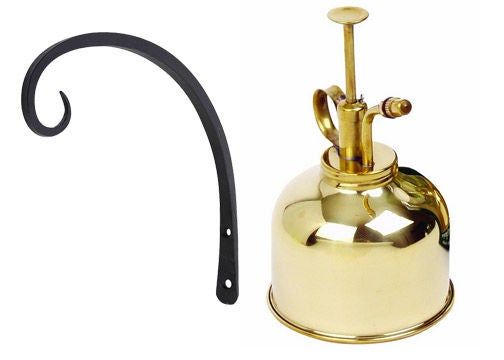
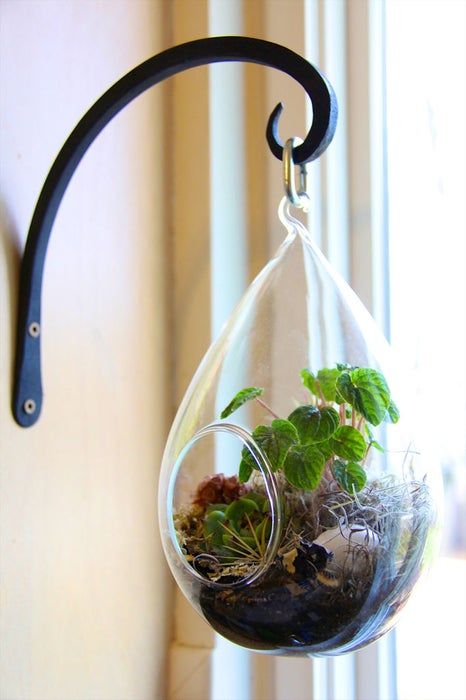
- It may be helpful to purchase some accessories for the terrarium. If you have made a glass globe terrarium that is not self-supporting, you will need some type of hook. I think these iron hooks look pretty good when combined with the terrarium.
- You also have to water the terrarium from time to time. Maybe once or twice a week, depending on location and weather conditions. We set up my mother with a dual watering system: the normal water can that serves most normal house plants, and then a special mister designed to mist living things like the air plant.
- Maintenance of these little guys is pretty easy. Simply hang it in an area that gets moderate sun (but not direct sun if possible) and be sure to water the little ones once a week or so. If it looks very damp in there, or if mold or a swampy smell develops, you are definitely overwatering. If plant parts begin to wilt, they are likely under watering.
Remember that you can also make a floating terrarium in the comfort of your home and easily.
Don't forget to follow us on our social networks for more news!
Popular Content
How to make a rocket stove for outdoors
Cardboard Drawers Lined with Jeans
Ideas and Salesjas of Window Grids for the Home!
Latest Articles
How to make a refrigerator out of insulating material: Practical step-by-step guide
How to make a Kilim for the Home: Complete Step by Step Guide
How to protect ourselves from accidents in our workplace: Complete prevention and safety guide
Related Content
How to Have a Cozy Rustic Decoration
Recycled Furniture with a Second Chance
Bamboo Projects for your Home
17 Ideas to Hide the Television
Creative Home Decor Ideas to Transform Every Space
Refreshing your home starts with smart design choices that combine comfort, personality, and functionality. Whether you want to modernize a small apartment, upgrade outdoor areas, or create cozy rustic interiors, these trending ideas can completely change the atmosphere of your space.
Outdoor Spaces That Increase Style and Functionality
Outdoor living continues to dominate modern home trends. Homeowners are increasingly investing in practical entertainment zones inspired by these BBQ shed ideas, which create the perfect setup for gatherings and weekend cooking sessions.
First impressions also matter when designing exteriors. Elegant farm entrance gates design ideas help properties stand out while improving privacy and curb appeal.
Compact living solutions are also gaining popularity. These inspiring 16x40 shed house interior design ideas show how smaller spaces can still feel luxurious and functional.
To enhance patios and entryways, homeowners are adding stylish protection with these creative porch awning exterior DIY ideas that blend aesthetics with practicality.
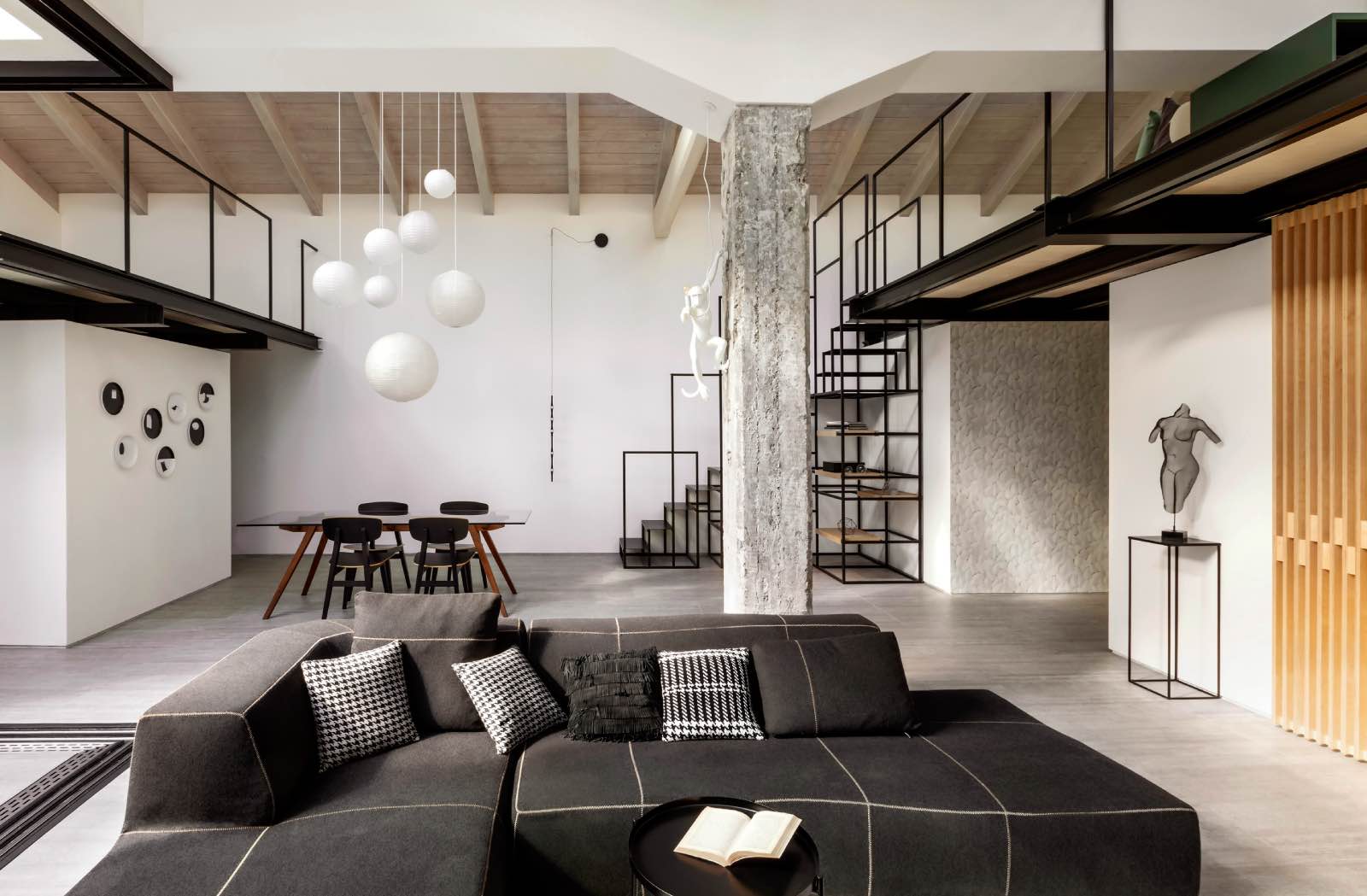
Rustic and Cozy Interior Design Trends
Warm and natural interiors remain timeless. These charming rustic decor ideas combine wood textures, vintage accents, and earthy tones to create welcoming spaces.
Bedrooms are becoming more personalized with curated wall arrangements. Many homeowners use these stylish picture wall ideas for bedroom spaces to display memories and artwork creatively.
Textured wall treatments are another major trend. Installing a board and batten wall adds architectural character while keeping interiors elegant and modern.
Similarly, bold accent wall ideas can instantly transform plain rooms into eye-catching focal points without requiring a full renovation.
Smart Kitchen and Organization Inspiration
Functional kitchens are essential for modern homes. These practical kitchen wall cabinet ideas maximize storage while maintaining a clean and stylish appearance.
Organization also starts at the entrance. Well-designed mud room ideas help families keep shoes, coats, and daily essentials neatly arranged.
Colorful and Personalized Home Styling
Vibrant interiors are becoming increasingly popular thanks to playful dopamine decor ideas that use bright colors and joyful accessories to improve mood and energy.
Gallery walls also continue to evolve as a major decorative feature. These trendy gallery wall inspiration ideas offer creative ways to combine prints, photos, and statement art.
Young renters and new homeowners are especially embracing these stylish first apartment aesthetic ideas to create sophisticated interiors on a budget.
Finally, selecting the right shades can dramatically influence any room’s atmosphere. These modern trendy color ideas help homeowners choose palettes that feel fresh, elegant, and timeless.
Final Thoughts
From rustic charm and colorful interiors to outdoor entertaining areas and functional storage solutions, today’s home decor trends focus on creating spaces that feel both beautiful and livable. By combining smart layouts, modern textures, and personalized decorative elements, any home can become more stylish, comfortable, and inspiring.
Browse the Shop
 Acacia frida deluxe solid wood bed frame |
Bedroom bench |
Bed chest drawers |
Lingerie dresser |
Frame base |
Mirror with jewelry storage |
30 Bathroom Vanity |
Memory foam queen mattress |
Mattresses for back pain |
Nightstand set of 2 |
Grand Goldman Shop |
Civil Lawyer
Deutschland Trikot WM 2026
Acacia frida deluxe solid wood bed frame |
Bedroom bench |
Bed chest drawers |
Lingerie dresser |
Frame base |
Mirror with jewelry storage |
30 Bathroom Vanity |
Memory foam queen mattress |
Mattresses for back pain |
Nightstand set of 2 |
Grand Goldman Shop |
Civil Lawyer
Deutschland Trikot WM 2026










