

Cómo hacer una mesa de trabajo de altura ajustable: una mesa móvil, con un tablero que puedo nivelar fácilmente dondequiera que decida usarla.
Estoy muy contento con el resultado y con la versatilidad que ofrece, y espero que esta información pueda ser útil para cualquiera que tenga una necesidad similar.
Find Bleeding Edge Supplements at Scandalous Prices on iHerb.

Paso 1: Descripción general

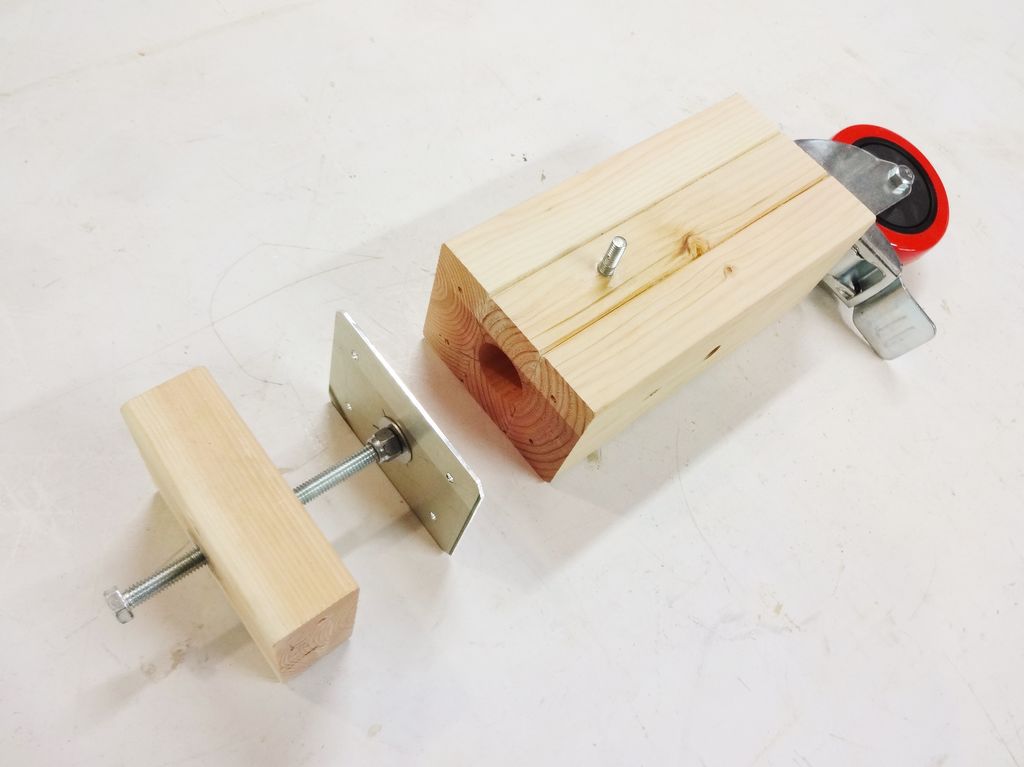
La mesa en sí se construyó de forma muy parecida a cientos de otras mesas de trabajo que se encuentran en Internet: tablas de madera de 2x4 cortadas y unidas con pegamento y tornillos.
Aquí tienes un par de otras mesas de trabajo que he hecho y que explican algunos procedimientos básicos con más detalle: Carrito de taller sencillo con cajón oculto
El tablero de mi mesa se hizo con dos mitades de una puerta de núcleo macizo que conseguí en una tienda de segunda mano, y se atornilló al bastidor de la mesa desde abajo.
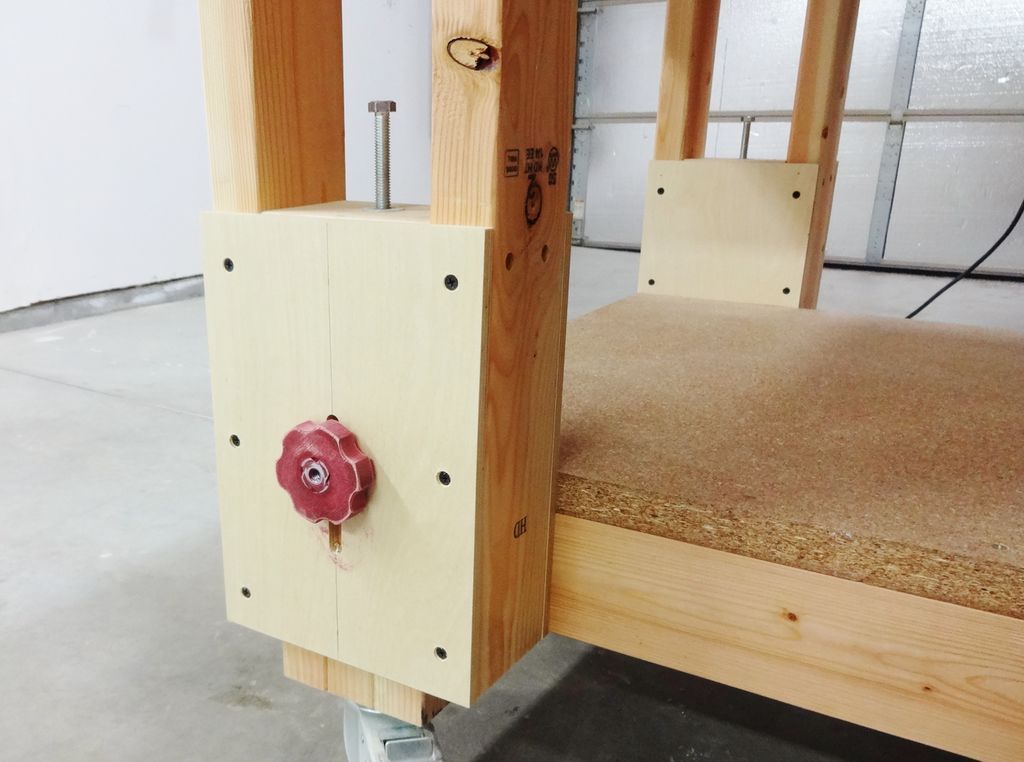
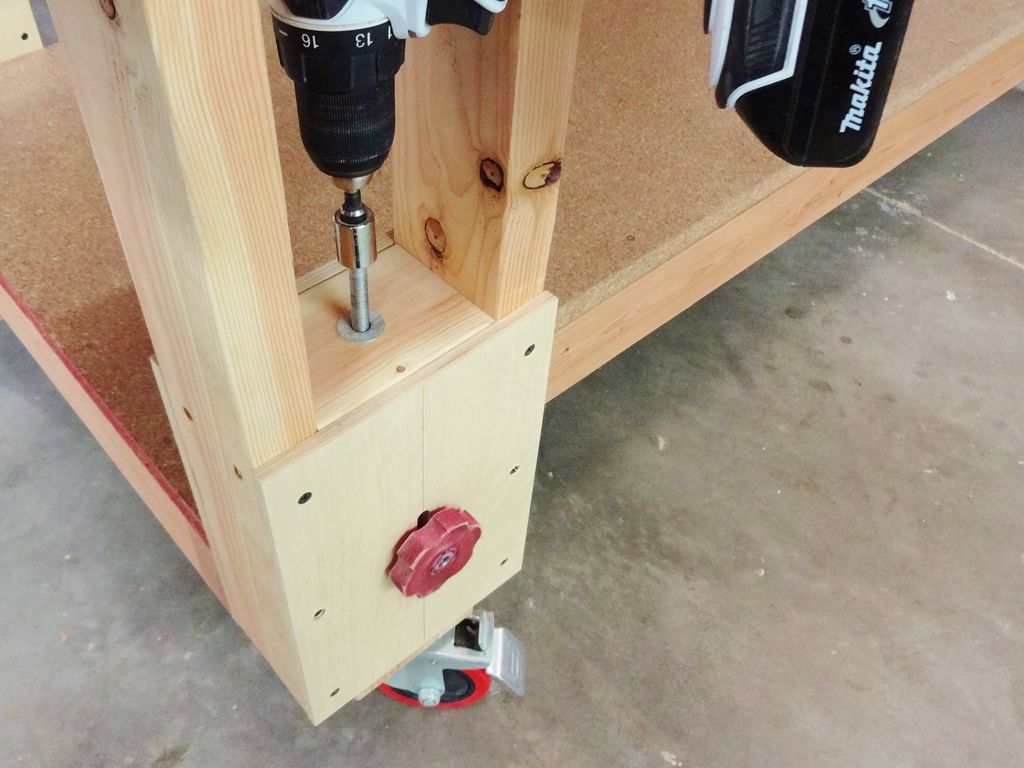
La sección del estante inferior se cubrió con un trozo de una encimera vieja. Las patas en sí y el mecanismo ajustable son el enfoque principal de este proyecto. Las fotos muestran en qué consisten y la esencia de cómo se ensamblan.
Paso 2: Pistón y bloque superior
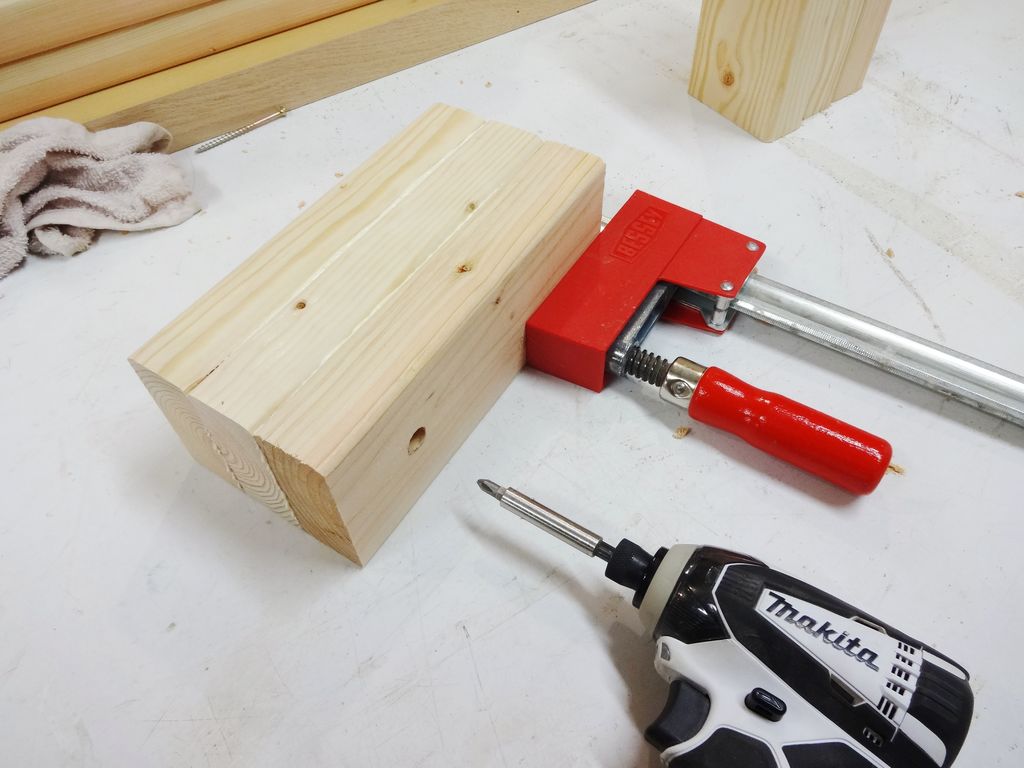
Empecé fabricando el conjunto de pistón ajustable para cada pata. La parte del pistón propiamente dicha está hecha de tres piezas de madera de armazón de 9 pulgadas de largo. Cada pieza se pasó por la sierra de mesa para recortar aproximadamente 1/32″ del ancho, de modo que la pieza terminada se deslizara libremente dentro del alojamiento de la pata.
Estos tres bloques se pegaron y atornillaron entre sí. Se usó una abrazadera para mantenerlos perfectamente alineados. El siguiente bloque superior, por el que se atornilla el perno, se cortó para que fuera aproximadamente 1/16″ más largo que el ancho del bloque de 3 piezas que acabas de hacer.
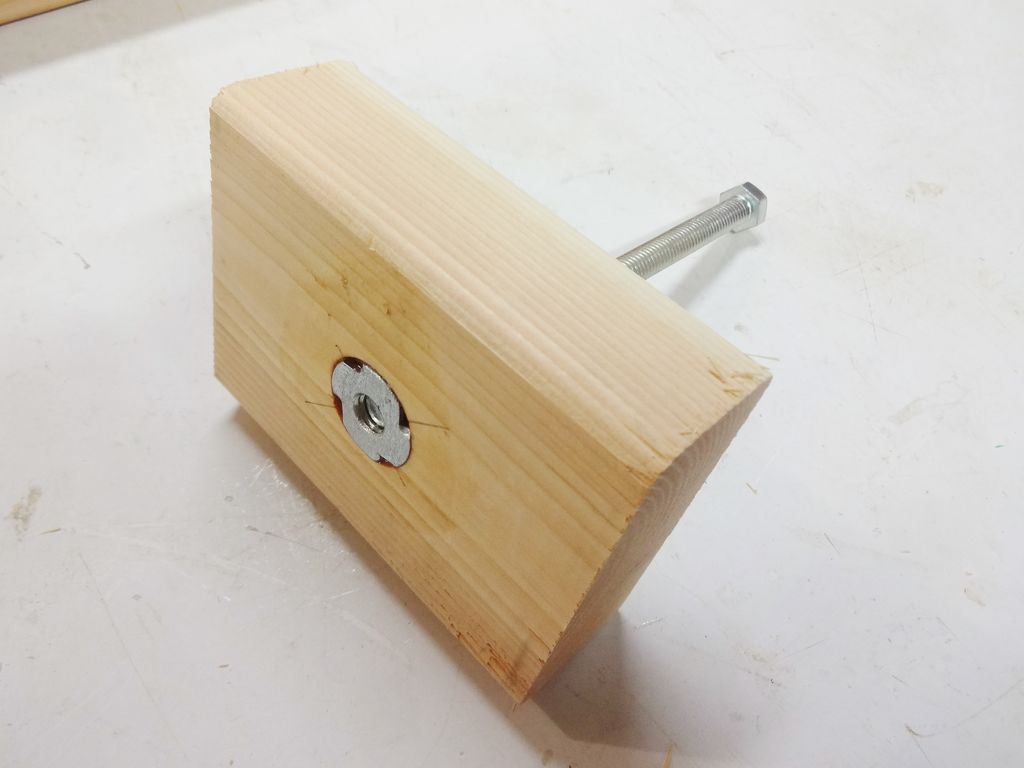
Los agujeros se taladraron para alojar una tuerca dentada en la parte inferior del bloque y una tuerca T con los dientes quitados en la parte superior. También se taladró un agujero pasante. Usé pernos de 6 pulgadas de largo y 3/8″ de diámetro, con el herraje correspondiente para cada mecanismo de pata. Con dos tuercas T como estas, debes asegurarte de que las roscas queden sincronizadas de manera que permitan que el perno se enrosque y suba y baje libremente.
Primero, la tuerca T dentada se untó con epoxi y se golpeó suavemente para asentarla en su sitio; después se atornilló un perno en su lugar.
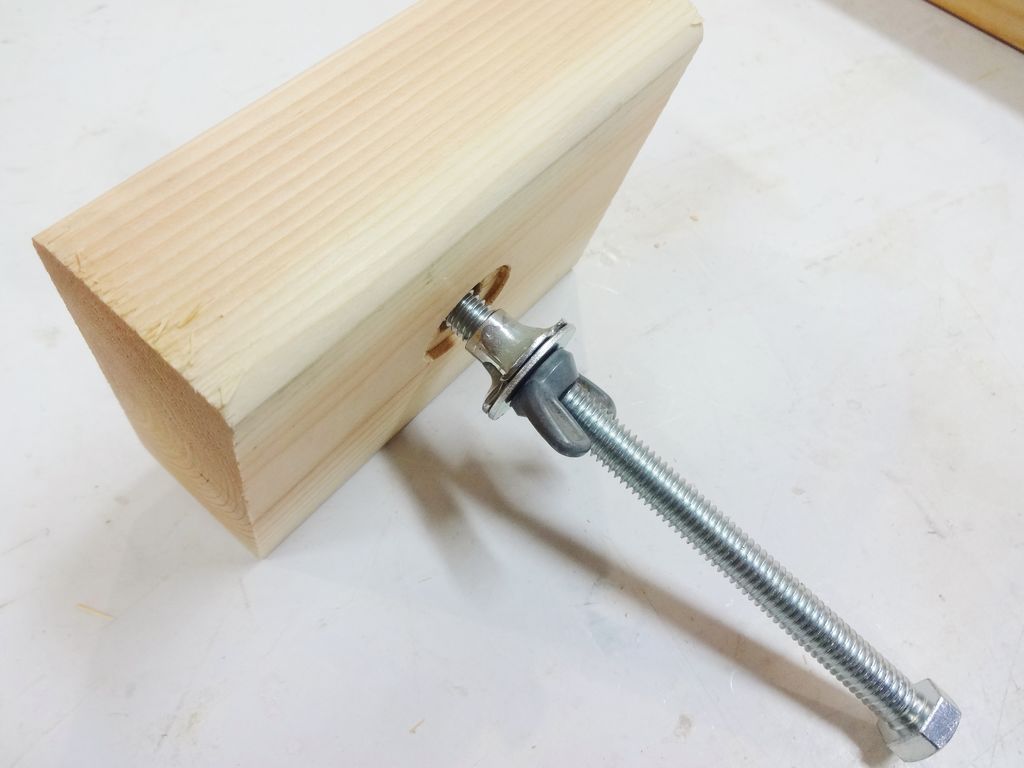
Los dientes de la segunda tuerca T se cortaron con una herramienta rotativa, y esta tuerca sin dientes se fijó con epoxi enroscándola en el perno y colocándola sobre el bloque.
Se usó una tuerca mariposa para mantenerlo en su lugar temporalmente mientras se secaba el epoxi. Es fundamental no usar demasiado epoxi, ya que no debe llegar al perno en absoluto. Cuando el epoxi se haya secado, deberías poder pasar el perno hacia arriba y hacia abajo a través del bloque con facilidad.
Paso 3: Ensamblaje
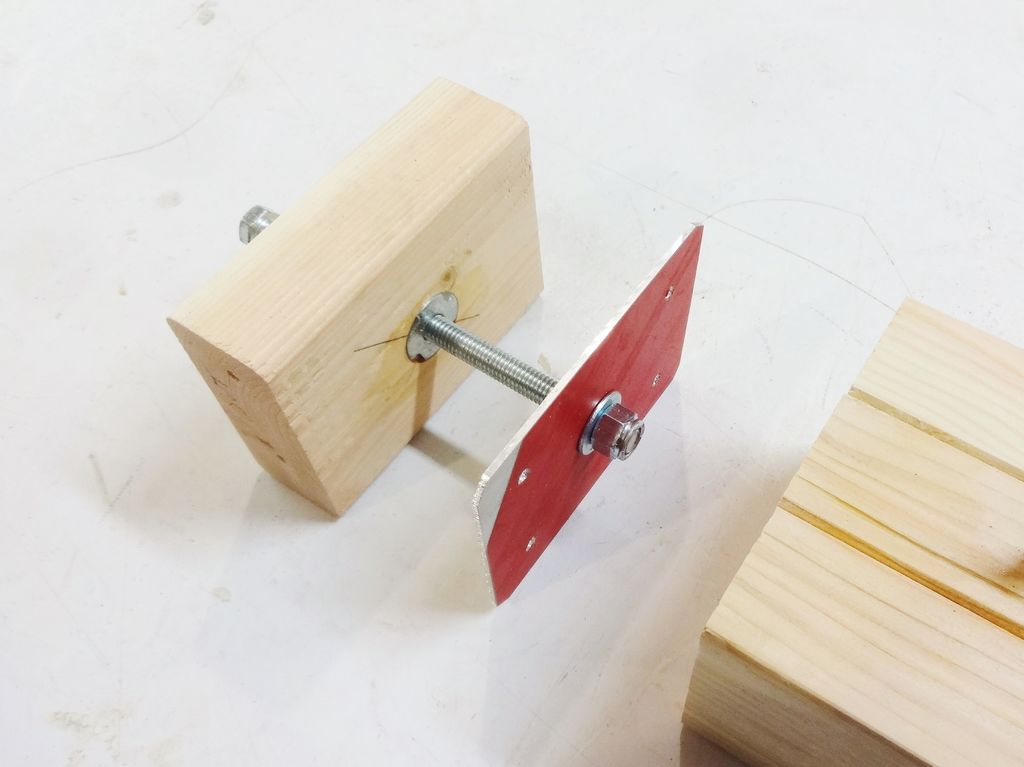
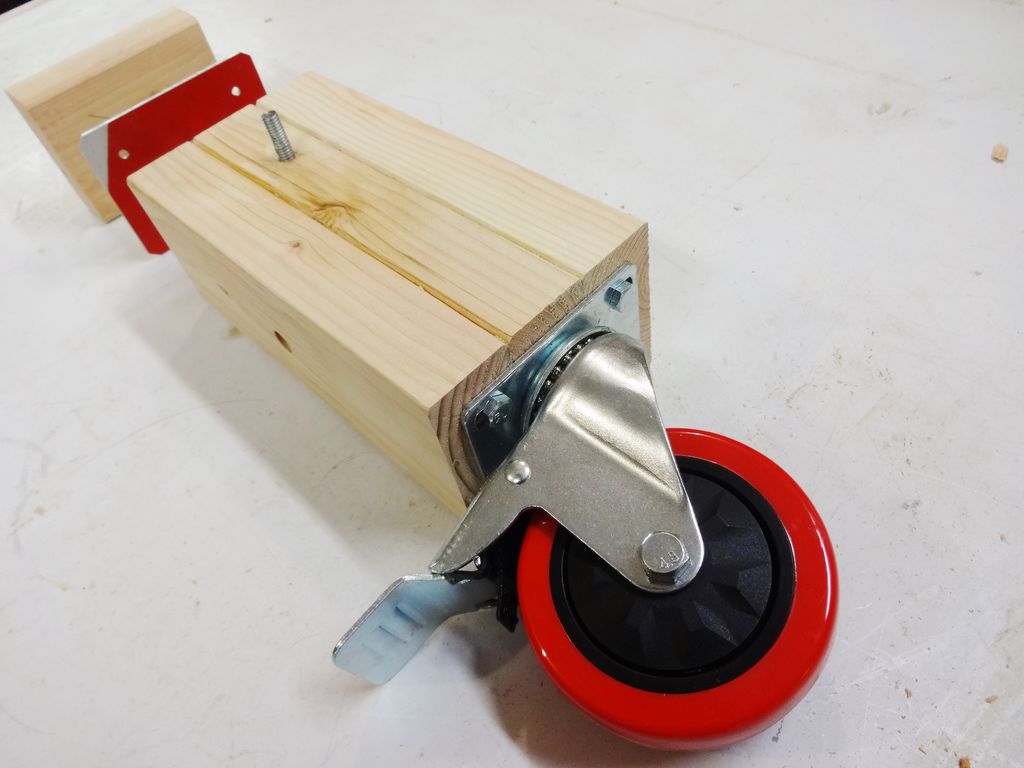
Con el perno y las tuercas colocados en el bloque superior, se cortó un trozo de aluminio de desecho para que encajara en la parte superior de la sección del pistón de la pata y se taladró el agujero en el centro. Corté el aluminio con esto.
El extremo del perno se fija a la placa con contratuercas y arandelas, pero se deja lo suficientemente flojo como para girar libremente. Esta placa se atornilla a la parte superior del pistón, y una rueda de bloqueo se fija al extremo inferior con tornillos de fijación en agujeros taladrados.
Paso 4: Instalar en las patas de la mesa
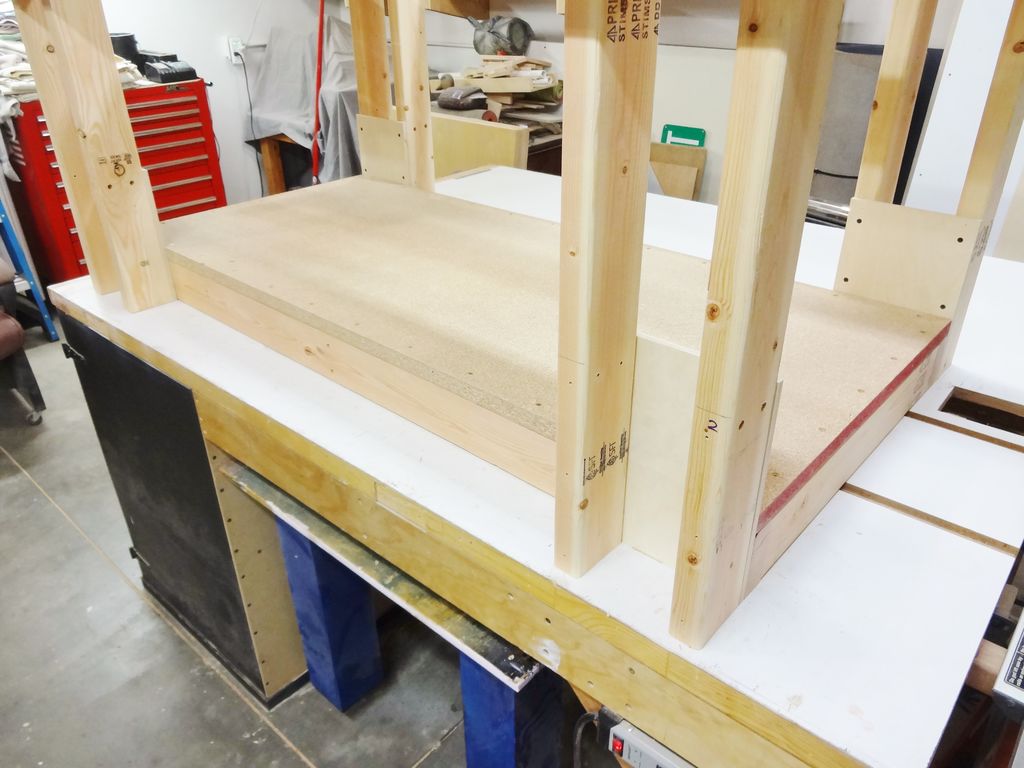
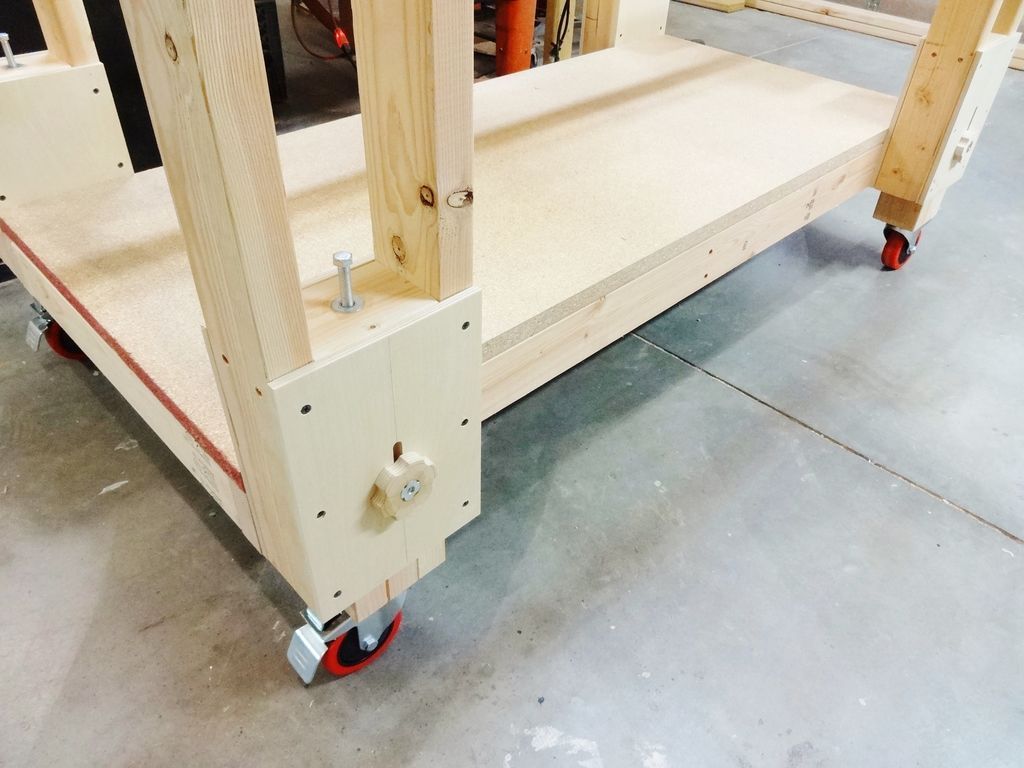
La mesa se construyó con piezas para las patas, como se muestra, para permitir instalar el mecanismo de pistón debajo de las patas.
El bloque superior del conjunto de pistón se fija dentro de las primeras 11 pulgadas desde la parte inferior de las patas de la mesa. Algunas perillas se hicieron de contrachapado con tuercas en T que actúan como bloqueo del movimiento vertical de los conjuntos de pistón.
Paso 5: Marco de la mesa
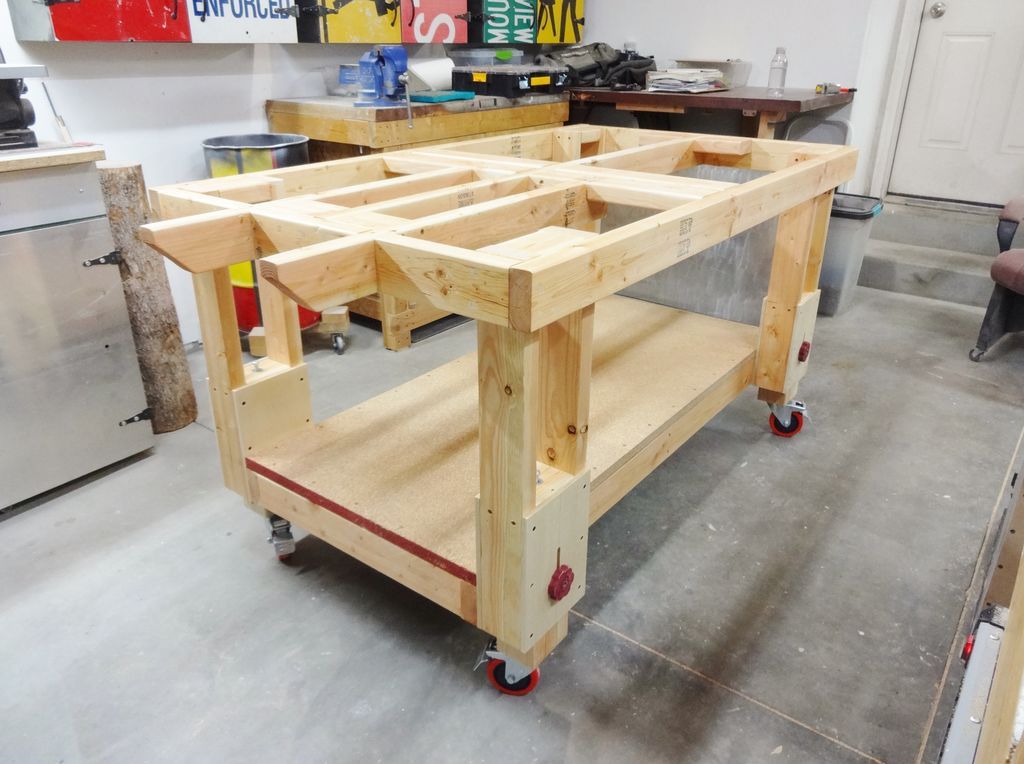
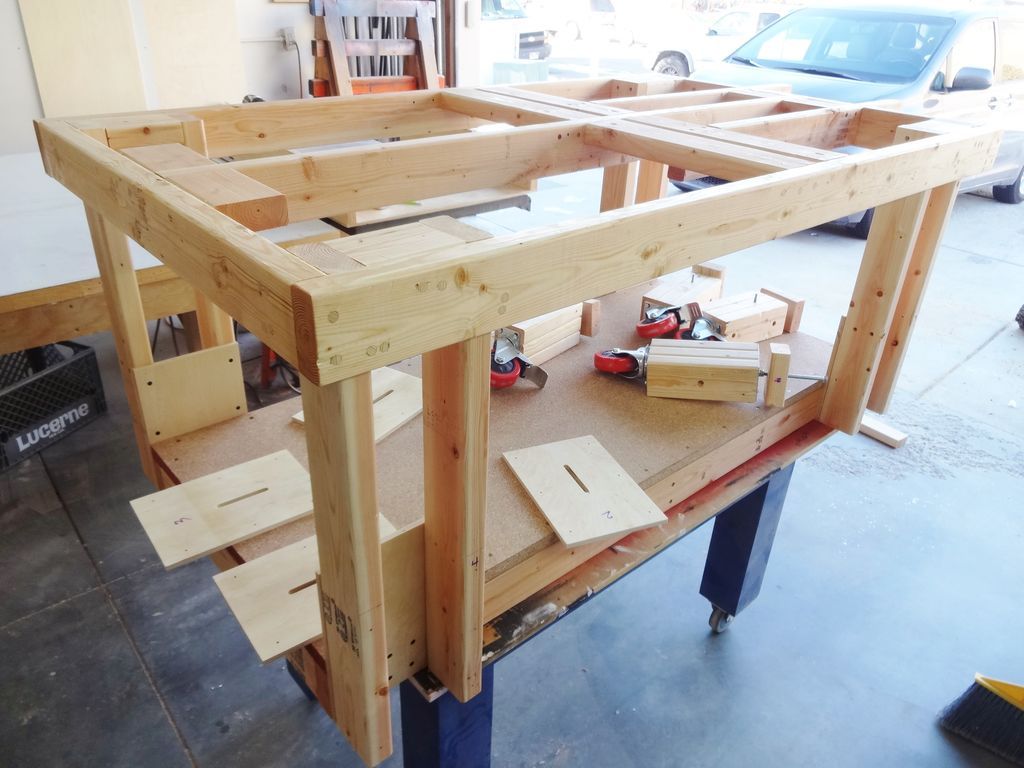
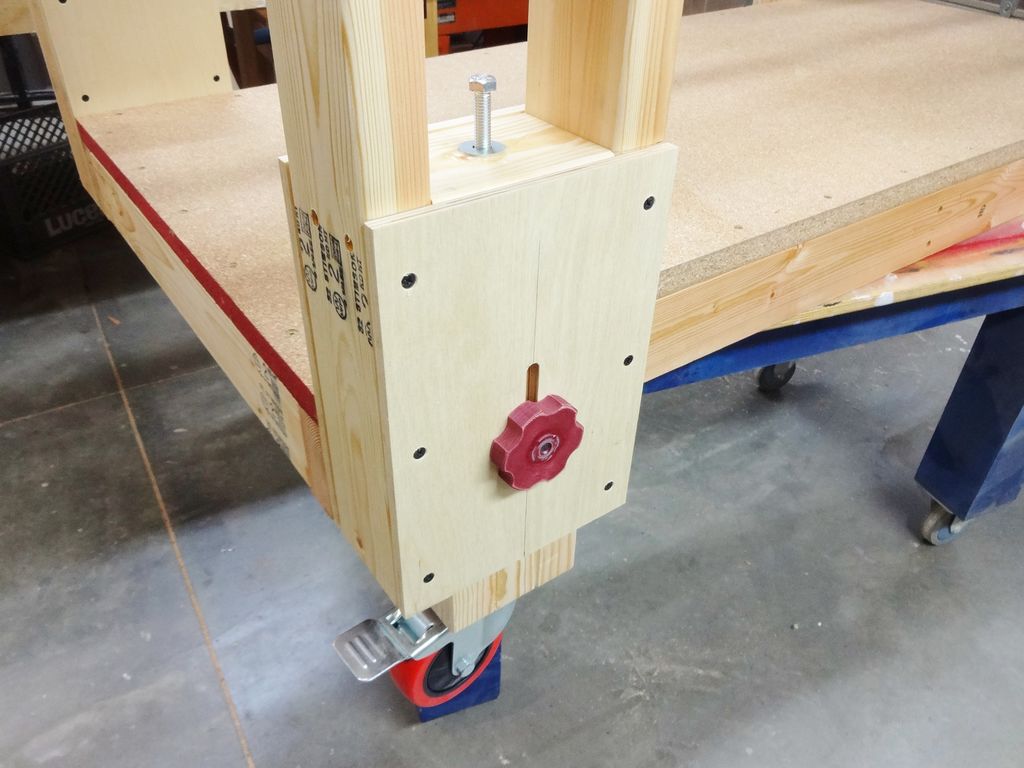
Aquí tienes una vista más de cerca del marco de la mesa. Todo recibió varias capas de laca, y las perillas también se pintaron.
Paso 6: Añadir el tablero, la moldura y los tornillos
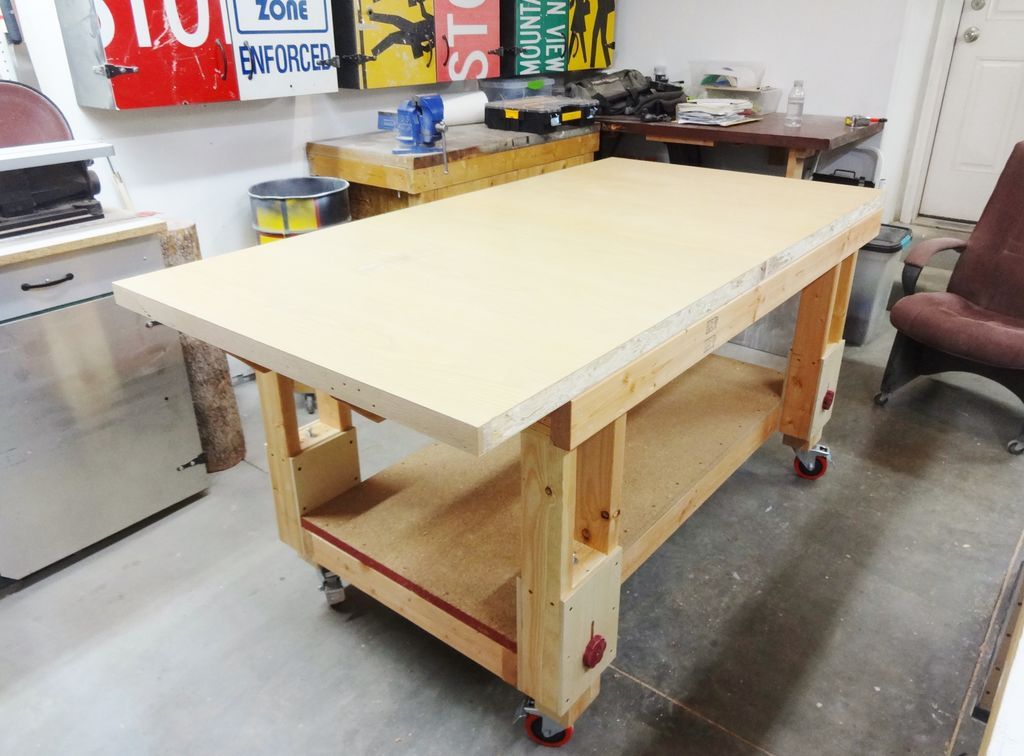
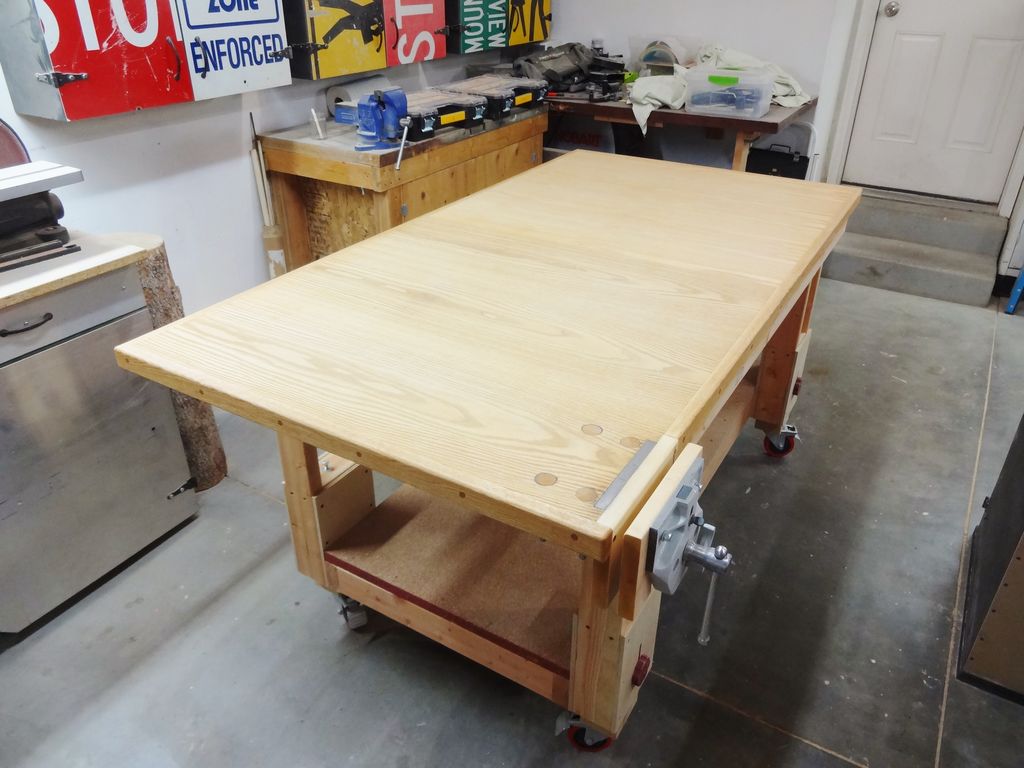
Se añadió el tablero de la mesa y se atornilló la moldura de roble alrededor del exterior.
Un tornillo de banco se atornilló a la esquina de la mesa que sobresalía del marco. Los pernos se cubrieron con piezas de madera de roble que se pegaron en su lugar, y toda la superficie recibió varias capas de laca. Lija un poco y rocía con más laca si es necesario.
Paso 7: Extra: Extensión para sierra de mesa
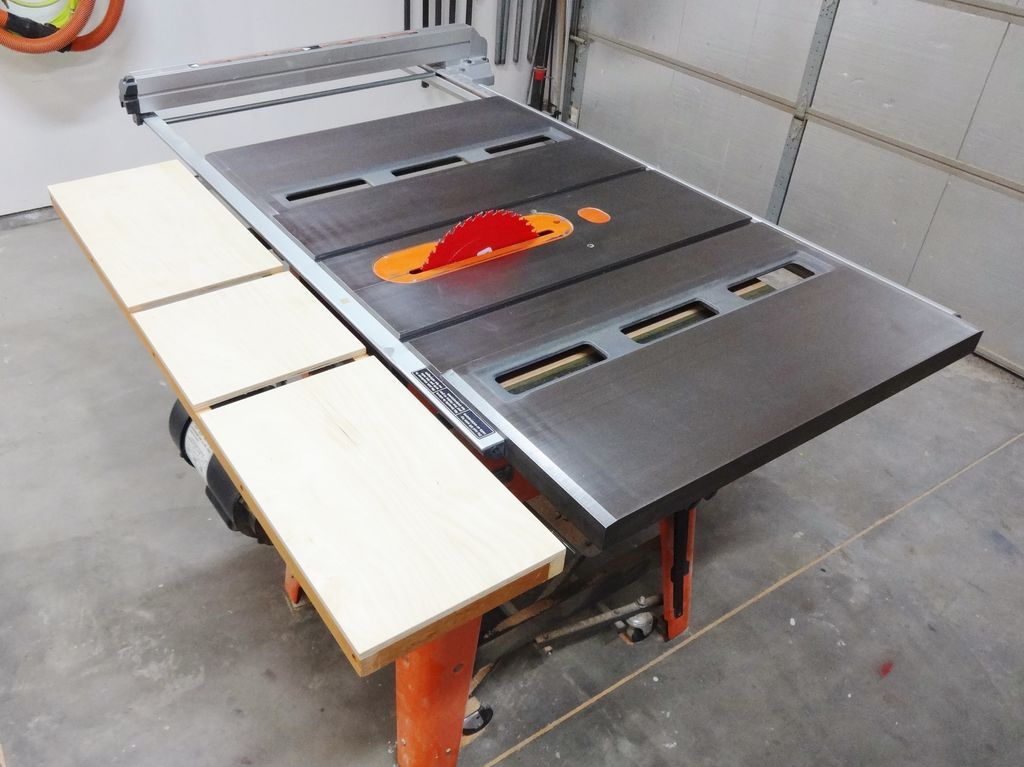
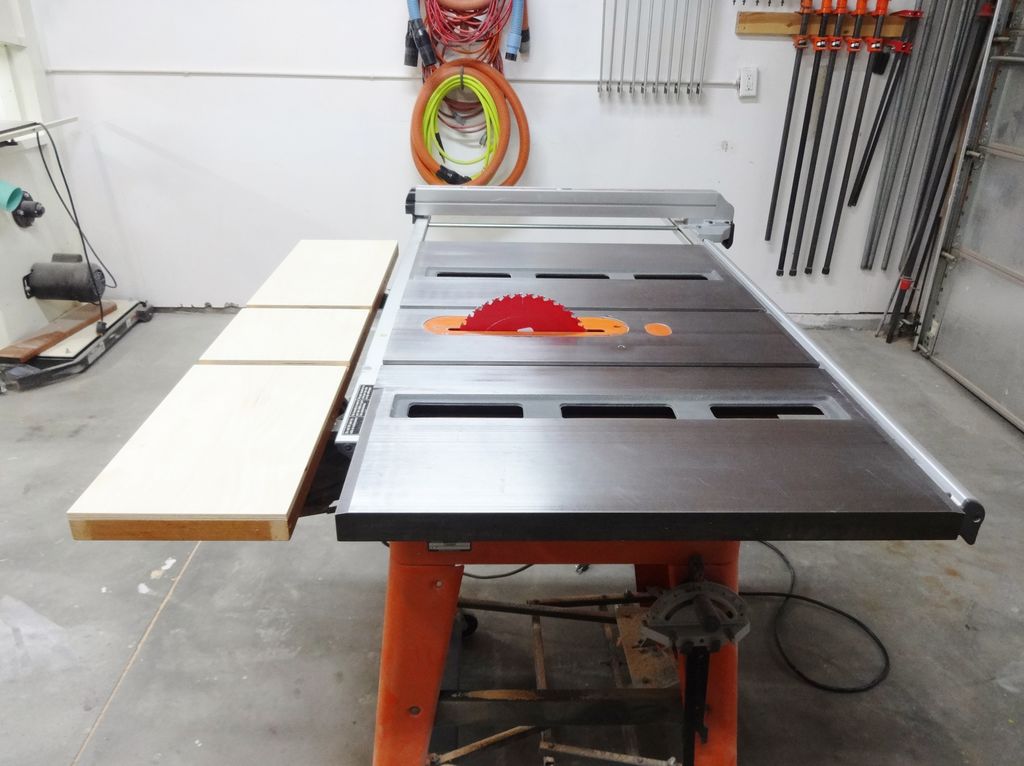
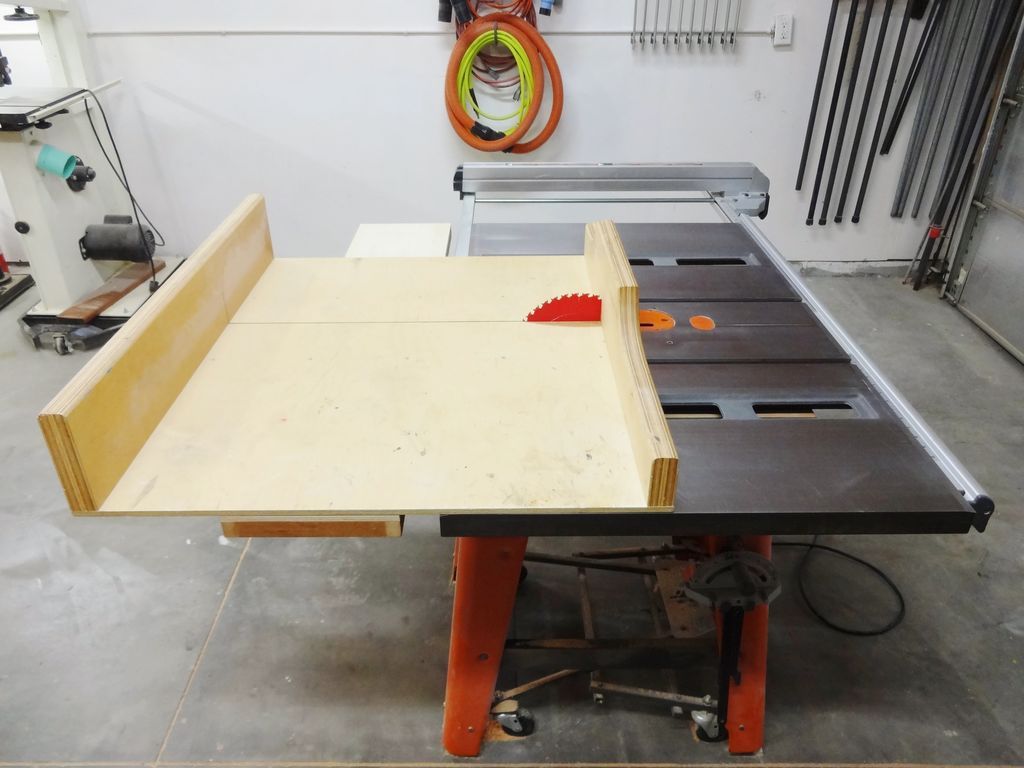
Añadí esta mini extensión a la parte trasera de mi sierra de mesa y, cuando necesito la mesa de salida grande para cortar tablas o paneles largos, la coloco a unas 8 pulgadas detrás de esta extensión y listo.
Los siguientes pasos muestran cómo se hizo.
Paso 8: Rieles de soporte
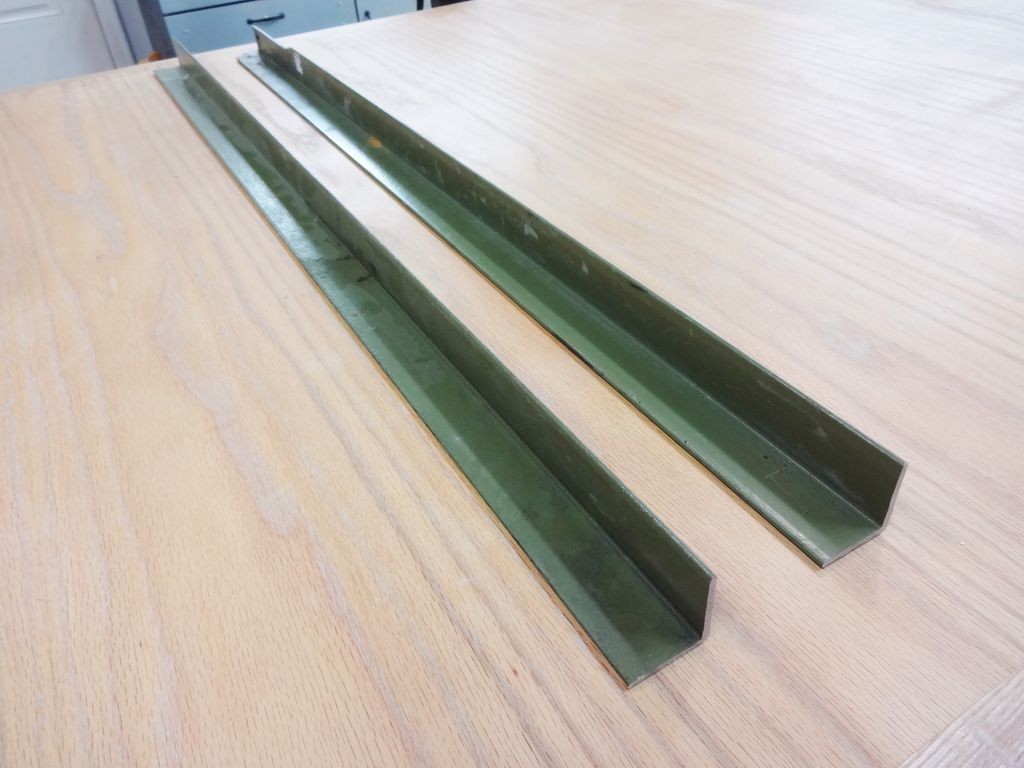
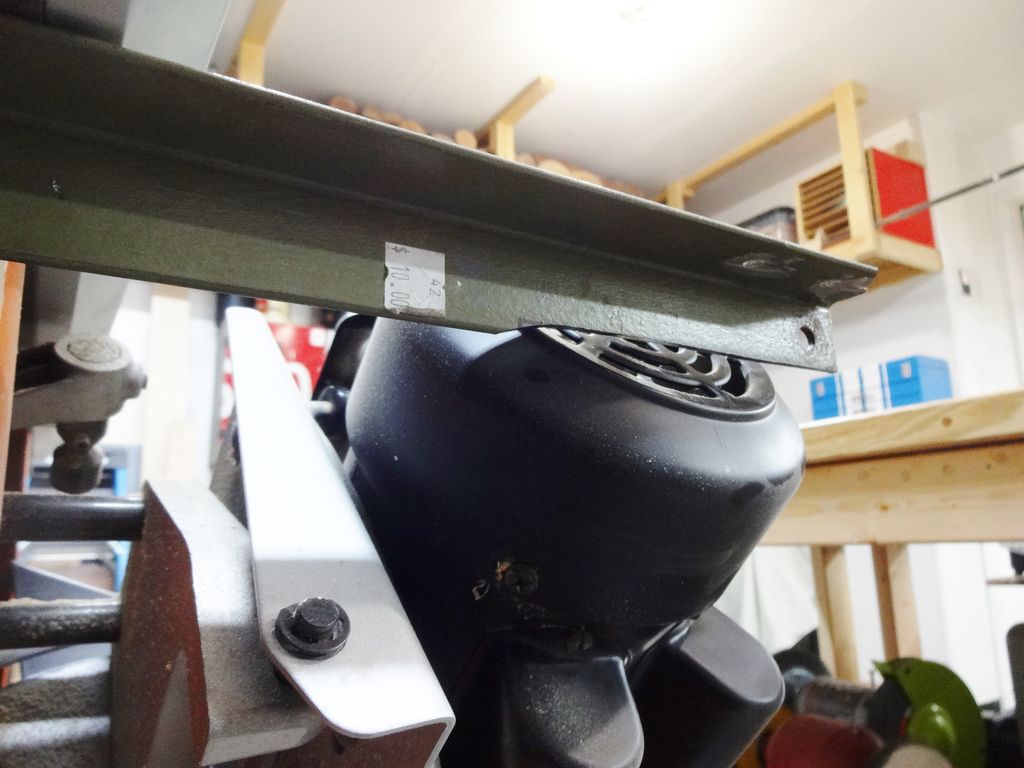
Se cortaron y prepararon dos piezas de hierro angular para fijarlas a los laterales de la carcasa de la sierra de mesa. En realidad, son de una estructura de cama usada.
Hubo que retirar algo de material de una de ellas para dejar espacio al motor cuando la hoja se ajustaba a su inclinación máxima.
Paso 9: Fijar los rieles
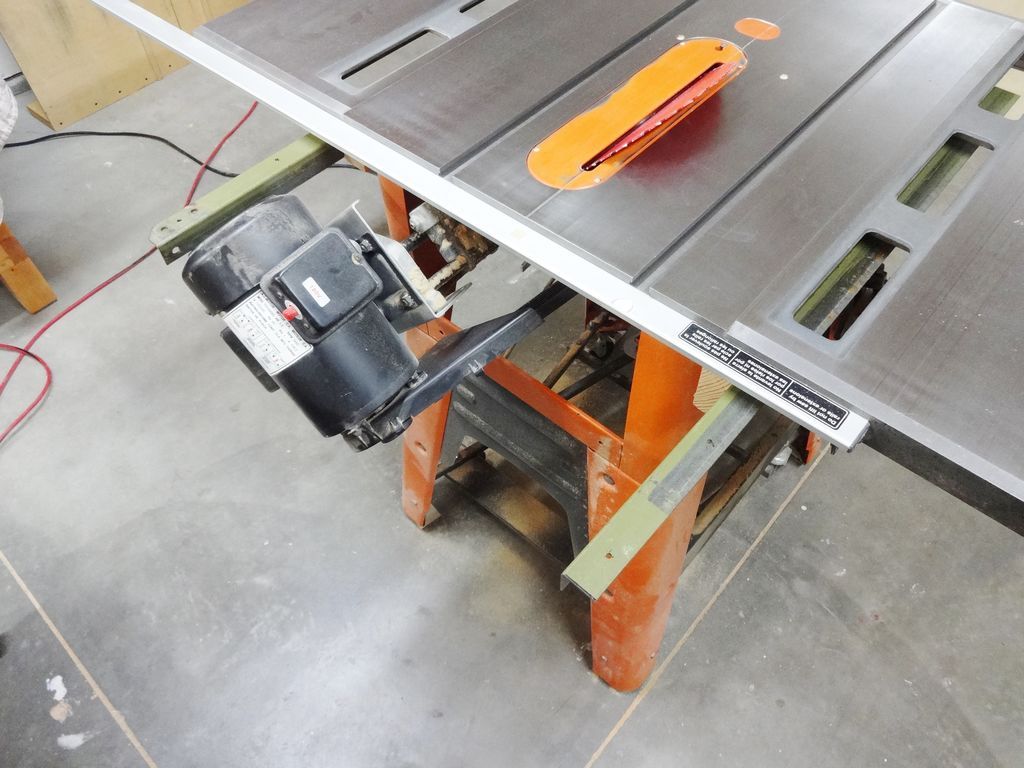
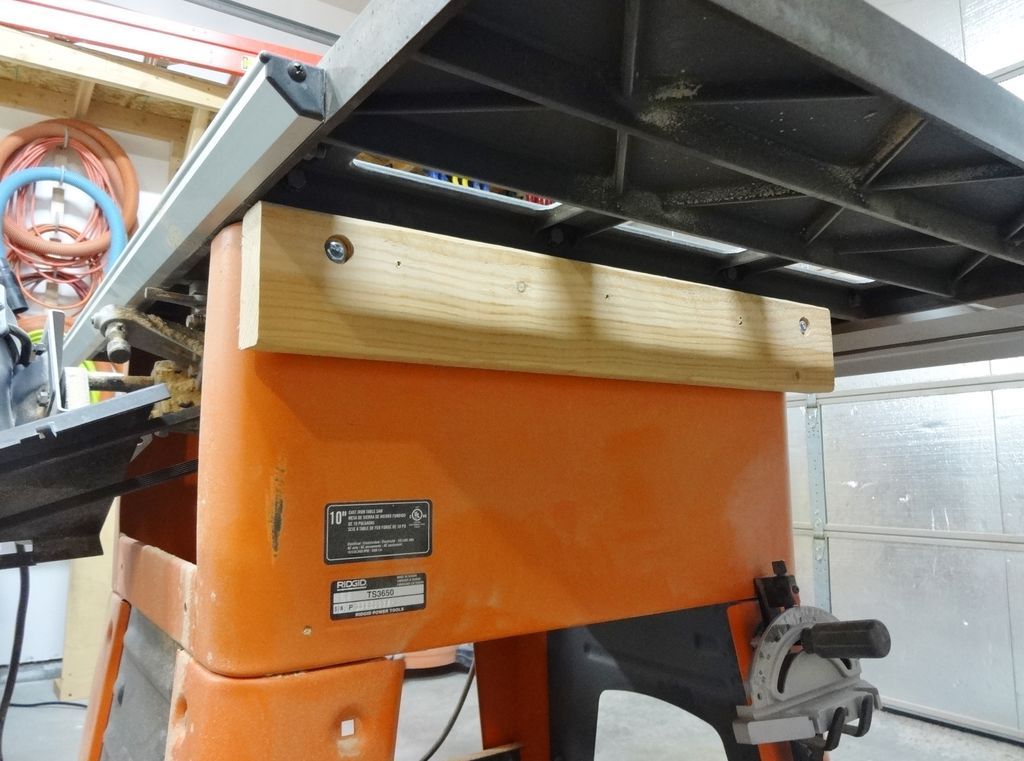
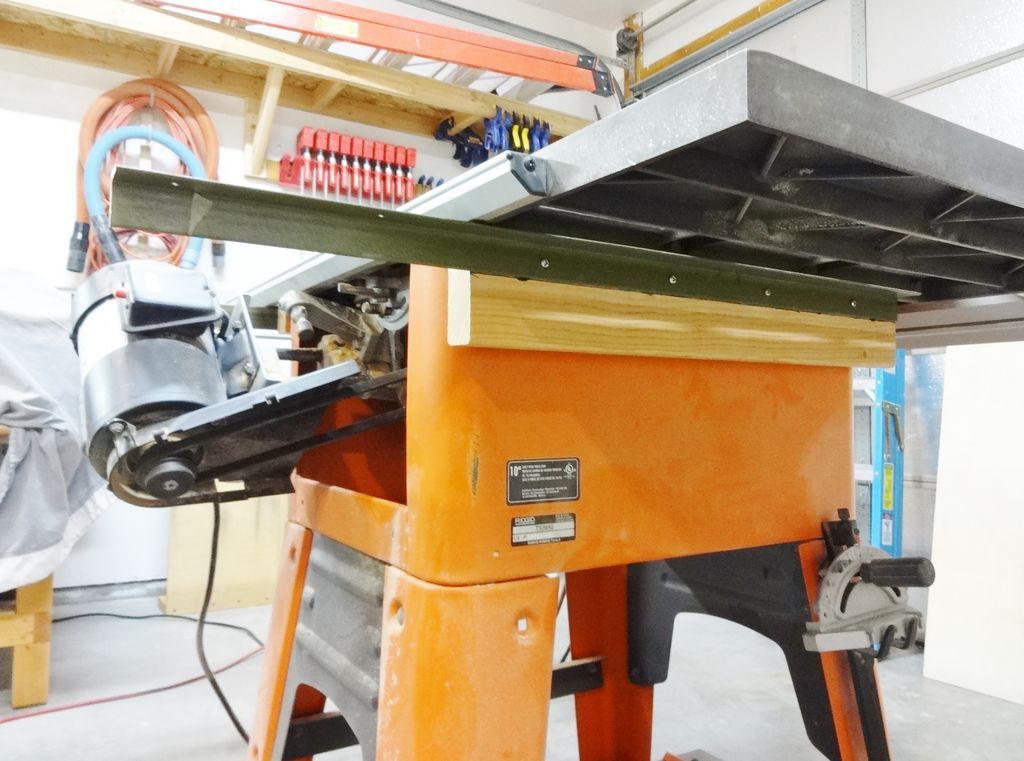
Tenía dos piezas de madera atornilladas a mi sierra de un proyecto anterior, lo que hizo que fijar estos rieles fuera aún más fácil. Los agujeros se taladraron en el metal con una broca y los rieles se atornillaron a la madera con tornillos de cabeza plana.
Paso 10: Marco ligero
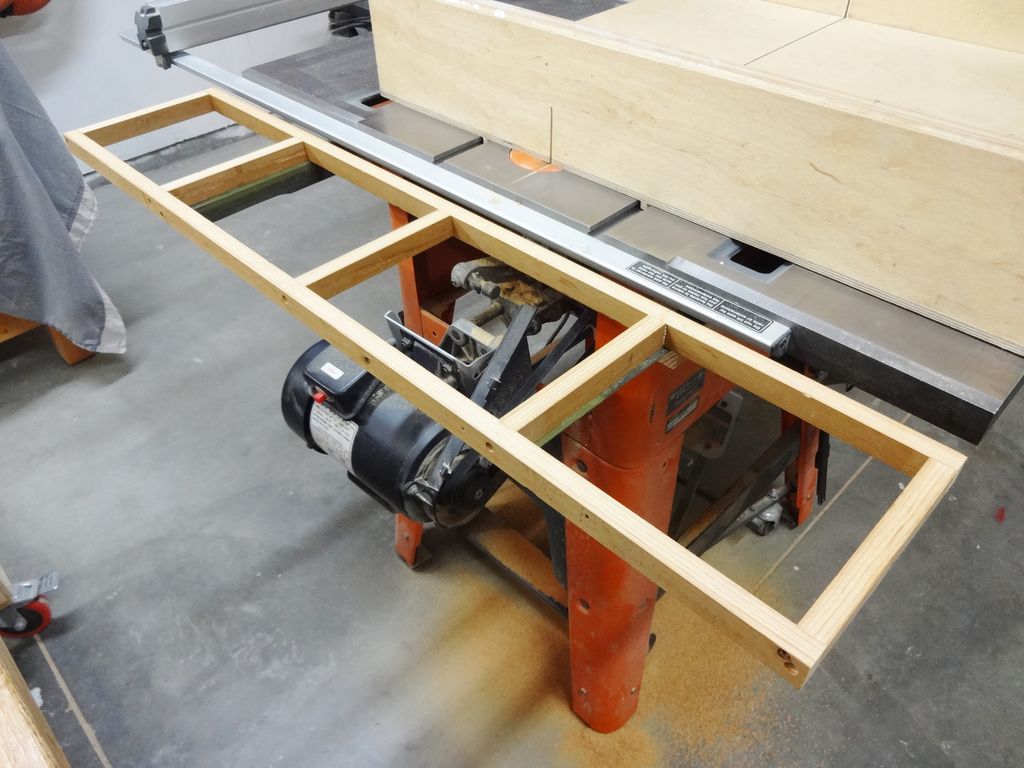

Usando metal de desecho, construí un marco ligero y lo rematé con piezas de contrachapado de abedul báltico. El marco se encoló y se atornilló, y el tablero se fijó con cola y clavos. Se terminó con laca y una capa de cera en pasta.
Se instalaron tornillos desde abajo para fijarla en su lugar. Para proyectos más pequeños y al cortar piezas más cortas, a menudo he comprobado que no necesito colocar la mesa de salida grande, y esta extensión es suficiente.
Es una gran adición a mi sierra y funciona perfectamente para lo que necesitaba.
Paso 11: Finalización
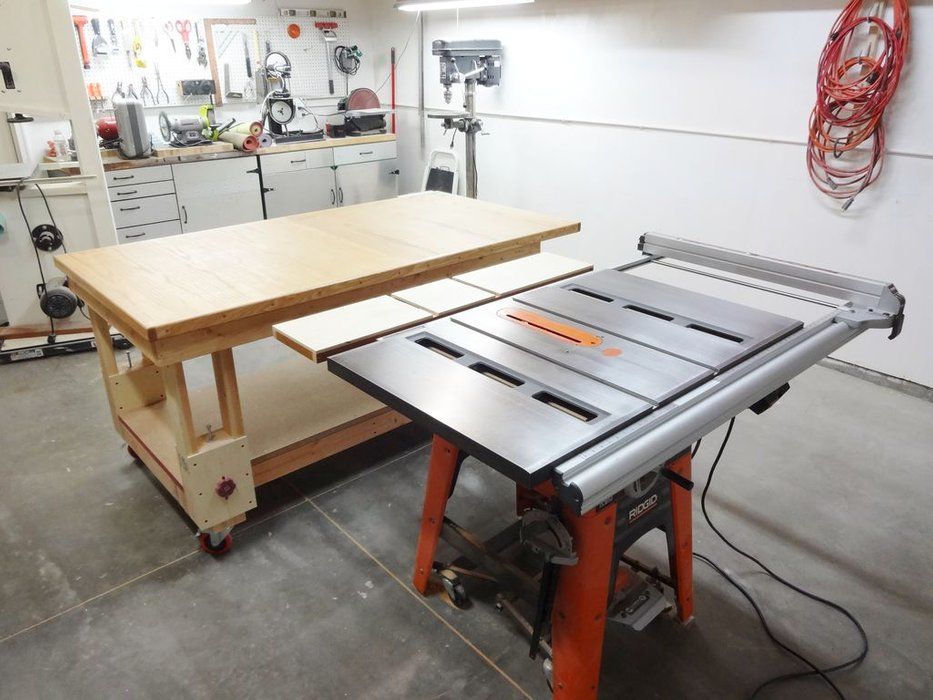
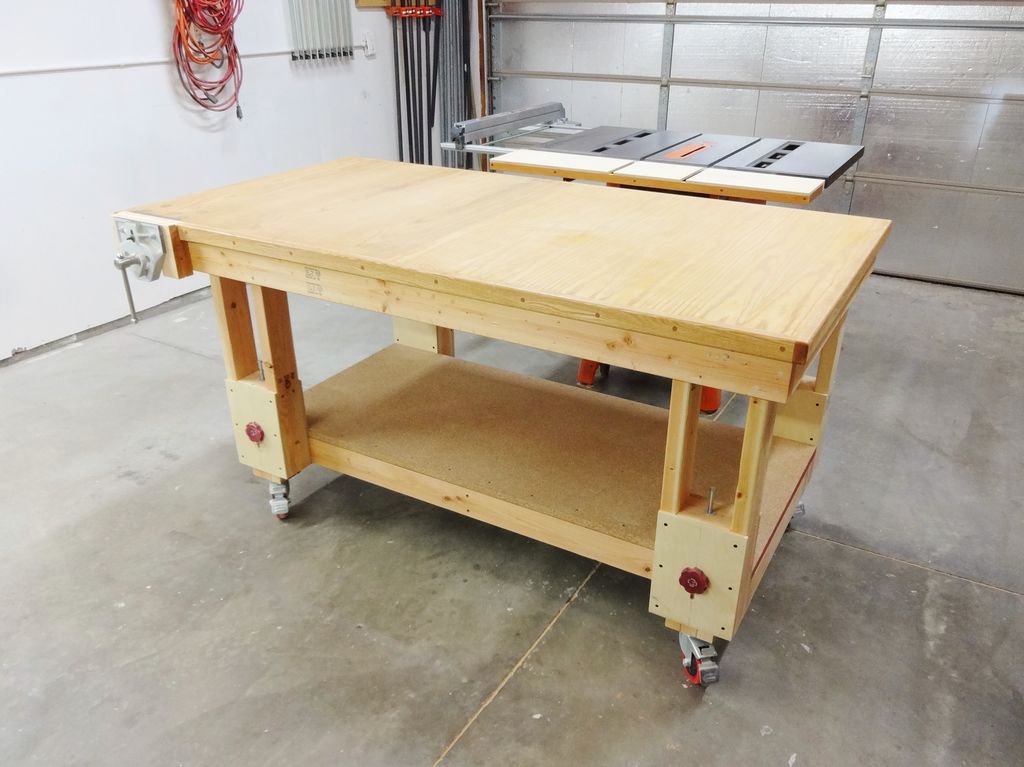
¡Eso es todo! Gracias de nuevo por echar un vistazo. ¡Las opiniones y los comentarios siempre son bienvenidos! 🙂
Obtén más información en perfectionidea.com y en nuestro Facebook para ver más sobre cómo hacer una mesa de trabajo de altura ajustable.
Contenido popular
Cómo hacer una estufa cohete para exteriores
Cajones de cartón forrados con jeans
Cómo crear un jardín de hadas: magia, creatividad y naturaleza en un solo lugar
Últimos artículos
Cómo crear un jardín de hadas: magia, creatividad y naturaleza en un solo lugar
Casa
Cómo protegernos de los accidentes en nuestro lugar de trabajo: guía completa de prevención y seguridad
Contenido relacionado
Baños a la altura de los pequeños de la casa
Cómo instalar una puerta metálica exterior: guía profesional paso a paso
Cómo hacer una mesa de conferencias
Almacenamiento de herramientas eléctricas con estación de carga
Ideas creativas de decoración del hogar para transformar cada espacio
Renovar tu hogar comienza con decisiones de diseño inteligentes que combinan comodidad, personalidad y funcionalidad. Ya sea que quieras modernizar un apartamento pequeño, mejorar las zonas exteriores o crear interiores rústicos acogedores, estas ideas de tendencia pueden cambiar por completo el ambiente de tu espacio.
Espacios exteriores que aportan estilo y funcionalidad
La vida al aire libre sigue dominando las tendencias del hogar moderno. Cada vez más propietarios invierten en zonas de entretenimiento prácticas inspiradas en estas ideas de cobertizos para barbacoa, que crean el entorno perfecto para reuniones y sesiones de cocina de fin de semana.
Las primeras impresiones también importan al diseñar exteriores. Las elegantes ideas de diseño de portones de entrada para granjas ayudan a que las propiedades destaquen mientras mejoran la privacidad y el atractivo exterior.
Las soluciones de vivienda compacta también están ganando popularidad. Estas inspiradoras ideas de diseño de interiores para casas de cobertizo de 16x40 demuestran que los espacios más pequeños pueden seguir resultando lujosos y funcionales.
Para mejorar patios y entradas, los propietarios están añadiendo protección elegante con estas creativas ideas de bricolaje para toldos exteriores de porche que combinan estética y practicidad.
Tendencias de diseño de interiores rústicos y acogedores
Los interiores cálidos y naturales siguen siendo atemporales. Estas encantadoras ideas de decoración rústica combinan texturas de madera, acentos vintage y tonos terrosos para crear espacios acogedores.
Los dormitorios se están volviendo más personalizados con composiciones de pared cuidadosamente seleccionadas. Muchos propietarios usan estas elegantes ideas de pared de fotos para dormitorios para exhibir recuerdos y obras de arte de forma creativa.
Los revestimientos de pared con textura son otra gran tendencia. Instalar una pared de tablas y listones añade carácter arquitectónico mientras mantiene los interiores elegantes y modernos.
Del mismo modo, las atrevidas ideas para paredes de acento pueden transformar al instante habitaciones sencillas en puntos focales llamativos sin necesidad de una reforma completa.
Inspiración para cocinas inteligentes y organización
Las cocinas funcionales son esenciales para los hogares modernos. Estas prácticas ideas para armarios de pared en la cocina maximizan el almacenamiento a la vez que mantienen una apariencia limpia y elegante.
La organización también comienza en la entrada. Las ideas bien diseñadas para recibidores ayudan a las familias a mantener zapatos, abrigos y artículos esenciales del día a día ordenados.
Estilo de hogar colorido y personalizado
Los interiores vibrantes son cada vez más populares gracias a las divertidas ideas de decoración con dopamina que usan colores brillantes y accesorios alegres para mejorar el estado de ánimo y la energía.
Las paredes de galería también siguen evolucionando como un gran elemento decorativo. Estas modernas ideas de inspiración para paredes de galería ofrecen formas creativas de combinar láminas, fotografías y piezas de arte llamativas.
Los inquilinos jóvenes y los nuevos propietarios de vivienda están adoptando con especial entusiasmo estas elegantes ideas estéticas para el primer apartamento para crear interiores sofisticados con un presupuesto ajustado.
Por último, elegir los tonos adecuados puede influir drásticamente en el ambiente de cualquier estancia. Estas modernas ideas de colores de tendencia ayudan a los propietarios a elegir paletas que resultan frescas, elegantes y atemporales.
Reflexiones finales
Desde el encanto rústico y los interiores coloridos hasta las áreas de entretenimiento al aire libre y las soluciones de almacenamiento funcionales, las tendencias actuales de decoración del hogar se centran en crear espacios que resulten hermosos y habitables a la vez. Al combinar distribuciones inteligentes, texturas modernas y elementos decorativos personalizados, cualquier hogar puede volverse más elegante, cómodo e inspirador.
Browse the Shop
 Acacia frida deluxe solid wood bed frame |
Bedroom bench |
Bed chest drawers |
Lingerie dresser |
Frame base |
Mirror with jewelry storage |
30 Bathroom Vanity |
Memory foam queen mattress |
Mattresses for back pain |
Nightstand set of 2 |
Grand Goldman Shop |
Civil Lawyer
Deutschland Trikot WM 2026
Acacia frida deluxe solid wood bed frame |
Bedroom bench |
Bed chest drawers |
Lingerie dresser |
Frame base |
Mirror with jewelry storage |
30 Bathroom Vanity |
Memory foam queen mattress |
Mattresses for back pain |
Nightstand set of 2 |
Grand Goldman Shop |
Civil Lawyer
Deutschland Trikot WM 2026










