

Learn how to properly mix concrete so you get the proper strength and consistency every time.
Introduction: How to mix concrete by hand so that it offers maximum strength and durability. Mixing is not complicated and when done right, concrete should last a lifetime.

Tools to properly mix concrete:
- Spatula
- Mask
- Rubber gloves
- Safety glasses
- Hard bristle brush

Materials needed:
- Concrete mix
Video: How to mix concrete.
Tips:
- Protect your skin and eyes! The cement in concrete is caustic and can cause burns if it comes into contact with your skin.
- Mixing bags of concrete is not complicated. Add a little water, stir and pour. But to get the most strength out of concrete, you need to recognize when it has just the right amount of water mixed in.
- Too little water and the particles in the mixture will not stick.
- Too much water weakens the concrete.
In this article, we will show you what the perfect combination looks like. We will also show you a mixing technique that will ensure completely mixed concrete with a minimum of effort.
Step 1: Before you start mixing the concrete

For most small jobs around the home, bagged concrete mix is the most convenient and least expensive way to go. You can use it for fence post footings, deck footings, and even small concrete pads. For jobs requiring more than about 30 bags, consider ordering “ready-to-mix” concrete from a truck.
Sixty or 80 pounds. Bags of concrete mix are available at home centers, lumber yards, and hardware stores. Do not confuse concrete mix with sand mix or mortar mix. They do not contain the aggregate (stones or gravel) that is necessary to make a pour thicker than approximately 3/4 in. You'll likely find more than one type of concrete mix on the shelf, including "quick set," "high early strength," and "fiber-reinforced." But for most jobs, standard concrete mix is fine. Read the recommendations on the bags or visit the manufacturers' websites to find out if one of the special mixes would work best for your project.
Whether you mix cement by hand in a plastic tub, a homemade mixing tub, or a wheelbarrow, the technique is the same for finding the correct concrete mix ratio. However, it is easier to move and dump mixed concrete in a wheelbarrow. For larger jobs, you can rent a mixer, but it may be more economical to simply order a ready-mixed concrete. In addition to a mixing bowl, you'll need a sturdy hoe and a large bucket, as well as a stiff-bristled brush for cleaning the equipment. Wear waterproof gloves and safety glasses because the cement mixed into the concrete mix is caustic and can burn the skin. Wash with water if it comes into contact with skin.
Step 2: Cut and throw away the bag

Place the bag of concrete mix on one end of the wheelbarrow and cut it with your hoe. Unload the mixture from the bag and remove the paper bag.
Step 3: Add a measured amount of water
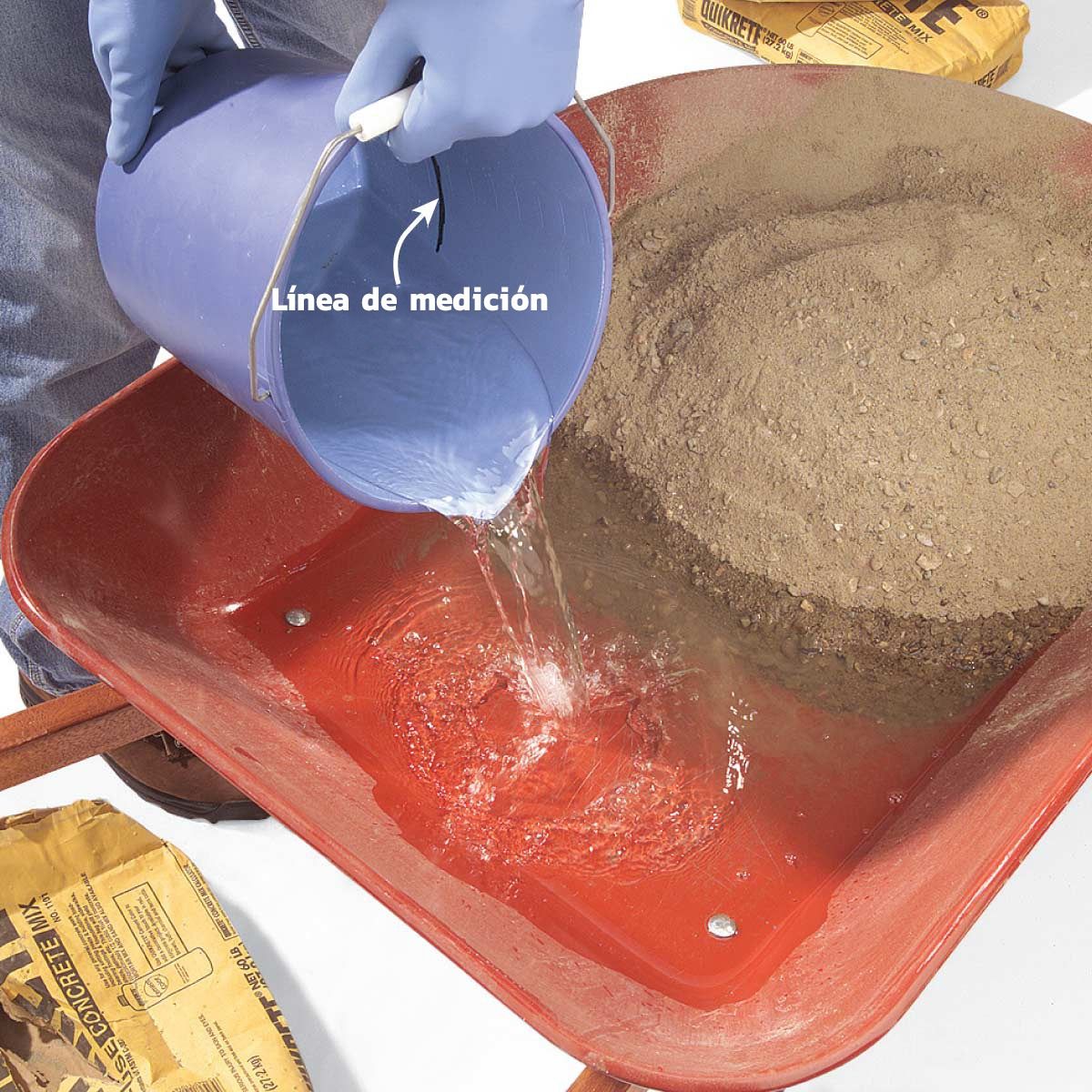
One of the most common mistakes beginners make is adding too much water and ending up with concrete that is thin and spongy. Here are some tips to avoid the problem and find the correct concrete mix ratio.
First, pour a measured amount of water (the amount varies depending on the size of the bag) into the mixture from a bucket instead of spraying it with a hose. For future reference, mark the water level with a permanent marker. Pour the water into the opposite end of the wheelbarrow, reserving about 4 cups to add later if needed. Continue mixing for a few minutes after all the water is absorbed, as theConcrete will often become foamier as it is mixed. If you add more water right away, you may end up running further than you would like. Finally, have at least a few cups of dry concrete mix on hand in case your mix is too thin.
Step 4: Gradually moisten the mixture

Throw a small amount of the dry mixture into the water with a hoe and mix thoroughly. A hoe makes a great mixing tool. A flat shovel or shovel also works. Continue pulling and mixing until all the powder is wet and the mixture clumps up at the end of the wheelbarrow. Continue mixing by going to the other end of the wheelbarrow and pulling the mixture toward you. This method ensures that all dry particles are completely moistened.
Step 5: Mixing technique
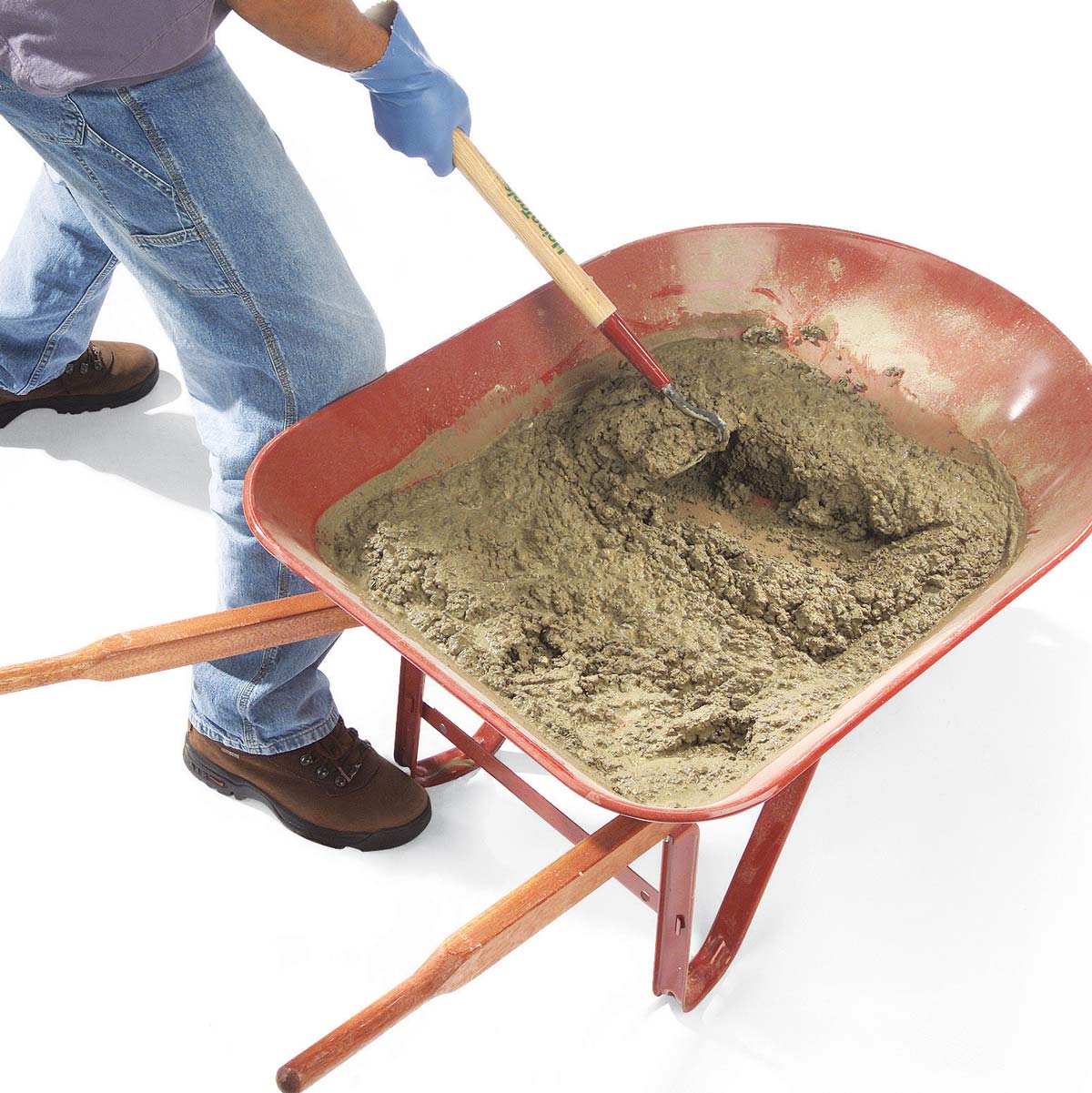
Use a sturdy wheelbarrow to mix your concrete. And make sure it's on a level surface. Support the wheelbarrow with your knee when mixing on its side.
Step 6: Work to the Perfect Concrete Mix Ratio
If the mixed concrete looks like the mixture in step 8, it is ready to pour. Otherwise, add additional dry mix or water until you get the right consistency.
It is tempting to simply spray water into the dry concrete mix with a hose and mix a large amount of concrete. After all, it's faster and dripping concrete is easier to pour. The problem is that powdered concrete is only half as strong as a proper mix and is more likely to crack. That's why we recommend spending a little more time measuring the water into a bucket first and adding only the amount needed. Although the thicker mix is a little more difficult to place, it will be worth the extra effort. We'll show you how to get the best consistency.
Step 7: Concrete too dry

Drag the hoe through the mixture to make a channel. The mix is too dry if the sides of the channel are crumbly and the concrete falls off in pieces when disturbed. Add water one cup at a time, mixing between each addition.
Step 8: Too fluid concrete

Add more dry concrete if the mixture is too wet and thick and sinks into the trench.
Step 9: Perfect Concrete Mix

The mixture is correct when the sides of the channel and the ingredients are well moistened. A hoe struck against concrete will leave a slightly shiny surface.
Step 10: Quick Clean

Remember to clean your equipment immediately. Scrub the wheelbarrow and tools with a stiff-bristled brush before the concrete begins to harden. Once the concrete hardens, it's a bear to get off. Scrape excess concrete from the wheelbarrow and pile it on a piece of plastic. If it's a large pile, break it into manageable chunks before it hardens completely. Use the rinse water in an inconspicuous corner of your lot (it can kill the grass). You can even dig a depression to hold the water and then cover the residue after the hole is drained.
That's all. We hope you have learned how to properly mix concrete.
Don't forget to follow us on our social networks for more news!
- Tags
- Tips
Popular Content
How to make a rocket stove for outdoors
DrawersCartons Lined with Jeans
Change the facade of your home with simple steps!
Latest Articles
How to make a refrigerator out of insulating material: Practical step-by-step guide
How to make a Kilim for the Home: Complete Step by Step Guide
How to protect ourselves from accidents in our workplace: Complete prevention and safety guide
Related Content
How to Build a Small Cabin on a Tight Budget!
Tool Storage and Cargo Wall
Learn How to Build a Rustic Bathroom Vanity!
Simple Steps to Repair Cracks in Concrete Roofs!
Creative Home Decor Ideas to Transform Every Space
Refreshing your home starts with smart design choices that combine comfort, personality, and functionality. Whether you want to modernize a small apartment, upgrade outdoor areas, or create cozy rustic interiors, these trending ideas can completely change the atmosphere of your space.
Outdoor Spaces That Increase Style and Functionality
Outdoor living continues to dominate modern home trends. Homeowners are increasingly investing in practical entertainment zones inspired by these BBQ shed ideas, which create the perfect setup for gatherings and weekend cooking sessions.
First impressions also matter when designing exteriors. Elegant farm entrance gates design ideas help properties stand out while improving privacy and curb appeal.
Compact living solutions are also gaining popularity. These inspiring 16x40 shed house interior design ideas show how smaller spaces can still feel luxurious and functional.
To enhance patios and entryways, homeowners are adding stylish protection with these creative porch awning exterior DIY ideas that blend aesthetics with practicality.

Rustic and Cozy Interior Design Trends
Warm and natural interiors remain timeless. These charming rustic decor ideas combine wood textures, vintage accents, and earthy tones to create welcoming spaces.
Bedrooms are becoming more personalized with curated wall arrangements. Many homeowners use these stylish picture wall ideas for bedroom spaces to display memories and artwork creatively.
Textured wall treatments are another major trend. Installing a board and batten wall adds architectural character while keeping interiors elegant and modern.
Similarly, bold accent wall ideas can instantly transform plain rooms into eye-catching focal points without requiring a full renovation.
Smart Kitchen and Organization Inspiration
Functional kitchens are essential for modern homes. These practical kitchen wall cabinet ideas maximize storage while maintaining a clean and stylish appearance.
Organization also starts at the entrance. Well-designed mud room ideas help families keep shoes, coats, and daily essentials neatly arranged.
Colorful and Personalized Home Styling
Vibrant interiors are becoming increasingly popular thanks to playful dopamine decor ideas that use bright colors and joyful accessories to improve mood and energy.
Gallery walls also continue to evolve as a major decorative feature. These trendy gallery wall inspiration ideas offer creative ways to combine prints, photos, and statement art.
Young renters and new homeowners are especially embracing these stylish first apartment aesthetic ideas to create sophisticated interiors on a budget.
Finally, selecting the right shades can dramatically influence any room’s atmosphere. These modern trendy color ideas help homeowners choose palettes that feel fresh, elegant, and timeless.
Final Thoughts
From rustic charm and colorful interiors to outdoor entertaining areas and functional storage solutions, today’s home decor trends focus on creating spaces that feel both beautiful and livable. By combining smart layouts, modern textures, and personalized decorative elements, any home can become more stylish, comfortable, and inspiring.










