

Making your own sourdough starter at home is a simple and rewarding process that requires just flour, water, and a bit of patience. Unlike commercial yeast, a sourdough starter is a living culture of wild yeasts and bacteria that ferments dough slowly, producing bread with a deeper flavor, a more open crumb, and better keeping qualities. This step-by-step guide will walk you through creating a robust starter from scratch over six days, with no previous ferment needed.
The main difference between sourdough and commercial yeast is that commercial yeast is a controlled fungal culture designed for fast, predictable fermentation. Sourdough fermentation is much slower, which gives bread a more complex, aromatic flavor, a moist and airy crumb, and improved digestibility. It also stays fresh longer. Once your starter is active, you can use it to leaven any bread or pastry dough.
Find Bleeding Edge Supplements at Scandalous Prices on iHerb.

In this recipe, we explain how to make a sourdough starter from zero, without any added yeast or starter. You can also make a starter with commercial yeast by fermenting a portion of flour and water with a little yeast until bubbly, but here we focus on the wild version. The process is straightforward: mix flour and water, wait, and repeat with regular feedings until the culture is strong enough to raise dough.
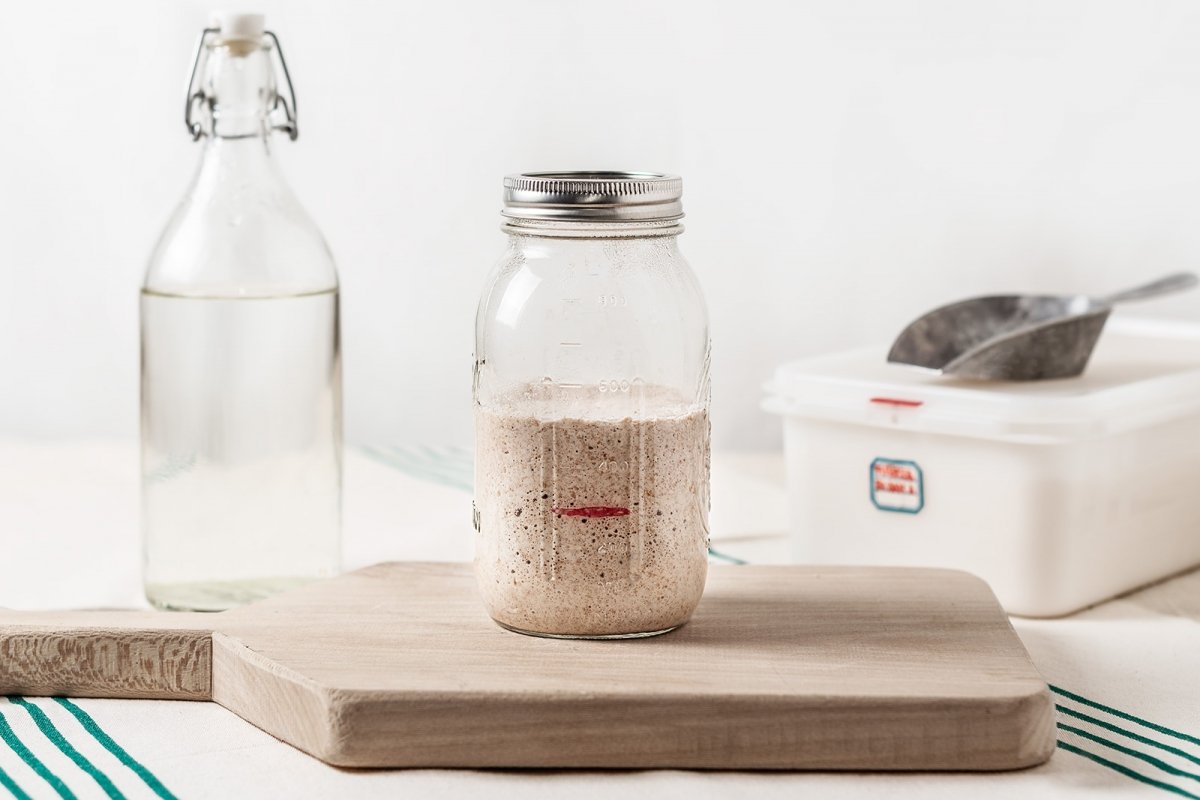
Ingredients for Sourdough Starter
This recipe makes 1 active sourdough starter, enough to leaven several loaves of bread.
- Whole wheat flour
- Warm water
- 1 tablespoon raisins (optional, to speed up the start)
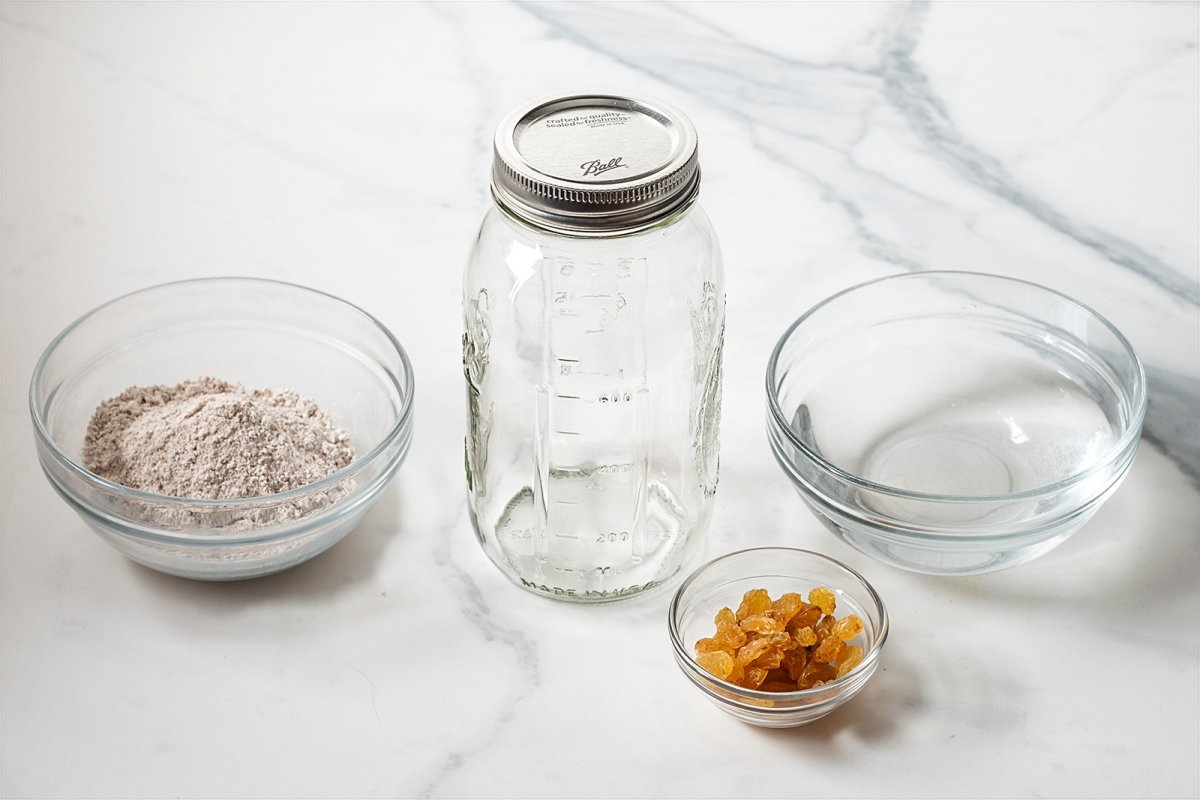
How to Make Sourdough Starter Step by Step
1. Day 1: Mix the Initial Starter
In a transparent container with a lid, add 50 g of whole wheat flour and 50 g of warm water (total = 100 g of starter). Optionally, you can add a tablespoon of raisins to encourage the fermentation. Mix well and cover, but do not seal the lid tightly so that gases can escape. Leave the mixture in a warm place for 24 hours.
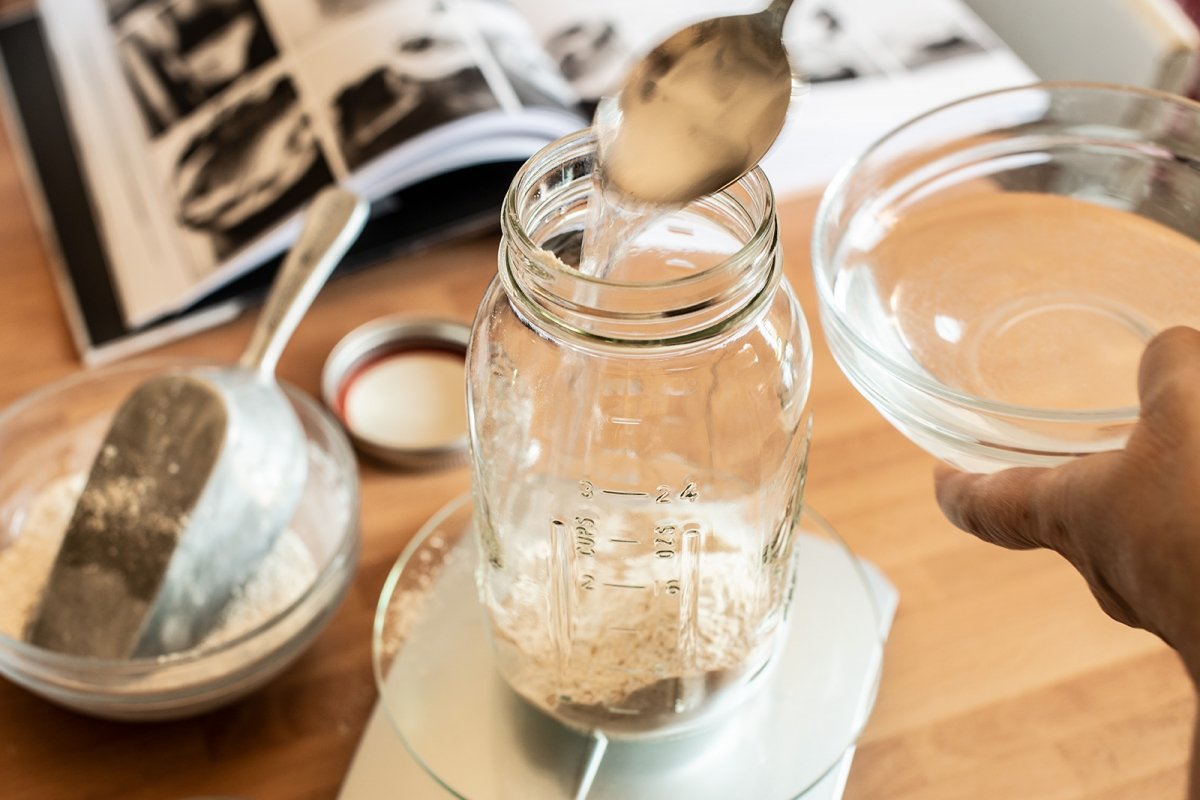
2. Day 2: First Feeding
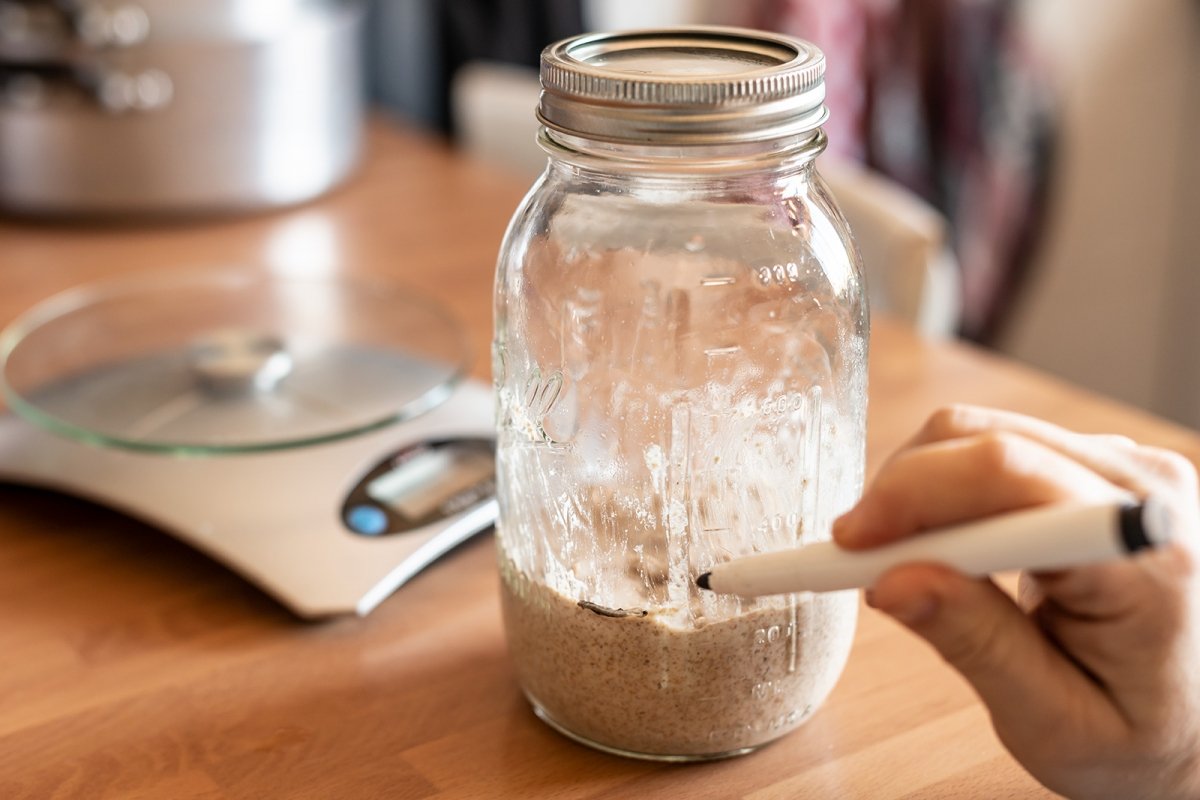
Without removing anything, add another 50 g of whole wheat flour and 50 g of warm water. At this point, you will have 200 g of starter. Mix and cover again without tightening the lid. Leave it in a warm place for 24 hours. You can mark the level of the mixture on the container to easily check if it rises slightly over the next 24 hours.
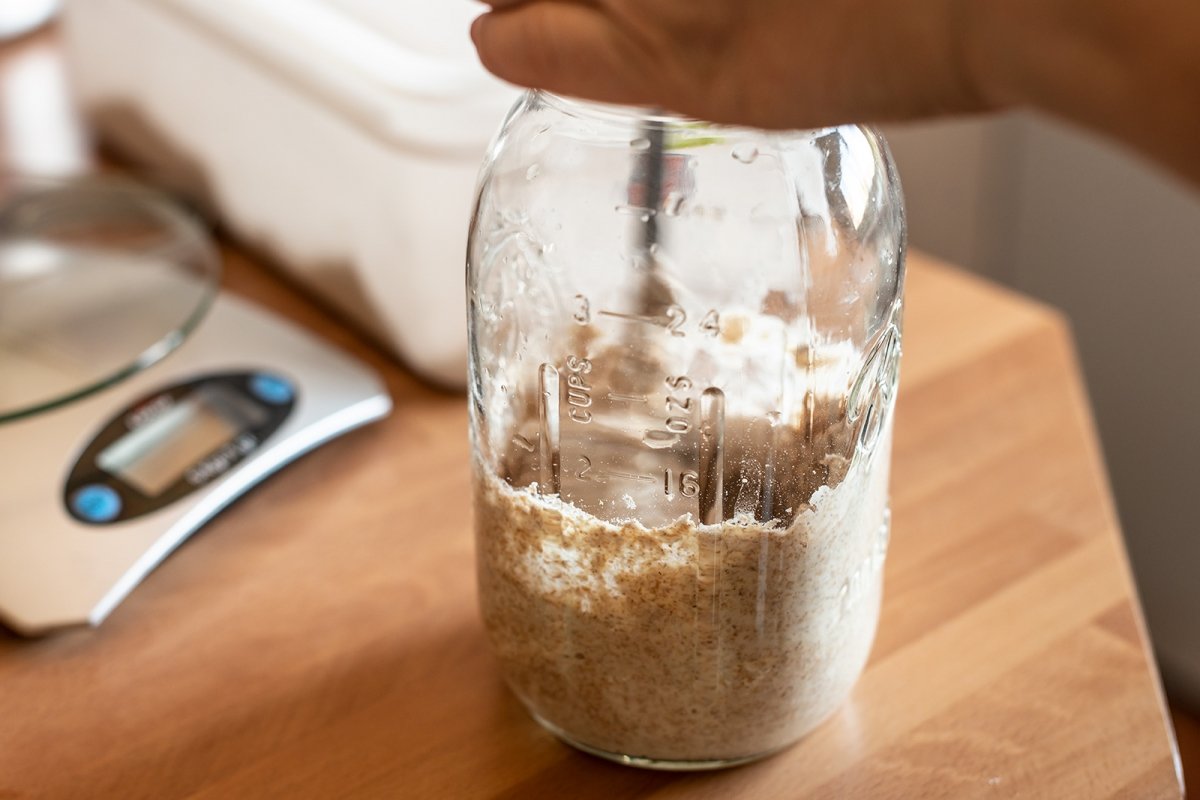
3. Day 3: Discard and Feed
Now you need to remove half of the mixture (100 g) and add 100 g of whole wheat flour and 100 g of warm water. You will have 300 g of starter. Mix, cover without tightening the lid, and leave in a warm place for 24 hours. Mark the level again. At this point, if you are lucky, you may start to see small bubbles.
4. Day 4: Continue Feeding
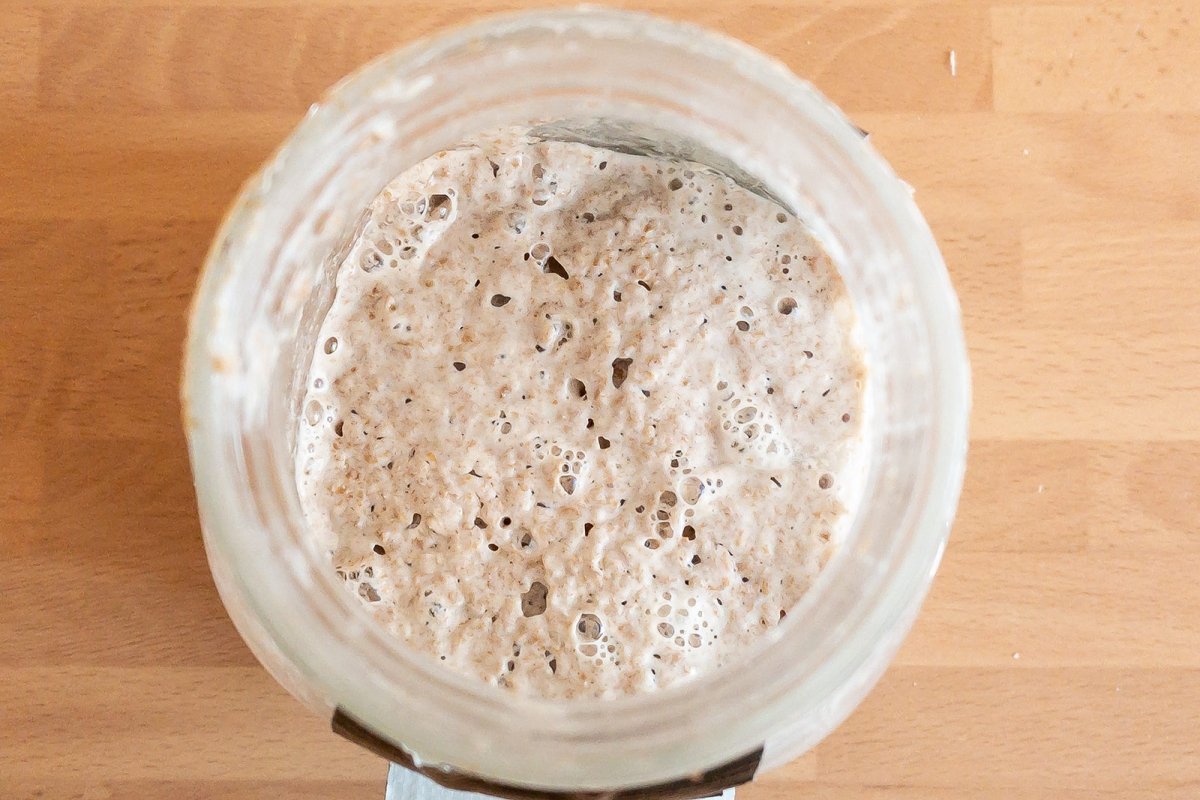
Remove starter until only 100 g remains. Also remove the raisins if you used them, as they have served their purpose. Add 100 g of whole wheat flour and 100 g of warm water. You will have a total of 300 g of starter. Mix, cover without tightening the lid, and leave in a warm place for 24 hours. Mark the level again to check the rise after 24 hours. By now, there should be some activity.
5. Day 5: Feed Again
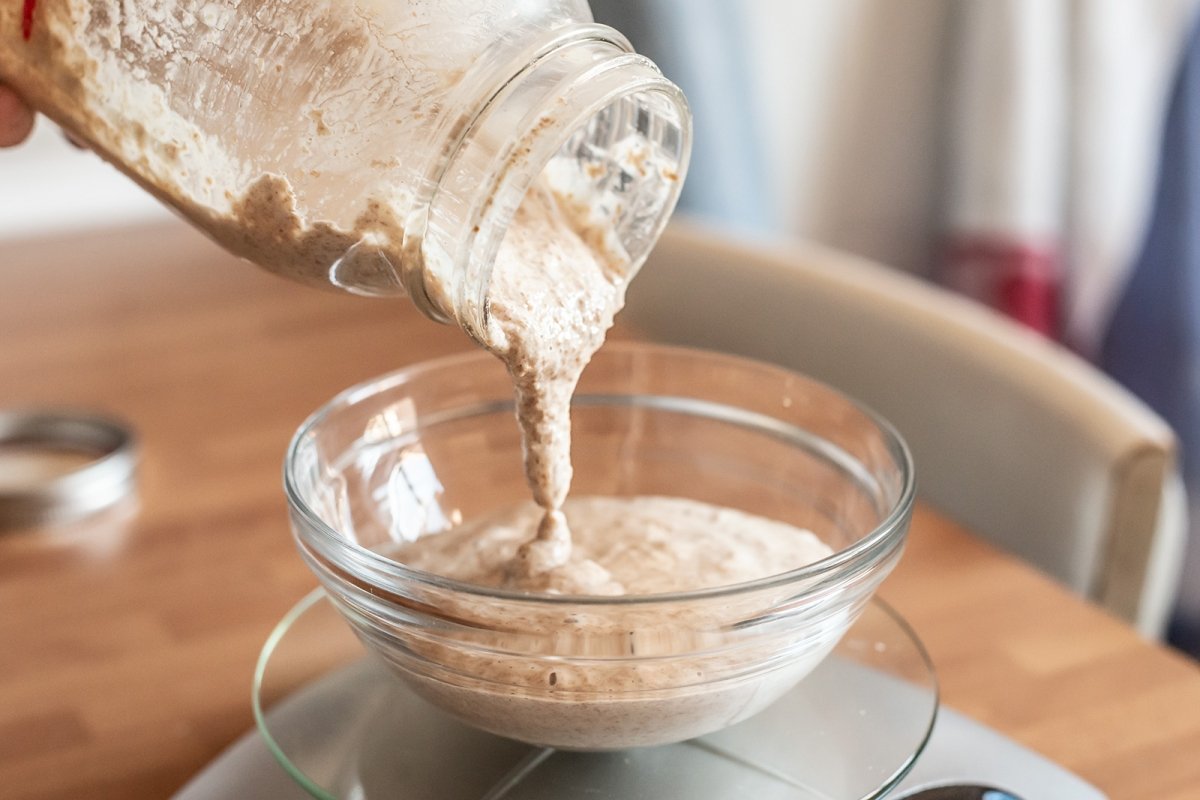
Remove starter until only 100 g remains and add 100 g of whole wheat flour and 100 g of warm water. You will have 300 g of starter. Mix and cover without tightening. Leave in a warm place for 24 hours, marking the top level to check if the starter grows. If all goes well, it may double in volume in less than 24 hours.
6. Day 6: Check if It's Ready
If everything has gone well, by this point you should have a well-activated starter ready to use. The starter is active when it can double its volume in less than 24 hours. At this stage, you can use it as explained in the introduction. If you are not going to use it immediately, continue feedings by always keeping 100 g of the fermented starter and adding 100 g of flour (of the type you will use for your bread) and 100 g of warm water to keep it healthy. It is best to refresh the starter as soon as it has fully risen, rather than waiting for it to deflate completely.
Tips for the Best Sourdough Starter
Temperature Matters
The ideal temperature for fermentation is around 25°C (77°F). If the room is much cooler, the yeasts will slow down and struggle to work. If it is too warm, fermentation will be too fast and the microorganisms may run out of food quickly. Temperatures above 40°C (104°F) will kill the culture. If you don't see much growth after 4-5 days, try placing the jar near a radiator or a gentle heat source.
Choosing the Right Flour
You can use any type of flour, but whole wheat flour tends to work best for sourdough because the bran contains more wild yeasts. Once your starter is active, you can switch to white flour or any other flour you prefer for baking.
Storing and Maintaining Your Starter
A well-active starter keeps well in the refrigerator for several days. When you want to use it again, depending on the room temperature, you may need to reactivate it over a couple of days with refreshments of equal amounts of starter, flour, and water. During refrigeration, you still need to refresh it, though less often—once a week or at most every 15 days is sufficient. For long-term storage without refreshments, you can freeze it in small portions and reactivate them later.
| Prep Time | 144 hours (6 days) |
|---|---|
| Cook Time | 0 minutes |
| Total Time | 144 hours |
| Servings | 1 starter |
| Course | Bread |
| Cuisine | International |
| Calories | 170 per serving |
30 Favorite Recipes I Keep Coming Back to at Home
Maybe you're a lot like me and like having a stash of cozy comfort dishes, tried-and-true international favorites, and desserts that please a crowd.
On nights when I'm after something indulgent and rich, my picks tend to be this La Viña Molten Cheesecake recipe, this refined Original French Crème Brûlée recipe, or a luscious Chocolate Mousse Cake recipe. And whenever a fruity, comforting dessert is calling my name, this timeless French Tarte Tatin recipe is the one I reach for.
For mornings that need to be easy and meals on the lighter side, these airy Oatmeal and Banana Pancakes recipe are a regular at my house, along with a hearty Stuffed Sweet Potato recipe or these vibrant Eggs Stuffed with Avocado and Salmon recipe. And when my pantry needs a gluten-free basic, this no-fuss Gluten-Free Rice Flour recipe is one I'm happy to whip up.
If tapas and Mediterranean cooking are what I'm craving, I'll cycle through this punchy Basque Tuna with Tomato recipe, a crunchy Patatas Bravas Air Fryer recipe, a smooth Tirokafteri Greek Dip Sauce recipe, and a bright Burrata Salad with Tomato and Pesto recipe. This elegant Italian Vitello Tonnato recipe is another one I love to serve when the occasion calls for something a bit more dressed up.
Come lunchtime or a cozy evening meal, these are the dishes I point people toward: a warming Meatballs in Spanish Sauce recipe, a time-honored Meatballs in Almond Sauce recipe, a deep-flavored Italian Bolognese Sauce recipe, and velvety Chicken Croquettes in Thermomix recipe. When I'm after something more substantial, I'll bake up this Greek Pastitsio Pie recipe, a homey Potatoes and Squid Stew recipe, or the deeply satisfying French Boeuf Bourguignon recipe.
Some nights I'm in the mood for street food or party fare, and that's when I'll throw together this saucy Homemade Chicken Doner Kebab recipe, a crispy Salchipapas recipe, a punchy Mexican Pork Carnitas recipe, or these crisp Korean Hobak Jeon recipe. These simple Air Fryer Zucchini Rings recipe also make a great little appetizer or snack.
And when guests are coming and drinks are part of the plan, I'll often serve dinner alongside this cool Original Cuban Mojito recipe, a strong Long Island Iced Tea recipe, or a pitcher of this fruity Bleeding Spanish Sangria recipe. To fill out the spread, this zippy French Remoulade Sauce recipe works beautifully on the side, or I'll finish the table with this eye-catching Mediterranean Black Rice with Squid recipe.
Even More Tasty Recipes to Cook for the Family

After years of testing and tweaking recipes in my own kitchen, I've come to believe the greatest dishes are built on simplicity, dependable methods, and serious flavor.
The recipes gathered here are the ones I genuinely keep coming back to—whether I'm putting together a fast meal just for me or making something memorable for friends and family.
When dessert is on my mind, the rich, silky Orange Chocolate Mousse Recipe is a go-to for those times I want something elegant without much fuss. The caramelized Trdelnik Slavic Pastry Recipe, modeled on the well-known Central European chimney cake, is another sweet favorite. If baking is your thing, knowing how to make syrup for better dessert texture comes in handy, and my Inverted Sugar Recipe walks through exactly how I do it at home.
On days when I want something light and fresh, I'll usually make the timeless Italian Caprese Salad Recipe or a flawlessly cooked Simple Poached Egg Recipe. For comfort cooking with more heft, the filling Meatball Sandwich Recipe, the creamy Russian Stroganoff Beef Recipe, and the fast weeknight go-to One Pot Pasta Recipe are ones I recommend often.
I'm also a big fan of passing along dishes from kitchens around the world, such as the genuine Sorropotún de Bonito Fish Stew Recipe, crunchy Chilean Pumpkin Sopaipillas Recipe, and the traditional Spanish Cochifrito Segovian Fried Pig Recipe.
Air fryer cooking is another area I turn to often, since it cuts down on time without sacrificing texture. The ones I make most include Air Fryer Pork Ribs Recipe, Air Fryer Chicken Thighs Recipe, Air Fryer Sweet Potatoes Recipe, Air Fryer Baked Potatoes Recipe, Air Fryer Peppers Recipe, Air Fryer Mixed Sandwich Recipe, Air Fryer Toasted Bread Recipe, and Air Fryer Hard-Boiled Eggs Recipe.
And for those steering clear of wheat, my cozy Gluten-Free Lasagna Recipe shows that a classic baked pasta can still be indulgent, cheesy, and deeply comforting without any gluten.
Gluten free Empanada Dough Recipe 🍕 Fluffy Apple Cake Recipe 🍔 Langos Hungarian Fried Bread Recipe 🌭 Gluten Free French Brioche Recipe 🍟 Madeira British Sponge Cake Recipe 🌮 Chocolate Argentinian Cookies Alfajores Recipe 🌯 Barmbrack Irish Sweet Bread Recipe 🥙 Gluten free Cookies Recipe 🥗 Homemade cream Maruxas Galician Biscuit Recipe 🍝 Japanese Dumplings Gyoza Dough Recipe
American Gluten Free Cookies Recipe 🍜 Gluten Free King Cake Recipe 🍲 Gluten Free Chocolate Cake Recipe 🍛 Extremadura Style Chard Recipe 🍣 Keto Sliced Sandwich Bread Recipe 🍱 Gluten Free Waffles Recipe 🍤 Low Carb Keto Pizza Recipe 🍗 Gluten Free Bread Rolls Recipe 🍖 Flourless Gluten Free Bread Buns Recipe 🥓 Protein Ice Cream Recipe 🥞 Chia Pudding Dessert with Seeds Recipe
Fluffy Cloud Bread Pan Nube Recipe 🧇 Quinoa Bread Recipe 🍞 Schiacciata Tuscan Focaccia Flat Bread Recipe 🥐 Shokupan Japanese Milk Bread Recipe 🥨 Potato Sandwich Bread Recipe 🧀 Homemade Breadsticks Recipe 🍳 Stollen German Dried Fruits Cake Recipe 🥚 French Gingerbread Spiced Cake Recipe 🍰 Gluten Free Pancakes Recipe
🥔 Potato-omelet-in-Thermomix 🍓 Smores-Sandwich-Dessert 🍰 Womens-Day-Mimosa-cake ☕ Coffee-Sorbet 🍆 Eggplant-pizza 🍋 Ciambella-Italian-Lemon-Cake 🥖 Zapiekanka-Polish-Snack 🌰 Dukkah-Egyptian-Nuts-Mix 🧆 Best-Hummus 🥑 Best-Avocado
Best Products We’ve Tested and Rated

Our testing team has hands-on reviews of edibles pain after surgery, nail file toenails, thc drinks, chamomile tea, and stretch mark laser removal. Every option below was compared across price, build quality, and real-world performance, with honest pros and cons. We update these guides regularly as new models arrive, so the recommendations stay current.
Our testing team has hands-on reviews of stethoscope nurses, sauna home, soap tattoos, sativa gummies energy, and wine help sleep. Every option below was compared across price, build quality, and real-world performance, with honest pros and cons. We update these guides regularly as new models arrive, so the recommendations stay current.
Browse the Shop
 Acacia frida deluxe solid wood bed frame |
Bedroom bench |
Bed chest drawers |
Lingerie dresser |
Frame base |
Mirror with jewelry storage |
30 Bathroom Vanity |
Memory foam queen mattress |
Mattresses for back pain |
Nightstand set of 2 |
Grand Goldman Shop |
Civil Lawyer
Deutschland Trikot WM 2026
Acacia frida deluxe solid wood bed frame |
Bedroom bench |
Bed chest drawers |
Lingerie dresser |
Frame base |
Mirror with jewelry storage |
30 Bathroom Vanity |
Memory foam queen mattress |
Mattresses for back pain |
Nightstand set of 2 |
Grand Goldman Shop |
Civil Lawyer
Deutschland Trikot WM 2026










